
PHARMACY

 Citrusbug Global →
Physicians make hundreds of decisions per shift with incomplete data and static rule engines flagging the wrong things. We build clinical decision support systems that combine rule-based logic with explainable AI, integrate through HL7 and FHIR, and stay classified correctly under FDA and ONC guidance.

 HIPAA Compliant
 HL7 / FHIR Compatible
 SOC 2 Type II
Trusted by Leading Healthcare Innovators














Certifications and Accreditations



Threshold-based alerts fire on volume, not relevance, training clinicians to click through instead of reading.
Point solutions that don’t share a data model force manual reconciliation before a recommendation ever reaches the chart.
Clinical evidence updates faster than most rule bases get maintained, leaving recommendations technically live but clinically outdated.
Teams build first and ask whether the feature triggers FDA oversight later, which is the expensive order to do it in.
Get a clear read on classification, integration scope, and timeline before you commit budget.
Book a Free ConsultationWe build rule-based engines for auditable, guideline-driven alerts and layer in machine learning where prediction adds value, like deterioration risk scoring, so every recommendation traces back to a defensible source.
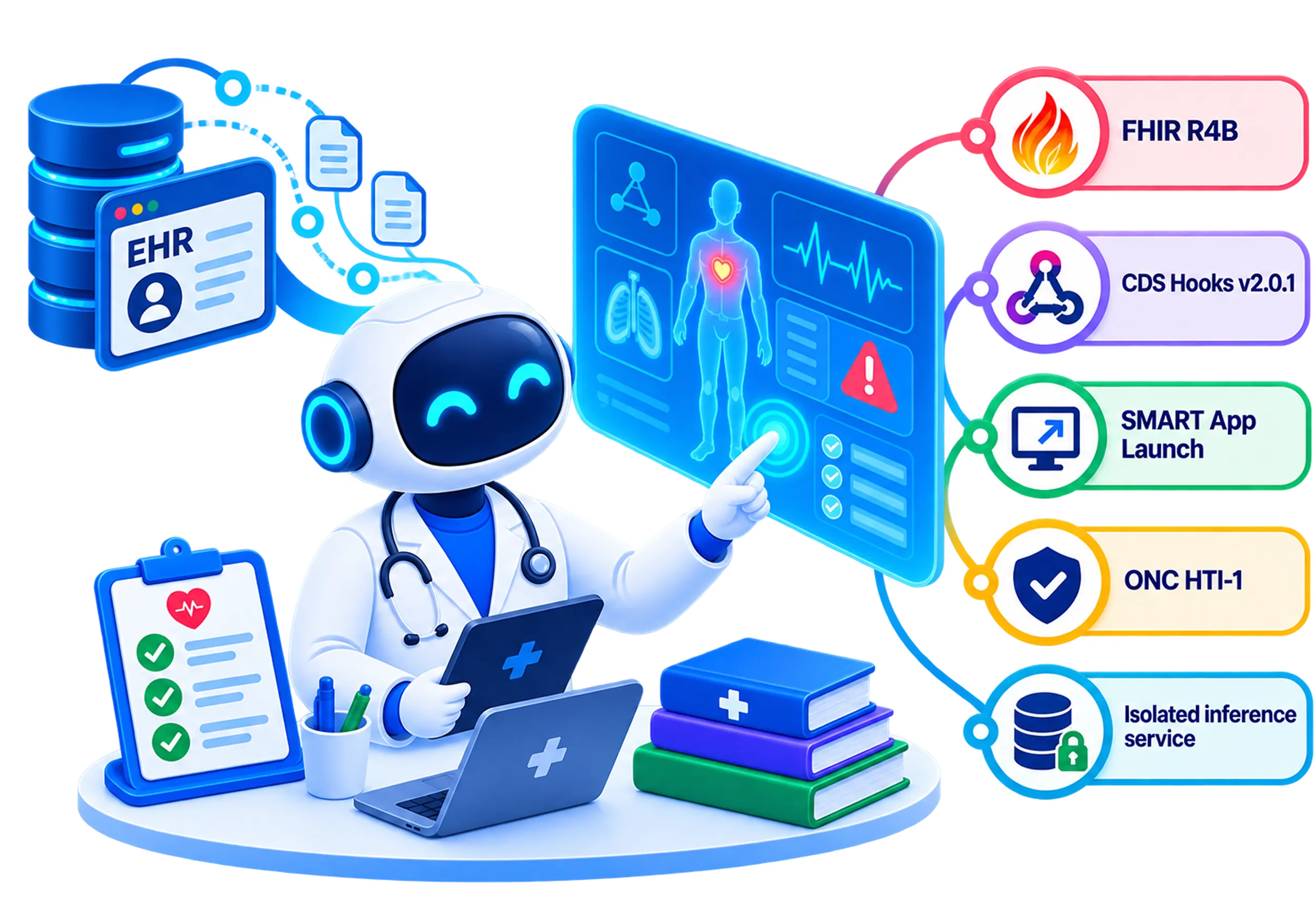
Systems connect to EHR, lab, and imaging platforms using FHIR R4B resources and HL7 v2 messaging, so patient context arrives complete instead of assembled from three separate logins.
Recommendations surface inside the clinician’s existing workflow through CDS Hooks v2.0.1 triggers and SMART App Launch, not in a separate tab nobody opens during a code.
Override tracking, false-positive monitoring, and quarterly rule review cycles are built into the system from day one, not bolted on after the first fatigue complaint.
AI-driven scoring includes a rationale a clinician can interrogate, since a recommendation nobody can explain is one nobody will act on during a real shift.
Modular, cloud-ready infrastructure supports new departments and locations without rebuilding the rule base or renegotiating every integration from scratch.
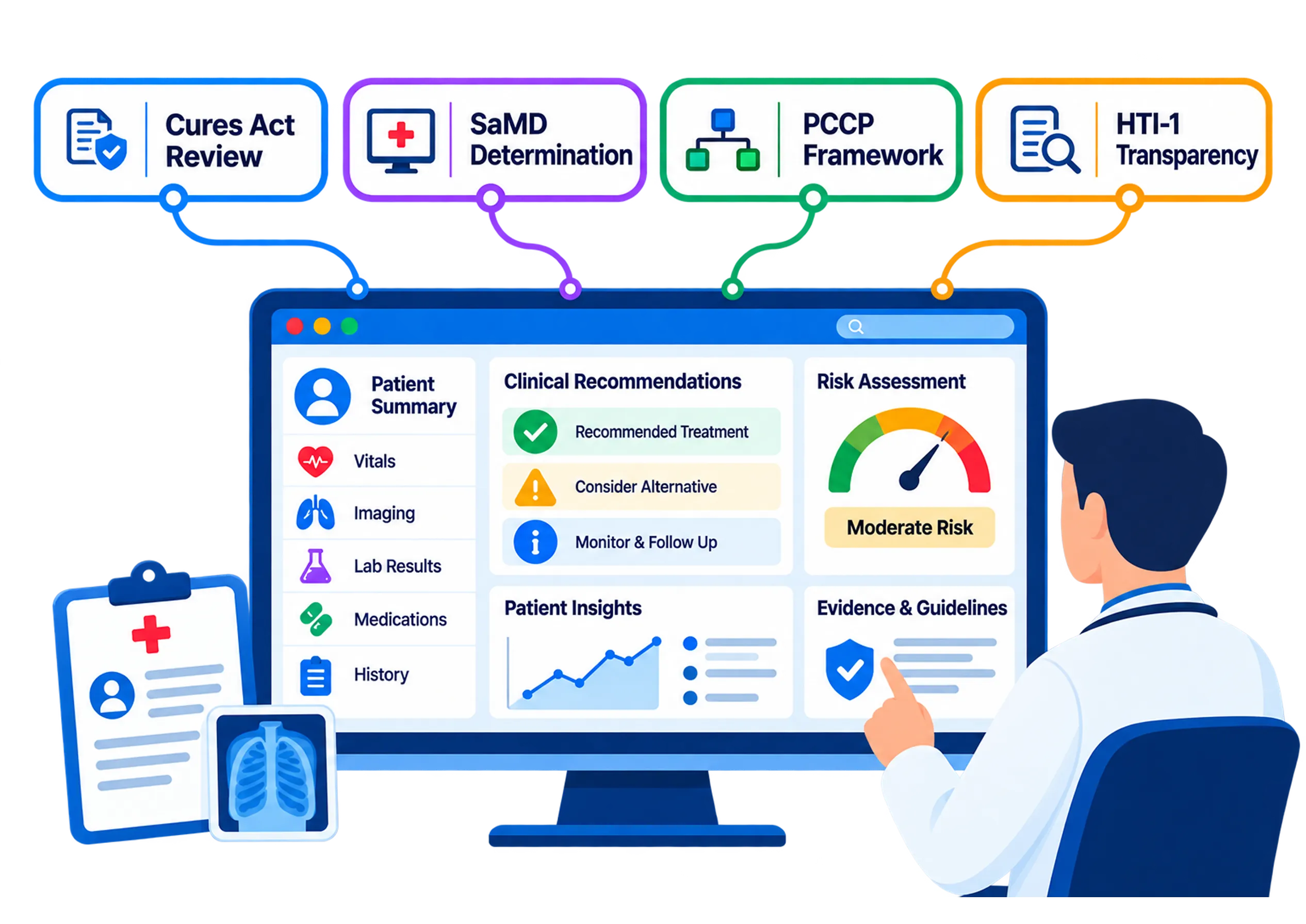
Not every CDSS feature is regulated the same way. The 21st Century Cures Act exempts tools that let a clinician independently review the basis for a recommendation, but AI-driven scoring often crosses that line.
We sit with physicians, nurses, and IT leadership to map exactly where a decision gets made today, what data feeds it, and where the current process breaks down. This stage also captures which specialty guidelines apply and how often they change, since that cadence shapes how the rule base gets maintained later.
Before any architecture gets drawn, we determine whether the planned feature set qualifies for the 21st Century Cures Act CDS exemption or crosses into Software as a Medical Device territory. Getting this wrong after development starts is the single most expensive mistake teams make on CDSS projects, so we settle it first.
We design the integration plan against FHIR R4B and HL7 v2 messaging, choose where CDS Hooks triggers fire, and decide which recommendations run on rule-based logic versus a trained model. Alert thresholds are calibrated against your organization's actual override tolerance rather than a generic default.
Engineers build the inference service, connect it to EHR, lab, and imaging systems, and implement the SMART App Launch flow so recommendations appear inside the clinician's existing screen. Iterative sprint releases mean your clinical team reviews working functionality every two weeks, not a finished product at month six.
We run the system against historical patient data to check recommendation accuracy, then pilot it live with a small clinician group to measure real override rates before a full rollout. Thresholds get retuned based on what actually happens at the point of care, not what looked right in testing.
Rollout is staged by department, with monitoring in place from day one. We hand over an alert governance dashboard, a documented rule-review cadence, and PCCP-aligned update procedures for any AI component, so your team can maintain accuracy without calling us every time a guideline changes.
Their agile way of working, competence, and friendliness are impressive.December 7, 2024
Citrusbug Technolabs handles a data extraction project for an education company. They're also responsible for managing an AI generation project for the client.
Citrusbug Technolabs has laid out and followed a clear project outline and consistently met deadlines. The team communicates well and demonstrates a strong understanding of the client's vision and goals. Their agile approach, high level of competence, and personable approach stand out.
 Read More
Their communication and ability to capture exactly what I was asking for were impressive.November 14, 2024
Citrusbug Technolabs built an automated system for a veteran medical company. The system needed to collect and store user data, generate customized letters based on surveys, and use AI to summarize reviews.
Citrusbug Technolabs delivered a functional automated system that successfully organized the client's records and auto-generated statements. The team was quick to respond, addressed all roadblocks, and communicated effectively. Overall, their ability to understand the client's needs stood out.
Read More
They were very calm and talented, and they did bring some of their own ideas.January 28, 2025
Citrusbug Technolabs has developed an MVP for a freight and capacity marketplace. The team has created three different interfaces for three market segments.
Citrusbug Technolabs has successfully developed an effective MVP. The team has delivered the project on time and almost within budget. Moreover, their responses have been timely. Overall, the team has been calm, talented, and innovative. This has led to the client's satisfaction.
Read More
What stood out most about them was their personalized approach and sense of ownership in every aspect of the project."February 27, 2024
Citrusbug Technolabs built a Flutter cross-platform mobile app for an education company. They also developed two web apps and an admin panel and provided DevOps support for the client's infrastructure.
Citrusbug Technolabs' support successfully boosted the client's user engagement by 8x, resulting in an 85% retention rate. The reliable team demonstrated a dedication to delivering on time and promptly responding to concerns and adjustments. Their personalized, client-centric approach stood out.
Read More
They didn't like the phrase "impossible to do", which made them very solution-oriented.February 19, 2024
A healthcare company hired Citrusbug Technolabs to design and develop a user-friendly application. The team provided tailored assistance to meet the client's requirements.
Citrusbug Technolabs successfully delivered an application that was ready for market. The team was highly professional and well-organized; they stayed focused throughout the engagement and were receptive to changes. Overall, they stood out for their trustworthiness and commitment to excellence.
Read More
They're 100% on time and transparent throughout each stage of the project.February 24, 2024
A financial technology company has hired Citrusbug Technolabs to build a custom web application. The team handles the development and design of the app.
The project is ongoing, but the client has been satisfied with Citrusbug Technolabs' services. The team is very professional — they always respect timelines and provide regular updates to ensure everyone's on the same page. Also, their transparent approach makes them a trustworthy partner.
Read More
"I do believe they are exceptional at where they stand."
Citrusbug Technolabs took on a mobile app development project for a Singapore-based development house. They were provided with UX designs to execute. Currently, they're finalizing and fine-tuning the product.
Citrusbug Technolabs contributed to the successful launch of the product, which has garnered over 10,000 users in just three months. The product has also received support from investors. They consistently followed-up with their progress and delivered at a speedy rate. The team is truly stellar.
Read More
A CDSS lives or dies on how cleanly it separates the inference layer from the systems it reads from. Our reference architecture keeps clinical logic, data integration, and audit trails as distinct services so any one layer can change without breaking the others.
Most vendors treat alert fatigue as a tuning problem you solve once at launch. We don't. Every CDSS we deliver ships with the infrastructure to track how clinicians actually respond to recommendations across every EHR integration point, not just whether the system technically fired an alert.
Every dismissed or modified recommendation is logged with a reason code, giving your clinical governance committee real data instead of anecdotes when deciding which rules to keep.
We schedule structured reviews of alert thresholds and guideline currency as a deliverable, not an optional add-on you have to negotiate for later.
Automated tracking flags rules whose false-positive rate creeps upward, so degradation gets caught before clinicians start ignoring the category entirely.
For AI-driven components, update paths are documented against FDA’s Predetermined Change Control Plan framework from the start, not retrofitted when a model needs retraining.
Epic, Oracle Health, and MEDITECH all ship native decision-support modules, and for a narrow set of standard alerts like drug interaction checks, that’s often enough. The calculation changes when your organization needs decision logic tied to a specific specialty mix, a research protocol, or a risk model your vendor doesn’t offer.
Vendor modules update on the vendor’s release cycle. If your clinical guidelines shift faster than that, or if you need audit trails detailed enough for FDA submission and HIPAA-ready application architecture, the packaged option starts working against you. Custom development costs more upfront but gives your organization ownership of the logic, the update cadence, and the compliance documentation.
Most health systems land on a hybrid: vendor modules for commodity alerts, custom-built CDSS for the decisions where accuracy actually moves outcomes.
Costs typically range from $40,000 for a single-specialty, rule-based module to $150,000+ for a multi-facility hybrid AI system with full SaMD documentation.
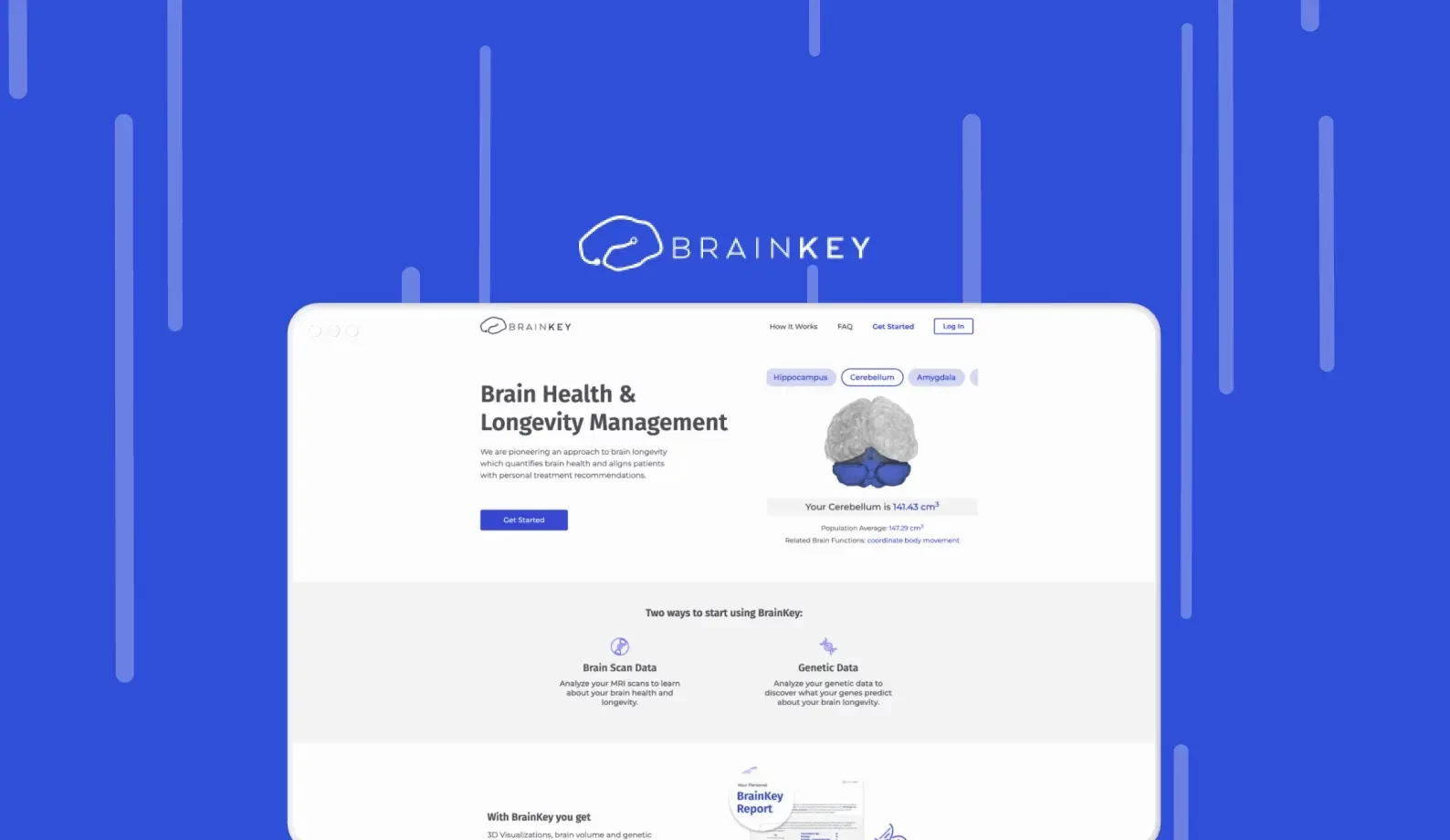
Not every regulation touches every feature. This breakdown shows which standards apply based on what your system does, not a blanket compliance claim that doesn't hold up under audit.
| Standard | Scope | Who Needs It | Citrusbug Coverage |
|---|---|---|---|
|
HIPAA |
Patient data handling, storage, transmission |
Every CDSS touching PHI |
Built into every build |
|
FHIR R4B / HL7 v2 |
EHR, lab, imaging data exchange |
Systems needing interoperability |
Standard integration layer |
|
21st Century Cures Act CDS Exemption |
Determines if a feature needs FDA clearance |
Any AI or scoring feature |
Reviewed at discovery, documented in writing |
|
FDA PCCP |
Post-launch model updates without new submissions |
AI-driven or adaptive scoring models |
Built into architecture when applicable |
|
ONC HTI-1 |
Source, intent, and validity transparency |
Certified health IT modules |
Transparency fields included by default |
|
SOC 2 Type II |
Infrastructure security controls |
Enterprise, multi-facility deployments |
Standard on cloud infrastructure |
 Artificial Intelligence
The global healthcare AI market is projected to surpass $188 billion by 2030, and most healthcare organizations already know they need AI in their workflows, the harder question is where…
Read Article → Artificial Intelligence
Introduction Healthcare organizations increasingly use data to aid in clinical, financial, and operational decision-making. With a growing amount of patient records, claims and administrative information, decision makers need context rather…
Read Article → Artificial Intelligence
Introduction The healthcare predictive analytics market is moving from experimental pilots to system level adoption across hospitals, payers, and life sciences. Advanced models now sit inside electronic health records, claims…
Read Article →It depends on the feature. Tools that let clinicians independently review the recommendation basis are typically exempt under the 21st Century Cures Act. AI-driven scoring without that transparency usually qualifies as SaMD.
Override tracking, false-positive monitoring, and a quarterly rule review cadence ship with every system. Alert governance is a deliverable, not something we hope holds up after go-live.
Yes. Integration runs through FHIR R4B, HL7 v2 messaging, CDS Hooks, and SMART App Launch, supported across all major EHR platforms.
Your team owns the rule base and update cadence. For AI components, updates follow a documented PCCP so guideline changes don't require a new build.
Single-specialty rule-based systems typically take 2 to 3 months. Multi-facility hybrid AI deployments with full SaMD documentation run 4 to 8 months.
Whichever fits the decision. Rule-based logic works for guideline-driven alerts. AI adds value for prediction tasks like deterioration risk, where a defensible rationale still matters.
You do. Full source code ownership transfers at delivery, along with documentation for the rule base, integrations, and any AI component's training data lineage.
Encryption in transit and at rest, role-based access controls, and full audit logging are standard, aligned with HIPAA and your existing security posture.
Yes. The architecture is modular by design, so new departments or locations extend the existing rule base instead of requiring a separate build.
L1 through L3 support options, plus the alert governance dashboard and rule review cadence established during deployment. Free maintenance applies where scoped upfront.
