

Built for Canadian Health Data Rules
Healthcare Software Development Company in Canada
Citrusbug is a healthcare software development company in Canada's digital health market, serving clinics, health systems, and health tech vendors. We design, build, and integrate EMR-connected platforms, virtual care, and clinical AI with provincial privacy rules, Canadian hosting, and CA Core+ FHIR exchange planned from the first sprint.
500+
Projects Delivered
98%
Client Retention
Certified
 HIPAA
 ISO 27001
 SOC 2
 HL7/FHIR
Trusted by industry leaders











Certifications and Accreditations

What Changes When Healthcare Software Has to Work in Canada
A healthcare product built for the U.S. market can still face additional Canadian requirements around provincial privacy, data handling, interoperability, and accessibility. The applicable rules vary by province and healthcare organization.
As a healthcare software development company in Canada's regulated market, Citrusbug accounts for these requirements during architecture and discovery. For U.S. vendors with HIPAA-ready application development, we can extend the existing foundation for applicable Canadian requirements instead of rebuilding the application.
Provincial Privacy Requirements
PIPEDA can apply to private-sector organizations, while provincial laws such as PHIPA in Ontario and the Health Information Act in Alberta create additional requirements for applicable healthcare organizations.
Data Location and Transfers
Healthcare contracts may specify where health information is stored or processed. Québec also has specific assessment requirements for certain communications of health information outside the province.
EMR and Data Integrations
Canadian healthcare integrations vary by province, with different EMRs, digital-health platforms, repositories, and data-exchange requirements. U.S. integration patterns may therefore need province-specific adjustments.
Accessibility and French
Québec projects may require French-language experiences depending on the organization and service. Ontario’s AODA also sets accessibility requirements for covered organizations, including specified WCAG 2.0 Level AA requirements.
Healthcare Software Development Services in Canada
Engineering support for Canadian clinics, health systems, and digital health vendors, from individual integrations to multi-province healthcare platforms.
Custom Healthcare Platform Development
Multi-tenant clinical and operational platforms built with Django, Node.js, .NET, and React, with role-based access, configurable workflows, and support for multiple healthcare organizations.
EMR and EHR Development and Integration
Custom EMR modules and EHR integration services using FHIR, CA Core+, and HL7 v2 where applicable, with access controls, audit trails, and province-specific integration requirements built into the workflow.
Virtual Care and Telehealth Platforms
Video visits, secure messaging, e-forms, and appointment booking designed around the requirements of the healthcare organization and applicable provincial virtual care and billing workflows.
Patient Portals and Mobile Health Apps
iOS, Android, and React Native apps for appointments, results, care plans, and patient communication, with accessibility requirements and French-language support considered where applicable.
Remote Patient Monitoring Software
Connected devices and wearables feed readings into clinician dashboards with configurable thresholds, alerts, patient histories, and workflows for chronic disease and home-care programs.
Clinical AI and Workflow Automation
Referral triage, intake summarization, and documentation tools with clinician review, auditability, and model governance. Where software falls within Health Canada’s medical-device framework, development can account for applicable ML and SaMD requirements.
Healthcare Data and Reporting Pipelines
Data pipelines connect EMRs, labs, billing systems, and other sources to governed warehouses and reporting layers for operational dashboards, analytics, and de-identified datasets.
Legacy Healthcare System Modernization
Legacy clinical applications built on older technologies such as Delphi, VB6, or on-premises SQL Server can be modernized in stages, with API layers, controlled data migration, and phased cutovers to reduce disruption.
Taking a US-Built Health Product Into Canada?
Get a practical review of the provincial requirements, integrations, data flows, and hosting considerations to address before launch.
Discuss Your Product RequirementsWho Hires Citrusbug for Canadian Healthcare Software
Healthcare teams that need privacy, integrations, data handling, and province-specific requirements considered during software development.
Digital health startups launching in Canada
U.S. health tech vendors entering the Canadian market
Multi-site clinics and specialist networks
Hospitals and regional healthcare organizations
Virtual care and telehealth providers
Clinical research and life sciences teams
Canadian Health Privacy Laws Mapped to Engineering Decisions
Canadian privacy requirements can affect data flows, access controls, audit trails, assessments, and accessibility. The applicable obligations depend on the organization, province, and type of health information involved. Your privacy officer or legal counsel should confirm how each requirement applies.
| Law or Rule | Where It Applies | Engineering Considerations |
|---|---|---|
|
PIPEDA |
Commercial activities, including certain interprovincial and international data flows |
Consent and purpose records, safeguards, breach-response workflows, and individual access requests |
|
PHIPA (Ontario) |
Health information custodians and other organizations covered by the Act |
Access controls, electronic audit logging, consent directives, and reports supporting custodian oversight |
|
HIA (Alberta) |
Health information custodians covered by the Act |
Applicable PIA workflows, role-based access, disclosure controls, and auditability |
|
Québec privacy and health-information laws |
Organizations and health bodies covered by the applicable provincial laws |
Privacy-by-design controls, transfer assessments where required, incident handling, and applicable French-language requirements |
|
BC PIPA and FIPPA |
PIPA for private organizations; FIPPA for public bodies |
Access controls, safeguards, privacy management, and applicable PIA and data-location requirements for public bodies |
|
Health Canada Medical Devices Regulations |
Software that meets the Canadian medical-device definition |
Classification, software lifecycle documentation, risk management, validation, and applicable ML change-control planning |
|
AODA |
Designated public-sector organizations and businesses/nonprofits with 50+ employees |
Accessible websites and web content meeting applicable WCAG 2.0 Level AA requirements |
Canadian EMR and Health System Integrations
Canadian healthcare uses a mix of commercial EMRs, hospital EHRs, provincial repositories, and pan-Canadian interoperability specifications. Bill S-5, the proposed Connected Care for Canadians Act, is currently at second reading in the House of Commons and includes proposed interoperability and anti-data-blocking requirements for health IT vendors. Integration scope depends on the province, organization, vendor access, and available interfaces.
Community EMRs and Clinic Systems
• TELUS Health PS Suite
• TELUS Health Med Access
• WELL Health Accuro
• OSCAR Pro
• Provincial billing workflows such as OHIP, MSP, and AHCIP
Hospital EHRs and Clinical Systems
• Epic, including Alberta’s Connect Care environment
• Oracle Health Millennium
• MEDITECH Expanse
• HL7 v2 ADT and laboratory feeds
• DICOM, PACS, and imaging workflows
Provincial and Pan-Canadian Exchange
• CA Core+ FHIR profiles
• Pan-Canadian Patient Summary (PS-CA)
• Pan-Canadian FHIR Exchange (CA:FeX)
• Ontario’s OLIS and Digital Health Drug Repository
• Alberta Netcare and Québec’s Dossier santé Québec (DSQ)
Clinical AI Development Under Health Canada Rules
Health Canada considers a software product's intended use when determining whether it meets the medical-device definition. Classification affects regulatory requirements, documentation, and whether a medical device licence may be required, so intended use should be established early in the project.
Administrative and Operational AI
Scheduling, intake, workflow, and other administrative features may fall outside the medical-device framework when they do not provide a medical purpose or influence clinical decisions.
• Referral and fax intake
• No-show prediction for scheduling
• Billing code suggestions for review
• Patient messaging automation
Clinical Decision Support
We build clinical decision support systems with defined intended use, explainable outputs where appropriate, and clinician review workflows. Whether a particular feature is regulated depends on its intended purpose and functionality.
• Guideline-based alerts
• Evidence and rationale for recommendations
• Clinician override and review workflows
• Intended-use documentation from day one
Software as a Medical Device
Software that meets Canada’s medical-device definition may require classification and licensing based on its intended use and risk. Health Canada’s MLMD guidance also addresses machine-learning-enabled medical devices across applicable device classes.
• Classification support with regulatory specialists
• IEC 62304 lifecycle documentation where applicable
• Model versioning and change controls
• Premarket cybersecurity documentation where applicable
Ambient Documentation and LLM Assistants
Ambient scribes and summarization tools can be designed with privacy controls, Canadian deployment options, and clinician review before generated content enters the clinical record. Data-location requirements depend on the organization, contract, and applicable provincial rules.
• Canadian-region hosting options
• Data minimization and redaction controls
• French-language documentation support
• Clinician review before chart entry
Technical Discovery for Canadian Healthcare Software Development
Discovery maps the provincial requirements, data flows, integrations, and architecture decisions that shape the build. The sprint produces practical technical artifacts your team can keep and use whether or not development continues with Citrusbug.
Jurisdiction and Data Flow Map
Map the provinces you plan to serve, systems handling health information, and relevant cross-border or interprovincial data flows. The diagram gives privacy, procurement, and engineering teams a shared view of the proposed architecture.
Privacy Assessment Inputs
Technical inputs for your privacy impact assessment and related security reviews, covering hosting, encryption, access controls, and audit logging. Your privacy or legal team owns the assessment, while our healthcare IT consulting team provides the supporting architecture details.
Integration Inventory and Access Plan
Document each EMR, EHR, provincial repository, lab feed, and external system the product needs to connect with. Partner requirements, sandbox access, and conformance testing are identified early so external dependencies are visible in the delivery plan.
Phased Estimate and Pilot Plan
Start with a defined pilot site or workflow, then map the technical and delivery requirements for additional provinces or organizations. Each phase includes scope, dependencies, estimated effort, and acceptance criteria so expansion decisions can follow actual pilot results.
Process We Follow for Healthcare Software Development
1
Discovery and Jurisdiction Mapping
Workshops with clinical leads, privacy staff, and product owners turn the target provinces and care settings into the data flow map and integration access plan. Open questions about custodianship, hosting, or device classification get resolved here, because each one changes the architecture and the estimate if it surfaces halfway through the build.
2
Clinician-Tested UX in Two Languages
Clickable prototypes go in front of physicians, nurses, and front-desk staff at the pilot site before development starts. English and French layouts are designed together, so longer French labels never break a screen, and accessibility checks against WCAG 2.1 AA happen at the wireframe stage when fixes cost minutes.
3
Architecture and Canadian Hosting
Environments are provisioned in AWS Canada Central or Canada West, or Azure Canada Central or Canada East, using infrastructure as code. Tenancy, encryption keys, and backups are separated per province where contracts require it, and audit logging is designed so a custodian can answer who viewed a record, and when, without engineering help.
4
Sprint Build With Weekly Demos
Sprints deliver working features to a staging environment loaded with synthetic Canadian patient data, including realistic provincial health card formats. Daily written updates and a demo at the end of each sprint keep clinical sponsors involved, while CI/CD pipelines run unit, integration, and FHIR validation tests on every merge.
5
Privacy and Conformance Testing
Before real PHI enters the system, penetration testing, access-control reviews, and audit log verification run against the release candidate. FHIR resources are validated against CA Core+ and any provincial profiles in scope, and findings are packaged as evidence for the client's PIA, TRA, and vendor certifications such as OntarioMD.
6
Pilot Go-Live and Ongoing Support
Launch starts with one clinic or unit, backed by training, a rollback plan, and a hypercare period with daily issue reviews. Expansion to more sites follows the usage and support data from that pilot. After hypercare, L1, L2, or L3 SLA support covers monitoring, EMR version changes, and legislative updates.
HEALTHCARE WORK
View All Case Studies →
Healthcare Platforms Citrusbug Has Delivered
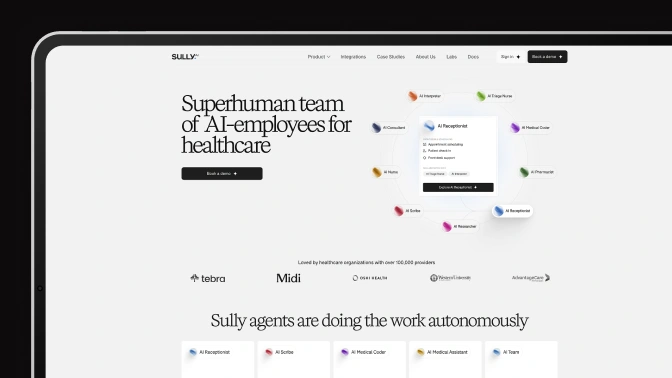
Sully AI
View Case Study →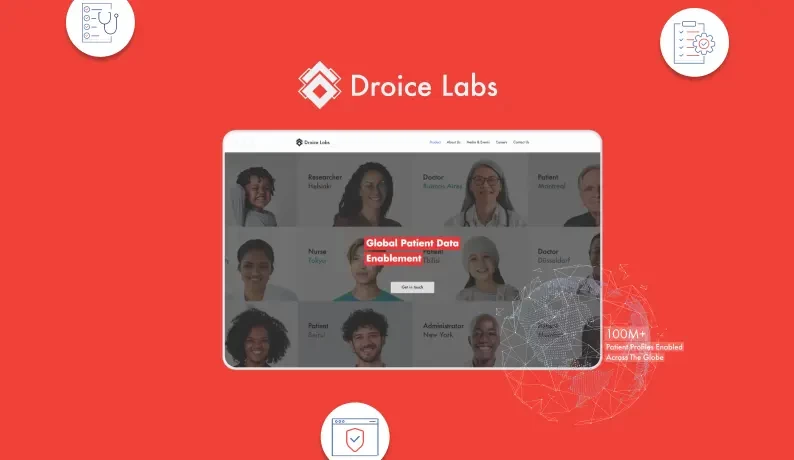
Droice Labs
AI-based personal health monitoring and preventive care platform designed to transform diverse clinical and patient data into actionable insights.
View Case Study →How Much Does It Cost to Develop Healthcare Software in Canada?
Focused healthcare MVPs typically start around USD 40K–150K, while multi-module platforms with complex integrations can range from USD 150K–750K+. Integration depth, AI features, security requirements, and the number of provinces involved have the biggest impact on cost.
Want a more specific estimate? Share your requirements and we’ll map the scope, integrations, team, and estimated effort.
Cutting-Edge Tech Stack for Fast and Secure Healthcare Solutions
AI and Machine Learning
Our AI models are triaged, risk-scored, and automated. Our pipelines include feature stores, retraining triggers, and drift monitoring, and explainability tooling and human review steps provide reliable results within clinical and operational workflows without slowing teams or creating black-box decision paths.
Data Analytics and Engineering
We use lakehouse designs, CDC ingestion, and managed semantic layers that drive near real-time analytics. Strong data quality policies, lineage, and role-based access ensure that insights remain reliable, and intuitive dashboards and cohort explorers enable clinicians and managers to respond quickly to throughput, outcomes, and financial performance trends.
Computer Vision and Imaging
Our team constructs pipelines of imaging classification, detection, and segmentation. We optimise models for edge and cloud inference, add calibration to mitigate bias, and integrate structured outputs into existing viewers and workflows, so radiologists and care teams gain speed and consistency without disrupting their established tools or reporting formats.
Client Testimonials (We're Rated 4.7 on Clutch)
THE PROJECT
Web & AI Development for Education Company
AI Development, Custom Software Development
Nov. 2024 - Ongoing
THE REVIEW
Their agile way of working, competence, and friendliness are impressive.December 7, 2024
PROJECT SUMMARY:
Citrusbug Technolabs handles a data extraction project for an education company. They're also responsible for managing an AI generation project for the client.
FEEDBACK SUMMARY:
Citrusbug Technolabs has laid out and followed a clear project outline and consistently met deadlines. The team communicates well and demonstrates a strong understanding of the client's vision and goals. Their agile approach, high level of competence, and personable approach stand out.
THE REVIEWER
 Read More
 Read More
THE PROJECT
Custom Automated System Dev for Veteran Medical Co
Generative AI, Application Testing, Custom Software Development
Aug. - Oct. 2024
THE REVIEW
Their communication and ability to capture exactly what I was asking for were impressive.November 14, 2024
PROJECT SUMMARY:
Citrusbug Technolabs built an automated system for a veteran medical company. The system needed to collect and store user data, generate customized letters based on surveys, and use AI to summarize reviews.
FEEDBACK SUMMARY:
Citrusbug Technolabs delivered a functional automated system that successfully organized the client's records and auto-generated statements. The team was quick to respond, addressed all roadblocks, and communicated effectively. Overall, their ability to understand the client's needs stood out.
THE REVIEWER
Read More
Read More
THE PROJECT
MVP Development for Freight & Capacity Marketplace
Custom Software Development
$10,000 to $49,999
Jan. 2024 - Feb. 2025
THE REVIEW
They were very calm and talented, and they did bring some of their own ideas.January 28, 2025
PROJECT SUMMARY:
Citrusbug Technolabs has developed an MVP for a freight and capacity marketplace. The team has created three different interfaces for three market segments.
FEEDBACK SUMMARY:
Citrusbug Technolabs has successfully developed an effective MVP. The team has delivered the project on time and almost within budget. Moreover, their responses have been timely. Overall, the team has been calm, talented, and innovative. This has led to the client's satisfaction.
THE REVIEWER
Read More
Read More
THE PROJECT
Web & Mobile App Development for Education Company
Custom Software Development, DevOps Managed Services
$10,000 to $49,999
THE REVIEW
What stood out most about them was their personalized approach and sense of ownership in every aspect of the project."February 27, 2024
PROJECT SUMMARY:
Citrusbug Technolabs built a Flutter cross-platform mobile app for an education company. They also developed two web apps and an admin panel and provided DevOps support for the client's infrastructure.
FEEDBACK SUMMARY:
Citrusbug Technolabs' support successfully boosted the client's user engagement by 8x, resulting in an 85% retention rate. The reliable team demonstrated a dedication to delivering on time and promptly responding to concerns and adjustments. Their personalized, client-centric approach stood out.
THE REVIEWER
Read More
Read More
THE PROJECT
Mobile App Development for Healthcare Company
Custom Software Development Mobile App Development UX/UI Design
$10,000 to $49,999
June 2023 - Jan. 2024
THE REVIEW
They didn't like the phrase "impossible to do", which made them very solution-oriented.February 19, 2024
PROJECT SUMMARY:
A healthcare company hired Citrusbug Technolabs to design and develop a user-friendly application. The team provided tailored assistance to meet the client's requirements.
FEEDBACK SUMMARY:
Citrusbug Technolabs successfully delivered an application that was ready for market. The team was highly professional and well-organized; they stayed focused throughout the engagement and were receptive to changes. Overall, they stood out for their trustworthiness and commitment to excellence.
THE REVIEWER
Read More
Read More
THE PROJECT
Custom Web App Dev & Design for Financial Technology Firm
Mobile App Development UX/UI Design Web Design
Sep. 2023 - Ongoing
THE REVIEW
They're 100% on time and transparent throughout each stage of the project.February 24, 2024
PROJECT SUMMARY:
A financial technology company has hired Citrusbug Technolabs to build a custom web application. The team handles the development and design of the app.
FEEDBACK SUMMARY:
The project is ongoing, but the client has been satisfied with Citrusbug Technolabs' services. The team is very professional — they always respect timelines and provide regular updates to ensure everyone's on the same page. Also, their transparent approach makes them a trustworthy partner.
THE REVIEWER
Read More
Read More
THE PROJECT
Staff Augmentation for Singaporean Development Company
Mobile App Development
$10,000 to $49,999
THE REVIEW
"I do believe they are exceptional at where they stand."
PROJECT SUMMARY:
Citrusbug Technolabs took on a mobile app development project for a Singapore-based development house. They were provided with UX designs to execute. Currently, they're finalizing and fine-tuning the product.
FEEDBACK SUMMARY:
Citrusbug Technolabs contributed to the successful launch of the product, which has garnered over 10,000 users in just three months. The product has also received support from investors. They consistently followed-up with their progress and delivered at a speedy rate. The team is truly stellar.
THE REVIEWER
Read More
Read More
Choosing a Healthcare Software Development Company in Canada
Province-Aware From Kickoff
Provincial privacy rules, custodian roles, and integration approvals are mapped before estimates are final, so PHIPA audit logs or Quebec French screens never arrive as late change requests.
Canadian Hosting by Default
Production, staging, and backups run in Canadian cloud regions from the first environment, with infrastructure as code that lets your team prove residency to auditors and procurement.
Full Code Ownership
Every engagement runs under NDA by default. Source code, infrastructure scripts, FHIR mappings, and documentation transfer to your organization at delivery, with nothing licensed back from Citrusbug.
13+ Years Shipping Software
Citrusbug has delivered custom software for more than 13 years and holds a 4.7 rating on Clutch, with reviews from healthcare clients and a Winnipeg-based founder.
INTEGRATION AND DATA READING
Healthcare Integration and Data Insights
 Custom Software Development
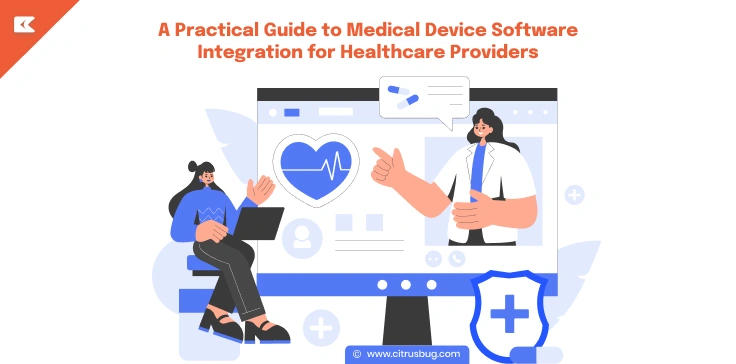
A Practical Guide to Medical Device Software Integration for Healthcare Providers
Healthcare providers today use a wide range of medical devices, from bedside monitors and ventilators to imaging systems and wearables. Such devices are continuously generating useful patient information, but in…
Read Article →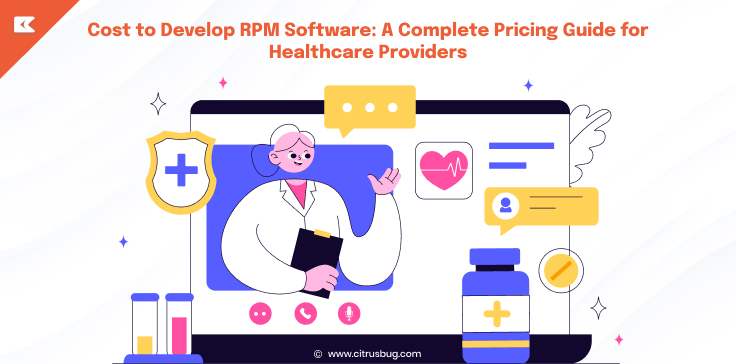 Custom Software Development
Cost to Develop RPM Software: A Complete Pricing Guide for Healthcare Providers
Healthcare providers are expanding remote care programs to monitor patients outside hospitals and clinics. Remote patient monitoring platforms collect health data from connected devices such as blood pressure monitors, glucose…
Read Article →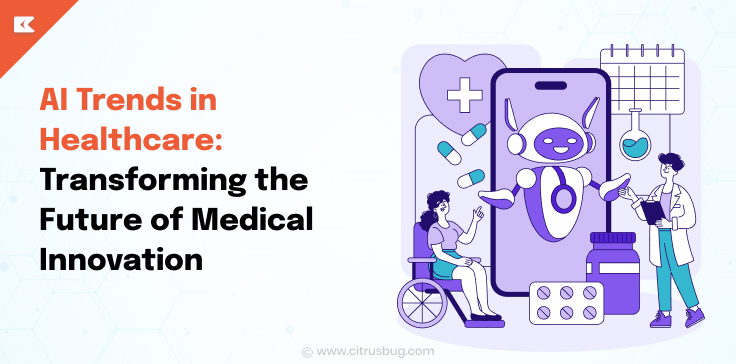 Artificial Intelligence
AI Trends in Healthcare: Transforming Future of Medical Innovation
AI technology is revolutionizing healthcare delivery by increasing efficiency and accessibility to medical services. AI’s role in healthcare advancement has been unparalleled – from aiding in accurate diagnoses to driving…
Read Article →Questions to Ask a Healthcare Software Development Company in Canada
Does patient data have to be stored in Canada?

PIPEDA allows storage outside Canada with safeguards and notice. Provincial laws, health authority contracts, and Quebec's transfer assessment rule tighten that, so we default to Canadian cloud regions for production, backups, and logs.
Can a company outside Canada build PHIPA-compliant software?
Yes. PHIPA duties sit with the health information custodian and extend to agents and service providers by agreement. We work under those agreements, host PHI in Canadian regions, and keep production access role-restricted and logged.
Which Canadian EMRs can you integrate with?
Integration work typically targets PS Suite, Med Access, Accuro, OSCAR Pro, Epic, Oracle Health, and MEDITECH Expanse. Scope depends on the vendor API or partner access your organization holds, which we confirm during discovery.
How much does healthcare software development cost in Canada?
A healthcare software development company in Canada may charge USD 40K–150K for a focused healthcare MVP, while multi-module platforms can range from USD 150K–750K+. Integration complexity, AI scope, security requirements, and the number of provinces served drive the final cost.
Does our product need a Health Canada medical device licence?
Only if it meets the medical device definition, for example, by diagnosing or driving treatment. Scheduling, billing, and most administrative tools do not. We document intended use early, so your regulatory consultant can confirm classification.
Do you build French-language interfaces for Quebec?
Yes. We build bilingual interfaces with managed translation keys, French clinical terminology review, and localization testing, which supports Charter of the French Language obligations for software offered in Quebec.
How should we evaluate a healthcare software partner for Canada?
Ask for a sample audit log design, how they handle PHIPA agent agreements, which Canadian EMRs they have integrated, and where PHI lives in staging. Clear answers on those show real Canadian delivery experience.
Who owns the source code and IP?
Your organization does. Source code, infrastructure scripts, and documentation transfer at delivery, and NDAs are standard from the first call.
What happens after go-live?
Hypercare follows the pilot clinic launch. After that, L1, L2, or L3 SLA support covers monitoring, incident response, EMR version changes, and updates when provinces amend privacy legislation.