




















Advinow
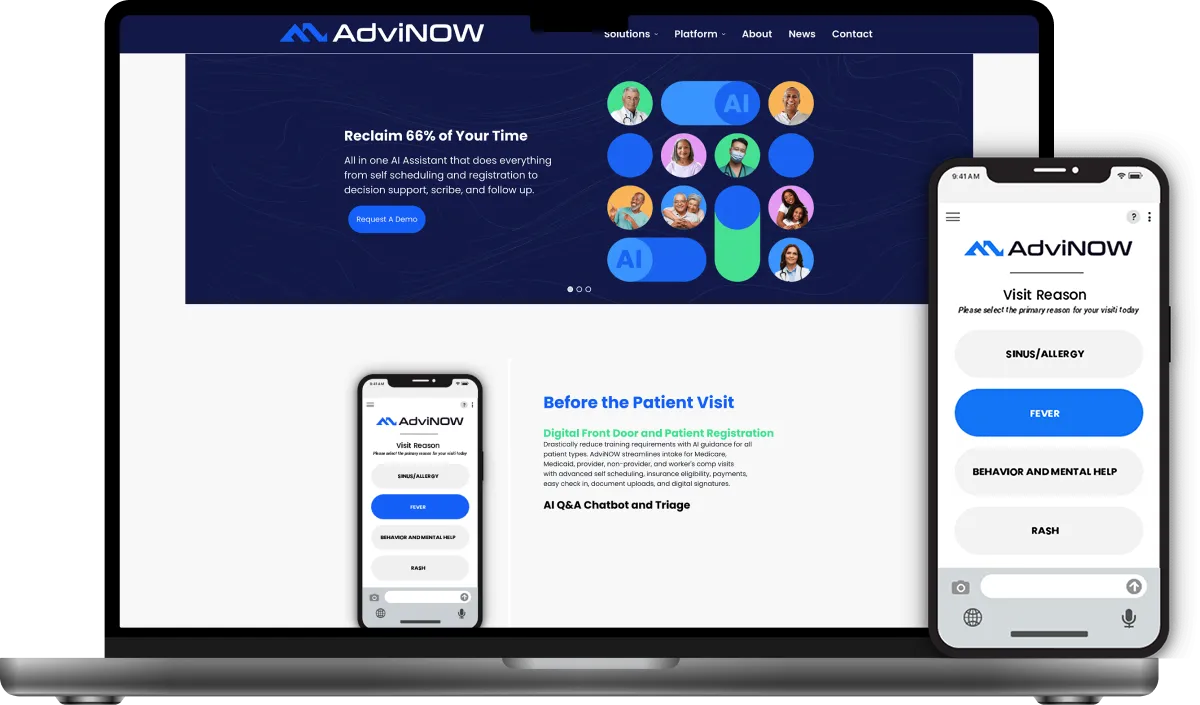
It’s an AI-driven healthcare platform that automates patient engagement and consultation processes, helping healthcare providers deliver efficient, on-demand services while improving operations for urgent care.

We build secure wearable applications for smartwatches, fitness bands, smart rings, and medical-grade devices, handling BLE and ANT+ protocol integration, HealthKit and Health Connect bridges, and HIPAA-compliant data pipelines from sensor to dashboard.
Trusted Software Development Company By
Each engagement covers a different layer of the wearable stack, from on-device experience to backend data handling.
We design and build native wearable interfaces tuned to the device’s screen size, battery profile, and interaction model, whether that is a glanceable watch face for vitals or a full clinical dashboard on a connected hub.
Most wearable products need a phone-side companion app for setup, history, and notifications. We build that companion layer with secure pairing and background sync so the watch and phone stay in step without draining either battery.
Raw sensor output from heart rate, SpO2, motion, and ECG sensors gets filtered, batched, and processed on-device before it ever reaches a server, keeping latency low and battery drain manageable on continuous monitoring use cases.
We build the backend and APIs that connect wearable apps to EHRs, cloud storage, and analytics platforms, handling the healthcare API integration work that turns isolated device data into something a care team can actually use.
Talk to engineers who have shipped BLE pairing, HealthKit sync, and HIPAA-compliant pipelines.
Talk to Our TeamBuilt on trusted healthcare frameworks, these integrations ensure consistent data flow, strong security, and seamless interoperability between devices, apps, and clinical systems.
Most wearable app problems trace back to one tension: accuracy versus battery life. Streaming raw heart rate or motion data every second gives you the cleanest signal, but it kills battery in hours, not days. The fix is not a simpler app. It is a smarter data pipeline.
We batch sensor reads, compress on-device before sync, and reserve continuous streaming for genuine emergency triggers like fall detection or arrhythmia flags. That single architectural decision determines whether your wearable app gets uninstalled in week one or stays on a wrist for a year.
BLE and ANT+ pairing logic, connection retry handling, and multi-device support across Apple Watch, Wear OS, Garmin, and Fitbit ecosystems.
On-device filtering and batching before any data leaves the wearable, reducing both battery drain and unnecessary network calls.
Encrypted, HIPAA-aligned storage with audit logging built in from day one, not bolted on after a compliance review.
A reporting layer that turns raw sync data into something a clinician or end user can act on, whether that is a trend chart or a clinical alert.
We start by mapping exactly which devices, sensors, and OS versions your app needs to support, since Apple Watch, Wear OS, Garmin, and Fitbit each expose data through different SDKs and impose different background processing limits.
Based on the device mix, we choose between native BLE pairing, ANT+ support, HealthKit bridges, or Health Connect integration, picking the combination that minimizes battery drain for your specific monitoring use case.
Our engineers build the on-device data pipeline first, testing batching intervals and background sync behavior on real hardware rather than emulators, since simulator results rarely match actual BLE connection stability.
We classify which data points become Protected Health Information the moment they sync to a server, then design encryption and access controls around that classification before any clinical data moves off the device.
We test on the actual hardware your users will wear, checking connection drops, battery impact over multi-day use, and sync reliability across firmware versions, not just on a single reference device.
After launch, we monitor sync failure rates and battery complaints in the first weeks, since wearable apps surface real-world device fragmentation issues that lab testing rarely catches.
A phone-side app paired with one device type, covering setup, sync, and basic notifications.
A monitoring app built for multiple device types with HIPAA-aligned data handling and clinician-facing reporting.
A complete wearable platform with backend infrastructure, EHR integration, and multi-tenant support.
The moment sensor data leaves a wearable and syncs to a server for clinical use, it becomes Protected Health Information under HIPAA, which changes how it must be stored, transmitted, and audited from that point forward.
Talk to a Compliance-Aware EngineerEvery wearable build decision we make weighs battery impact against data completeness, because a medically accurate app that drains a battery in six hours gets uninstalled regardless of how good the sensor data is.
Battery-Aware Sync: Batched delivery intervals tuned per device type.
BLE Connection Stability: Retry logic tested across firmware versions.
HIPAA-Safe Pipelines: PHI classification applied at the point of sync.
EHR-Ready Integration: Structured data output for clinical systems.
Wearable app development typically ranges from $15,000 for a single-device companion app to $150,000+ for a multi-device clinical-grade platform with EHR integration. Tell us about your device and we'll scope it.
We test wearable builds on the actual device hardware your users will wear rather than simulators, since BLE connection behavior and battery drain only show up accurately under real-world conditions.
Our wearable team works directly with BLE, ANT+, HealthKit, and Health Connect rather than treating them as generic mobile APIs, which is what catches fragmentation issues before they reach production.
We classify PHI at the architecture stage, not after a compliance review flags it, using our Secure ADLC methodology to keep data handling correct from the first sprint.
It’s an AI-driven healthcare platform that automates patient engagement and consultation processes, helping healthcare providers deliver efficient, on-demand services while improving operations for urgent care.
Carepoint is a solution dedicated to the pharmacy industry with a variety of tools needed to manage any pharmacy.
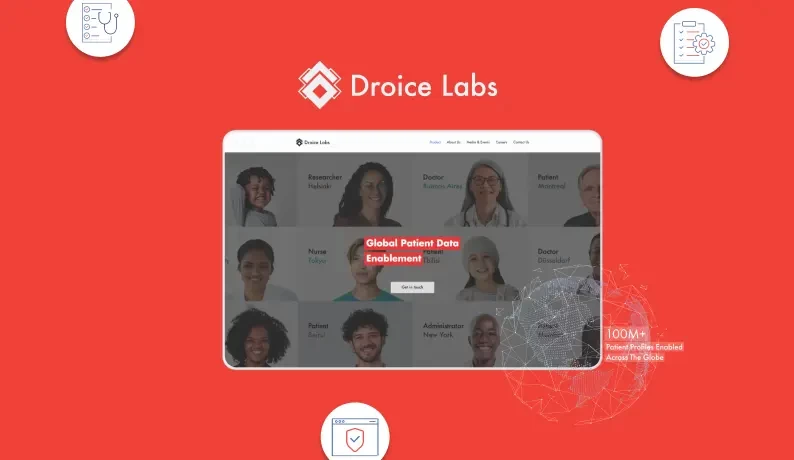
Droice Labs is a middleware designed to transform messy, unstructured patient data into clean, analysis-ready formats for clinical trials.
Wearable devices have evolved from their original purpose as fitness trackers to function as health monitoring systems, payment solutions, and productivity enhancement tools. Businesses entering this market need wearable app…
Read Article →
Wearable medical devices in 2025 have evolved from being just fitness trackers to bona fide healthcare tools, powered by AI sensors to track vitals, sleep, and glucose, supporting patient self-care…
Read Article →
Healthcare providers today use a wide range of medical devices, from bedside monitors and ventilators to imaging systems and wearables. Such devices are continuously generating useful patient information, but in…
Read Article →We build for both. Native Swift for watchOS, native Kotlin for Wear OS, with a shared backend so you are not managing two disconnected codebases.
Yes, once sensor data syncs to a server for clinical use, it becomes Protected Health Information and must be handled under HIPAA storage and transmission rules.
Yes. Garmin, Fitbit, and Whoop expose data through cloud APIs rather than direct BLE, so we build a unified data layer that normalizes across all four sources.
We flag this early in discovery. Apple now requires apps in Medical or Health & Fitness categories to declare regulatory status, which affects app store submission timing.
We batch sensor reads instead of streaming continuously, reserving real-time streaming for emergency triggers like fall detection, which keeps multi-day battery life realistic.
Real devices, always. BLE connection stability and battery behavior do not show up accurately in a simulator.
Yes, we regularly take over stalled wearable builds, starting with a technical audit of the existing sensor pipeline before continuing development.
Most builds run 12 to 16 weeks depending on device count and whether backend EHR integration is included.