Custom Health Insurance Software Development Services
We build HIPAA-compliant, AI-powered health insurance platforms that handle claims adjudication, enrollment, member portals, prior authorization, and provider network management. Built for regulated payer environments - from regional health plans to Medicare Advantage.
Our Health Insurance Software Development Services
From core administration systems to AI-driven adjudication engines, we develop production-grade insurance software tailored to the operational complexity of regulated payer environments. Every build starts with compliance architecture, not as an afterthought.
Health Insurance Platform Development
We architect and build core administration systems that manage the full policy lifecycle from quoting and enrollment through billing, claims processing, and renewals. Designed for long-term scalability and CMS interoperability compliance.
Enrollment and Eligibility Software
Custom enrollment solutions that handle ACA marketplace integration, employer group management, COBRA administration, subsidy and premium tax credit logic, and EDI 834 transaction processing for plan sponsors and TPAs.
Claims Adjudication and Processing
Automated claims adjudication engines with rule-based validation, coordination of benefits COB logic, duplicate detection, and remittance processing via EDI 837 and 835. Designed to reduce manual review queues and adjudication cycle time.
Prior Authorization Software
We build prior authorization workflows compliant with the CMS-0057-F Prior Authorization API mandate, including FHIR-based payer-to-payer API connections, real-time PA decision engines, and integrations with UM vendors and EHR systems.
Member and Provider Portals
Secure, responsive portals that give members real-time access to benefits, claims status, EOBs, and plan documents, and give providers direct access to eligibility verification, claim submission, and remittance history.
AI-Powered Fraud Detection and Underwriting
ML models trained on claims history and provider behavior patterns to flag anomalies, identify billing irregularities, and surface high-risk claims before payment. Supports underwriting risk stratification and HCC coding accuracy for Medicare Advantage plans.
Population Health and Actuarial Analytics
Data engineering and analytics platforms that aggregate claims, clinical, and pharmacy data to support actuarial modeling, HEDIS measure reporting, risk score calculation, and value-based care payment reconciliation.
Premium Billing and Payment Processing
Automated premium billing, invoicing, and multi-channel payment collection for individual, group, and government-sponsored plans. Includes grace period management, lapse processing, and integration with payment gateways and lockbox providers.
Planning to Build or Upgrade Your Health Insurance Platform?
We turn your requirements into production-ready systems with the right architecture, integrations, and compliance built in.
What Makes Health Insurance Software Hard to Build
Claims Adjudication Logic Is Not a Simple Workflow
Claims adjudication involves thousands of rule intersections across benefit configuration, eligibility at date of service, coordination of benefits, subrogation, network status, and fee schedules. A single claim can trigger dozens of logic paths, directly impacting denial rates, costs, and member experience.
Enrollment Complexity Goes Far Beyond a Form
Enrollment must support SEP logic, APTC reconciliation, employer eligibility, COBRA continuation, and EDI 834 exchanges with CMS and employers. All of this must work alongside retroactive eligibility tracking, where small data errors often surface later as costly claims denials.
Prior Authorization Is Now an API Mandate
CMS-0057-F requires most payers to implement FHIR R4 Prior Authorization APIs by January 2026, with strict response timelines. Payers without modern infrastructure risk non-compliance, operational strain, and increasing provider dissatisfaction due to delays and lack of real-time visibility.
Coordination of Benefits Requires Dual-Source Truth
COB logic determines primary coverage, applies secondary payer payments, and prevents duplicate reimbursement. Errors create overpayment risk and reconciliation challenges. At scale, this requires a purpose-built rules engine capable of handling high-volume claims with consistent, accurate decision logic.
Features to Look for in Health Insurance Management Software
Automated Claims Workflows
Look for platforms that support rule-based validation, smart routing, and automated adjudication. This reduces manual work, speeds up reviews, and improves accuracy across the entire claims lifecycle.
Flexible Benefit Configuration
Your system should allow quick updates to plan benefits, coverage limits, eligibility rules, and pricing without heavy development effort. This flexibility ensures faster adaptation to regulatory or market changes.
AI-Powered Fraud Detection
The modern health insurance software must contain AI models to identify anomalies, notice suspicious patterns, and conduct automatic analysis of documents. This assists the insurers in minimizing the losses and enhancing risk management.
Billing & Payment Processing
Automated premium billing, invoicing, reminders, and multi-method payment options are used to simplify financial operations and enhance payment accuracy across individual and group policies.
EDI Support
Health insurance platforms should support secure EDI transactions, enabling seamless communication with clearinghouses, providers, and partners for claims, eligibility checks, and remittance advice.
Secure Document Management
An encrypted centralized storage is used to maintain all policy, claims, and compliance records in a well-organized and accessible manner. This improves traceability and supports regulatory audits.
The Integration Ecosystem Your Health Insurance Platform Requires
EHR and EMR Integration via FHIR R4
Real-time clinical data exchange with Epic, Cerner, Oracle Health, and athenahealth via FHIR R4 APIs
CDS Hooks integration for point-of-care prior authorization decision support
SMART on FHIR application launch for member and provider-facing tools
Patient demographic and coverage verification at time of service
EDI Transaction Processing
EDI 837P and 837I for professional and institutional claim submission
EDI 835 Electronic Remittance Advice with automated payment posting
EDI 270/271 real-time eligibility inquiry and response
EDI 834 benefit enrollment and maintenance with employer groups and CMS
EDI 277 claim acknowledgment and status
Clearinghouse Connectivity
Direct connectivity to Change Healthcare, Availity, Waystar, and Trizetto
Claim scrubbing and validation before submission to reduce rejection rates
Real-time claim status tracking and denial reason categorization
Remittance aggregation and reconciliation across payer portals
Pharmacy Benefit Manager (PBM) Integration
Real-time formulary and drug tier lookup for member-facing tools
Prior authorization status exchange with Express Scripts, CVS Caremark, and OptumRx
Medication adherence data integration for population health platforms
NCPDP transaction support for pharmacy claims and eligibility
CMS and Government Systems
CMS FFM and SBM enrollment and reporting APIs for marketplace plans
Medicare Advantage encounter data submission to RAPS and EDPS
HHS Risk Adjustment Data Validation (RADV) audit preparation data flows
Medicaid and CHIP T-MSIS encounter data and eligibility file processing
Payment and Financial Systems
Premium collection via ACH, credit card, and lockbox with automatic reconciliation
ERA and EFT enrollment and remittance processing through CAQH EnrollHub
Capitation payment calculation and distribution for value-based contracts
Financial reporting integration with ERP systems such as SAP, Oracle, and Workday
How Much Does it Cost to Develop a Health Insurance Software?
Development costs range from $20,000 for focused modules (member portal, enrollment system) to $100,000+ for a full payer platform with claims adjudication, prior authorization, and CMS interoperability APIs. Share your requirements for an accurate estimate.
The Regulatory Landscape Your Software Must Navigate in 2025-2027
Health insurance IT is facing the most concentrated regulatory change period in a decade. Platforms that do not address these requirements now will require costly emergency retrofits within 12 to 24 months. We build systems that are ready for what is current and what is coming.
HIPAA and HITECH
All ePHI must be secured at rest and in transit using AES 256 encryption, access controls, and audit logging. Our platforms are built for HIPAA Security Rule compliance from the start, with breach workflows and BAA management included.
ACA and Marketplace Integration
Exchange plans must support FFM and SBM connectivity, handle APTC and CSR reconciliation, and transmit daily 834 files. We build and maintain these integrations and support high volume processing during SEP and OEP periods.
No Surprises Act NSA Compliance
Requires transparent out-of-network cost estimates, IDR workflows, and good faith estimates. We embed NSA-compliant logic into prior authorization and claims systems to reduce compliance risk and avoid penalties.
CMS Interoperability and Prior Authorization Final Rule CMS 0057 F
Effective January 2026, mandates FHIR R4 APIs for prior authorization, patient access, provider directories, and payer data exchange. We implement Da Vinci aligned APIs and help close compliance gaps.
NCQA HEDIS Reporting
Plans pursuing NCQA accreditation must generate HEDIS data from claims and clinical systems. We build pipelines that extract, structure, and prepare encounter data for accurate reporting and submission.
HOW WE DELIVER
Our Health Insurance Software Development Process
Health insurance platforms fail when compliance, integration, and claims logic are treated as phases rather than foundations. We structure every engagement so that the hard problems are solved before development begins, not during user acceptance testing.
01
Discovery and Compliance Architecture
We map benefit plans, claims workflows, integrations, and regulatory obligations, delivering a compliance architecture, integration inventory, and data model upfront to prevent costly mid-build surprises in payer IT projects.
02
System Design and Data Modeling
Architects define adjudication engines, EDI flows, FHIR APIs, and member and provider data models, documenting decisions against HIPAA, ACA, and CMS-0057-F so compliance remains auditable from day one.
03
Development and Integration
Engineers build in agile sprints with working software reviewed every two to four weeks, while EDI integrations, FHIR endpoints, and clearinghouse connections are developed and tested alongside core applications.
04
Compliance Testing and Certification
We perform HIPAA transaction testing, FHIR conformance validation, and claims scenario testing across benefit plans, alongside penetration testing and vulnerability assessments to ensure compliance and security before go-live.
05
Deployment and Ongoing Support
We deploy to HIPAA-compliant cloud environments, manage cutover with your operations team, and provide ongoing support with SLAs for production issues, remaining engaged beyond go-live for long-term stability.
Why Health Plans and TPAs Choose Citrusbug for Health Insurance Software Development
Insurance software decisions carry multi-year consequences. The right partner needs more than development capability. They need regulatory fluency, integration depth, and the operational discipline to deliver in a compliance-controlled environment.
Compliance Is an Engineering Discipline Here
Our engineers hold working knowledge of HIPAA EDI transaction sets, FHIR Implementation Guides, ACA marketplace requirements, and CMS regulatory timelines. Compliance is not handled by a QA checklist. It is built into architecture from the first design session.
We Build to the Actual Standard
We do not use off-the-shelf middleware connectors that create vendor lock-in and limit your control. Our EDI processors, FHIR endpoints, and clearinghouse integrations are built to the published standard, giving you source-code ownership and long-term flexibility.
AI Built for Insurance Risk Environments
Our ML models for fraud detection, risk stratification, and adjudication automation are developed with explainability in mind. Insurers operating in regulated environments need models whose decisions can be documented and defended, not black boxes.
ISO 27001 Certified Security Posture
Our ISO 27001 certification reflects a managed security program, not just secure coding practices. Encryption at rest and in transit, role-based access control, audit logging, and vulnerability management are standard on every health insurance engagement.
Experinced Engineers on Every Engagement
Health insurance platforms are too complex for junior developers to learn on your project. Your engagement is staffed with senior engineers who have delivered claims, enrollment, and compliance-critical systems before.
Full Source Code Ownership
You own everything we build. No license fees, no vendor lock-in, no proprietary platforms. The code, documentation, and infrastructure configurations are transferred to you at project completion.
Client Testimonials (We're Rated 4.7 on Clutch)
THE PROJECT
Web & AI Development for Education Company
AI Development, Custom Software Development
Nov. 2024 - Ongoing
THE REVIEW
Their agile way of working, competence, and friendliness are impressive.
December 7, 2024
5
★★★★★
Quality5.0
Schedule5.0
Cost5.0
Willing to refer5.0
PROJECT SUMMARY:
Citrusbug Technolabs handles a data extraction project for an education company. They're also responsible for managing an AI generation project for the client.
FEEDBACK SUMMARY:
Citrusbug Technolabs has laid out and followed a clear project outline and consistently met deadlines. The team communicates well and demonstrates a strong understanding of the client's vision and goals. Their agile approach, high level of competence, and personable approach stand out.
Custom Automated System Dev for Veteran Medical Co
Generative AI, Application Testing, Custom Software Development
Aug. - Oct. 2024
THE REVIEW
Their communication and ability to capture exactly what I was asking for were impressive.
November 14, 2024
5
★★★★★
Quality5.0
Schedule5.0
Cost5.0
Willing to refer5.0
PROJECT SUMMARY:
Citrusbug Technolabs built an automated system for a veteran medical company. The system needed to collect and store user data, generate customized letters based on surveys, and use AI to summarize reviews.
FEEDBACK SUMMARY:
Citrusbug Technolabs delivered a functional automated system that successfully organized the client's records and auto-generated statements. The team was quick to respond, addressed all roadblocks, and communicated effectively. Overall, their ability to understand the client's needs stood out.
MVP Development for Freight & Capacity Marketplace
Custom Software Development
$10,000 to $49,999
Jan. 2024 - Feb. 2025
THE REVIEW
They were very calm and talented, and they did bring some of their own ideas.
January 28, 2025
5
★★★★★
Quality5.0
Schedule5.0
Cost5.0
Willing to refer5.0
PROJECT SUMMARY:
Citrusbug Technolabs has developed an MVP for a freight and capacity marketplace. The team has created three different interfaces for three market segments.
FEEDBACK SUMMARY:
Citrusbug Technolabs has successfully developed an effective MVP. The team has delivered the project on time and almost within budget. Moreover, their responses have been timely. Overall, the team has been calm, talented, and innovative. This has led to the client's satisfaction.
What stood out most about them was their personalized approach and sense of ownership in every aspect of the project."
February 27, 2024
5
★★★★★
Quality5.0
Schedule5.0
Cost5.0
Willing to refer5.0
PROJECT SUMMARY:
Citrusbug Technolabs built a Flutter cross-platform mobile app for an education company. They also developed two web apps and an admin panel and provided DevOps support for the client's infrastructure.
FEEDBACK SUMMARY:
Citrusbug Technolabs' support successfully boosted the client's user engagement by 8x, resulting in an 85% retention rate. The reliable team demonstrated a dedication to delivering on time and promptly responding to concerns and adjustments. Their personalized, client-centric approach stood out.
Custom Software Development Mobile App Development UX/UI Design
$10,000 to $49,999
June 2023 - Jan. 2024
THE REVIEW
They didn't like the phrase "impossible to do", which made them very solution-oriented.
February 19, 2024
4.75
★★★★★
Quality4.5
Schedule4.5
Cost5.0
Willing to refer5.0
PROJECT SUMMARY:
A healthcare company hired Citrusbug Technolabs to design and develop a user-friendly application. The team provided tailored assistance to meet the client's requirements.
FEEDBACK SUMMARY:
Citrusbug Technolabs successfully delivered an application that was ready for market. The team was highly professional and well-organized; they stayed focused throughout the engagement and were receptive to changes. Overall, they stood out for their trustworthiness and commitment to excellence.
Custom Web App Dev & Design for Financial Technology Firm
Mobile App Development UX/UI Design Web Design
Sep. 2023 - Ongoing
THE REVIEW
They're 100% on time and transparent throughout each stage of the project.
February 24, 2024
5
★★★★★
Quality5.0
Schedule5.0
Cost5.0
Willing to refer5.0
PROJECT SUMMARY:
A financial technology company has hired Citrusbug Technolabs to build a custom web application. The team handles the development and design of the app.
FEEDBACK SUMMARY:
The project is ongoing, but the client has been satisfied with Citrusbug Technolabs' services. The team is very professional — they always respect timelines and provide regular updates to ensure everyone's on the same page. Also, their transparent approach makes them a trustworthy partner.
Staff Augmentation for Singaporean Development Company
Mobile App Development
$10,000 to $49,999
THE REVIEW
"I do believe they are exceptional at where they stand."
5
★★★★★
Quality5.0
Schedule5.0
Cost5.0
Willing to refer5.0
PROJECT SUMMARY:
Citrusbug Technolabs took on a mobile app development project for a Singapore-based development house. They were provided with UX designs to execute. Currently, they're finalizing and fine-tuning the product.
FEEDBACK SUMMARY:
Citrusbug Technolabs contributed to the successful launch of the product, which has garnered over 10,000 users in just three months. The product has also received support from investors. They consistently followed-up with their progress and delivered at a speedy rate. The team is truly stellar.
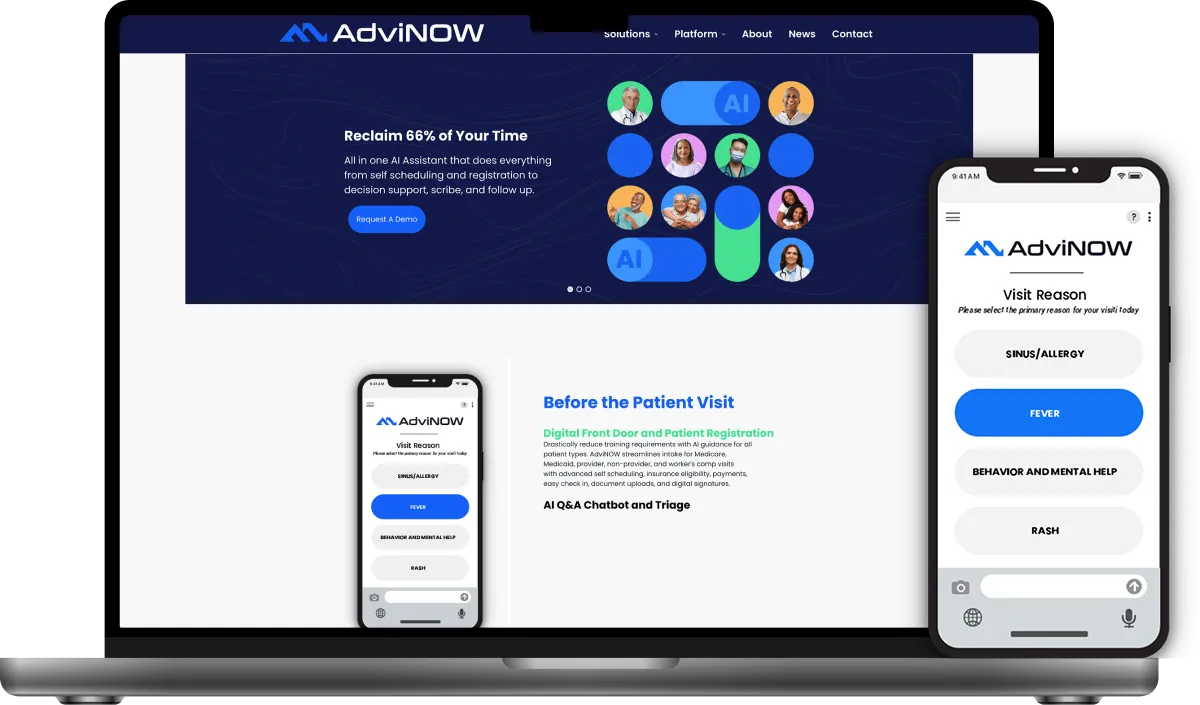
It’s an AI-driven healthcare platform that automates patient engagement and consultation processes, helping healthcare providers deliver efficient, on-demand services while improving operations for urgent care.
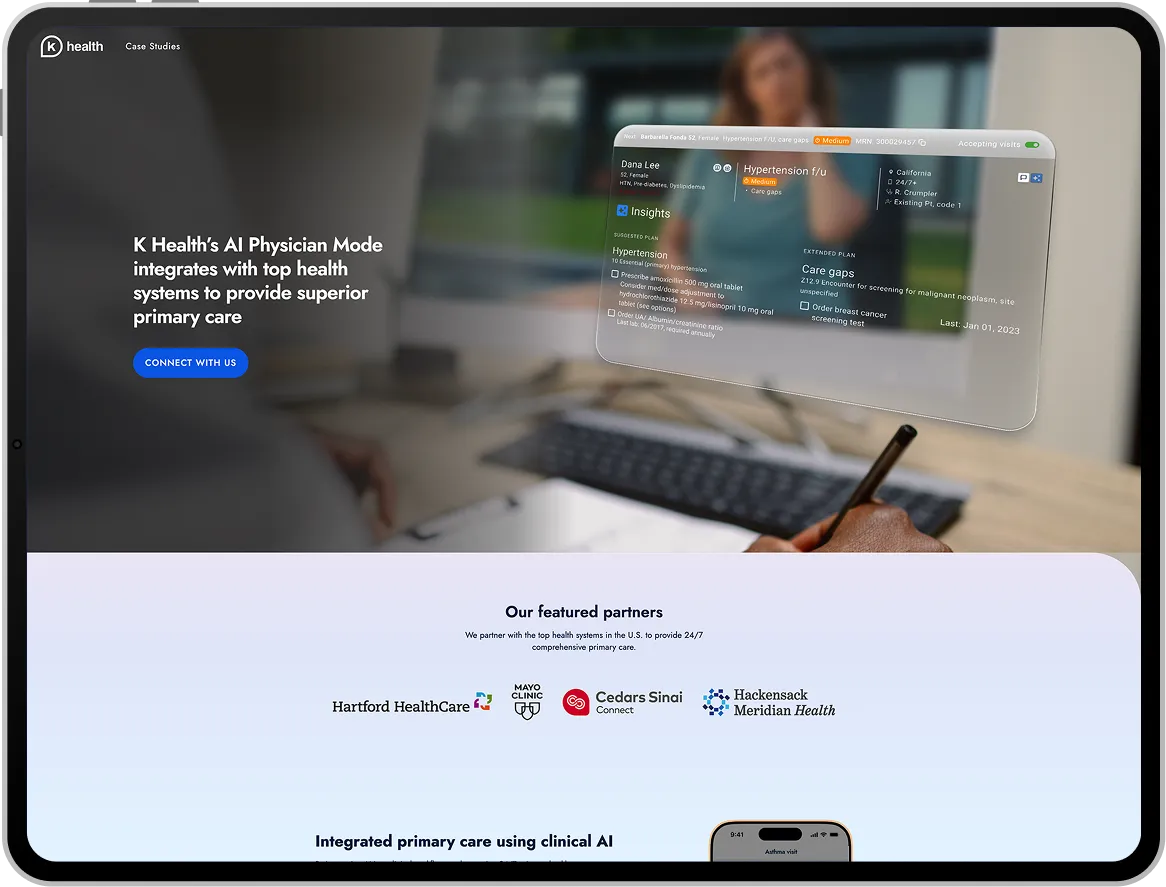
K Health is a United States-based AI clinical care company providing virtual primary care services through AI-driven symptom assessment and clinician integrations.
InsurTech Statistics: Growth, Adoption, and Market Shifts in 2026
Introduction Technology is changing how insurance is priced, sold, and serviced. Tasks that once took days now take minutes because of automation, AI tools, and digital platforms. The customers desire…
AI in Insurance Fraud Detection: Key Benefits, Use Cases, and Industry Examples
Insurance fraud is a growing challenge. The FBI estimates that insurance fraud costs more than $40 billion annually in the United States alone. False claims impact premiums, resource strain and…
Top Insurance Software Development Companies in 2026
Introduction Selecting the right tech partner can determine whether an insurance product scales smoothly or struggles with compliance, security, and integration challenges. The list reflects the insurance software development companies…
It is the design and development of software that supports payer operations such as claims adjudication, enrollment, prior authorization, provider network management, billing, and reporting. Unlike general healthcare IT, it focuses on administrative and financial workflows rather than clinical care delivery.
What compliance standards apply to health insurance software?
At minimum, software must comply with HIPAA, HITECH, and ACA requirements. Additional rules include CMS-0057-F (APIs and prior auth), the No Surprises Act, and NCQA standards. Systems must also meet HIPAA Security Rule safeguards like encryption, audit controls, and access management.
What is the CMS-0057-F rule and does it affect my software?
CMS-0057-F is a CMS interoperability and prior authorization rule effective January 1, 2026. It requires FHIR R4 APIs for patient access, prior auth, provider directory, and payer data exchange. It applies to Medicare Advantage, Medicaid, CHIP, and marketplace plans, with compliance risks if unmet.
How long does it take to develop custom health insurance software?
A single module (e.g., portal or prior auth workflow) typically takes 4–6 months. A full payer platform can take 12–24 months depending on complexity. Initial discovery and compliance architecture take about 4–6 weeks and help avoid delays later.
Can you integrate health insurance software with EHR systems?
Yes. Integrations with systems like Epic, Oracle Health (Cerner), and athenahealth are built using FHIR APIs and SMART on FHIR. We also implement CDS Hooks for prior auth workflows and support EDI transactions like eligibility checks and clinical data exchange.
What is claims adjudication software vs. claims management?
Claims management systems track and store claims, while adjudication systems make payment decisions based on eligibility, benefits, contracts, and policies. Adjudication engines are complex and often custom-built to give payers full control over rules and logic.
How does AI improve health insurance software?
AI improves fraud detection, prior authorization, and risk stratification. It helps identify suspicious claims, automate clinical review using NLP, and predict high-risk members for care management, improving efficiency and quality outcomes.
How to choose a reliable health insurance software development company?
When it comes to finding a trustworthy insurance software development firm, research their past insurance software projects, their capability of creating secure and compliant software, their technical capabilities, their reviews on Clutch and Good Firms, and their transparency throughout the project and post-launch support.
Launch Your Health Insurance Software Development with AI
Develop AI-powered health insurance software featuring automated claims adjudication, policy management, fraud detection, compliance controls, and seamless system integrations.



























.svg)


.svg)