Advinow
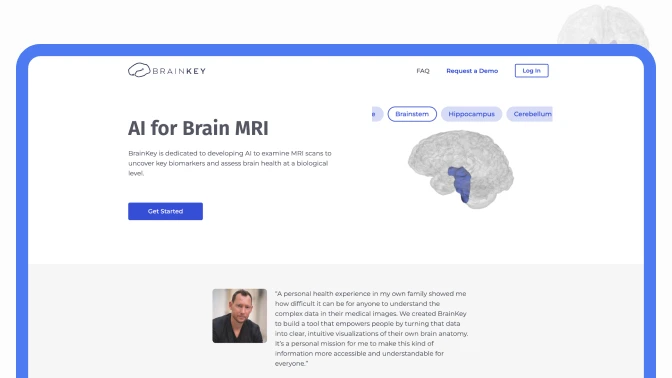
Advinow is an AI-powered platform that automates patient engagement and consultations, enabling efficient, on-demand urgent care and streamlined operations.
Trusted By Industry Leaders
Every app we ship for a covered entity or business associate starts from the same baseline, then gets shaped around the specific PHI flows involved.
Video, chat, and file sharing between patient and provider, all encrypted end-to-end with session recording controls that respect state-level consent rules on top of HIPAA. We’ve built this for practices where a single dropped BAA on a video vendor would have voided the whole compliance posture.
Portals expose more than the record itself. Appointment titles, message subject lines, and even URL parameters can carry PHI if nobody’s watching for it. We design the data model so metadata gets the same encryption and access treatment as the clinical record underneath it.
Vitals streaming from a wearable or home device need an authenticated device identity, not just an API key, or a spoofed reading can trigger a false clinical alert. We build device attestation into the ingestion layer, not bolted on after the pilot.
Systems moving PHI between providers, payers, and labs need audit trails granular enough to reconstruct exactly who touched a record and why, not just that access occurred. We log at the field level where the data is sensitive enough to warrant it.
Talk to an engineer about your PHI flows before you commit to a roadmap or a vendor.
Book Compliance ReviewHHS OCR reported roughly 57 million individuals affected by health data breaches in 2025 alone. 2024 was worse, with over 275 million records compromised, largely from the Change Healthcare incident. Enterprise buyers now treat HIPAA compliance as a gate before they’ll even evaluate a product, not a nice-to-have they’ll accept as a roadmap item.
That math changes how a build should be scoped from day one. A retrofit after launch typically costs several times more than building the architecture correctly the first time, because encryption, access control, and audit logging all touch the data model, and the data model is the hardest thing to change once real patient records are living in it.
The proposed 2026 Security Rule overhaul raises the stakes further: if HHS finalizes it, organizations get roughly 240 days to comply, and a codebase that treated encryption or MFA as optional will be the one paying for a rushed rebuild under a deadline.
AES-256 for stored PHI, TLS 1.2 or higher for anything moving between services, applied consistently rather than at whichever layer someone remembered to configure.
Role-based permissions enforced in the application layer, not just at the database connection string, so a compromised service account can’t read PHI it was never meant to touch.
Debug and error logs are the most common accidental PHI exposure path. A patient lookup endpoint that logs the request body by default is a breach waiting for a third-party log vendor without a BAA.
Immutable logs of every access, edit, and deletion attempt on PHI, structured so they hold up as evidence during an OCR investigation, not just as internal debugging data.
HHS published its Notice of Proposed Rulemaking for the HIPAA Security Rule overhaul on January 6, 2025, and as of mid-2026 it’s still proposed, not final. The rule would eliminate the current “addressable vs. required” distinction entirely, making encryption, multi-factor authentication, annual penetration testing, and a maintained technology asset inventory mandatory rather than optional documentation exercises.
A coalition of over 100 hospital systems has pushed back on the projected $9 billion first-year cost, so the exact finalization date keeps slipping. We architect to the proposed standard now rather than the current minimum, because retrofitting mandatory MFA into an app that was built assuming it was optional is a much harder rebuild than building it in from the start.
• Encryption treated as mandatory, not addressable, from sprint one
• MFA enforced across every role that touches ePHI, including admin accounts
• Audit logging structured for a 24-hour breach reporting window if the rule finalizes
• Technology asset inventory maintained as a living document, not a launch artifact
• Annual penetration testing scheduled into the roadmap before it’s required
A Business Associate Agreement with your hosting provider covers exactly one link in the chain. The break usually happens somewhere nobody was watching.
Teams are diligent about getting a BAA from their cloud host, then quietly add Sentry for error tracking, Intercom for support chat, or a Twilio SMS flow without checking whether that vendor will sign one. Under the proposed rule, subcontractors of business associates become directly liable too, which raises the cost of getting this wrong.
If a feature routes PHI through an LLM API for summarization, triage, or chat, that vendor needs its own BAA, and any training data involved needs de-identification under HIPAA's Safe Harbor or Expert Determination methods. Most teams treat this as a feature decision instead of a compliance decision until legal flags it late.
Field-level access logging inside your app means nothing if a third-party integration reads PHI and logs it somewhere you don't control. We map every PHI-touching vendor before development starts, not after a breach forces the conversation.
A 15-minute idle timeout that logs a nurse out mid-chart during a code makes the app unsafe in a different way than a breach does. We tier timeout thresholds by role and screen context instead of applying one blanket rule.
Hardware keys and biometric binding for admin roles, push-based approval for clinical staff who are already juggling a badge, a device, and a patient in front of them. The friction goes where the risk actually concentrates.
Emergency override access that's logged, time-boxed, and reviewed after the fact, so a clinician can act fast during a genuine emergency without the system blocking care in the name of compliance.
Access scoped to what a billing coordinator, a nurse, and a physician actually need to see, built from interviews with the people who'll use the app daily, not from a generic RBAC template.
We map every system, vendor, and data path that will touch PHI before writing a line of code, flagging BAA gaps and logging risks early.
Encryption, access control, and audit logging get designed into the data model itself, not layered on top once the schema is already locked.
Development runs against the compliance map from step one, with security testing embedded in every sprint rather than saved for a pre-launch scramble.
We deploy with continuous monitoring in place and a documented path for the annual risk reassessment HIPAA already expects, regardless of what the 2026 rule does.
Advinow is an AI-powered platform that automates patient engagement and consultations, enabling efficient, on-demand urgent care and streamlined operations.
Built for providers and researchers, it supports early detection, predictive insights, and smarter treatment planning.
Day One is a journaling app developed by Citrusbug Technolabs for iPhone, iPad, and Mac devices.
Almost no HIPAA-compliant app lives in isolation. It has to exchange data with the systems your clients already run, and that's usually where projects stall. Epic, Cerner (now Oracle Health), and Allscripts remain the three EHR platforms most integration requests target, typically over HL7 v2.x or FHIR R4B, and each has its own quirks around what counts as a valid bidirectional sync versus a one-way data dump. We build the middleware layer that keeps PHI isolated from any third-party service in that exchange, verify BAA coverage for every AI vendor if the app includes generative features, and document the integration so a payer or auditor can trace exactly how data moved.
Compliance overhead typically adds 15-25% on top of standard app development costs, mostly from encryption, audit logging, and the BAA management work described above. Ranges below assume a US-based buyer working with an experienced healthcare-focused team.
| App Type | Complexity | Estimated Cost | Timeline |
| Patient Portal / Basic Telehealth | Medium | $30,000 – $70,000 | 10-16 weeks |
| Remote Patient Monitoring Platform | High | $50,000 – $120,000 | 16-24 weeks |
| Multi-System EHR Integration Platform | Very High | $90,000 – $150,000+ | 24-40 weeks |
| Enterprise Data Exchange / Payer Platform | Very High | $100,000 – $250,000+ | 30-52 weeks |
Annual maintenance for ongoing audits, patching, and monitoring typically runs an additional $5,000-$15,000 depending on scale. Penetration testing, which the proposed 2026 rule would make an annual requirement rather than a best practice, adds $10,000-$30,000 per engagement.
Most HIPAA-compliant apps we scope land between $50,000 and $200,000, depending on integration and compliance scope. Get a real number for your project on a short call.
We run a full PHI data-flow assessment before development starts, catching BAA gaps and logging risks while they’re still cheap to fix, not after a security review flags them at launch.
We’ve taken over healthcare builds that stalled under a previous vendor mid-compliance-review, auditing existing code against the Security Rule and finishing the work without starting from zero.
We tune your AWS, Azure, or GCP footprint so you’re not paying enterprise-tier compliance infrastructure costs for an MVP-stage patient volume.
You own every line of code, every architecture decision, and every piece of documentation at delivery, with no dependency on us to maintain or export it.
Every engagement starts under NDA before we see a single PHI data flow, standard practice we don’t treat as a negotiable add-on.
L1 through L3 support options after launch, so compliance monitoring and patching don’t become someone’s part-time responsibility internally.
Introduction 2026 is the year when most healthcare organizations and providers realize HIPAA Compliance is critical and mandatory to implement now more than ever. The report by the U.S. Department…
Read Article →
Healthcare providers today use a wide range of medical devices, from bedside monitors and ventilators to imaging systems and wearables. Such devices are continuously generating useful patient information, but in…
Read Article →
Computer vision is moving from experimental pilots in radiology labs to everyday clinical workflows across hospitals, imaging centers, and digital health platforms, driven by broader trends in digital transformation in…
Read Article →Eligible infrastructure means your cloud provider can support compliance. It doesn't mean your app is compliant. Your application still has to enforce encryption, access control, and PHI-aware logging itself.
Most projects run 8-24 weeks, depending on the integration scope. EHR connections, AI features, and multi-system data exchange all extend the timeline meaningfully.
It isn't final yet, but the direction is clear enough that building to the stricter standard avoids a costly retrofit if it lands mid-project.
Yes, we sign one before touching PHI. Any third-party vendor your app routes PHI through, including AI APIs, also needs its own signed BAA.
Usually, yes. We run a gap assessment first to determine whether it's a targeted remediation or a deeper architecture change.
Any PHI routed through an AI vendor needs a BAA from that vendor and de-identified training data. We plan for this even if AI isn't in phase one.
You are, as the covered entity or business associate. We build the technical controls and hand over documentation, but ongoing compliance ownership stays with your organization.
It's typically included in discovery for engagements above a certain scope. For smaller projects, we scope them separately based on how many systems and vendors are involved.