
HEALTHCARE

 Citrusbug Global →
Citrusbug is a healthcare software development company in the UK, building EPR integrations, patient apps, and clinical AI for NHS suppliers and private providers. Clinical safety records, DSPT controls, and DTAC evidence are produced during the build, so procurement reviews get answers on the first request.

 ISO 27001
 SOC 2
 HL7 FHIR
 HIPAA
Trusted By Industry Leaders











Certifications and Accreditations



For NHS-facing software, functionality is only part of the delivery. Clinical safety, data protection, security, interoperability, and accessibility can all affect procurement and assurance. These requirements need to influence architecture and workflows from the start, not be added after development.
Citrusbug builds assurance considerations into discovery, architecture, and testing, helping teams prepare the product and supporting evidence for NHS review.
Custom healthcare software for NHS suppliers, private hospital groups, and digital health teams, shaped around clinical workflows, integration requirements, and the assurance needs of each project.
Referral management, care coordination, and theatre scheduling platforms designed around real clinical workflows. FHIR R4 can support interoperability where required, while modular architecture makes it easier to introduce new pathways without rebuilding the core platform.
Extend EPR workflows where standard functionality leaves operational gaps. SMART on FHIR applications can launch within supported EPR environments and use authorised patient context to reduce duplicate data entry and connect clinical workflows.
Patient apps for appointments, results, care plans, and other digital services, with NHS login integration where the use case and eligibility requirements allow. Accessibility is considered from the first release, including WCAG 2.2 AA requirements where applicable.
Video consultations, virtual waiting rooms, and remote monitoring workflows that bring relevant patient data into clinical dashboards. Configurable thresholds and escalation rules can help route alerts to the appropriate care team for review.
Prescribing, dispensing, and medicines-management workflows using NHS dm+d terminology where required, with Electronic Prescription Service integration for eligible use cases. Structured medicines data supports interoperability, traceability, and consistent clinical records.
Data pipelines that pseudonymise records where appropriate and move governed data into analytics environments for population health, capacity planning, and operational reporting. Centralised metric definitions help maintain consistent reporting across dashboards and teams.
Modernise ageing patient administration and departmental systems incrementally using approaches such as strangler patterns, feature flags, and parallel runs. Our healthcare legacy modernisation services support staged migration while existing workflows continue operating.
Companion applications and cloud services for connected medical devices, with IEC 62304-aligned development where the intended use brings the software within medical-device requirements. Device data ingestion, fleet management, updates, and alerting can be designed as part of the same technical architecture.
Tell us what you need to connect, automate, or modernise. Our engineers can turn the requirements into a practical development plan.
Talk to Healthcare EngineersNHS integrations often involve more than API development. Supplier onboarding, test environments, information governance, clinical safety, and conformance requirements can shape the delivery timeline, so integration planning starts during discovery.
Our EHR integration services connect healthcare applications with NHS services, GP systems, and hospital EPRs using the appropriate API, messaging, and terminology standards for each use case.
Integrate with supported GP clinical systems through IM1 APIs, including supplier pairing, clinical safety prerequisites, information governance requirements, and conformance activities.
Support eligible GP Connect workflows for clinical information access and document exchange, with MESH used for supported messaging flows and the required NHS integration standards.
Integrate patient-facing services with NHS Login and workforce applications with Care Identity Service 2, following the relevant onboarding, identity, security, and conformance requirements.
Connect eligible workflows with services such as the Personal Demographics Service, Electronic Prescription Service, and e-Referral Service using the applicable NHS interfaces and access requirements.
Exchange admissions, discharges, transfers, orders, results, and clinical data with hospital EPRs through HL7 v2, FHIR, or other supported interfaces, with integration engines where required.
Structure clinical data using standards such as SNOMED CT and FHIR UK Core where applicable, with mappings and validation aligned to the requirements of the target system and integration.
AI used in healthcare can have different regulatory requirements depending on its intended purpose and functionality. We design clinical AI with appropriate safety controls, human review, data governance, and model monitoring from the start.
AI-enabled ambient scribing converts consultation audio into structured notes and correspondence, with clinician review before content is saved or actioned in the patient record.
AI medical coding software that suggests SNOMED CT, ICD-10, and OPCS-4 codes from clinical documentation, with human confirmation and performance monitoring across specialties.
Symptom and referral triage models with documented failure modes, configurable thresholds, human oversight, and clinical safety processes. Our healthcare AI consulting team works with clinical stakeholders to define appropriate controls.
Predictive models that identify patterns associated with missed appointments, demand, and capacity constraints, helping operational teams prioritise interventions using relevant activity data.
A healthcare software development company in the UK needs to consider requirements based on what the product does, whose data it processes, how it is used in care, and whether it connects to NHS systems. Mapping these requirements during discovery helps define the technical controls, documentation, testing, and assurance evidence needed for deployment.
| Requirement | When It Applies | Build and Assurance Evidence |
|---|---|---|
|
UK GDPR and Data Protection Act 2018 |
The product processes personal or health data |
Data flows, DPIA inputs, lawful-basis documentation, retention rules, access controls, and data-subject rights workflows |
|
Data Security and Protection Toolkit (DSPT) |
Your organisation or supplier role involves NHS data or systems and the relevant DSPT requirements apply |
Security controls, access management, audit logging, supplier controls, incident processes, and evidence supporting the organisation’s DSPT assessment |
|
DCB0129 Clinical Risk Management |
The health IT system could introduce clinical risks through its intended use |
Clinical risk management plan, hazard log, risk assessments, mitigations, and clinical safety case documentation |
|
DCB0160 Deployment Safety |
An NHS or other health organisation deploys, configures, or uses the system in its care environment |
Deployment-specific risk inputs, configuration considerations, local hazard assessment, and evidence supporting the deploying organisation’s clinical safety case |
|
DTAC |
The digital health technology is being assessed for relevant NHS procurement or deployment in England |
Evidence covering clinical safety, data protection, technical security, interoperability, and usability/accessibility requirements |
|
MHRA Medical Device Requirements |
The software meets the applicable definition of a medical device or IVD based on its intended purpose and functionality |
Intended-purpose documentation, risk management, technical documentation, clinical evidence where required, post-market processes, and applicable conformity assessment evidence |
|
NHS Integration Requirements |
The product connects to NHS services, GP systems, EPRs, identity services, or other national infrastructure |
Interface specifications, supplier onboarding, test results, conformance evidence, security documentation, and required connection agreements |
DTAC assesses digital health technologies across clinical safety, data protection, technical security, interoperability, usability, and accessibility. Producing the relevant evidence alongside development makes requirements easier to trace from user story to testing, risk controls, and release documentation.
Relevant user stories include clinical risk inputs where a feature can affect patient safety. Hazards, mitigations, and verification evidence are documented as the product evolves, supporting the DCB0129 clinical safety process and ongoing Clinical Safety Officer review.
Data flows and privacy considerations are assessed during discovery and revisited when processing changes. DPIA inputs, retention requirements, access controls, and appropriate pseudonymisation are documented as features introduce new data handling.
Security requirements are mapped to the applicable NHS assurance framework and project controls. Access management, logging, encryption, vulnerability testing, and penetration testing can be tracked through development and retained as supporting evidence. For organisations within scope, the DSPT is aligned with the NCSC Cyber Assessment Framework.
Integration requirements are defined against the target NHS service and applicable standards. Where FHIR UK Core profiles apply, resources and interactions can be validated during integration testing, with test results retained as supporting assurance evidence.
User journeys are tested against the accessibility and usability requirements applicable to the product and its intended NHS setting. Accessibility issues are tracked through development and retested before release, creating evidence alongside the product rather than at the end of assessment.
As a healthcare software development company in the UK, Citrusbug takes your product from classification and architecture through development, NHS integration, assurance, and phased deployment. Each stage turns technical and regulatory requirements into defined engineering work and release evidence.
Discovery answers whether the product handles patient data, influences clinical decisions, or qualifies as a medical device, then turns those answers into requirements, user stories, and wireframes.
Hosting regions, identity, audit logging, and integration routes are fixed in the architecture before sprint one, along with the NHS test environment requests that take weeks to approve.
Two-week sprints with daily updates and a working demo at each close, so clinical leads see real screens early and change requests land before they become expensive.
Integration testing runs in NHS environments, the penetration test closes out, and the DTAC pack, safety case, and conformance reports are assembled from evidence already gathered.
Phased rollout across sites with DCB0160 inputs for each deploying trust, staff training before cutover, and L1, L2, or L3 support agreements once the product goes live.
Their agile way of working, competence, and friendliness are impressive.December 7, 2024
Citrusbug Technolabs handles a data extraction project for an education company. They're also responsible for managing an AI generation project for the client.
Citrusbug Technolabs has laid out and followed a clear project outline and consistently met deadlines. The team communicates well and demonstrates a strong understanding of the client's vision and goals. Their agile approach, high level of competence, and personable approach stand out.
 Read More
Their communication and ability to capture exactly what I was asking for were impressive.November 14, 2024
Citrusbug Technolabs built an automated system for a veteran medical company. The system needed to collect and store user data, generate customized letters based on surveys, and use AI to summarize reviews.
Citrusbug Technolabs delivered a functional automated system that successfully organized the client's records and auto-generated statements. The team was quick to respond, addressed all roadblocks, and communicated effectively. Overall, their ability to understand the client's needs stood out.
Read More
They were very calm and talented, and they did bring some of their own ideas.January 28, 2025
Citrusbug Technolabs has developed an MVP for a freight and capacity marketplace. The team has created three different interfaces for three market segments.
Citrusbug Technolabs has successfully developed an effective MVP. The team has delivered the project on time and almost within budget. Moreover, their responses have been timely. Overall, the team has been calm, talented, and innovative. This has led to the client's satisfaction.
Read More
What stood out most about them was their personalized approach and sense of ownership in every aspect of the project."February 27, 2024
Citrusbug Technolabs built a Flutter cross-platform mobile app for an education company. They also developed two web apps and an admin panel and provided DevOps support for the client's infrastructure.
Citrusbug Technolabs' support successfully boosted the client's user engagement by 8x, resulting in an 85% retention rate. The reliable team demonstrated a dedication to delivering on time and promptly responding to concerns and adjustments. Their personalized, client-centric approach stood out.
Read More
They didn't like the phrase "impossible to do", which made them very solution-oriented.February 19, 2024
A healthcare company hired Citrusbug Technolabs to design and develop a user-friendly application. The team provided tailored assistance to meet the client's requirements.
Citrusbug Technolabs successfully delivered an application that was ready for market. The team was highly professional and well-organized; they stayed focused throughout the engagement and were receptive to changes. Overall, they stood out for their trustworthiness and commitment to excellence.
Read More
They're 100% on time and transparent throughout each stage of the project.February 24, 2024
A financial technology company has hired Citrusbug Technolabs to build a custom web application. The team handles the development and design of the app.
The project is ongoing, but the client has been satisfied with Citrusbug Technolabs' services. The team is very professional — they always respect timelines and provide regular updates to ensure everyone's on the same page. Also, their transparent approach makes them a trustworthy partner.
Read More
"I do believe they are exceptional at where they stand."
Citrusbug Technolabs took on a mobile app development project for a Singapore-based development house. They were provided with UX designs to execute. Currently, they're finalizing and fine-tuning the product.
Citrusbug Technolabs contributed to the successful launch of the product, which has garnered over 10,000 users in just three months. The product has also received support from investors. They consistently followed-up with their progress and delivered at a speedy rate. The team is truly stellar.
Read More
Healthcare software development costs vary with clinical risk, integration requirements, regulatory scope, infrastructure, AI complexity, and rollout plans. These factors often have a greater effect on the estimate than the number of features alone.
Software that can introduce clinical risk may require a DCB0129 clinical risk management process, including hazard identification, risk assessment, mitigations, and supporting documentation. The level of clinical safety work depends on the product's intended use and risk profile.
IM1, GP Connect, NHS Login, Spine services, and hospital EPR integrations can involve different onboarding, access, testing, and conformance requirements. The number of systems, data flows, and read or write requirements can significantly change integration effort.
Software that meets the applicable medical-device definition can require additional regulatory and technical documentation. Where applicable, this may include software lifecycle processes, risk management, clinical evidence, and conformity assessment. Our medical device software development team can scope the regulatory and engineering work separately.
Cloud region selection, private networking, backup policies, disaster recovery objectives, and deployment constraints all affect infrastructure costs. Healthcare organisations with on-premise requirements may also require additional deployment, monitoring, and support work.
Clinical AI can require additional validation, performance testing, human oversight, monitoring, and clinical risk controls. The effort depends on the model's intended use, available data, validation requirements, and how the output is used within the clinical workflow.
A single-site pilot requires a different level of configuration, training, testing, and deployment support than a multi-site rollout. Phased deployment can spread implementation work across sites while allowing lessons from early deployments to inform later configurations.
Scoped clinical tools typically start around £40,000, while NHS-integrated platforms with DTAC evidence and multi-site rollout can pass £500,000. Share your scope and we will return a costed estimate with a timeline.
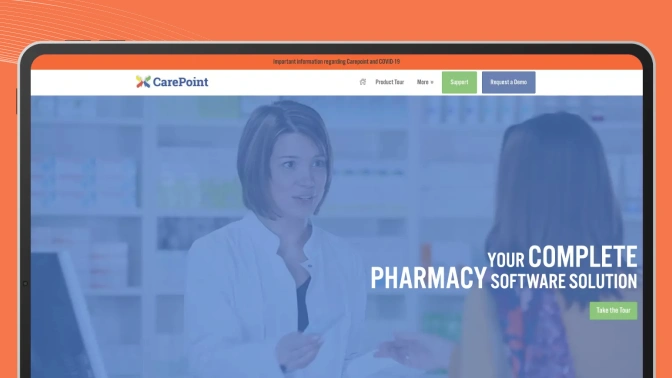
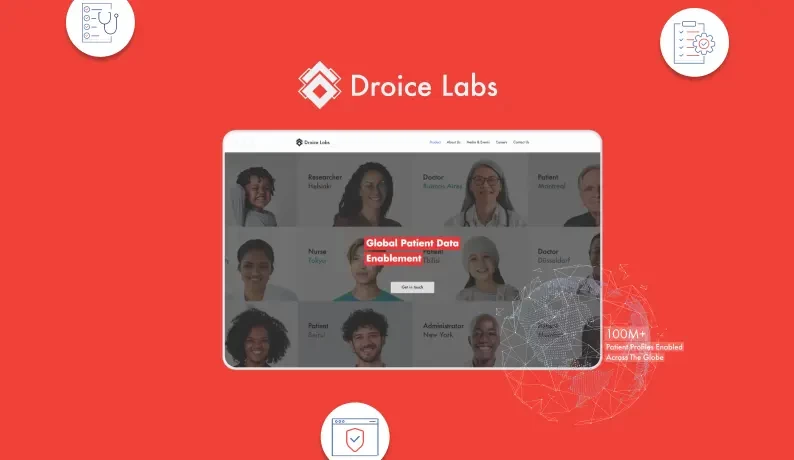
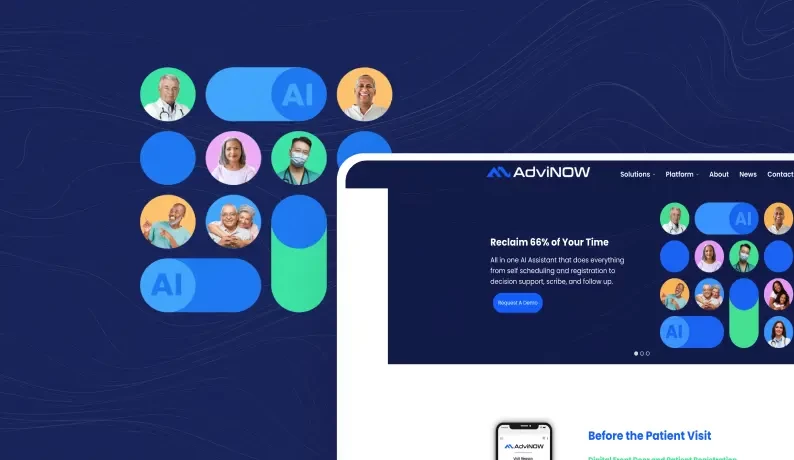
AI-based personal health monitoring and preventive care platform designed to transform diverse clinical and patient data into actionable insights.
View Case Study →Healthcare experience is easier to assess when a partner can explain how it handles clinical safety, NHS integrations, data protection, security, and assurance evidence. Before choosing a healthcare software development company in the UK, ask for specific examples of the processes, documentation, and handover practices that would apply to your product.
A capable team should explain its DCB0129 approach, including hazard identification, risk controls, traceability, and how clinical stakeholders contribute to the process.
Find out which DTAC requirements apply to your product, how evidence is produced during development, and how documentation is kept aligned with the applicable assessment criteria.
Ask which NHS services or supplier APIs are involved, what onboarding and testing dependencies exist, and which integration requests need to start early in the project.
Confirm ownership and access for source code, technical documentation, test evidence, deployment materials, credentials, and relevant clinical safety documentation, with responsibilities clearly defined between the development team and deploying organisation.
Thirteen years of custom software delivery, applied to products that have to clear NHS assurance as well as user testing.
Hazard log entries, security findings, and accessibility results are produced inside each sprint, so your DTAC submission is assembled from records the team already has.
Patient data is hosted in UK cloud regions with encryption at rest and in transit, and nothing moves offshore without a documented DPIA and your approval.
Requirements, user stories, wireframes, and the regulatory classification are agreed before estimates are final, which keeps change requests small and scope honest.
NDA by default from the first conversation and full source code ownership at delivery, including infrastructure scripts, test suites, and clinical safety documentation.
 Artificial Intelligence
The rapid development of AI impacts many sectors, and healthcare is probably one of the most heavily affected sectors. AI has the full potential to transform healthcare systems, improve patient…
Read Article → Custom Software Development
Introduction Healthcare is deep into a cloud-first decade, where digital transformation, data-driven decision-making, and scalable cloud platforms are reshaping how care is delivered and managed. Electronic health records, imaging, telehealth,…
Read Article → Artificial Intelligence
Artificial intelligence has become one of the most transformational trends in healthcare. By minimizing diagnosis mistakes to facilitating real-time patient monitoring, AI healthcare apps are no longer an idea of…
Read Article →Yes. An overseas development partner can build software for the NHS, provided the product, hosting, security, integration, clinical safety, and assurance requirements are addressed appropriately. We can support UK-focused architecture and evidence while your organisation retains its responsibilities as the relevant supplier or manufacturer.
The requirements depend on the product, intended use, data processing, integrations, and deployment context. UK GDPR, DSPT requirements, clinical safety standards, and DTAC may apply, while software that qualifies as a medical device can have additional MHRA obligations.
For health IT systems within the scope of DCB0129, manufacturers are expected to appoint a suitably qualified Clinical Safety Officer and maintain clinical safety documentation throughout development. The deploying organisation has separate responsibilities under DCB0160. We can work alongside your in-house or contracted clinical safety team.
There is no standard timeline for NHS integration. Duration depends on the target service, supplier onboarding, access requirements, test environments, conformance activities, data flows, and whether the integration is read-only or supports transactions. We identify these dependencies during discovery so external approvals can be planned into the delivery schedule.
It depends on the software's intended purpose, functionality, and how its output is used. An intended-purpose statement is an important part of determining whether software qualifies as a medical device and what regulatory requirements may follow. Classification should be considered before architecture and development decisions are finalised.
Healthcare software development costs vary significantly by clinical safety scope, integrations, security requirements, AI complexity, medical-device obligations, and rollout size. A focused product may require a substantially smaller budget than an NHS-integrated, multi-site platform, so we estimate costs after defining the product scope and assurance requirements.
Yes. We can develop AI-assisted coding workflows that suggest SNOMED CT, ICD-10, or OPCS-4 codes from clinical documentation, with human review and performance monitoring built into the workflow. The appropriate validation and clinical safety approach depends on the intended use of the system.
We offer Fixed-Price, Time and Material, and Dedicated Team models. Fixed-Price works best when scope and requirements are well defined, while Time and Material or Dedicated Team models can provide greater flexibility when integrations, product requirements, or assurance activities may evolve during development.
Your contract can define ownership and access to the source code, technical documentation, infrastructure scripts, test suites, and other agreed deliverables. NDA coverage, intellectual property ownership, repository access, credentials, and clinical safety documentation responsibilities should all be established clearly before development begins.
