















Let’s Talk

Healthcare Automation Solutions Built Around Your Existing Systems

Manual workflows cost hospitals thousands of staff hours each year and introduce errors that hit revenue, compliance, and patient outcomes. We build custom healthcare automation solutions that connect to your EHR, automate clinical and administrative workflows, and reduce the manual load on your staff without forcing a platform migration.

Healthcare Automation Solutions
500+
Projects Delivered
98%
Client Retention

Certified Healthcare Automation Solutions By

HIPAA Compliant HIPAA Compliant
FHIR Compatible FHIR Compatible
SOC 2 Type II SOC 2 Type II

Trusted Software Development Company By

Certifications and Accreditations

Why Generic Automation Tools Break Down in Healthcare

Most off-the-shelf RPA platforms automate clicks, not clinical context. They can fill a form field, but they cannot validate a patient record against your EHR schema, flag a denial pattern specific to your payer mix, or route a referral based on your intake rules.

When your organization grows, adds a new payer, or changes a clinical protocol, generic bots break. Someone has to rebuild the script, retest the integration, and hope nothing else downstream shifts.

We build automation that sits inside your actual workflow logic. The rules come from how your team works, not from a vendor’s template library. When your protocols change, the system adapts because your team owns the logic, not a license.

What We Automate Across Clinical and Administrative Workflows

Our healthcare automation solutions cover the processes that consume the most staff time and create the most compliance risk, from the front desk to the back office.

Patient Intake and Registration

We replace paper forms and manual data entry with digital intake flows that map directly to your EHR schema. Demographics, consent, and insurance details validate automatically and route to the correct record on first submission.

Claims and Billing Automation

Claim-ready data is extracted from your billing system, checked against payer rules, and formatted for submission. Denied claims trigger automated resolution workflows that pull missing details or escalate exceptions to your billing team.

EHR and EMR Synchronization

We build integration layers using FHIR and HL7 that keep patient records consistent across systems without manual re-entry. Updates in one system reflect in the others on a schedule your team controls.

Appointment Scheduling and Reminders

Booking, rescheduling, and reminder workflows run across SMS, email, and patient portals. No-show rates drop because reminders adjust based on appointment type and patient history, not a single fixed template.

Remote Patient Monitoring Coordination

Wearable and device data feeds into automated triage rules that flag abnormal readings and route them to the right care team. Where rule-based systems stop at task completion, agent-based automation can monitor for changes and continue working until the outcome is reached.

Intelligent Document Processing

Referrals, lab results, and consent forms arrive as scans, faxes, and PDFs. Our document processing pipelines extract, classify, and route them to the correct patient record, encounter, or department with minimal manual review.

Clinical Decision Support Workflows

We build automation that surfaces relevant patient history, flags drug interactions, and prompts protocol-based next steps at the point of care, supporting clinicians without replacing their judgment.

Compliance and Audit Tracking

Every automated workflow logs who did what, when, and under which rule. Audit trails are structured for HIPAA reviews and internal compliance checks without extra manual reporting work.

Ready to Map Your Automation Opportunities?

Tell us about your current workflows and we will show you where automation fits first.

Talk to Our Experts

What Gets Replaced When You Automate


Most health systems already run a patchwork of spreadsheets, point-solution bots, and manual handoffs between departments. Before we build anything new, we map what exists today and decide what stays, what gets retired, and what gets rebuilt as part of a connected workflow.

decide what stays, what gets retired, and what gets rebuilt as part of a connected workflow. This is not a rip-and-replace project. Your EHR and EMR integration stays in place. We build the automation layer around it.

We build the automation layer as a middle tier between your existing EHR, billing platform, and patient-facing tools. It reads from and writes to your systems through FHIR APIs and HL7 messages, so your team keeps working in the EHR they already know.

Workflow rules, validation logic, and routing decisions live in this middle layer where your team can adjust them without a vendor change request. AI components for document classification, triage, and prediction plug into the same layer, so automation and intelligence run on one connected stack instead of separate point tools.

FHIR APIs
HL7 messaging
Custom workflow engine
AI/ML models
EHR connectors
Audit logging

How We Architect the Automation Layer

1

EHR and System Integration

Every automation workflow connects to your existing EHR using HL7 FHIR R4 APIs, HL7 v2. x message streams, or REST endpoints. We support Epic, Cerner, eClinicalWorks, athenahealth, and custom EHR environments. Data flows in both directions with complete audit trails and access logging aligned to HIPAA minimum necessary standards.

2

Rules Engines and ML Models

Business logic automation is handled through configurable rules engines for deterministic workflows such as eligibility checks, claim edits, and alert routing. When prediction improves outcomes, including denial likelihood, no-show probability, and care gap identification, we deploy ML models trained on your payer mix and patient population.

3

Agentic AI Workflows

For complex multi-step workflows that require decision-making across multiple data sources, we deploy AI agents with defined decision boundaries and escalation protocols. These agents operate within your governance framework and generate structured outputs that your team can review, override, or approve.

4

Compliance and Audit Infrastructure

Every automated action is logged, timestamped, and attributed. Access controls follow role based permission structures. Automated workflows can be paused and inspected at any time. Audit trail exports are formatted for HIPAA audits and internal compliance reviews without additional processing.

Our Healthcare Automation Development Process

01

Workflow Discovery

We document workflows through clinical interviews, EHR and billing system analysis, and payer rule mapping. The output is a detailed functional specification approved by your team before development begins.

02

Architecture Design

We design the integration layer, defining APIs, data transformations, and system of record rules. Compliance requirements like HIPAA, SOC 2, and FHIR R4 are built directly into the architecture.

03

Iterative Development

Development runs in two week sprints with working software reviewed by clinical and operations teams. Edge cases and exception logic are identified early, ensuring visibility before anything is deployed.

04

Integration Testing

Automation workflows are tested against sandbox environments that mirror your production systems. Real EHR data structures and payer configurations are validated against predefined pass and fail criteria.

05

Go Live Support

Deployment is staged starting with lower risk workflows. We monitor performance, exception rates, and latency in real time, with SLA support covering configuration updates, fixes, and model improvements.

How Much Does It Cost to Build Healthcare Automation Solutions?

Healthcare automation projects typically range from $20,000 for a single-workflow build to $150,000+ for enterprise, multi-department systems with full EHR integration and compliance reporting.


    Your data and info stays secure. Read our Privacy Policy.


    What Your Team Receives at Delivery

    Every healthcare automation engagement produces a defined set of outputs. No open-ended scope. No ambiguity about what gets handed over.

    We follow a structured delivery methodology that ensures clinical and technical stakeholders sign off at each phase before moving forward.

    • Check Icon

      Functional specification with workflow diagrams and decision tree logic

    • Check Icon

      API integration documentation for each connected system

    • Check Icon

      Configured automation rules engines with your payer and clinical logic

    • Check Icon

      ML model documentation including training data scope, validation metrics, and retraining triggers

    • Check Icon

      HIPAA compliance checklist aligned to implemented workflows

    • Check Icon

      Role-based access control configuration

    • Check Icon

      Audit trail and logging setup with export templates

    • Check Icon

      UAT test cases and acceptance criteria sign-off records

    • Check Icon

      Go-live runbook and rollback procedures

    • Check Icon

      L1/L2/L3 support handoff documentation and SLA terms

    Who Needs Healthcare Automation Solutions

    Healthcare automation fits organizations carrying high transaction volume, complex compliance requirements, or repetitive manual workflows that pull staff away from patient care.

    Hospitals and multi-site health systems
    Clinics and group practices
    Diagnostic labs and imaging centers
    Revenue cycle management firms
    Health insurers and payers
    Digital health startups scaling operations

    Why Health Systems Choose Citrusbug

    Named Senior Engineers

    Named Senior Engineers

    You see the exact engineers building your automation layer before the project starts, with direct access throughout the engagement rather than rotating staff.

    HIPAA-First Architecture

    HIPAA-First Architecture

    Every workflow we build treats patient data handling, access controls, and audit logging as core requirements, not features added after the system is live.

    FHIR and HL7 Expertise

    FHIR and HL7 Expertise

    Our integration work follows current HL7 and FHIR standards, so your automation layer exchanges data with EHRs and payer systems without custom one-off connectors.

    Source Code Ownership

    Source Code Ownership

    You receive full source code and documentation at delivery, so your automation runs on infrastructure your team controls completely.

    Secure ADLC Delivery

    Secure ADLC Delivery

    Security reviews happen throughout the build, not as a final gate, reducing rework and helping your automation pass compliance reviews on schedule.

    Phased Rollout Support

    Phased Rollout Support

    We deploy automation department by department, so your staff adapts gradually and clinical operations continue without interruption during the transition.

    Client Testimonials (We're Rated 4.7 on Clutch)

    Healthcare Projects We've Built

    View All Case Studies →
    HEALTHCARE Advinow

    Advinow

    It’s an AI-driven healthcare platform that automates patient engagement and consultation processes, helping healthcare providers deliver efficient, on-demand services while improving operations for urgent care.

    Explore →
    HEALTHCARE Carepoint

    Carepoint

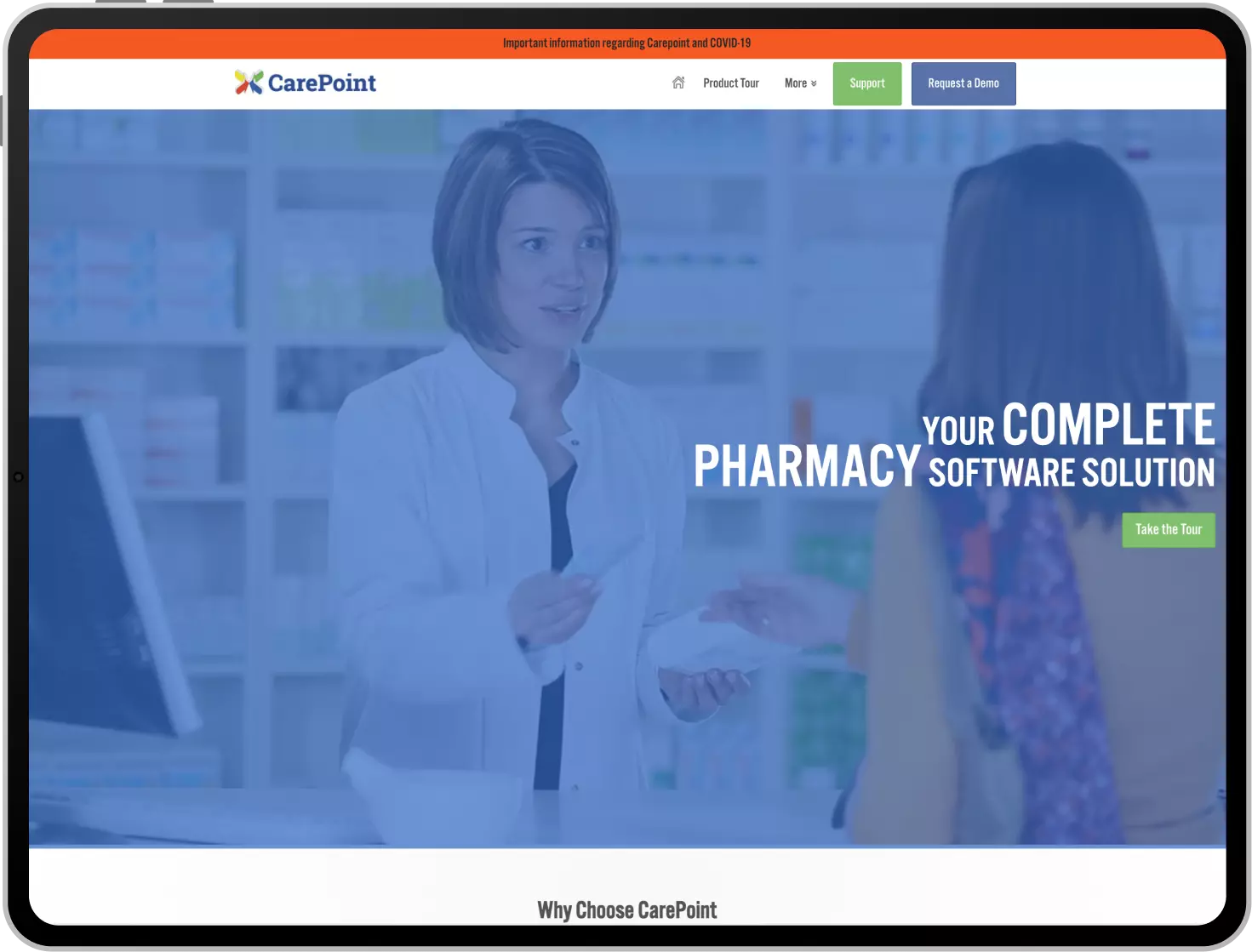
    Carepoint is a solution dedicated to the pharmacy industry with a variety of tools needed to manage any pharmacy.

    Explore →
    HEALTHCARE Droice Labs

    Droice Labs

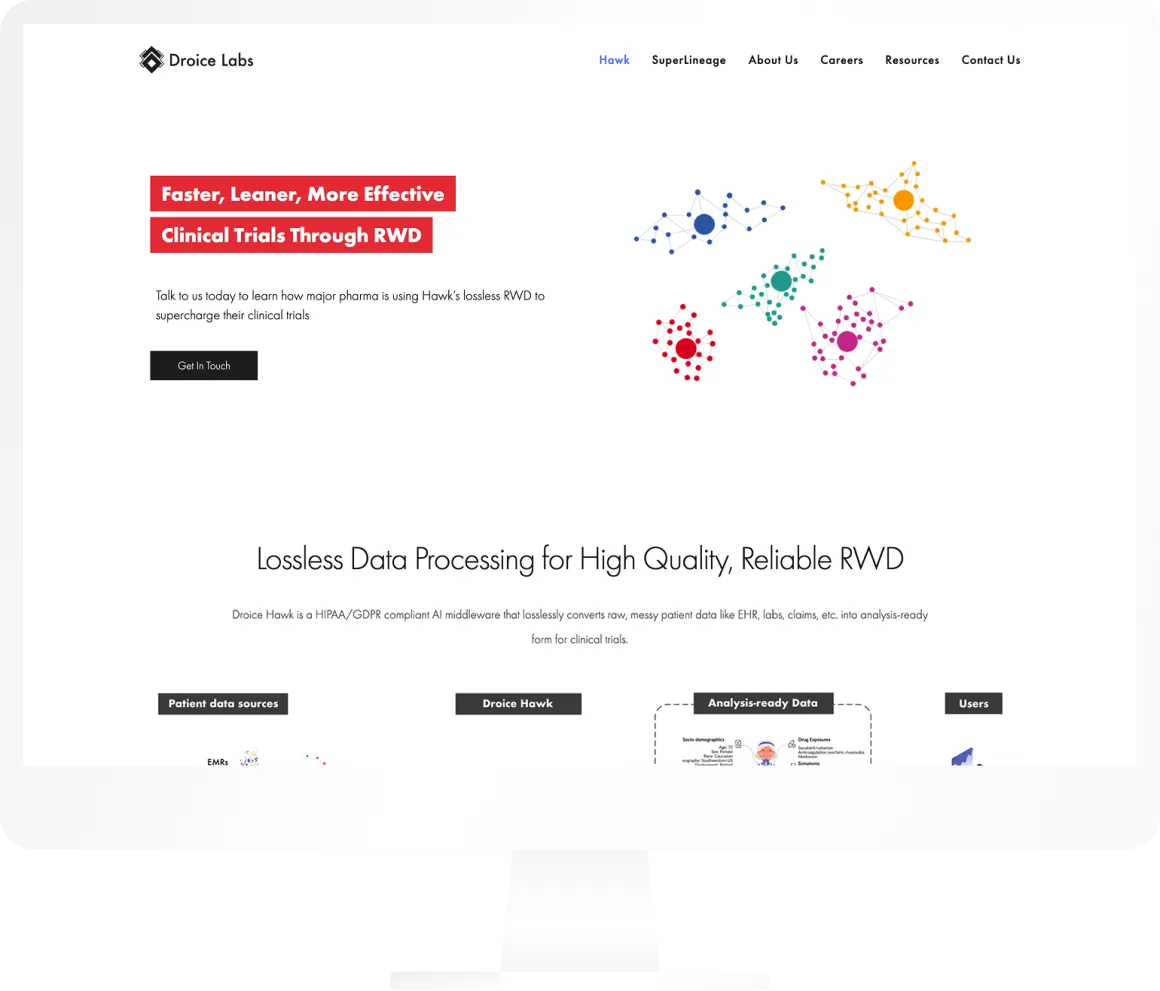
    Droice Labs is a middleware designed to transform messy, unstructured patient data into clean, analysis-ready formats for clinical trials.

    Explore →

    Recent Insights

    visit Our Blogs
    Healthcare Automation Market Shifts Every Healthcare Organization Should Know
    Healthcare Automation Market Shifts Every Healthcare Organization Should Know Custom Software Development

    Healthcare Automation Market Shifts Every Healthcare Organization Should Know

    The healthcare automation market is undergoing rapid transformation as providers seek efficiency, accuracy, and scalability in an increasingly complex healthcare landscape. It’s no longer just forms that are being digitized…

    Read Article →
    How AI and Automation Are Enhancing EHR Functionality?
    How AI and Automation Are Enhancing EHR Functionality? Custom Software Development

    How AI and Automation Are Enhancing EHR Functionality?

    In the past, Electronic Health Records (EHRs) served solely to keep databases of patients’ information. However, in this modern era of medicine, doing just that is not sufficient. What healthcare…

    Read Article →
    The Ultimate Guide to Healthcare IT Statistics
    The Ultimate Guide to Healthcare IT Statistics Artificial Intelligence

    The Ultimate Guide to Healthcare IT Statistics

    Introduction Healthcare is no longer exclusively about hospitals, doctors, and patients, it consists of the technology that links them. Healthcare IT such as electronic health records, telehealth, and AI-driven diagnostic…

    Read Article →

    FAQS on Automated Healthcare Solutions

    What is included in a healthcare automation solution?

    A healthcare automation solution typically includes workflow mapping, integration with your EHR or billing system through FHIR/HL7, automated rules for tasks like intake or claims, and audit logging for compliance review.

    How does healthcare automation integrate with existing EHR systems?

    Integration happens through FHIR APIs and HL7 messaging that read from and write to your EHR without replacing it. The automation layer sits alongside your existing systems and exchanges data on a schedule your team sets.

    What is the difference between RPA and agentic AI in healthcare automation?

    RPA follows fixed rules for repetitive, predictable tasks like data entry or eligibility checks. Agentic AI handles tasks involving judgment, such as triage prioritization or adaptive patient monitoring, where the path is not fixed in advance.

    How much does it cost to build healthcare automation solutions?

    Costs typically range from around $20,000 for a focused, single-workflow automation to over $150,000 for enterprise systems covering multiple departments with full EHR integration and compliance documentation.

    How long does a healthcare automation project take?

    A single-workflow automation can launch in 2 to 4 months. Multi-department projects with EHR integration and compliance testing usually take 5 to 8 months depending on scope.

    Do you work with existing clinical workflow automation software we already use?

    Yes. We assess your current tools first and build the automation layer to work alongside what is functioning well, replacing only the parts that are causing friction or breaking down.

    Can automation help with claims and billing specifically?

    Yes. We build automation for claim creation, payer rule validation, denial handling, and resubmission, which reduces manual rework in revenue cycle management automation for billing teams.

    What happens after the automation system goes live?

    We offer post-launch support through L1, L2, and L3 SLA options, and our money-back guarantee gives you confidence in the engagement from day one.

    Let's Map Your Automation Roadmap

    Share your current workflows and we will show you where custom automation fits, what it replaces, and what it costs.