Pharmacy operations span dispensing, inventory, claims, patient records, and regulatory requirements. As your pharmacy management software development company, we build custom systems that connect these workflows and support retail pharmacies, hospital pharmacies, long-term care facilities, and PBMs.
We build pharmacy management systems for independent retail pharmacies and multi-location chains. Centralized inventory, real-time price syncing, loyalty programs, and unified reporting across every store location.
Hospital & Health-System Pharmacies
Custom inpatient pharmacy software with closed-loop medication administration, IV compounding documentation, MAR integration, and seamless data exchange with hospital EHR systems using HL7 and FHIR.
Long-Term Care & Specialty Pharmacies
harmacy management software designed for LTC, infusion, and specialty workflows. Cycle-fill management, eMAR connectivity, controlled substance tracking, and care-facility billing built into the platform.
PBMs, Mail-Order & Online Pharmacies
Scalable pharmacy benefit management software and online pharmacy platforms with payer adjudication, mail-fulfillment routing, doorstep delivery integration, and patient-facing mobile apps.
Pharmacy Management Software Development Services We Cover
End-to-end pharmacy software development delivering custom healthcare software solutions across builds, modernization, and integration work. Every engagement is scoped around your pharmacy workflows, compliance footprint, and growth roadmap.
Custom Pharmacy Software Development
We design and develop custom pharmacy management software from scratch, tailored to retail, hospital, LTC, or specialty workflows, with scalable architecture, security-first engineering, and compliance built into every layer.
Pharmacy App Development
We build mobile pharmacy apps for patients and pharmacists, covering prescription refills, e-consults, refill reminders, and real-time order tracking with secure data handling and a frictionless user experience.
Pharmacy Inventory Management System
We engineer intelligent pharmacy inventory management software with real-time stock tracking, AI demand forecasting, expiry alerts, auto-reordering, and centralized control across multiple pharmacy locations and warehouses using AI in pharmacy management.
e-Prescribing Software (EPCS Ready)
We build secure, DEA EPCS-compliant e-prescribing solutions that connect to Surescripts and NCPDP SCRIPT networks, support controlled-substance prescribing, and reduce transcription errors with end-to-end audit trails.
Pharmacy Revenue Cycle Management
We develop pharmacy RCM software that automates insurance adjudication, claim submissions, denial management, and reimbursements, improving pharmacy billing and claims management while helping pharmacies reduce claim rejections and accelerate cash flow with cleaner financial records.
Pharmacy Automation & Robotics Integration
We integrate dispensing robots, automated counting systems, barcode scanners, and IoT sensors with your pharmacy management system to enable pharmacy workflow automation and free pharmacists for higher-value clinical work.
Pharmacy Benefit Management (PBM) Software
We build PBM platforms with formulary management, eligibility checks, prior authorization workflows, claims adjudication switches, rebate tracking, and pharmacy data analytics dashboards for plan sponsors and pharmacy networks.
System Integration Services
We integrate pharmacy software with EHR and EMR systems, POS terminals, insurance switches, telehealth platforms, and ERP via HL7, FHIR, NCPDP SCRIPT, REST APIs, and secure messaging protocols.
Map Your Pharmacy Software Roadmap in One Call
A 30-minute discovery call with our pharmacy software architects gives you a feature roadmap, integration plan, compliance checklist, and a ballpark cost - no obligation, no slide deck pitch.
Compliance Requirements for Pharmacy Management Software Development
Pharmacy software lives inside a tight regulatory perimeter shaped by strict pharmacy software compliance standards. We engineer compliance into the architecture itself, not bolted on at the end. Every solution we build for pharmacies is reviewed against the frameworks below. Our development practices are audited under ISO 27001 and SOC 2 Type II, and we follow PCI DSS handling rules for pharmacy POS and payment workflows.
HIPAA
We follow HIPAA Privacy and Security Rules across PHI handling, access controls, encryption-in-transit and at-rest, audit logging, and breach response readiness for every US-based pharmacy system we develop.
HL7 & FHIR
We engineer pharmacy systems to HL7 v2 and FHIR R4 interoperability standards for safe, standardized data exchange with EHRs, clinical platforms, payers, and connected healthcare systems across the patient care continuum.
NCPDP SCRIP
We build pharmacy software that speaks NCPDP SCRIPT for e-prescribing, NCPDP Telecom for claim adjudication, and SCRIPT 2017071 standards for controlled substance routing with audit-grade message traceability.
DEA EPCS
We develop e-prescribing modules that meet DEA Electronic Prescriptions for Controlled Substances requirements, including identity proofing, two-factor authentication, signed audit trails, and certified token-based credentialing for prescribers.
FDA DSCSA
We engineer pharmacy systems for Drug Supply Chain Security Act compliance with serialized product tracking, T3 (transaction history) data, lot-level traceability, and verification workflows aligned with FDA phased enforcement.
GDPR
For pharmacies operating in the EU and UK, we build software that meets GDPR requirements for lawful basis, data subject rights, retention policies, processor agreements, and cross-border data transfer controls.
Business Benefits of a Modern Pharmacy Management System
Fewer Dispensing Errors
Automated drug interaction checks, AI-assisted prescription validation, and barcode-driven verification catch issues before they reach the patient, reducing preventable errors and the liability exposure that comes with them.
Faster Insurance Reimbursements
Real-time eligibility verification, intelligent claim scrubbing, and automated prior authorization shorten days-in-AR, lift first-pass acceptance rates, and recover revenue that manual adjudication leaves uncollected on every prescription.
Lower Inventory Carrying Costs
Predictive demand forecasting, expiry tracking, and automated reordering keep capital out of slow-moving stock while preventing critical-medication stockouts that cost pharmacies prescriptions and patient trust at the counter.
Audit-Ready Compliance
Built-in HIPAA controls, NCPDP messaging logs, DEA EPCS audit trails, and DSCSA traceability make every transaction defensible, so board-of-pharmacy inspections and payer audits stop being fire drills.
Higher Patient Retention
Mobile refill apps, two-way messaging, MTM scheduling, and adherence reminders turn one-time prescriptions into recurring relationships, lifting prescription retention and the lifetime value of every patient on file.
Operational Scalability
Multi-location architecture, role-based access, centralized formulary, and unified reporting let pharmacy operators add stores, regions, or service lines without re-platforming or re-training every time growth happens.
AI Use Cases Across Pharmacy Operations
AI is more than a marketing layer in pharmacy management software. Used right, it changes unit economics. Here is where we apply it in production pharmacy systems we build.
Predictive Inventory & Demand Forecasting
Machine learning models trained on historical dispensing data, seasonality, and local prescribing patterns forecast demand for high-velocity SKUs. Pharmacies reduce stockouts on critical medications while cutting expired-inventory write-offs and freeing working capital.
AI-Assisted Prescription Validation
ML-driven drug interaction checks go beyond rule-based logic, flagging dosage anomalies, duplicate therapies, and contraindications in real time. This reduces preventable dispensing errors and gives pharmacists a second pair of eyes on every prescription.
Automated Insurance & Prior Authorization
Intelligent claim scrubbing identifies rejection-likely claims before submission, while NLP-driven prior authorization automation drafts payer-ready documentation. Pharmacies see fewer denials, shorter days-in-AR, and recovered revenue that manual workflows leave on the table.
Patient Adherence & Refill Intelligence
Predictive models identify patients at risk of non-adherence and trigger personalized refill reminders, MTM outreach, and counseling prompts. Pharmacists focus clinical time where it matters most, lifting therapy outcomes and prescription retention.
Pharmacy Management Software Integrations We Build
The right integrations can remove manual steps between prescribing, dispensing, claims, payments, and delivery. As a pharmacy management software development company, we connect these systems so pharmacy teams can work from consistent data across their daily operations.
EHR/EMR Integration (HL7/FHIR)
We connect pharmacy management systems with EHR systems and EMR platforms using HL7 v2, FHIR R4, and CCDA standards for real-time prescription sharing, allergy reconciliation, and clinical data exchange with providers.
We integrate with Surescripts, RxHub, and other e-prescribing networks using NCPDP SCRIPT messaging for inbound prescriptions, electronic refill requests, change requests, and controlled substance routing under DEA EPCS protocols.
PBM Adjudication & Insurance Claims
We connect pharmacy software to PBM switches such as Change Healthcare, RelayHealth, and Optum Rx for real-time eligibility checks, claim adjudication, and electronic prior authorization workflows that accelerate reimbursements and reduce denials.
POS & Payment Gateway Integration
We integrate pharmacy POS terminals and payment gateways including Stripe, Square, Adyen, and HSA/FSA processors for secure transactions, split tenders, contactless payments, and end-of-day reconciliation across multi-location pharmacy networks.
CRM & Patient Engagement Tools
We connect pharmacy systems to CRM platforms for refill reminders, MTM scheduling, two-way patient messaging, loyalty program management, and outreach campaigns that boost retention and adherence.
Delivery, Shipping & Last-Mile Logistics
We integrate pharmacy software with carriers and last-mile delivery platforms for doorstep medicine delivery, real-time order tracking, cold-chain compliance for temperature-sensitive drugs, and signature capture on controlled substances.
Telehealth & Virtual Care Platforms
We integrate pharmacy management systems with telehealth platforms for synchronous and asynchronous consults, prescription-to-pharmacy routing, and continuity-of-care documentation that keeps pharmacists in the patient communication loop.
ERP, Accounting & Wholesaler Systems
We integrate pharmacy software with ERP, accounting tools like QuickBooks and NetSuite, and wholesaler ordering systems such as McKesson, Cardinal Health, and AmerisourceBergen for unified procurement, financial reporting, and inventory visibility.
Custom Pharmacy Software vs Off-the-Shelf PMS: How to Decide
Most pharmacy operators evaluate this trade-off at some point. The right answer is the one that matches your scale, integration needs, and growth horizon. Here is the honest comparison.
Factor
Custom Pharmacy Software
Off-the-Shelf PMS
Upfront cost
Higher
Lower
Monthly cost over 5 years
Lower (one-time + maintenance)
Higher (recurring license)
Workflow fit
Built to your workflow
You adapt to vendor’s workflow
Integration flexibility
Any system, any API
Limited to vendor’s adapters
Differentiation
Owned IP, market-differentiating
Same software as competitors
Best fit
Chains, hospitals, PBMs, scale-out plans
Single-location indie pharmacies with standard workflows
If you serve more than three locations, manage non-standard payer relationships, or plan to differentiate on patient experience or automation, custom pharmacy software almost always wins on five-year total cost of ownership and strategic optionality.
How Much Does it Cost to Develop Pharmacy Management Software?
The cost to develop pharmacy management software typically ranges from $30,000 to $250,000. Features, EHR/EMR and inventory integrations, compliance requirements, and workflow complexity all affect the final development cost. As a pharmacy management software development company, we assess these factors during discovery to build a realistic project estimate.
Every project is unique, so share your requirements to get a customized estimate tailored to your pharmacy software needs.
Flexible Engagement Models for Pharmacy Software Development Projects
Dedicated Pharmacy Software Team
You get a hand-picked team of pharmacy domain engineers, FHIR specialists, QA leads, and a project manager working as an extension of your in-house team. Best for ground-up pharmacy management system builds and long roadmaps with evolving scope.
Fixed-Scope Engagement
For pharmacy software projects with locked requirements, we deliver against a defined scope, timeline, and fixed price. Best for MVP builds, single-module additions like e-prescribing or RCM, and one-off integration work with predictable boundaries.
Staff Augmentation
We embed senior pharmacy software engineers, FHIR developers, and security architects into your existing team. Best for in-flight projects that need specialized healthcare interoperability skills without the overhead of hiring full-time.
BUILDING NEXT-GEN SOLUTIONS
Technologies and Platforms We Use
LangChain
Haystack
OpenAI GPT-4
Anthropic Claude
OpenAI GPT-4
Google Dialogflow
Rasa
Vapi.ai
Azure Prompt flow
DALL-E
Stable Diffusion
TensorFlow
Hugging Face Transformers
Amazon Glu
Pandas
Numpy
Redshift
OpenCV
Tesseract OCR
Our Pharmacy Management Software Development Process
1
Discovery & Compliance Audit
We map your pharmacy workflows, payer mix, integration footprint, and regulatory requirements. Deliverable: scope document, compliance matrix, and an initial architecture sketch reviewed with your stakeholders.
2
Architecture & Roadmap
Our solution architects design the system, integration topology, data flows, and security model. Deliverable: technical architecture, sprint roadmap, and a milestone-based engagement plan.
3
UX/UI Design for Pharmacists & Patients
We design pharmacy-staff workflows and patient-facing screens with usability testing on real pharmacy environments. Deliverable: clickable prototypes, design system, and accessibility-audited UI components.
4
Agile Pharmacy Software Development
Pharmacy management software development company follows cross-functional sprints, with working software delivered every two weeks alongside continuous code review, FHIR integration, and security scans. Deliverable: shippable increments with full source code access and CI/CD pipelines.
5
Validation, Security & QA
Functional testing, integration testing, HIPAA-aligned penetration testing, and compliance validation against NCPDP and DEA EPCS requirements. Deliverable: QA reports, security audit, and a go-live readiness checklist.
6
Deployment & Continuous Support
Production deployment, staff training, post-launch monitoring, and ongoing regulatory updates such as DSCSA enforcement changes. Deliverable: SLA-backed support, quarterly health reviews, and feature roadmap continuity.
Why Choose Citrusbug as Your Pharmacy Management Software Development Company
Rated 4.7/5 on Clutch and backed by 13+ years of software development expertise, Citrusbug provides pharmacy management software development service for retail pharmacies, hospital pharmacies, long-term care facilities, and PBMs. Our approach covers workflow discovery, secure architecture, system integrations, development, testing, and deployment.
Pharmacy & Healthcare Domain Depth
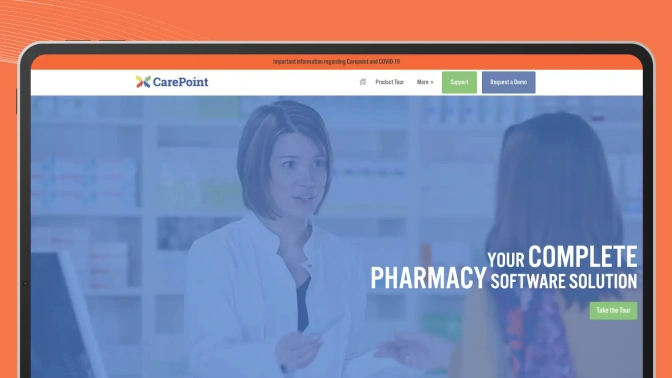
Our engineering bench has shipped production systems for retail pharmacies, hospital pharmacy modules, and pharmacy management platforms like CarePoint. We do not learn pharmacy workflows on your project. We bring them to it.
Healthcare Interoperability Engineering
HL7 v2, FHIR R4, NCPDP SCRIPT, NCPDP Telecom, and DEA EPCS protocols are first-class skills on our team. Your pharmacy software talks to the rest of the healthcare stack from day one, not after rework.
IP Protection & Source-Code Transparency
ou own 100% of source code, IP, and infrastructure access from day one. Strict NDAs, role-based dev environments, source-code escrow on request, and a clean ownership transfer at every milestone.
Flexible, Transparent Engagement
Choose dedicated team, fixed-scope, or staff augmentation. Weekly demos, open Jira boards, and direct Slack access to your engineers and architects. No black-box delivery and no surprise change-order invoices.
Post-Launch SLAs That Hold
Production support backed by tiered SLAs covering uptime, security patching, and regulatory update windows. When DSCSA, DEA, or HIPAA rules shift, your pharmacy software changes with them, on a schedule that holds.
Senior-Heavy Project Teams
Every pharmacy engagement is led by a senior architect, a healthcare-domain engineering lead, and a dedicated PM. No bait-and-switch. The team that scopes your project is the team that ships it.
Client Testimonials (We're Rated 4.7 on Clutch)
THE PROJECT
Web & AI Development for Education Company
AI Development, Custom Software Development
Nov. 2024 - Ongoing
THE REVIEW
Their agile way of working, competence, and friendliness are impressive.
December 7, 2024
5
★★★★★
Quality5.0
Schedule5.0
Cost5.0
Willing to refer5.0
PROJECT SUMMARY:
Citrusbug Technolabs handles a data extraction project for an education company. They're also responsible for managing an AI generation project for the client.
FEEDBACK SUMMARY:
Citrusbug Technolabs has laid out and followed a clear project outline and consistently met deadlines. The team communicates well and demonstrates a strong understanding of the client's vision and goals. Their agile approach, high level of competence, and personable approach stand out.
Custom Automated System Dev for Veteran Medical Co
Generative AI, Application Testing, Custom Software Development
Aug. - Oct. 2024
THE REVIEW
Their communication and ability to capture exactly what I was asking for were impressive.
November 14, 2024
5
★★★★★
Quality5.0
Schedule5.0
Cost5.0
Willing to refer5.0
PROJECT SUMMARY:
Citrusbug Technolabs built an automated system for a veteran medical company. The system needed to collect and store user data, generate customized letters based on surveys, and use AI to summarize reviews.
FEEDBACK SUMMARY:
Citrusbug Technolabs delivered a functional automated system that successfully organized the client's records and auto-generated statements. The team was quick to respond, addressed all roadblocks, and communicated effectively. Overall, their ability to understand the client's needs stood out.
MVP Development for Freight & Capacity Marketplace
Custom Software Development
$10,000 to $49,999
Jan. 2024 - Feb. 2025
THE REVIEW
They were very calm and talented, and they did bring some of their own ideas.
January 28, 2025
5
★★★★★
Quality5.0
Schedule5.0
Cost5.0
Willing to refer5.0
PROJECT SUMMARY:
Citrusbug Technolabs has developed an MVP for a freight and capacity marketplace. The team has created three different interfaces for three market segments.
FEEDBACK SUMMARY:
Citrusbug Technolabs has successfully developed an effective MVP. The team has delivered the project on time and almost within budget. Moreover, their responses have been timely. Overall, the team has been calm, talented, and innovative. This has led to the client's satisfaction.
What stood out most about them was their personalized approach and sense of ownership in every aspect of the project."
February 27, 2024
5
★★★★★
Quality5.0
Schedule5.0
Cost5.0
Willing to refer5.0
PROJECT SUMMARY:
Citrusbug Technolabs built a Flutter cross-platform mobile app for an education company. They also developed two web apps and an admin panel and provided DevOps support for the client's infrastructure.
FEEDBACK SUMMARY:
Citrusbug Technolabs' support successfully boosted the client's user engagement by 8x, resulting in an 85% retention rate. The reliable team demonstrated a dedication to delivering on time and promptly responding to concerns and adjustments. Their personalized, client-centric approach stood out.
Custom Software Development Mobile App Development UX/UI Design
$10,000 to $49,999
June 2023 - Jan. 2024
THE REVIEW
They didn't like the phrase "impossible to do", which made them very solution-oriented.
February 19, 2024
4.75
★★★★★
Quality4.5
Schedule4.5
Cost5.0
Willing to refer5.0
PROJECT SUMMARY:
A healthcare company hired Citrusbug Technolabs to design and develop a user-friendly application. The team provided tailored assistance to meet the client's requirements.
FEEDBACK SUMMARY:
Citrusbug Technolabs successfully delivered an application that was ready for market. The team was highly professional and well-organized; they stayed focused throughout the engagement and were receptive to changes. Overall, they stood out for their trustworthiness and commitment to excellence.
Custom Web App Dev & Design for Financial Technology Firm
Mobile App Development UX/UI Design Web Design
Sep. 2023 - Ongoing
THE REVIEW
They're 100% on time and transparent throughout each stage of the project.
February 24, 2024
5
★★★★★
Quality5.0
Schedule5.0
Cost5.0
Willing to refer5.0
PROJECT SUMMARY:
A financial technology company has hired Citrusbug Technolabs to build a custom web application. The team handles the development and design of the app.
FEEDBACK SUMMARY:
The project is ongoing, but the client has been satisfied with Citrusbug Technolabs' services. The team is very professional — they always respect timelines and provide regular updates to ensure everyone's on the same page. Also, their transparent approach makes them a trustworthy partner.
Staff Augmentation for Singaporean Development Company
Mobile App Development
$10,000 to $49,999
THE REVIEW
"I do believe they are exceptional at where they stand."
5
★★★★★
Quality5.0
Schedule5.0
Cost5.0
Willing to refer5.0
PROJECT SUMMARY:
Citrusbug Technolabs took on a mobile app development project for a Singapore-based development house. They were provided with UX designs to execute. Currently, they're finalizing and fine-tuning the product.
FEEDBACK SUMMARY:
Citrusbug Technolabs contributed to the successful launch of the product, which has garnered over 10,000 users in just three months. The product has also received support from investors. They consistently followed-up with their progress and delivered at a speedy rate. The team is truly stellar.
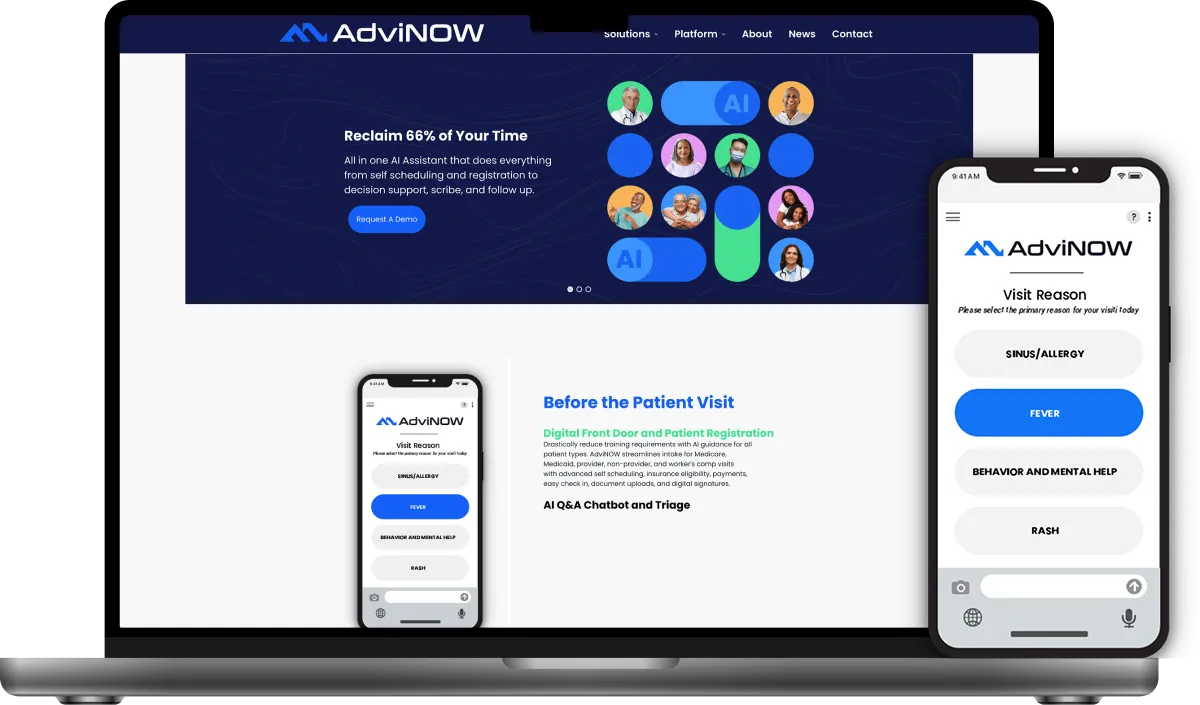
It’s an AI-driven healthcare platform that automates patient engagement and consultation processes, helping healthcare providers deliver efficient, on-demand services while improving operations for urgent care.
Pharmacy Management System Market: Size, Growth, and Key Statistics
The way pharmacies operate has changed dramatically over the past few years. From manual record-keeping and paper prescriptions to fully digital workflows, the shift toward technology-driven pharmacy operations is accelerating…
Pharmacy Software Development: Solving Key Challenges with Custom AI Solutions
Pharmacy software development is transforming the way pharmacies work in this increasingly complex healthcare environment with advanced pharmacy automation software. There are multiple factors, such as inventory management, expired medications…
Cost to Develop RPM Software: A Complete Pricing Guide for Healthcare Providers
Healthcare providers are expanding remote care programs to monitor patients outside hospitals and clinics. Remote patient monitoring platforms collect health data from connected devices such as blood pressure monitors, glucose…
FAQs on Custom Pharmacy Management Software Development Services
What is pharmacy management software?
Pharmacy management software is a healthcare platform that manages prescription processing, inventory, insurance claims, billing, patient records, and regulatory compliance. Modern systems also include e-prescribing, drug interaction checks, automation, and patient engagement tools.
How much does it cost to develop pharmacy management software?
Pharmacy management software costs typically range from $30,000 for an MVP to $350,000+ for an enterprise PBM-grade platform. Cost is driven by feature scope, number of integrations, compliance footprint, and rollout complexity.
How long does it take to build custom pharmacy software?
An MVP takes 3-4 months. A mid-scale pharmacy management system takes 5-7 months. Enterprise platforms with PBM, multi-tenant architecture, and full interoperability typically take 8-12 months.
Can pharmacy software integrate with EHR or EMR systems?
Yes. We build pharmacy management software that is HL7 v2 and FHIR R4 compliant for safe, standardized integration with EHR/EMR systems, clinical platforms, and provider networks.
Is the pharmacy software you build NCPDP and DEA EPCS compliant?
Yes. We engineer pharmacy software to NCPDP SCRIPT for e-prescribing, NCPDP Telecom for claim adjudication, and DEA Electronic Prescriptions for Controlled Substances requirements with identity proofing and signed audit trails.
How do you handle DSCSA serialization requirements?
We build serialized product tracking, T3 transaction data flows, lot-level traceability, and verification workflows into the pharmacy management system so you stay aligned with FDA Drug Supply Chain Security Act phased enforcement.
Can you migrate data from a legacy pharmacy system?
Yes. We perform data migration from legacy PMS platforms with field-by-field mapping, validation, dual-run periods, and reconciliation reports so prescription history, inventory state, and patient records transfer cleanly.
Cloud-hosted or on-premise pharmacy software, which do you build?
Both. Cloud-hosted (AWS, Azure, GCP) is the default for scalability and faster updates. On-premise or hybrid models are available for pharmacies with strict data residency or air-gapped network requirements.
. Do I own the source code and IP?
Yes. You own 100% of source code, IP, and infrastructure access from day one of the engagement. Strict NDAs and a clean ownership transfer are signed before any work begins.
Do you provide ongoing support and maintenance?
Yes. We offer SLA-backed post-launch support covering security patching, regulatory updates (DSCSA, DEA, HIPAA), performance optimization, and incremental feature work under a transparent monthly retainer.
Ready to Build Your Pharmacy Management Software?
Whether you are modernizing a legacy pharmacy system, building a new patient-facing platform, or scaling into a multi-location chain, we will help you scope, architect, and ship pharmacy software that holds up to clinical, financial, and regulatory pressure.