AI Health and Wellness Companion
Bevel is a health intelligence platform that unifies wearable and lifestyle data to generate personalized metabolic and wellness insights.
Citrusbug delivers patient portal software development for healthcare CTOs, digital health leaders, and hospital technology teams seeking secure, HIPAA-compliant patient engagement platforms that improve care access, reduce administrative burden, and modernize the patient experience across every touchpoint.
Trusted by industry leaders
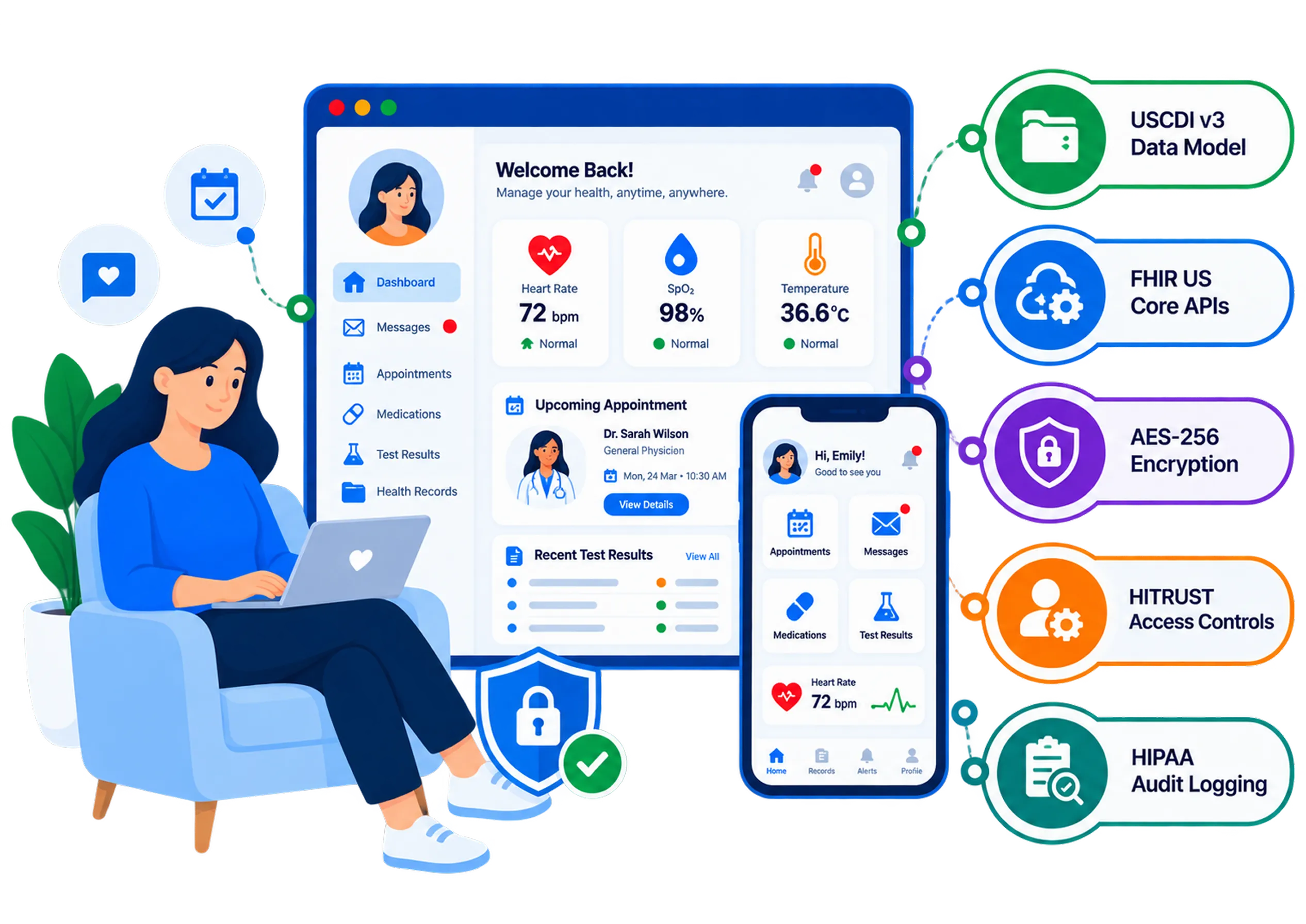
We deliver comprehensive patient portal software development that covers the full spectrum of patient engagement from appointment scheduling and health record access to secure messaging, billing, and telehealth integration — built on HIPAA-compliant, interoperable architecture.
Design and build tailored patient portals that reflect your clinical workflows, brand identity, and patient population needs — not generic off-the-shelf templates.
Connect patient portals seamlessly with existing EHR platforms, laboratory systems, pharmacy networks, and clinical data sources through HL7 FHIR and API-first architecture.
Embed secure video consultations, asynchronous messaging, and remote monitoring capabilities directly within the patient portal experience.
Architect every layer of the patient portal with HIPAA-compliant data handling, role-based access controls, audit logging, and end-to-end encryption from day one.
Fragmented health records, manual appointment processes, and limited digital access frustrate patients, increase no-show rates, and place unnecessary administrative load on clinical staff.
Build Your Patient PortalThe cost of patient portal software development can start from $30,000 for foundational portals covering appointment scheduling, secure messaging, and health record access, and go beyond $400,000 for fully integrated, enterprise-grade patient engagement platforms spanning EHR connectivity, telehealth, remote monitoring, billing management, and multi-facility deployments. Connect with us and share your project requirements to get a personalized quote.
Assess existing patient engagement tools, EHR landscape, clinical workflows, compliance obligations, and digital experience gaps to establish a clear development baseline.
Design portal architecture, integration strategy, data models, and HIPAA compliance framework aligned with clinical operations and patient experience objectives.
Build portal modules, connect EHR and clinical systems, integrate telehealth capabilities, and validate compliance controls through structured agile delivery with clinical stakeholder reviews.
Deploy with full security monitoring, uptime observability, patient feedback loops, and iterative feature development aligned with evolving care delivery needs.
We understand the regulatory complexity, clinical workflow nuances, and patient experience standards unique to healthcare, and engineer software that reflects that depth at every layer.
Privacy and security are not compliance checkboxes; they are foundational architecture decisions. Every component we build is designed to protect patient data and meet HIPAA obligations without compromising usability.
We build patient portals on HL7 FHIR-compliant, API-first architecture that integrates cleanly with existing EHR platforms, clinical systems, and third-party health services without creating new data silos.
We design portal experiences that serve both patients navigating their health and clinical teams managing high volumes, balancing consumer-grade usability with the operational demands of enterprise healthcare.
Bevel is a health intelligence platform that unifies wearable and lifestyle data to generate personalized metabolic and wellness insights.
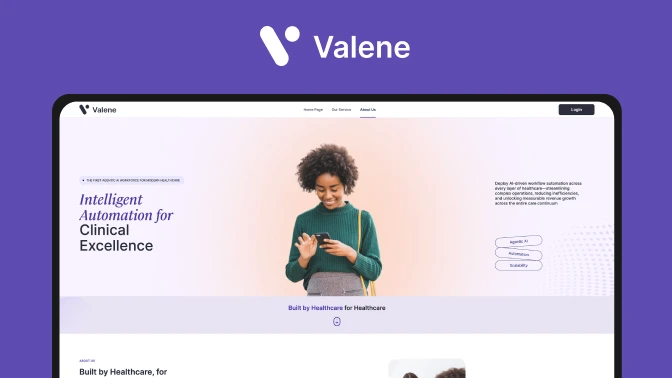
Valene Health is a pioneering telepsychiatry platform that leverages AI to enhance mental healthcare delivery.
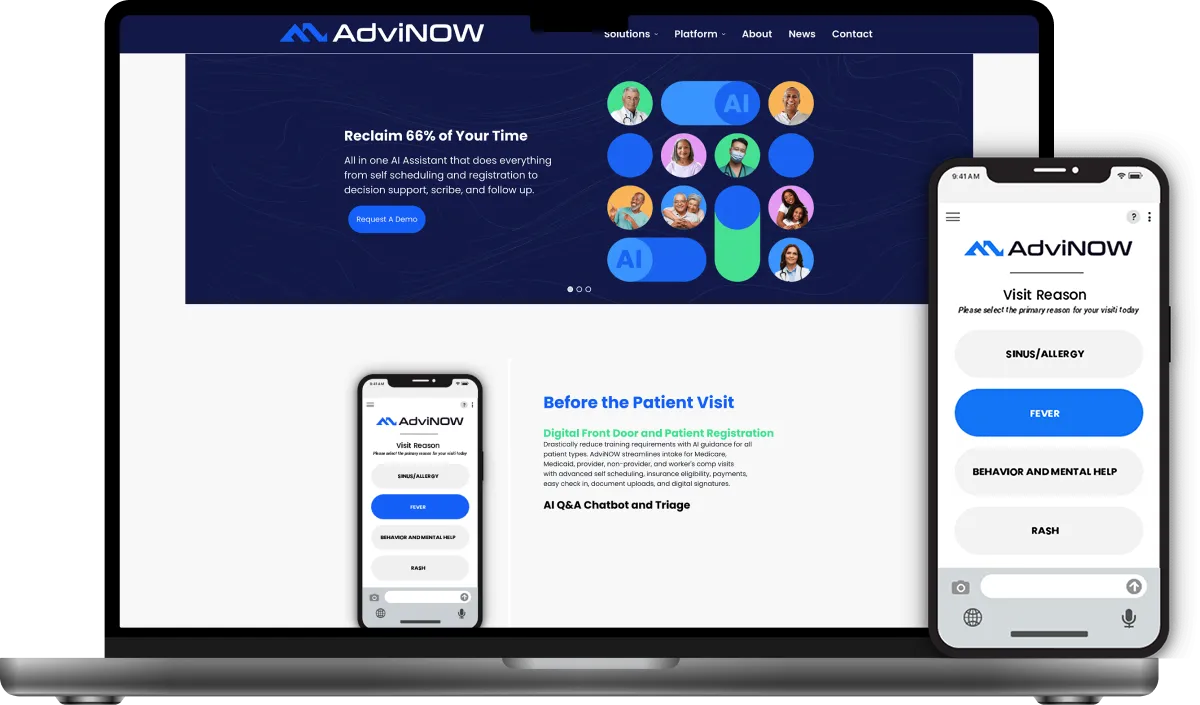
Advinow is an AI-driven healthcare platform that automates patient engagement and consultation processes, helping healthcare providers deliver efficient, on-demand services while improving operations for urgent care.
A complete guide to edge computing in healthcare, covering use cases, benefits, challenges, and future trends powering real-time, secure care systems.
Read MoreDiscover how a remote IoT monitoring solution transforms healthcare with real-time insights, reduced costs, and improved patient outcomes through secure, connected systems.
Read MoreRead the HIPAA compliance checklist to help healthcare organizations protect patient data, reduce risk, meet regulations, and stay audit-ready with confidence.
Read MoreA foundational patient portal covering scheduling, secure messaging, and record access can be delivered in 10–14 weeks. Fully integrated enterprise platforms with EHR connectivity, telehealth, and billing systems typically span 4 to 12 months depending on integration complexity and the number of clinical systems involved.
HIPAA compliance is embedded from the architecture design stage. This includes implementing administrative, physical, and technical safeguards — end-to-end encryption, role-based access controls, audit logging, session management, and Business Associate Agreement alignment — validated at every delivery milestone rather than audited retrospectively.
Yes. We design all patient portals with HL7 FHIR-compliant integration architecture, enabling clean, bidirectional data exchange with major EHR platforms including Epic, Cerner, Allscripts, athenahealth, and others — without disrupting existing clinical workflows or requiring EHR replacement.
Absolutely. We develop native telehealth features including secure video consultations, asynchronous clinical messaging, and remote patient monitoring integrations within the portal environment — giving patients a single destination for all their care interactions rather than redirecting them to separate platforms.
We build patient portals to WCAG 2.1 AA accessibility standards, ensuring the platform is usable by patients across age groups, devices, and ability levels. Usability is validated through clinical stakeholder reviews and patient experience testing throughout the development process.
We architect patient portals with multi-tenancy and role-based configuration capabilities, allowing health systems with multiple facilities, departments, or care settings to deploy a unified patient experience while maintaining facility-level customization, data segregation, and administrative control.