Explore our Healthcare Technology Offerings Citrusbug Healthcare → Citrusbug Healthcare →
Let’s Talk

Banking CRM Software Development Built Around Your Core Systems

Most banking CRM projects start with a feature list and end up fighting the core system. We start with your integration map, then build a CRM your onboarding, lending, and compliance teams can actually run on, without the per-seat licensing costs that scale against you as your bank grows.

Banking CRM Software Development
500+
Projects Delivered
98%
Client Retention

Certified Banking CRM Software Developers By

PCI DSS PCI DSS
SOC 2 SOC 2
ISO 27001 ISO 27001
GDPR GDPR

Trusted Software Development Company By

Bosch
Deloitte
eClinicalWorks
Epic Systems
Flipkart
McKinsey
HSBC
Softbank
Allianz
Airbnb
United Health
Phelic
Sun Pharma
Target
US Foods
Advinow

Certifications and Accreditations

Custom Banking CRM Software Development Services

A banking CRM is only as useful as the systems it talks to. These are the four areas where most of that integration work, and most of the risk, actually lives.

360° Customer Intelligence Across Every Branch

Every deposit, loan, card, and service ticket rolls up into one customer profile, whether the interaction happened at a branch, a call center, or your mobile app. Role-based access keeps front-line staff and compliance officers looking at exactly what their job requires, nothing more.

KYC and Onboarding Without the Manual Backlog

Document capture, identity verification, and risk scoring run inline during onboarding instead of as a separate queue days later. Case officers see flagged applications the moment risk rules trigger, not after a batch review.

Loan and Credit Servicing in One Pipeline

Origination, underwriting, document collection, and approval status live in a single view instead of spreadsheets and email threads. Scoring model outputs feed directly into the pipeline so relationship managers see real-time risk alongside customer history.

Core Banking, Card Processing, and Payment Rail Integration

The CRM reads and writes against your core banking system, card processing platform, and payment rails using the same ISO 20022 structured data your operations team already depends on for reconciliation. No side database that drifts out of sync with the system of record. 

Ready to See What This Would Actually Cost You?

Share your current core banking setup and we will scope a build that fits it, not the other way around.

Book a CRM Audit

Why Off-the-Shelf Banking CRMs Start Costing More Than They Save

A platform CRM works fine at ten users. Then your bank opens a branch, your NBFC hires another dozen loan officers, and the renewal invoice jumps in a way nobody budgeted for. Salesforce, Dynamics, and Creatio all price by seat, and every page selling you one of those platforms leaves out the part where that pricing model starts working against you instead of for you.

That’s not a CRM gap. It’s a vendor charging you for growth you already paid to create. And underneath it, the harder problem never actually gets solved: keeping customer records consistent across your core banking system, card processor, and compliance tools, regardless of which CRM sits on top.

A custom build fixes that consistency problem once, in the integration layer, and stays fixed no matter how many people log in next year.


How We Approach Banking CRM System Development


Most vendors start with CRM features and bolt on integrations later. We start with your core banking system's API surface, your card processor, and your payment rail connections, then design the CRM data model to match what those systems can actually expose. That sequencing is why the integration doesn't break the first time your core vendor pushes an update.

It also changes the ownership math. A platform-based CRM keeps charging per user for as long as your bank exists. A custom build is licensed to you once, with full source code ownership at delivery, so your cost curve flattens as you scale instead of climbing with it.
Core Banking System Sync

Real-time or scheduled sync with your core banking platform using ISO 20022 structured messaging, so account, deposit, and loan data stay current in the CRM without manual reconciliation.

Card Processing and Payment Rails

Direct integration with card processing systems and payment rails, including FedNow and instant-payment schemes, so transaction status shows up in the CRM the moment it clears, not after a batch job.

Document Management and E-Signature

Document generation, storage, and e-signature workflows tied to the customer record, so a loan proposal or account agreement pulls the right data automatically instead of a rep copying it by hand.

AI Agent Connectivity Through MCP

Where it fits, we connect AI agents to core banking functions through Model Context Protocol, a standardized interface that avoids writing custom integration code for every new agentic workflow you add later. 

Compliance Built Into the CRM

Banking CRM data sits inside PCI DSS, GLBA, and SOC 2 scope the moment it touches account or card data, and Executive Order 14181’s push toward faster fintech-bank API partnerships in 2026 makes audit-ready connectivity a requirement, not a nice-to-have.

  • Check Icon

    Role-based access control and full user activity logs on every record

  • Check Icon

    KYC and AML workflow alignment with your existing compliance rules

  • Check Icon

    Immutable audit trail for every AI-assisted action, not just human ones

  • Check Icon

    Data handling designed around PCI DSS, GLBA, and SOC 2 Type II expectations

Who We Build Custom Banking CRM Systems For

Community and Regional Banks

Community and Regional Banks

Multi-branch operations that need one customer view across locations without paying per-branch licensing fees that scale against them.

Credit Unions

Credit Unions

Member-owned institutions that need CRM workflows built around member service standards, not generic retail sales targets.

NBFCs and Digital Lenders

NBFCs and Digital Lenders

Non-bank lenders running co-lending and partnership models that need CRM visibility across multiple funding partners in one pipeline, not siloed by lender.

Neobanks and Digital-First Banks

Neobanks and Digital-First Banks

API-native institutions that need the CRM to keep pace with a mobile-first product roadmap and frequent core banking releases.

What a Real Lending Workflow Build Looks Like

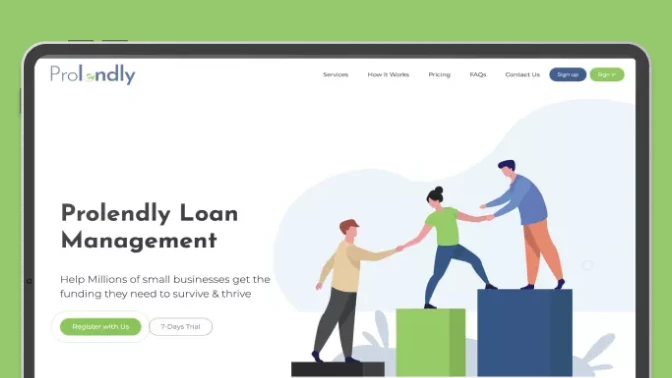
We built Prolendly, a fintech SaaS platform connecting startups and small businesses with funding opportunities, lenders, and capital consulting resources. The build centered on the same problem banking CRM buyers face: keeping a customer's funding journey visible across multiple parties without losing data along the way.

Lender and funding-source matching pipeline Centralized applicant and business profiles Workflow visibility across every stage of the funding process
Read Full Case Study

What Banking CRM Software Development Costs, By Complexity

Custom banking CRM cost depends mainly on how many systems it has to talk to and how much of the workflow needs automating. Here's how that typically breaks down.

Build Type Complexity Estimated Cost Timeline

Core CRM for a single branch or NBFC

Medium

$20,000 – $45,000

6-10 weeks

Multi-branch CRM with core banking integration

High

$45,000 – $110,000

3-5 months

Enterprise CRM with AI agents and multi-rail integration

Very High

$110,000 – $200,000+

5-8 months

Our Banking CRM Software Development Company Process

1

Discovery and Integration Audit

We map your core banking system's API surface, your card processor, and every third-party tool the CRM needs to talk to before any design work starts. This is where we catch data model mismatches that would otherwise surface mid-build and cost weeks to fix.

2

Compliance and Architecture Design

We design the CRM's data model and access controls around your specific compliance scope, whether that's PCI DSS, GLBA, or credit union member-data rules, and produce an architecture document your compliance team can actually review before we write code.

3

Build and Core Banking Integration

Development happens in parallel with integration work rather than after it, so the CRM is tested against real banking responses from early sprints instead of mocked data that hides problems until launch.

4

Security and QA Testing

Every integration point gets tested for both function and failure mode. What happens when the core system times out mid-transaction matters as much as what happens when it responds correctly, and we test both.

5

Phased Deployment and Branch Rollout

We roll out branch by branch or business line by business line rather than all at once, so your team can flag workflow issues on a small user base before the CRM reaches everyone.

6

Post-Launch Optimization

Once live, we tune workflows based on real usage patterns, adjust automation rules that turn out to be too aggressive or too cautious, and keep the integration layer current as your core banking vendor ships updates.

Client Testimonials (We're Rated 4.7 on Clutch)

How Much Does It Cost to Develop Banking CRM Software?

Custom banking CRM software typically runs $20,000 to $200,000+ depending on integration complexity. Share your requirements for an accurate estimate.


    Your data and info stays secure. Read our Privacy Policy.


    Why Teams Choose Citrusbug for Banking Software Development

    No Per-Seat Licensing Costs
    Senior Engineers on Your Build
    NDA-Protected From Day One
    Full Source Code Ownership at Delivery
    Discovery Before a Line of Code

    Case Studies

    View All Case Studies →
    Fintech Prolendly

    Prolendly

    Prolendly is a FinTech SaaS platform that connects startups and small businesses with funding opportunities, lenders, and capital consulting resources.

    Read Case Study
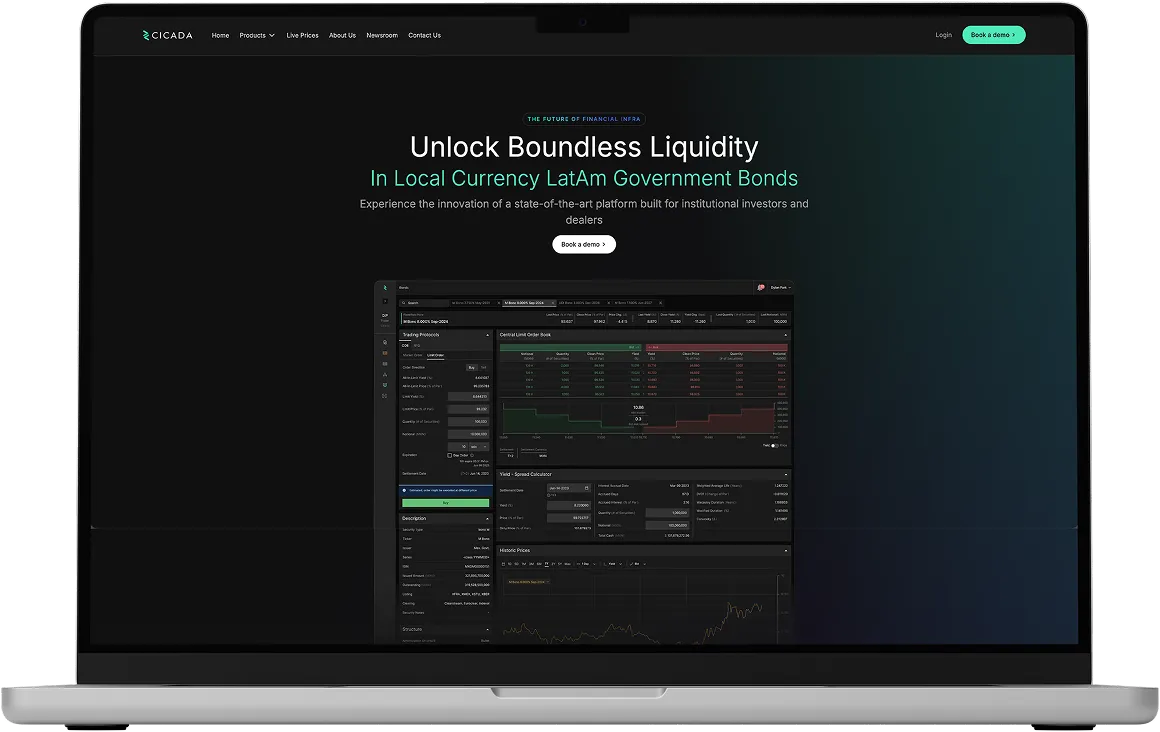
    Fintech Cicada

    Cicada

    Cicada is a comprehensive trading platform designed for accessible and powerful financial market interaction.

    Read Case Study
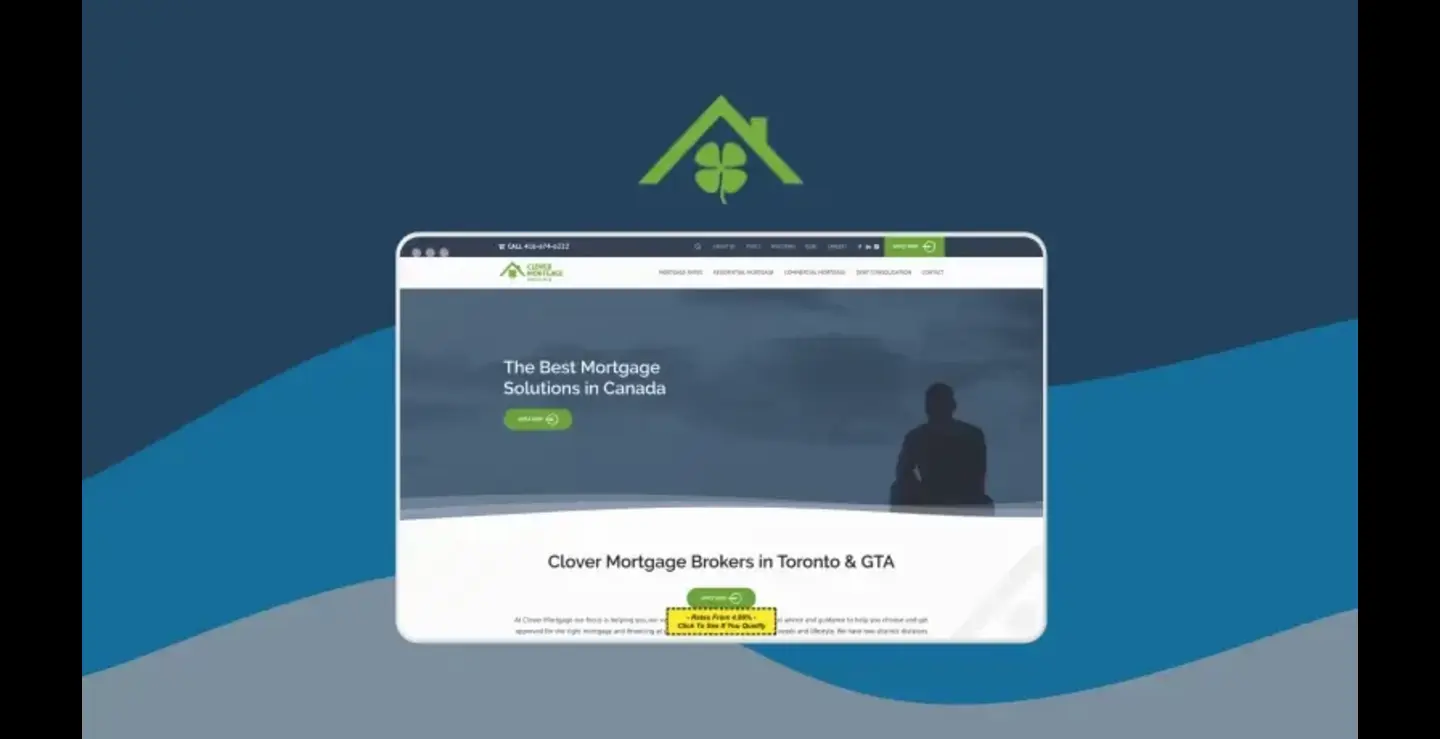
    Fintech Clover Mortgage

    Clover Mortgage

    Clover Mortgage Brokers provides tailored mortgage solutions for home buyers across Toronto

    Read Case Study

    Banking Technology Perspectives Worth Your Time

    VIEW ALL
    AI in Banking Statistics: Trends, Market Growth, and Future Predictions
    AI in Banking Statistics: Trends, Market Growth, and Future Predictions Artificial Intelligence

    AI in Banking Statistics: Trends, Market Growth, and Future Predictions

    Introduction In an era where digital transformation is rewriting the way traditional services operate, AI banking app development has emerged as a key driver of change in the banking sector.…

    Read Article →
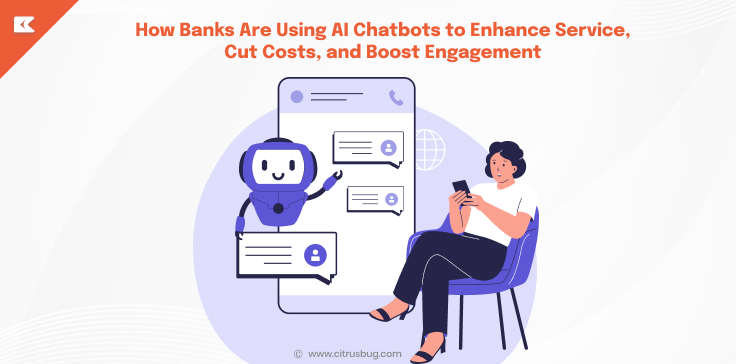
    How Banks Are Using AI Chatbots to Enhance Service, Cut Costs, and Boost Engagement
    How Banks Are Using AI Chatbots to Enhance Service, Cut Costs, and Boost Engagement Artificial Intelligence

    How Banks Are Using AI Chatbots to Enhance Service, Cut Costs, and Boost Engagement

    Banks are rapidly adopting advanced technologies to improve customer experience and streamline operations. One of the most influential innovations is the AI chatbot for banks, which provides immediate assistance, decreases…

    Read Article →
    Top Banking App Development ​Companies in 2026
    Top Banking App Development ​Companies in 2026 Application Development

    Top Banking App Development ​Companies in 2026

    Introduction The need for secure, quick, and convenient digital banking solutions has surged. As a result, businesses have been challenged to find partners that can create applications to meet their…

    Read Article →

    FAQs on Banking CRM Software Development

    How long does banking CRM development take?

    6 weeks to 8 months depending on scope. A single-branch build runs 6-10 weeks; enterprise builds with multi-rail integration run 5-8 months.

    Can you integrate with our existing core banking system?

    Yes. We build against your core system's API surface directly, including ISO 20022 structured data, card processing systems, and payment rails.

    Do you build on Salesforce or Dynamics, or fully custom?

    We build fully custom by default to avoid per-seat licensing, but we can also customize an existing platform if you've already committed to one.

    Can you migrate data from our legacy CRM?

    Yes. Data migration from legacy CRM or spreadsheet-based systems is part of our standard delivery process, not a separate project.

    Can the CRM support co-lending or NBFC partnership workflows?

    Yes. We build multi-party visibility into the pipeline so funding partners, lenders, and internal teams see the same applicant status without separate systems.

    Do you provide post-launch support?

    Yes. We offer continuous monitoring, bug fixes, and enhancement support after go-live, along with a money-back guarantee on initial delivery milestones.

    Can the CRM scale across multiple branches or business lines?

    Yes. Since there's no per-seat licensing fee, adding branches or business lines is a rollout decision, not a budget renegotiation.

    Are You Looking for the Best Banking CRM Software Development Partner?

    Connect with our banking CRM engineers to get a real cost estimate based on your actual core systems, not a generic quote.