Explore our Healthcare Technology Offerings Citrusbug Healthcare → Citrusbug Healthcare →
Let’s Talk
Enterprise AI Assistants

AI Assistant Development Company for Enterprise Teams

Most AI assistants stall at pilot because they were built as a chat interface, not an integration layer. As an AI assistant development company, Citrusbug builds assistants that plug into your CRM, ERP, and knowledge base from day one, so they complete real work instead of just answering questions.

Hero Image

Trusted AI Development Company By

Bosch
Deloitte
eClinicalWorks
Epic Systems
Flipkart
McKinsey
HSBC
Softbank
Allianz
Airbnb
United Health
Phelic
Sun Pharma
Target
US Foods
Advinow

Certifications and Accreditations

The Gap Between AI Demos and Real-World Performance

A pilot chatbot looks great in a conference room. It answers the ten questions someone tested it with, and everyone signs off. Then it goes live, a customer asks something the demo never covered, and the assistant either makes something up or dead-ends into a contact form, which is the exact experience it was supposed to replace.


The gap is rarely the language model. It’s everything wired around it: which systems it can actually read from, what happens when it’s wrong, and who is accountable when it takes an action instead of just answering a question. Teams that skip that groundwork end up with an expensive demo instead of a working system.


The fix isn’t a smarter model. It’s treating the assistant as part of your workflow automation stack from day one, not a chat widget bolted onto the front of it.

AI Assistant Development for the Work Your Teams Actually Do

Cuts Ticket Volume Before It Escalates

Support teams lose hours to repetitive password resets, order status checks, and policy questions. The assistant handles first-line triage, pulls order and account history through system integrations, and escalates only when a human judgment call is genuinely needed.

Answers the Questions Slack Threads Used To

Employees ask the same handful of HR, IT, and finance questions every week. A workplace assistant answers from your actual policy documents instead of a stale wiki page, cutting the internal ticket queue that never shows up in support metrics.

Drafts the Follow-Up Before the Call Ends

Reps spend more time updating the CRM than selling. A sales assistant pulls account context before a call, drafts a personalized follow-up in your voice, and logs the interaction back to the CRM without a rep touching a keyboard.

Reschedules Without a Phone Call

Scheduling changes and status updates eat into field teams’ working hours. An operations assistant handles rebooking, sends confirmation messages, and updates the calendar system directly, cutting the back-and-forth calls that slow dispatch down.

See What This Looks Like for Your Systems

Get a scoped estimate based on your actual CRM, ERP, and ticketing stack, not a generic package.

Start My Integration Plan

What Makes AI Assistant Development Services Enterprise-Ready

Enterprise assistants need to solve the harder problem behind the chat interface. An AI assistant development company designs systems that determine when to answer directly and when to hand off to AI agents that can plan and act across tools for tasks that require more than a text response.

Permission-Aware Retrieval

  • The assistant only surfaces documents and records a given user is cleared to see. Role-based access sits in front of every retrieval call, so a support agent and a finance lead get different answers to the same question, by design.

Context That Survives a Handoff

  • A conversation that starts in Slack and finishes in a support ticket keeps its history and what’s already been tried, so nobody has to repeat themselves to a human after talking to a bot first.

Grounded Answers, Not Guesses

  • Responses are pulled from your actual policy documents and product content, not generated from the model’s general training, which is what keeps confidently wrong answers out of production.

Escalation Before It Becomes a Complaint

  • The assistant recognizes frustration, ambiguity, and high-stakes requests, then routes to a person with full context attached instead of looping the user through another failed attempt.

AI Assistants Already Live in Production

View All Case Studies →
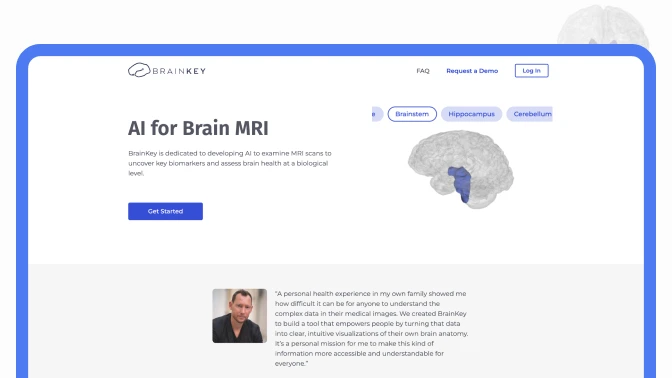
HEALTHCARE Brainkey

Brainkey

Designed for healthcare providers and researchers, the platform enhances early detection of neurological conditions.

Read Case Study
E-COMMERCE Exii

Exii

Exii.co recommendation engine personalizes online shopping experiences, enhancing customer engagement and increasing sales.

Read Case Study
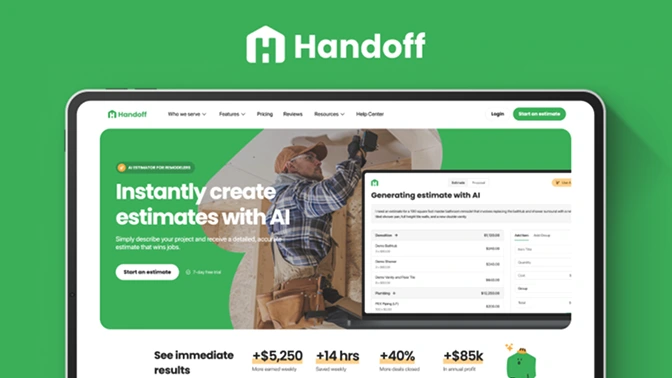
REAL ESTATE Handoff

Handoff

This AI tool provides real-time, accurate renovation cost estimates for homeowners, contractors, investors, and insurance companies.

Read Case Study

Where Most AI Assistant Projects Actually Fail

Most AI assistant projects don’t fail on conversation design. They fail the first time someone asks the assistant to check inventory in the ERP or update a ticket status, and the integration nobody scoped for has to be rebuilt from scratch on the fly.

Integration is the hard part. Citrusbug builds assistants MCP-native from day one, using the protocol that has become the standard interface for connecting AI systems to enterprise tools, so adding a new data source later doesn’t mean rebuilding the orchestration layer or accepting custom LLM development that locks you into one vendor’s closed ecosystem.

This is also where the difference between an AI assistant and a simpler AI chatbot matters for scoping. A chatbot answers from a script. An assistant is expected to look something up, take an action, and remember the last five minutes of conversation, which is a bigger integration surface than most RFPs account for.

Integration Types We Connect:

  • CRM and ERP write-back (Salesforce, HubSpot, SAP, and similar systems)
  • Ticketing and helpdesk platforms
  • Knowledge bases and document repositories
  • Identity providers and role-based access systems

How We Build an AI Assistant That Survives Contact With Real Users

1

Discovery and Use Case Mapping

We start by mapping where your team actually loses time today: which questions repeat, which handoffs break, and which systems the assistant needs to read from on day one. This produces a shortlist of use cases ranked by effort and impact, so the first release solves something real instead of something impressive in a demo.

2

Conversation and Escalation Design

We design the dialogue flows, tone, and guardrails around your actual edge cases, not the happy path. Just as important, we define exactly when the assistant should stop and hand off to a person, with what context attached, so escalation feels like a warm handoff instead of a dead end.

3

Knowledge and Data Preparation

Most of what the assistant needs already exists in policy docs, product content, and past tickets. We structure that content for retrieval, apply permission rules so answers respect who is asking, and set freshness rules so outdated content stops surfacing as if it were current.

4

Architecture and Integration Build

Engineers build the orchestration layer and connect it to your CRM, ERP, ticketing, and identity systems through secure, permissioned connectors that respect your existing API contracts. This is where most of the real engineering effort goes, and where a rushed build usually shows up first in production.

5

Testing and Evaluation

We run the assistant against real scenarios, not scripted demos: ambiguous questions, adversarial inputs, and multi-step requests spanning more than one system. Accuracy, safety, and escalation behavior are benchmarked against numbers you agree on before launch, not judged by whether it feels smart.

6

Launch and Continuous Optimization

We deploy with monitoring, access controls, and a rollback plan in place, then review real conversations weekly for the first month. Prompts, retrieval sources, and routing logic get tuned based on what users actually ask, not what the original scope assumed they would.

Why Architecture Matters for Enterprise AI Assistants

Every retrieval call respects role-based permissions, so two users never see the same answer if they aren't cleared for the same data.

Responses are grounded in your own content, not the model's general training, which keeps the assistant from inventing policy that doesn't exist.

Every action the assistant takes, from updating a ticket to writing to your CRM, is logged and auditable after the fact.

Escalation triggers are tuned to your actual edge cases during testing, not left as a generic fallback nobody configured.

How Much Does It Cost to Develop an AI Assistant?

Most enterprise AI assistant development projects range between $5,000 and $100,000+, depending on the assistant’s complexity, integrations, customization, and security requirements. As an experienced AI assistant development company, we can help you determine the right architecture, integrations, and level of customization for your use case.

Share your use case with us, and we’ll help scope the right solution and estimate the development cost in one call.


    Your data and info stays secure. Read our Privacy Policy.


    An Architecture Built Around Open Standards, Not a Closed Platform

    Model Context Protocol has become the standard way AI systems connect to enterprise tools and data, and Agent2Agent handles delegation between specialized agents. Building on both means your assistant isn't locked into one vendor's closed ecosystem as your requirements grow.

    • MCP-native tool and data connectors
    • Permission-aware retrieval with full audit logs
    • A2A-ready for multi-agent delegation later
    • No rip-and-replace when you switch models

    Choosing the Right Engagement Model for AI Assistant Development

    Fixed-Price Build

    Fixed-Price Build

    Best when scope and use cases are already locked and you need budget certainty before your team commits.

    • Scope defined before kickoff
    • Fixed cost and fixed timeline
    • Single core use case
    • Ideal for a first assistant
    Time and Material

    Time and Material

    Best when requirements will shift as real usage data comes in and the roadmap needs room to move.

    • Flexible scope as you learn
    • Billed against actual effort
    • Good for multi-phase rollouts
    • Room to add use cases mid-build
    Dedicated Team

    Dedicated Team

    Best when you're running multiple assistants or business units and need standing capacity, not a one-off project.

    • Embedded team, not a project queue
    • Covers build plus ongoing optimization
    • Scales across departments or channels
    • Fits assistants treated as products

    Why Choose Citrusbug as Your AI Assistant Development Company

    MCP-native architecture, not vendor lock-in
    Senior engineers assigned before kickoff
    Takes over stalled AI projects mid-build
    Secure ADLC embedded from day one
    Full source code ownership at delivery

    Recent Insights on AI Assistant Development

    View All Blogs
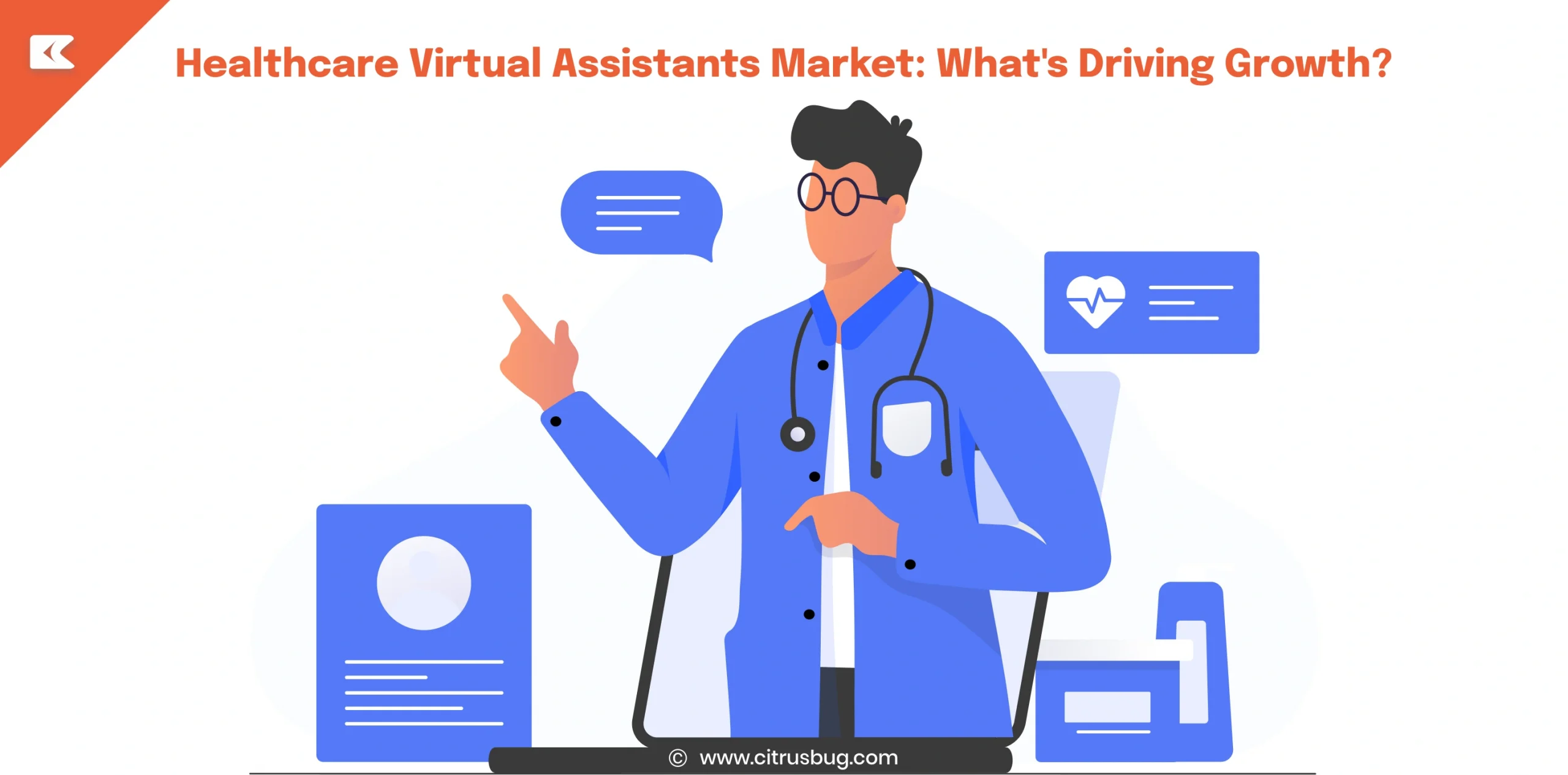
    Healthcare Virtual Assistants Market: What’s Driving Growth?
    Healthcare Virtual Assistants Market: What’s Driving Growth? Artificial Intelligence

    Healthcare Virtual Assistants Market: What’s Driving Growth?

    Healthcare organizations across the world are investing in digital tools to reduce administrative workload, improve patient access, and support clinical staff at scale. The healthcare virtual assistants market has emerged…

    Read Article →
    Conversational AI in Healthcare Market Statistics and Trends 2026
    Conversational AI in Healthcare Market Statistics and Trends 2026 Artificial Intelligence

    Conversational AI in Healthcare Market Statistics and Trends 2026

    Healthcare now treats intelligent conversations as a core part of digital care, not a side feature. Virtual assistants, triage bots, and voice interfaces guide patients, support staff, and assist clinicians…

    Read Article →
    AI Agent vs Chatbot: What’s the Difference and Which Should You Build in 2026
    AI Agent vs Chatbot: What’s the Difference and Which Should You Build in 2026 Chatbot Development

    AI Agent vs Chatbot: What’s the Difference and Which Should You Build in 2026

    A chatbot answers questions inside a fixed script. An AI agent reasons across your systems, decides what needs to happen next, and takes the action itself, without a human closing…

    Read Article →

    FAQs On AI Assistant Development Services

    What's the difference between an AI assistant, an AI agent, and a chatbot?

    A chatbot follows scripted flows and answers narrow questions. An AI assistant understands open-ended requests, keeps context across turns, and retrieves approved knowledge. An AI agent goes further, planning and taking actions across systems on its own.
    How much does it cost to build a custom AI assistant?

    Most custom AI assistant development projects fall between $15,000 and $150,000, depending on scope, integrations, and data prep. A focused single-use-case assistant (FAQ handling, a scoped workflow) typically lands on the lower end, while a multi-channel build spanning several systems with deeper integrations pushes toward the higher end. We scope exact numbers after discovery.
    Can an AI assistant integrate with our existing CRM, ERP, and ticketing systems?

    Yes. We build MCP-native connectors to systems like Salesforce, HubSpot, SAP, and common ticketing platforms, so the assistant reads and writes to systems of record instead of operating as a disconnected chat window.

    How long does it take to design, build, and launch an enterprise AI assistant?

    Timelines depend on the number of integrations and use cases. A focused first release typically launches in 6 to 14 weeks, with a proof of concept validating feasibility before full build starts.

    How do you prevent the assistant from giving wrong or hallucinated answers?

    We ground responses in your own content, restrict answers to approved sources, and set confidence thresholds that trigger escalation instead of a guess when the assistant isn't sure. As an AI assistant development company, we also build retrieval, validation, and evaluation mechanisms to improve response accuracy and reliability.
    What happens to our data, and who can see what the assistant retrieves?
    Retrieval respects role-based permissions, so a user only sees what they're already cleared to access. Actions and retrievals are logged for audit, and data handling follows HIPAA, SOC 2, or GDPR depending on your industry.

    Can you take over an AI assistant project that another vendor started or stalled?

    Yes. We regularly take over stalled builds, audit what exists, and either continue on the current architecture or rebuild the parts that won't scale, without starting discovery completely from zero.

    Do you build on platforms like Rasa or Dialogflow, or fully custom?

    Both. If you're already using a platform with assistant capabilities, we extend it with better orchestration and integrations. When requirements need deeper control, we build fully custom on an MCP-native architecture instead.

    Ready to Build an AI Assistant That Actually Integrates?

    Talk to an engineer about your systems, your data, and what a working assistant looks like for your team.