















Explore our Healthcare Technology Offerings Citrusbug Healthcare → Citrusbug Healthcare →
Let’s Talk
CUSTOM AI DEVELOPMENT

Intelligent Document Automation Software Development

Manual document review eats up a third of operations staff time and multiplies error rates across claims, invoices, and compliance filings. We build intelligent document automation systems that read, classify, and route your documents accurately, validated against your real files before a single line of integration code ships.

Hero Image

Trusted by industry leaders

Bosch
Deloitte
eClinicalWorks
Epic Systems
Flipkart
McKinsey
HSBC
Softbank
Allianz
Airbnb
United Health
Phelic
Sun Pharma
Target
US Foods
Advinow

Certifications and Accreditations

What Intelligent Document Automation Actually Does

Citrusbug builds document automation systems that go past text capture. Each system reads context, sorts documents by type, moves data into the right downstream workflow, and keeps a record of every decision it made along the way.

Reads Documents Like a Practitioner

Multimodal models interpret a document’s meaning, not just its layout, so a reformatted invoice or a scanned form with a coffee stain doesn’t break extraction the way a rules-based template does.

Sorts and Routes Automatically

Incoming documents get classified by type and pushed into the right queue, whether that’s accounts payable, claims intake, or compliance review, without a human triaging the inbox first.

Flags What It's Not Sure About

Every extracted field carries a confidence score. Low-confidence fields get routed to human review instead of silently passing through as a wrong number.

Keeps an Audit Trail Built In

Every extraction, classification, and routing decision is logged, giving compliance teams a record they can actually produce during an audit.

Not Sure If Your Documents Are a Good Fit?

Send us three real examples and we'll show you what accurate extraction looks like.

Talk to an Engineer

Why Off-the-Shelf Document Platforms Hit a Ceiling


Most IDP platforms train their extraction models on generic document sets, then charge you per page or per document as your volume grows. That works fine at low volume. It stops working the moment your document mix gets specific, your compliance requirements tighten, or your invoice count triples during a busy quarter and the bill triples with it.

Not automation. A subscription to someone else's accuracy ceiling. We build systems trained and validated against your actual documents before you commit to a full build, and you own the source code and models when it's done, with no per-document meter running underneath a workflow you thought you'd already paid for.
Generic Extraction Models

Off-the-shelf models are tuned for the average document, not your invoice format, your claim forms, or your engineering drawings.

Per-Document Pricing That Scales Against You

Consumption-based pricing means your automation gets more expensive exactly when it’s saving you the most time.

Template Brittleness

A vendor redesigns their form and your extraction accuracy drops overnight, with no visibility into why.

Compliance Gaps

Generic platforms rarely give you a defensible audit trail for regulated document types like medical records or loan files.

The Architecture Behind Agentic Document Processing

We design document automation systems that combine multimodal large language models for document-level reasoning with a multi-agent pipeline, where a dedicated extraction agent, a validation agent, and a cross-reference agent each handle one part of the job before an orchestration layer reconciles their outputs. This replaces the single-pass, rules-based extraction that older OCR tools still rely on, and it's built alongside our broader natural language processing and document understanding work so the reasoning layer stays consistent across your document set.

  • Multimodal LLM-based document reasoning
  • Schema-first structured JSON output
  • Confidence-scored extraction with human review
  • Multi-agent orchestration for cross-validation

Document Types We Build Automation For

Every document category needs a different extraction approach. Here's what we've built systems for, and what typically breaks generic tools on each one.

Invoices & AP Documents

  • Line-item extraction, vendor matching, and automated three-way matching against purchase orders, cutting manual reconciliation out of your accounts payable workflow entirely.

Contracts & Agreements

  • Clause identification, obligation tracking, and renewal date extraction pulled consistently across contracts that rarely share the same template or structure.

Claims & Medical Records

  • Structured extraction from clinical notes, lab results, and handwritten intake forms, built to handle the inconsistency real medical documentation actually has.

KYC & Loan Documents

  • Identity verification, income documentation, and cross-document consistency checks that flag mismatches before they become a compliance problem down the line.

Engineering & Compliance Drawings

  • Dimension, tolerance, and annotation extraction from technical drawings, replacing the manual review cycle engineering teams still run by hand today.

Logistics & Trade Documents

  • Bill of lading, customs forms, and packing list data reconciled into a single record, regardless of which format each document originally arrived in.

How Document Automation Varies by Industry

Document automation isn’t one build. A hospital finance team needs claim forms and clinical notes read without mishandling protected health information, which is where this connects to revenue cycle and claims documentation work we’ve done separately. A lender needs KYC and loan packets cross-checked against fraud signals in minutes, not days.

Real estate brokerages need title and closing documents reconciled across a dozen inconsistent formats from different counties. Insurance teams need first-notice-of-loss forms triaged the moment they arrive, not batched overnight. Logistics teams need customs paperwork read the same way whether it shows up as a scan, a photo from a driver’s phone, or a clean PDF.

How We Build and Validate Your Document Automation

1

Document Audit & Discovery

We review a real sample of your documents, map the fields you actually need extracted, and identify where a generic model is likely to fail against your specific formats before any code gets written.

2

Proof of Concept on Your Real Documents

Before committing to a full build, we run a working extraction pass against your own documents so you can see actual accuracy numbers, not a vendor's marketing benchmark from someone else's dataset.

3

Model & Agent Design

We design the extraction, validation, and orchestration agents around your document types, deciding where multimodal reasoning is worth the cost and where a lighter-weight approach is enough.

4

Integration Build

The system gets wired into your ERP, CRM, or core platform so extracted data lands where your team already works instead of sitting in a separate dashboard nobody checks.

5

Validation & Accuracy Testing

We test against a held-out set of your real documents, not a synthetic benchmark, and tune the confidence thresholds until the exception queue matches what your team can actually review.

6

Deployment & Monitoring

Once live, we monitor extraction accuracy over time, since document formats drift, and we retrain or adjust before accuracy quietly degrades. This is also where a lot of clients replace an older RPA-driven workflow automation layer that was brittle against format changes.

Still Reviewing Documents by Hand?

Every week spent re-keying data manually is a week your team could spend on work that actually needs a person.

Where This Plugs Into What You Already Run

An intelligent document automation system that doesn’t connect to the rest of your stack just becomes another tab someone has to check. We build the integration layer alongside the extraction models, so structured data lands directly in your ERP and CRM systems, your EHR, or your core banking platform, in whatever format that system already expects.

  • Check Icon

    ERP Systems — Extracted invoice, PO, and inventory data posts directly into your existing financial system without a manual export step.

  • Check Icon

    CRM Platforms — Contract terms, renewal dates, and customer document data sync into the records your sales and account teams already work from.

  • Check Icon

    EHR & Practice Management — Clinical documentation and claims data flow into your existing healthcare records system with the access controls it requires.

  • Check Icon

    Core Banking & Loan Origination — KYC and loan document data feeds directly into underwriting and origination systems, cutting manual re-entry out of the process.

  • Check Icon

    Cloud Storage & DMS — Processed documents and structured outputs land in the document management system your compliance team already audits against.

What Document Complexity Does to Cost and Timeline

Document automation pricing depends almost entirely on how messy your documents are, not just how many you have. Here's roughly what to expect.

Document Type Complexity Estimated Cost Timeline

Structured documents (invoices, receipts, forms)

Low

$8,000-$20,000

4-6 weeks

Semi-structured documents (contracts, claims, applications)

Medium

$20,000-$45,000

6-10 weeks

Unstructured & mixed-format documents (medical records, engineering drawings, handwritten forms)

High

$45,000-$90,000+

10-16 weeks

How Much Does It Cost to Develop Intelligent Document Automation Software?

Most builds range from $8,000 for a single structured-document workflow to $90,000+ for multi-format systems handling medical records or engineering drawings. Final cost depends on document variety, volume, and integration depth.


    Your data and info stays secure. Read our Privacy Policy.


    Engagement Options for Intelligent Document Automation

    Proof of Concept

    A focused test against your real documents to validate extraction accuracy before any commitment to a full build.

    • Extraction accuracy report on your sample set
    • No integration work included
    • Typically 2-3 weeks
    • Fixed scope, fixed cost

    Core Automation Build

    A production system covering one or two document types, fully integrated into a single downstream system.

    • Full extraction and classification pipeline
    • One system integration included
    • Validation against your document set
    • Post-launch monitoring included

    Full Platform Rollout

    A multi-document, multi-system deployment covering your full document workflow across departments.

    • Multiple document types and agent workflows
    • Integration across ERP, CRM, or core systems
    • Ongoing retraining and drift monitoring
    • Dedicated delivery team throughout

    Built for Documents That Carry Regulatory Weight

    Intelligent document automation touching medical records, loan files, or claims data isn't just an engineering problem. We build with the audit trail, access controls, and data handling regulated document types actually require, not bolted on after the fact.

    HIPAA-aligned handling of medical and claims records GDPR-compliant processing for documents containing personal data Audit-logged extraction for high-risk AI Act use cases like credit and claims decisioning SOC 2-aligned infrastructure across the full pipeline

    Client Testimonials (We're Rated 4.7 on Clutch)

    Why Choose Citrusbug for Intelligent Document Automation Services

    Validates Before You Commit

    We test extraction accuracy against your actual documents during a proof of concept, so you know what you’re building before you pay for the full system.

    No Per-Document Fees

    You get a system you own outright, not a consumption-priced platform that gets more expensive as your document volume grows.

    Discovery Before Code

    Requirements, document samples, and field mapping happen before development starts, not as a mid-build correction.

    You Own the Models

    Source code and trained models transfer to you at delivery. Nothing stays locked inside a vendor’s platform.

    Cost-Optimised Cloud Builds

    We architect the extraction pipeline around realistic document volumes, so you’re not paying for infrastructure sized for traffic you don’t have.

    Post-Launch Support Options

    L1/L2/L3 support tiers are available once your system is live, for teams that want ongoing coverage without hiring in-house.

    Our Work Portfolio

    Client Success
    View All Case Studies →
    HEALTHCARE Brainkey

    Brainkey

    Designed for healthcare providers and researchers, the platform enhances early detection of neurological conditions.
    Read Case Study
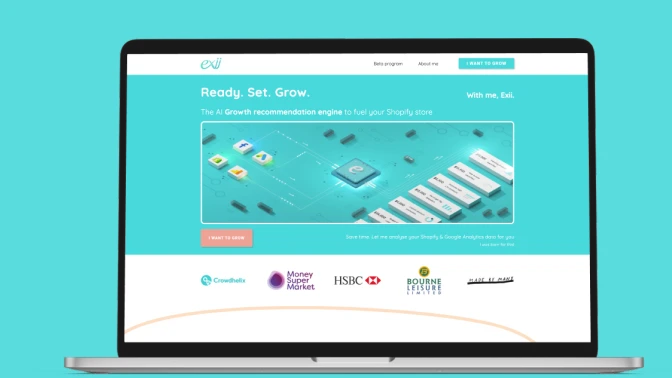
    E-COMMERCE Exii

    Exii

    Exii.co recommendation engine personalizes online shopping experiences, enhancing customer engagement and increasing sales.

    Read Case Study
    REAL ESTATE Handoff

    Handoff

    This AI tool provides real-time, accurate renovation cost estimates for homeowners, contractors, investors, and insurance companies.

    Read Case Study

    FAQs on Intelligent Document Automation

    What's the real difference between a custom-built document automation system and an off-the-shelf IDP platform?

    A custom build is trained and validated against your actual documents and priced once, not per document. Off-the-shelf platforms use generic models and consumption-based pricing that scales with your volume.

    How long does implementation take for a custom document automation build?

    Most projects run 4-16 weeks depending on document complexity and how many systems it integrates with. Structured document types move faster than mixed-format or handwritten content.

    What happens if the extraction accuracy isn't good enough after the build?

    We validate accuracy during the proof-of-concept stage before full development starts, so this gets caught early. Post-launch, we monitor and retrain as document formats drift.

    Can this replace our existing OCR or RPA tools, or does it need to work alongside them?

    It depends on your setup. Many clients replace brittle RPA-plus-OCR stacks entirely, while others keep RPA for task automation and route document understanding through the new system.

    Who owns the source code and trained models when the project is done?

    You do, in full. There's no vendor lock-in and no ongoing license fee tied to the extraction models themselves.

    What data privacy and compliance requirements does document automation need to meet?

    It depends on document type. Medical records need HIPAA-aligned handling, EU-based data needs GDPR compliance, and document-driven credit or claims decisions may fall under EU AI Act high-risk obligations.

    Do you handle scanned paper documents and handwriting, or only digital PDFs?

    Yes, including scans, photos of physical documents, and handwritten forms. Multimodal models handle these with lower accuracy than clean digital PDFs, which is why we test against your real samples first.

    What happens to our data during model training, is it used to train anyone else's system?

    No. Your documents and any fine-tuned models are used exclusively for your system and are never shared across client projects.

    Ready to Automate Your Document Workflows?

    See what accurate extraction looks like on your own documents before committing to a build.