



Model Training & Fine-Tuning
AI Model Training Services for Production-Ready AI
A production AI model needs more than a successful training run. Citrusbug fine-tunes models around your data, domain requirements, and performance goals, with rigorous evaluation against real-world scenarios. Our AI model training services help deliver models that stay accurate, reliable, and ready for production workloads beyond the pilot stage.
500+
Projects Delivered
98%
Client Retention
 GDPR
GDPR
 HIPAA-Ready
 ISO/IEC 27001
 SOC 2
SOC 2
Trusted by industry leaders










Certifications and Accreditations


Why AI Model Training Efforts Plateau Before Production
Gartner expects that 60% of AI projects will be abandoned because the data underneath them was never ready for production use, not because the model architecture was wrong. Most teams discover this after the third or fourth training run, when accuracy stops improving and nobody can clearly explain why. For teams investing in AI model training services, getting the data and evaluation process right early can prevent costly retraining cycles later.
The usual culprits repeat across projects regardless of industry. A team fine-tunes on a dataset that looked clean in a spreadsheet but was inconsistently labeled at the edges. Or they choose a technique, usually whichever tutorial they found first, without checking whether it matches the task’s actual constraints. Training more is not a strategy. Without an evaluation harness built before training starts, every retraining round is a guess dressed up as progress.
- Inconsistent or unvalidated training data
- Wrong technique for the task (full fine-tune where LoRA would do, or the reverse)
- No evaluation harness until after the model is already underperforming
- Accuracy that degrades weeks after deployment with nobody watching for it
Not Sure Which Training Approach Fits Your Model
A short technical call tells you whether this is a data problem, a technique problem, or a base-model problem before you spend on another training run.
Discuss Your Model Training NeedsWhat Citrusbug's AI Model Training Services Actually Include
Our AI model training services cover the full path from raw data to a model your team trusts in production, not just the training run in the middle. Each engagement is scoped to what your model actually needs, not a fixed template.
Data Audit and Preparation Pipelines
We assess label consistency, class balance, and coverage gaps before training starts, then build data preparation pipelines that catch drift in the source data itself, not just the model output.
PEFT and Full Fine-Tuning
We fine-tune with LoRA or QLoRA adapters when the base model is close, or run full fine-tuning when the task genuinely needs it, matched to your GPU budget and latency target.
Evaluation Harness Design
We build the scoring rubric, held-out test sets, and regression checks before the first training run, so every subsequent iteration is measured against a fixed bar instead of a moving one.
Deployment and Drift Monitoring
Once the model ships, we track prediction drift and catastrophic forgetting against production traffic, flagging when a retrain is actually needed instead of running one on a fixed calendar.
Choosing the Right AI Model Training Approach for the Task
The starting point is the constraint that actually matters: your data volume, your latency budget, and how verifiable the task’s correctness is. A style or format problem rarely needs the same approach as a math or code-generation problem, and treating them the same wastes GPU hours you’ll pay for either way.
We diagnose stalled training pipelines the same way. When a client’s model plateaus after several rounds, the fix is almost never “train it again.” It’s usually one of three things: the data needs restructuring, the technique doesn’t match the task, or the base model itself has hit its ceiling and a different one is the honest answer. We say which one it is before proposing more billable hours.
- LoRA and QLoRA adapters for style, format, and domain-vocabulary tasks where a strong base model is already close
- Full fine-tuning reserved for tasks where parameter-efficient methods genuinely underperform
- DPO-style preference tuning for alignment problems, reinforcement fine-tuning for math, code, and other verifiable-reward tasks
- Retrieval-augmented generation paired with a thin fine-tune when the problem is really about content, not interface behavior, which is often a better fit than full custom model builds
Does Your Model Need Fine-Tuning or Retraining?
Tell us where your model is today and what you're trying to improve. We'll look at the data, training approach, and performance requirements to help determine the right next step.
The AI Model Training Stack Behind Every Model We Fine-Tune
Our training stack is built around parameter-efficient methods and reproducible evaluation, not a single framework we push regardless of fit. We standardize on tools with active 2026 support so adapters, checkpoints, and eval results stay portable across projects instead of getting locked into one team's preferred setup.
- LoRA and QLoRA adapters trained through Hugging Face PEFT and TRL
- Unsloth and Axolotl for single and multi-GPU fine-tuning jobs
- DPO and RFT pipelines for preference and verifiable-reward tuning
- Versioned eval harnesses tied to every checkpoint, not just the final one
The Process We Follow to Train AI Models
1
Data and Task Audit
We review label quality, class distribution, and data volume against the actual task, then flag where retrieval-augmented generation or data engineering work most training projects skip needs to happen before any training begins.
2
Evaluation Harness Design
We define the metrics, held-out test sets, and regression checks that will grade every future checkpoint. This step happens before training, not after the first disappointing result.
3
Technique Selection
We match the task to LoRA, QLoRA, full fine-tuning, DPO, or reinforcement fine-tuning based on data volume, latency budget, and how verifiable the desired output actually is.
4
Training and Iteration
We run the training jobs, checkpoint frequently, and score each checkpoint against the fixed harness rather than eyeballing outputs, so progress is measurable round over round.
5
Red Team and Edge Case Testing
Before deployment, we stress-test the model against adversarial and edge-case inputs your production traffic will eventually throw at it, not just the clean validation split.
6
Deployment and Drift Monitoring
We ship the model into your stack and monitor for prediction drift and catastrophic forgetting against live traffic, triggering a retrain only when the data actually calls for one.
What AI Model Training Typically Costs and Takes
Real project ranges vary by data readiness and technique, but most engagements fall into one of three shapes. Use this as a planning baseline, not a quote.
| Training Type | Complexity | Estimated Cost | Timeline |
|---|---|---|---|
|
LoRA/QLoRA fine-tune on existing base model |
Low |
$8,000 to $20,000 |
3 to 5 weeks |
|
Multi-technique fine-tune with custom eval harness |
Medium |
$20,000 to $50,000 |
6 to 10 weeks |
|
Full fine-tune or multi-model retraining pipeline |
High |
$50,000 to $120,000+ |
10 to 16 weeks
|
COMPLIANCE-AWARE TRAINING
AI Model Training Documentation Built for Audit Readiness
EU AI Act obligations for general-purpose AI models require documented training and testing processes and public training-data summaries under Article 53. That obligation doesn't stop at foundation model labs. Any team fine-tuning or retraining a model that meets the GPAI threshold inherits a version of the same documentation burden, and most engineering teams find that out after the fact.
Get Started With AI TrainingHow You Can Partner With Us on AI Model Training

One-Time Fine-Tune
A single model, fixed scope, fixed price.
- One base model, one target task
- Fixed deliverable and fixed price

Managed Training Pipeline
Ongoing retraining as your data and traffic change.
- Scheduled retraining tied to drift signals, not a fixed calendar
- Continuous eval harness maintenance included

Embedded ML Team
Our engineers work inside your existing stack and sprints.
- Direct integration with your MLOps and CI/CD tooling
- Scales up or down with your roadmap
Client Testimonials (We're Rated 4.7 on Clutch)
THE PROJECT
Web & AI Development for Education Company
AI Development, Custom Software Development
Nov. 2024 - Ongoing
THE REVIEW
Their agile way of working, competence, and friendliness are impressive.December 7, 2024
PROJECT SUMMARY:
Citrusbug Technolabs handles a data extraction project for an education company. They're also responsible for managing an AI generation project for the client.
FEEDBACK SUMMARY:
Citrusbug Technolabs has laid out and followed a clear project outline and consistently met deadlines. The team communicates well and demonstrates a strong understanding of the client's vision and goals. Their agile approach, high level of competence, and personable approach stand out.
THE REVIEWER
 Read More
 Read More
THE PROJECT
Custom Automated System Dev for Veteran Medical Co
Generative AI, Application Testing, Custom Software Development
Aug. - Oct. 2024
THE REVIEW
Their communication and ability to capture exactly what I was asking for were impressive.November 14, 2024
PROJECT SUMMARY:
Citrusbug Technolabs built an automated system for a veteran medical company. The system needed to collect and store user data, generate customized letters based on surveys, and use AI to summarize reviews.
FEEDBACK SUMMARY:
Citrusbug Technolabs delivered a functional automated system that successfully organized the client's records and auto-generated statements. The team was quick to respond, addressed all roadblocks, and communicated effectively. Overall, their ability to understand the client's needs stood out.
THE REVIEWER
Read More
Read More
THE PROJECT
MVP Development for Freight & Capacity Marketplace
Custom Software Development
$10,000 to $49,999
Jan. 2024 - Feb. 2025
THE REVIEW
They were very calm and talented, and they did bring some of their own ideas.January 28, 2025
PROJECT SUMMARY:
Citrusbug Technolabs has developed an MVP for a freight and capacity marketplace. The team has created three different interfaces for three market segments.
FEEDBACK SUMMARY:
Citrusbug Technolabs has successfully developed an effective MVP. The team has delivered the project on time and almost within budget. Moreover, their responses have been timely. Overall, the team has been calm, talented, and innovative. This has led to the client's satisfaction.
THE REVIEWER
Read More
Read More
THE PROJECT
Web & Mobile App Development for Education Company
Custom Software Development, DevOps Managed Services
$10,000 to $49,999
THE REVIEW
What stood out most about them was their personalized approach and sense of ownership in every aspect of the project."February 27, 2024
PROJECT SUMMARY:
Citrusbug Technolabs built a Flutter cross-platform mobile app for an education company. They also developed two web apps and an admin panel and provided DevOps support for the client's infrastructure.
FEEDBACK SUMMARY:
Citrusbug Technolabs' support successfully boosted the client's user engagement by 8x, resulting in an 85% retention rate. The reliable team demonstrated a dedication to delivering on time and promptly responding to concerns and adjustments. Their personalized, client-centric approach stood out.
THE REVIEWER
Read More
Read More
THE PROJECT
Mobile App Development for Healthcare Company
Custom Software Development Mobile App Development UX/UI Design
$10,000 to $49,999
June 2023 - Jan. 2024
THE REVIEW
They didn't like the phrase "impossible to do", which made them very solution-oriented.February 19, 2024
PROJECT SUMMARY:
A healthcare company hired Citrusbug Technolabs to design and develop a user-friendly application. The team provided tailored assistance to meet the client's requirements.
FEEDBACK SUMMARY:
Citrusbug Technolabs successfully delivered an application that was ready for market. The team was highly professional and well-organized; they stayed focused throughout the engagement and were receptive to changes. Overall, they stood out for their trustworthiness and commitment to excellence.
THE REVIEWER
Read More
Read More
THE PROJECT
Custom Web App Dev & Design for Financial Technology Firm
Mobile App Development UX/UI Design Web Design
Sep. 2023 - Ongoing
THE REVIEW
They're 100% on time and transparent throughout each stage of the project.February 24, 2024
PROJECT SUMMARY:
A financial technology company has hired Citrusbug Technolabs to build a custom web application. The team handles the development and design of the app.
FEEDBACK SUMMARY:
The project is ongoing, but the client has been satisfied with Citrusbug Technolabs' services. The team is very professional — they always respect timelines and provide regular updates to ensure everyone's on the same page. Also, their transparent approach makes them a trustworthy partner.
THE REVIEWER
Read More
Read More
THE PROJECT
Staff Augmentation for Singaporean Development Company
Mobile App Development
$10,000 to $49,999
THE REVIEW
"I do believe they are exceptional at where they stand."
PROJECT SUMMARY:
Citrusbug Technolabs took on a mobile app development project for a Singapore-based development house. They were provided with UX designs to execute. Currently, they're finalizing and fine-tuning the product.
FEEDBACK SUMMARY:
Citrusbug Technolabs contributed to the successful launch of the product, which has garnered over 10,000 users in just three months. The product has also received support from investors. They consistently followed-up with their progress and delivered at a speedy rate. The team is truly stellar.
THE REVIEWER
Read More
Read More
Why Engineering Teams Choose Citrusbug for AI Model Training Services?
Our AI model training services are built by people who have watched training pipelines stall and know the difference between a data problem and a technique problem before the fifth retraining round proves it.

Diagnosis Before Training
We audit data quality and evaluation setup before recommending a training approach, so you’re not paying for a fine-tune that was never going to fix the actual problem in the first place.

Senior ML Engineers
You know which AI engineers are working on your model before any work starts, not a rotating roster of names that changes between the kickoff call and the first checkpoint review.

Full Model Ownership
Adapters, checkpoints, and evaluation harnesses are yours at delivery, with an NDA in place from day one and no dependency on our infrastructure to keep using them.
Technique-Agnostic Builds
We’re not locked into one PEFT method or one vendor’s fine-tuning framework, so the technique gets picked for your task instead of your task getting bent to fit our default stack.

Eval Harness First
The scoring rubric and held-out test sets exist before the first training run, not assembled after a disappointing result to explain what went wrong.
.svg)
Post-Launch Drift Watch
We monitor for catastrophic forgetting and prediction drift after deployment and tell you when a retrain is actually warranted, instead of billing one on a fixed schedule regardless of need.
BUILDING NEXT-GEN SOLUTIONS
Technologies and Platforms We Use

LangChain

Haystack

OpenAI GPT-4

Anthropic Claude
OpenAI GPT-4

Google Dialogflow
Rasa
Vapi.ai

Azure Prompt flow

DALL-E
Stable Diffusion
TensorFlow

Hugging Face Transformers
Amazon Glu

Pandas
Numpy
Redshift

OpenCV
Tesseract OCR
Our Case Study
View All Case Studies →
Real-world Impact
Our Project Portfolio
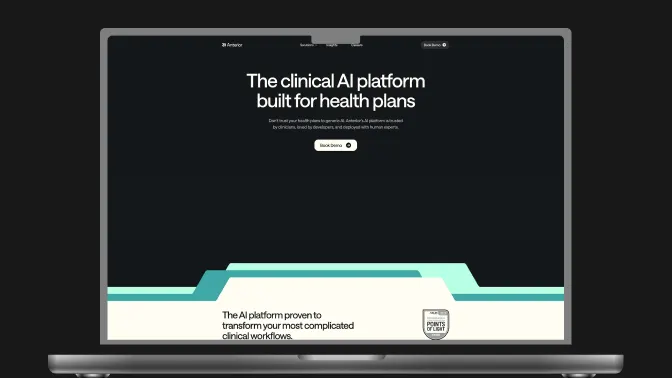
Anterior
AI clinical workflow automation platform that transforms administrative healthcare processes like prior authorization.
View Case Study →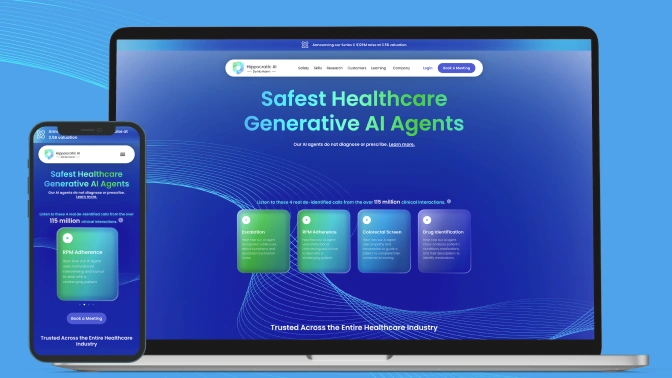
Hippocratic AI
View Case Study →Related Insights
VIEW ALL
 Artificial Intelligence
7 Best Practices for Building an AI Predictive Analytics Model
What if your business could predict customer behavior, detect risks before they happen, and make smarter decisions? That’s what AI predictive analytics can help you with. Instead of only analyzing…
Read Article → Custom Software Development
A Complete Guide to Remote IoT Monitoring Solutions in Healthcare
In medical practice, information can save lives. Each day, hospitals and clinics are dealing with numerous patients, devices, and data. A remote IoT monitoring is a solution that links medical…
Read Article → Application Development
AI App Development Cost in 2026: A Complete Guide for Businesses
Artificial Intelligence (AI) has rapidly evolved from a futuristic concept to a business-critical technology. AI has applications in nearly every aspect of running a business, from offering users predictive healthcare…
Read Article →FAQS about AI Model Training Services
How long does AI model training typically take?

Most engagements run 3 to 16 weeks depending on data readiness and technique. A LoRA fine-tune on an existing base model is faster than a full retraining pipeline.
Do you train models from scratch or fine-tune existing ones?
Mostly fine-tuning. Training a foundation model from scratch is rarely the right call for a specific business task, and we'll say so if that's what your case needs.
What happens to our data and the trained model after the engagement?
You keep the model, the adapters, and the evaluation harness. We work under NDA and hand over full ownership at delivery, with no dependency on our infrastructure.
Can you take over a training pipeline someone else built?
Yes. We audit the existing data, technique, and eval setup first to diagnose what's actually wrong before touching anything, rather than restarting the whole pipeline by default.
How do you decide between fine-tuning and RAG?
If the problem is what the model knows, RAG usually wins. If it's how the model behaves, in tone, format, or task structure, fine-tuning is the better fit.
What does AI model training cost?
It depends on data readiness and technique. Our AI model training services for a single LoRA fine-tune start around $8,000, while a full retraining pipeline with ongoing monitoring runs higher. We scope the requirements before quoting.
How do you handle EU AI Act training data documentation requirements?
We log data provenance and maintain model cards per checkpoint from the start, so audit-ready documentation is a byproduct of the process, not a separate deliverable after the fact.
Do you provide support after the model is deployed?
Yes. We monitor for drift and catastrophic forgetting against live traffic and flag when a retrain is warranted, available as part of our managed training pipeline model.