
HEALTHCARE

 Citrusbug Global →
We provide healthcare SaaS development services to build multi-tenant, cloud-native platforms for healthcare providers, payers, and digital health startups. From patient portals to claims engines, we handle architecture, compliance, and integrations so your platform is ready for real clinical and operational use from day one.
 HIPAA Compliant
 HL7 / FHIR Compatible
 SOC 2 Type II
 ISO 27001
Trusted Software Development Company By














Certifications and Accreditations



Packaged healthcare software can handle standard workflows, but your requirements often extend beyond what a fixed product supports. New service lines, changing payer requirements, complex care workflows, and growing patient volumes can create gaps that are difficult to address through configuration alone.
With healthcare SaaS development services, you can build a platform around your operational needs, including custom data models, workflows, integrations, permissions, and reporting. The platform can also evolve as your requirements change, without being limited by a vendor’s product roadmap.
We build platforms across the full range of clinical and operational needs, each architected for multi-tenancy, compliance, and scale from the start.

Give patients secure access to records, appointments, messaging, and billing in one platform. We build portals that connect to your EHR through HL7 or FHIR APIs so patient-facing data stays accurate and current.

Video consultations, asynchronous messaging, and e-prescribing in a single workflow. We build telehealth platforms with session recording, scheduling, and payer-ready documentation built in.

Cloud-native EHR systems built around FHIR resources, configurable templates, and role-based clinical workflows. We support migration from legacy on-premise EHR systems without disrupting active patient records.

Automate claims generation, eligibility checks, denial management, and payment posting. Our billing platforms integrate with major clearinghouses and support both fee-for-service and value-based models.

Ingest data from connected devices and wearables, apply clinical thresholds, and route alerts to care teams. Built for continuous data streams without overwhelming clinicians with noise.

Scheduling, staff management, inventory, and reporting in one operational layer. Multi-location organizations get a single platform with location-level permissions and consolidated reporting.
.svg)
Aggregate data across patient panels to surface risk scores, care gaps, and outcome trends. Built on data pipelines that can pull from multiple EHRs and claims sources.

Prescription tracking, refill workflows, drug interaction checks, and inventory management for pharmacies and dispensaries, integrated with e-prescription and EHR systems.
Tell us what you are building and we will map out the architecture, compliance requirements, and timeline.
Schedule a Free Consultation
We architect data separation at the database or schema level so each hospital, clinic, or practice group sees only its own data, with shared infrastructure underneath to keep operating costs down.

Different organizations run different intake, scheduling, and approval processes. We build configuration layers so each tenant can adjust workflows without forking the codebase.

Physicians, nurses, billing staff, and administrators each get access scoped to their role, mapped to clinical hierarchies rather than generic admin tiers.

Every platform we build exposes APIs for EHR, lab, and billing system connections, so new integrations do not require touching core application logic.

Every access to PHI is logged with user, timestamp, and action, giving you the audit trail that HIPAA and SOC 2 audits require without extra tooling.

Auto-scaling handles morning appointment surges or month-end billing runs without manual intervention, on AWS or Azure HIPAA-eligible services.
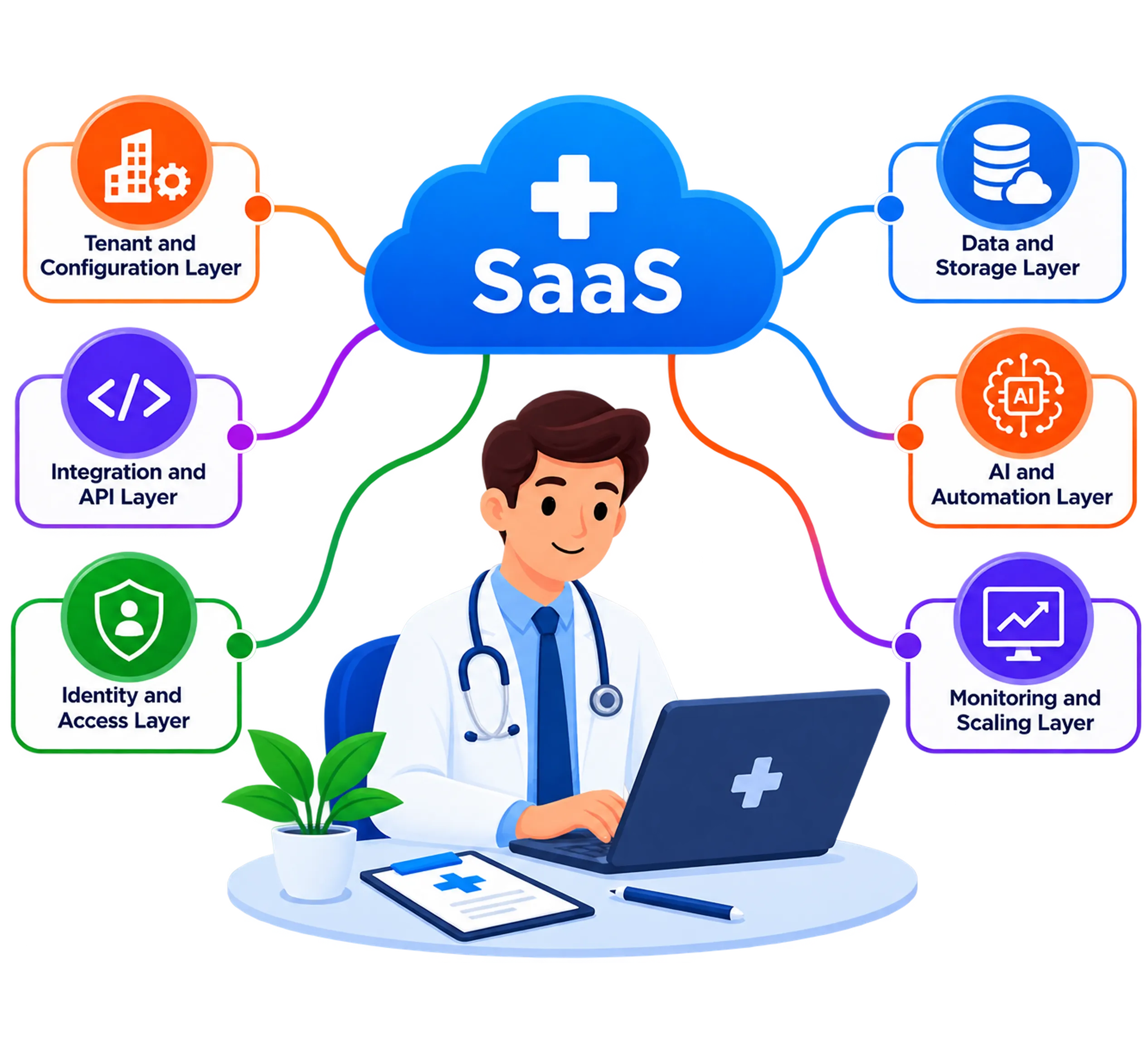
Our healthcare SaaS platforms run on containerized microservices on Kubernetes, with shared services for authentication, audit logging, and notifications. Data sits in encrypted, HIPAA-eligible storage with FHIR-compliant models, so clinical data stays portable as you add modules.

Tenant and Configuration Layer: Isolated data per tenant, configurable workflows without forking code.
Integration and API Layer: HL7 and FHIR R4 APIs for EHR, lab, and billing connections.
Identity and Access Layer: OAuth 2.0 and SAML, role-based access mapped to clinical roles.
Data and Storage Layer: PostgreSQL on AWS or Azure, encrypted, with full audit trails.
AI and Automation Layer: Clinical AI services trained on your data, built into the core.
Monitoring and Scaling Layer: Auto-scaling for appointment surges and month-end billing runs.
We design access controls, encryption at rest and in transit, and audit logging from the first architecture decision, not retrofitted after launch.
Our development and operational processes align with SOC 2 trust principles, covering security, availability, and confidentiality for cloud-hosted healthcare data.
We build data models around FHIR R4 resources so your platform exchanges patient data with EHRs, labs, and payers using current interoperability standards.

Our patient access APIs and data sharing capabilities are built to meet information blocking rules and meaningful use requirements for electronic health data.
Healthcare SaaS platforms typically cost $30,000 to $150,000, depending on features, integrations, user roles, and compliance requirements.
The cost of healthcare SaaS development services varies with the platform’s complexity, integrations, and scalability needs. Share your requirements for a tailored estimate from our team.
We map your clinical workflows, compliance obligations, and integration points before writing code. This produces a technical architecture document and a data model that becomes the foundation for development.
We design interfaces around how clinicians and patients actually use software under time pressure, with wireframes reviewed by your clinical team before development starts.
Our engineers build the multi-tenant core, including authentication, RBAC, and the tenant configuration layer, using the Secure ADLC methodology to bake security into every sprint.
We connect EHR, billing, and lab systems through HL7 or FHIR interfaces, then run functional, security, and compliance testing across every module before release.
We deploy to your cloud environment, monitor performance under real usage, and run iteration cycles based on clinician and patient feedback after launch.


AI agents listen to patient encounters and generate structured notes in your EHR format, cutting documentation time so clinicians spend more time with patients than on charts.
Models trained on your patient population flag readmission risk, care gaps, and deterioration signals early, feeding directly into care management workflows your team already uses.
AI agents pre-fill prior authorization requests and flag claims likely to be denied before submission, reducing manual review time across your billing team.
Get a technical architecture review and project estimate from our healthcare engineering team.

You see who is building your platform before signing. No bait-and-switch staffing after the contract is signed, and direct access to the people writing your code.

Security gets built into every development sprint, not bolted on before launch. This reduces compliance rework and keeps audit timelines predictable.

You receive full source code ownership at delivery, along with documentation and architecture diagrams your internal team can build on.

L1, L2, and L3 support options keep your platform running after launch, with response times matched to clinical operational needs.
Their agile way of working, competence, and friendliness are impressive.December 7, 2024
Citrusbug Technolabs handles a data extraction project for an education company. They're also responsible for managing an AI generation project for the client.
Citrusbug Technolabs has laid out and followed a clear project outline and consistently met deadlines. The team communicates well and demonstrates a strong understanding of the client's vision and goals. Their agile approach, high level of competence, and personable approach stand out.
 Read More
Their communication and ability to capture exactly what I was asking for were impressive.November 14, 2024
Citrusbug Technolabs built an automated system for a veteran medical company. The system needed to collect and store user data, generate customized letters based on surveys, and use AI to summarize reviews.
Citrusbug Technolabs delivered a functional automated system that successfully organized the client's records and auto-generated statements. The team was quick to respond, addressed all roadblocks, and communicated effectively. Overall, their ability to understand the client's needs stood out.
Read More
They were very calm and talented, and they did bring some of their own ideas.January 28, 2025
Citrusbug Technolabs has developed an MVP for a freight and capacity marketplace. The team has created three different interfaces for three market segments.
Citrusbug Technolabs has successfully developed an effective MVP. The team has delivered the project on time and almost within budget. Moreover, their responses have been timely. Overall, the team has been calm, talented, and innovative. This has led to the client's satisfaction.
Read More
What stood out most about them was their personalized approach and sense of ownership in every aspect of the project."February 27, 2024
Citrusbug Technolabs built a Flutter cross-platform mobile app for an education company. They also developed two web apps and an admin panel and provided DevOps support for the client's infrastructure.
Citrusbug Technolabs' support successfully boosted the client's user engagement by 8x, resulting in an 85% retention rate. The reliable team demonstrated a dedication to delivering on time and promptly responding to concerns and adjustments. Their personalized, client-centric approach stood out.
Read More
They didn't like the phrase "impossible to do", which made them very solution-oriented.February 19, 2024
A healthcare company hired Citrusbug Technolabs to design and develop a user-friendly application. The team provided tailored assistance to meet the client's requirements.
Citrusbug Technolabs successfully delivered an application that was ready for market. The team was highly professional and well-organized; they stayed focused throughout the engagement and were receptive to changes. Overall, they stood out for their trustworthiness and commitment to excellence.
Read More
They're 100% on time and transparent throughout each stage of the project.February 24, 2024
A financial technology company has hired Citrusbug Technolabs to build a custom web application. The team handles the development and design of the app.
The project is ongoing, but the client has been satisfied with Citrusbug Technolabs' services. The team is very professional — they always respect timelines and provide regular updates to ensure everyone's on the same page. Also, their transparent approach makes them a trustworthy partner.
Read More
"I do believe they are exceptional at where they stand."
Citrusbug Technolabs took on a mobile app development project for a Singapore-based development house. They were provided with UX designs to execute. Currently, they're finalizing and fine-tuning the product.
Citrusbug Technolabs contributed to the successful launch of the product, which has garnered over 10,000 users in just three months. The product has also received support from investors. They consistently followed-up with their progress and delivered at a speedy rate. The team is truly stellar.
Read More

 Custom Software Development
As the number of diseases increases, the healthcare industry is working to ease cures with technology. New-generation technologies like AI/ML, robotics, and applications are a boon to the healthcare industry.…
Read Article →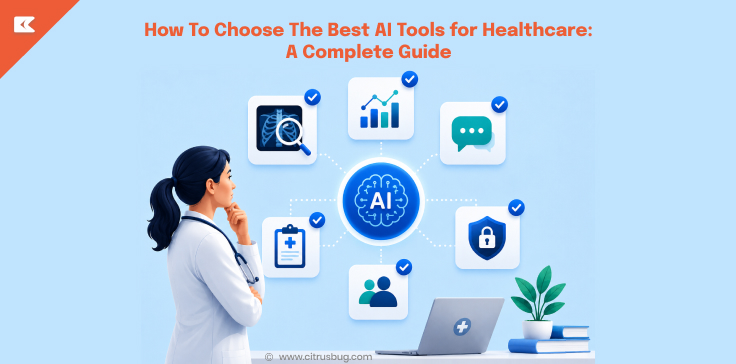 Artificial Intelligence
The global healthcare AI market is projected to surpass $188 billion by 2030, and most healthcare organizations already know they need AI in their workflows, the harder question is where…
Read Article → Custom Software Development
Introduction Healthcare is deep into a cloud-first decade, where digital transformation, data-driven decision-making, and scalable cloud platforms are reshaping how care is delivered and managed. Electronic health records, imaging, telehealth,…
Read Article →Healthcare SaaS development services involve building cloud-based software for healthcare organizations, covering patient management, telemedicine, billing, analytics, and other clinical or operational workflows. These platforms are delivered through the cloud rather than installed on local servers.
Most mid-complexity platforms range from $30,000 to $150,000, while enterprise platforms with multiple integrations and compliance layers can exceed $500,000. Cost depends on features, integrations, and compliance scope.
HIPAA, SOC 2, HL7/FHIR, HITECH, and the 21st Century Cures Act apply to most US healthcare platforms. GDPR applies if you serve EU patients, and FDA/IEC 62304 apply if your SaaS connects to medical devices.
Yes. We map your current data model and integrations first, then run the new platform alongside the old one during a parallel period to validate accuracy before full cutover.
A mid-sized platform typically takes 3 to 6 months from discovery to launch. Platforms with multiple EHR integrations or complex compliance requirements can take 6 to 12 months.
Both, depending on your business model. SaaS products sold to multiple healthcare organizations are usually multi-tenant. Internal platforms for a single health system are often single-tenant with multi-location support.
Yes. We build integrations using HL7 v2, HL7 v3, and FHIR R4 depending on what your EHR vendor supports, including Epic, Cerner, and athenahealth systems.
We offer post-launch SLA support across L1, L2, and L3 tiers, and free maintenance for an initial period after delivery so early issues get resolved without additional cost.
