
 Back
Back








Key Takeaways
- The healthcare virtual assistant market reached $2.1 billion in 2026, up from $1.7 billion in 2025, roughly 24% year-over-year growth.
- Chatbots lead product adoption, contributing more than 75% of health intelligent virtual assistant market share in 2024.
- Cloud-based solutions account for 65% of deployments, favored for remote access and lower infrastructure investment.
- Natural language processing leads the technology segment with 61% of deployments, central to both documentation and administrative automation.
- Legacy system integration and data security compliance remain the biggest barriers, with some forecasts citing a more conservative 15.6% CAGR due to these frictions.
Healthcare organizations across the world are investing in digital tools to reduce administrative workload, improve patient access, and support clinical staff at scale. The healthcare virtual assistants market has emerged as one of the fastest-growing segments within the broader healthcare IT landscape, with AI-driven systems gaining adoption across hospitals, outpatient facilities, and telehealth platforms.
What began as basic chatbot functionality has evolved into voice-enabled, NLP-powered systems capable of scheduling appointments, answering patient queries, supporting clinical documentation, and triaging symptoms before physician contact. The technology is no longer limited to early-adopter organizations; it is becoming standard infrastructure in modern care delivery.
Investment and deployment activity have accelerated substantially, backed by rising demand for cost-efficient care, growing clinical staffing pressures, and greater acceptance of digital health interfaces among both patients and clinicians.
What is a Healthcare Virtual Assistant?
A healthcare virtual assistant is a software-based system that uses artificial intelligence, natural language processing, and speech recognition to communicate with patients and clinical staff. These systems manage tasks such as appointment scheduling, symptom triage, medication reminders, and real-time documentation support across hospital and outpatient environments.
Their practical value lies in reducing administrative burden on front-line teams while maintaining consistent patient engagement between care visits. By automating routine communication and high-volume data entry workflows, these tools allow staff to concentrate on decisions that require direct clinical expertise and judgment.
Key functions of Healthcare Virtual Assistants include:
- AI-powered patient support
- Appointment scheduling automation
- Symptom assessment assistance
- Medication reminder management
- Clinical workflow optimization
- Real-time patient engagement
- Healthcare system integration
- 24/7 virtual assistance
A Snapshot of the Healthcare Virtual Assistants Market
This segment spans AI-powered chatbots, voice assistants, and smart documentation tools integrated with electronic health record systems. Market data across multiple segments and technology definitions consistently confirms that this category has moved well past proof-of-concept and into large-scale institutional deployment across hospitals, health networks, and digital care platforms worldwide.
The diversity of market definitions within this space, spanning AI-specific virtual medical assistants, conversational AI in healthcare platforms, and digital assistant service markets, reflects both the breadth of the category and the distinct value each sub-segment brings to healthcare operations.
Global Market Valuation (2024–2026)
Current and near-current valuations confirm that this market has reached significant commercial scale, with year-over-year growth sustained across care settings and technology categories on a global level.
- The healthcare virtual assistant market was estimated at USD 1.71 billion in 2024, driven by strong baseline demand from hospitals and outpatient providers seeking automated tools for patient engagement, appointment management, and clinical communication workflows. The market is projected to expand at a CAGR of 30.5% from 2024 to 2032, reflecting sustained institutional and investor commitment to intelligent health engagement platforms across every major care setting.
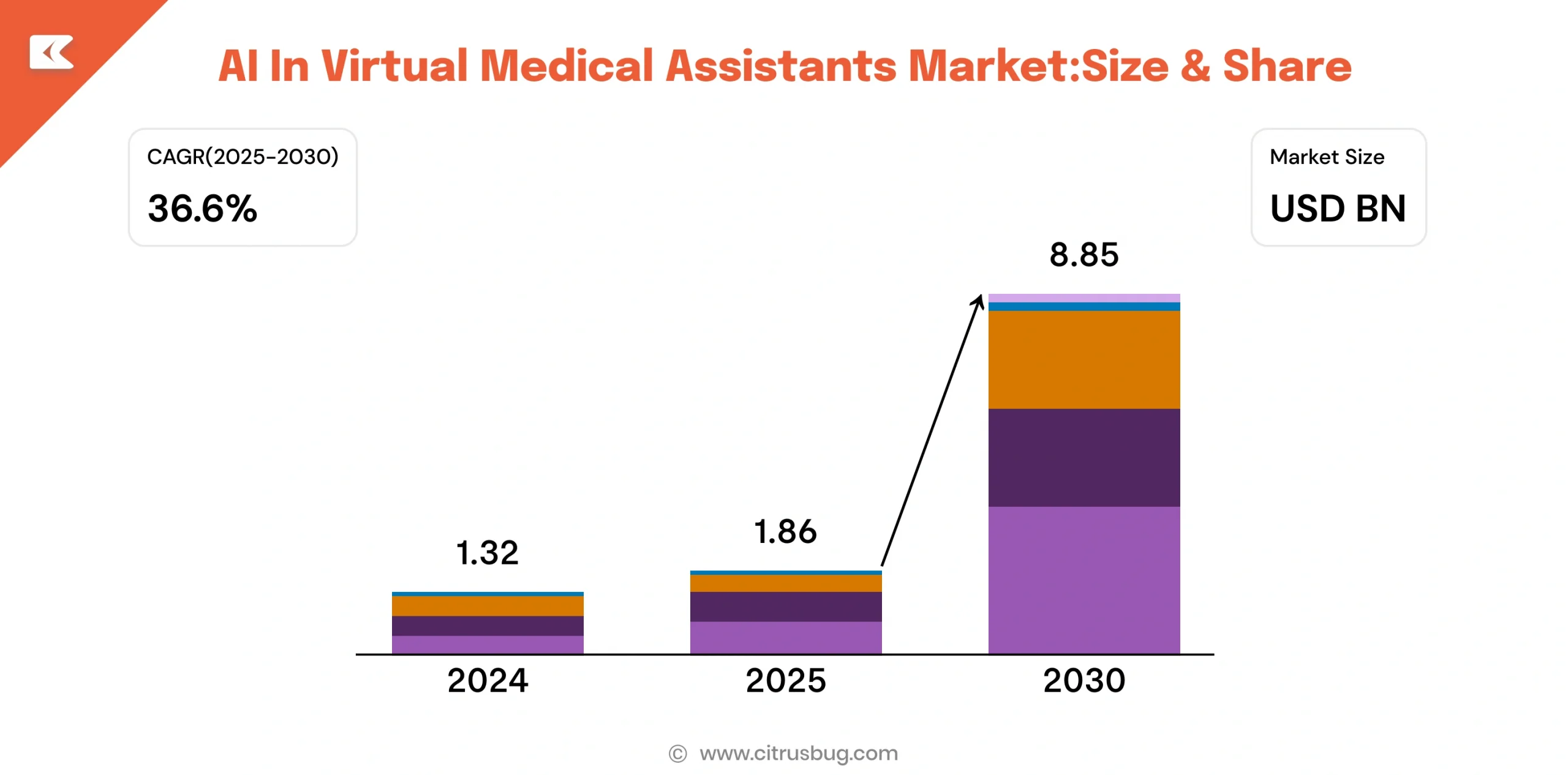
- The AI in virtual medical assistants segment reached USD 1.86 billion in 2025, advancing at a CAGR of 36.6% from 2025 to 2030, as health systems directed investment into AI-native tools for clinical documentation support, real-time patient communication, medication adherence programs, and chronic disease management support at scale.
Broader Healthcare AI Market Scale
Virtual assistants represent a specialized product category within a much larger healthcare AI ecosystem. The scale of adjacent market segments illustrates the cross-sector investment momentum and the depth of institutional demand driving commercial adoption of these tools across clinical and administrative environments.
- Global conversational AI in healthcare was valued at USD 13.68 billion in 2024, spanning the full scope of AI-driven dialogue systems within which healthcare virtual assistants function as a core patient-facing and clinical-support application category across hospitals, payers, and digital health platforms.
- Digital assistants in the healthcare market reached USD 3.07 billion in 2026, growing at a CAGR of 32.84% from 2026 to 2031, with voice interface integration and AI model deployment driving adoption across clinical workflow management, documentation tools, and patient communication platforms.
- The global virtual medical assistant service market reached USD 1,900.5 million in 2026, with enterprise-level health system adoption pushing demand for multi-function platforms that combine administrative automation, clinical documentation support, and patient engagement capabilities within a single, integrated operational environment.
How Healthcare Providers Are Using Virtual Assistants
Deployment activity across hospital networks, outpatient facilities, and health insurance platforms shows a clear preference for scalable, language-capable systems that integrate with existing clinical infrastructure. Adoption patterns reveal consistent momentum among healthcare providers and a steady shift from narrow single-function tools to comprehensive virtual assistant platforms that support multiple care workflows simultaneously.
Platform selection decisions are increasingly driven by NLP capability, EHR compatibility, and the ability to scale across high-volume patient communication environments without significant per-interaction cost increases.
Deployment Infrastructure Preferences
Cloud-first architecture dominates the deployment landscape for virtual assistant programs, though on-premise configurations retain a meaningful share among institutions with strict data sovereignty requirements, complex security obligations, and internal IT governance standards.
- Cloud-based solutions account for 65% of the healthcare virtual assistant market, driven by provider preference for platforms that enable remote access, automatic feature updates, and significantly lower infrastructure investment compared to self-hosted alternatives across distributed, multi-site care environments.
- On-premise solutions are projected to hold 49.3% of the virtual medical assistant service market in 2026, reflecting strong demand from large hospital systems that require complete data control and strict alignment with internal IT governance and regulatory compliance frameworks around patient data handling.
Technology and Service Category Adoption
Natural language processing and chatbot functionality lead the technical capability landscape within this market. Administrative task automation remains the highest-volume deployment category, with scheduling, billing support, and documentation generating the majority of commercial platform activity across provider organizations.
- Natural language processing leads the technology segment with a 61% share of healthcare virtual assistant deployments in 2026, reflecting how central conversational accuracy and text interpretation capabilities are to both clinical documentation automation and high-volume administrative workflow support.
- Chatbots account for 46.30% of revenue share in the digital assistants in healthcare market as of 2025, making messaging-based interaction the most widely deployed virtual assistant format across patient-facing platforms, scheduling tools, and administrative support environments.
- Administrative support services are projected to hold 42.9% of the virtual medical assistant service market share in 2026, as scheduling automation, insurance query handling, and documentation support generate the highest volume of institutional deployments across hospitals and outpatient care settings.
End-User Segment Leadership
Among all end-user categories in this market, healthcare providers represent the largest and most active adopter group, accounting for the majority of commercial virtual assistant deployment activity across clinical and administrative operations globally.
- Healthcare providers account for 56% of the health intelligent virtual assistant market in 2024, as hospitals and physician practices integrate virtual assistant platforms to manage patient communication, appointment operations, real-time documentation workflows, and clinical coordination at institutional scale across both inpatient and outpatient environments.
Key Trends Reshaping Healthcare Virtual Assistant Adoption
The healthcare virtual assistants market is transitioning from isolated pilot deployments to full-scale, integrated care platforms as enterprise investment grows and AI infrastructure matures. The following trends define the pace and direction of this shift through 2025 and 2026, with adoption data pointing consistently toward broader, deeper deployment across hospitals, health plans, and digital care organizations.
Milestone Market Growth Through 2026
The market reached USD 2.1 billion in 2026, up from USD 1.7 billion in 2025, reflecting approximately 24% year-over-year growth. This consistent expansion confirms that virtual assistant adoption has moved decisively beyond exploratory pilot activity into mainstream deployment across hospital systems, health plans, and enterprise digital health networks. The pace of this growth also indicates that both patient adoption of digital care tools and institutional commitment to AI infrastructure are accelerating in parallel.
Chatbot Technology Dominating Product Adoption
Chatbots have established themselves as the clear product category leader in this market, and the data reflects a decisive advantage in real-world deployment.
They contributed more than 75% of health intelligent virtual assistant market share in 2024, driven by their ability to handle large volumes of rule-based interactions including appointment scheduling, insurance verification, and FAQ responses through text-based messaging interfaces that patients find intuitive and accessible without requiring specialized hardware or voice input capabilities.
Hospital Networks at the Center of Deployment Activity
The hospital application environment is the primary commercial driver for virtual assistant adoption, and recent market data confirms this position is strengthening.
The market reached USD 2.4 billion in 2026, with hospitals leading deployment to manage scheduling backlogs, automate patient onboarding, and support real-time clinical documentation as patient volumes and administrative complexity continue to grow. Hospitals are also increasingly using virtual assistants for post-discharge follow-up and medication adherence support.
Investment Activity Confirming Structural Market Demand
The global market reached USD 2.57 billion in 2025, with AI advancement and growing telemedicine adoption identified as the primary growth catalysts. Rising financial commitment from health IT vendors, payer organizations, and hospital networks confirms that demand for virtual assistant tools reflects a durable structural shift in healthcare operations.
This level of capital deployment signals that organizations are no longer treating virtual assistants as experimental technology but as essential operational infrastructure for managing patient communication at scale.
Factors Accelerating Healthcare Virtual Assistant Growth
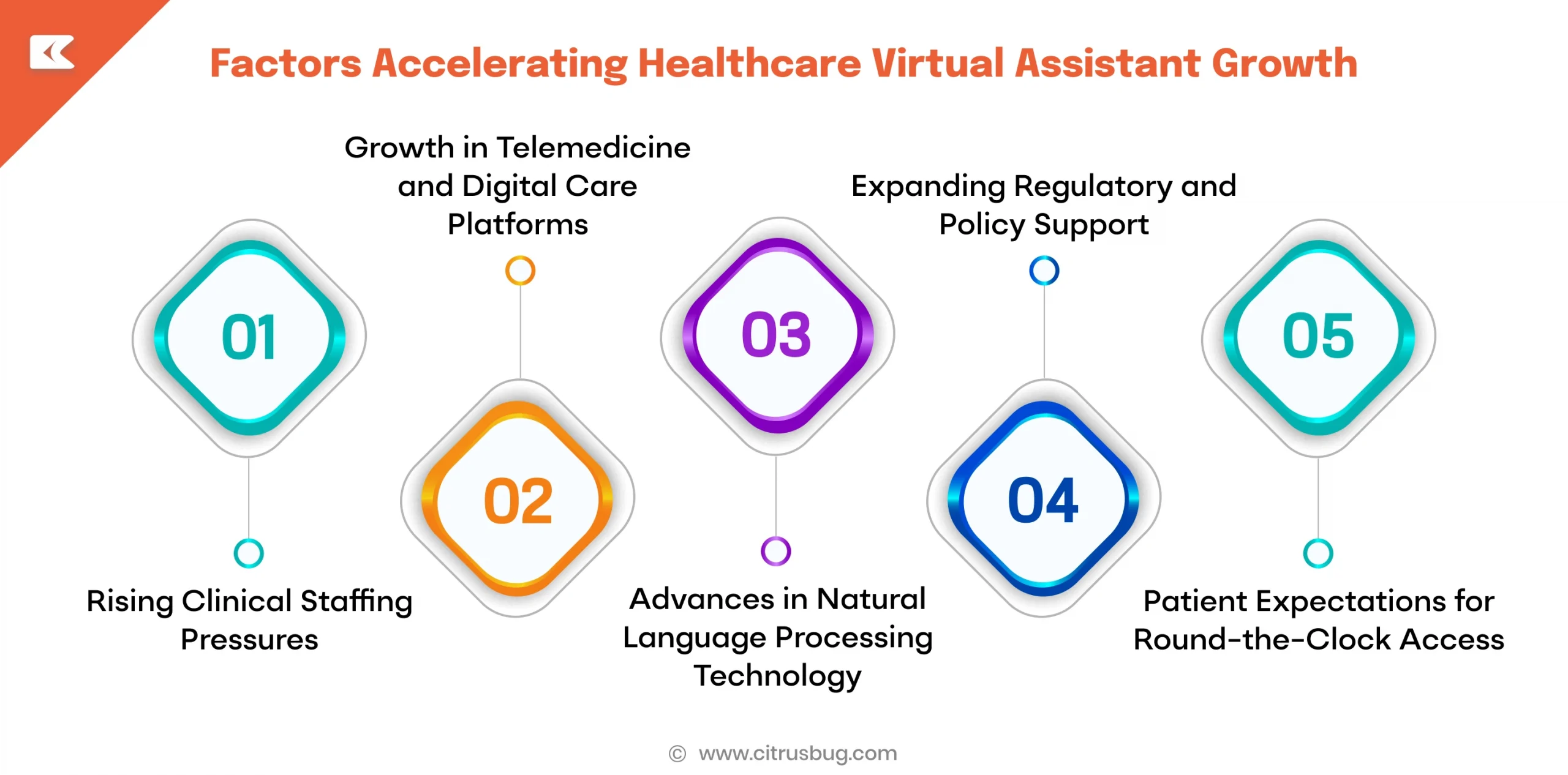
Several interconnected forces are driving consistent expansion across this market. From workforce constraints to improvements in foundational AI technologies, these factors together create conditions for sustained long-term deployment growth across care settings, organization sizes, and geographic markets. Understanding these drivers is critical for healthcare organizations evaluating when and how to invest in virtual assistant infrastructure at scale.
Rising Clinical Staffing Pressures
Nurse and administrative staff shortages across hospitals have intensified to the point where digital augmentation is a practical operational strategy. Health systems are deploying virtual assistants to manage appointment reminders, medication queries, and routine patient interactions through healthcare automation solutions, reducing reliance on human staff for repetitive, high-volume communication tasks that fall within software capability ranges and do not require direct clinical expertise or judgment to handle effectively.
Growth in Telemedicine and Digital Care Platforms
The broad adoption of telehealth services has created new patient-provider communication touchpoints that require automated support infrastructure to function at scale. Virtual assistants integrate with telehealth platforms to manage pre-visit screening, post-visit follow-ups, and real-time symptom triage, reducing clinician time on routine communication while keeping patient engagement timely and consistent across digital care environments.
Advances in Natural Language Processing Technology
The maturity of NLP models and large language applications has significantly raised the accuracy and contextual understanding of virtual assistants in clinical settings. Modern systems interpret complex medical language, recognize patient intent across different communication styles, and adapt responses based on prior interaction history, raising adoption confidence among healthcare administrators and clinical leadership teams evaluating these tools for enterprise-level deployment.
Expanding Regulatory and Policy Support
Governments and healthcare regulators across major markets have established frameworks that clarify how AI tools can operate responsibly within clinical environments. Digital health reimbursement pathways, national digital health strategies, and updated compliance standards are reducing institutional risk for organizations moving from exploratory pilots to enterprise-level virtual assistant implementations across complex, multi-site health systems.
Patient Expectations for Round-the-Clock Access
Patients now expect continuous access to health information and support beyond scheduled care appointments. Virtual assistants address this expectation directly by providing 24/7 responses to medication questions, appointment changes, test result queries, and general health guidance, reducing after-hours call volume and unscheduled visit demand that would otherwise consume front-desk and nursing staff capacity across hospital networks and outpatient facilities.
Challenges in Healthcare Virtual Assistant Adoption
Despite strong market momentum, real-world barriers limit the speed at which organizations can fully integrate virtual assistants into clinical and administrative operations.
- Data Security and Regulatory Compliance: Virtual assistants in healthcare handle sensitive patient information across multiple digital access points, making compliance with HIPAA, GDPR, and jurisdiction-specific data governance standards a persistent operational challenge for health organizations of all sizes. Some market projections estimate a more conservative CAGR of 15.6% from 2025 to 2032 for this sector, citing adoption friction driven by data security risk, regulatory complexity, and the significant cost of integrating these tools with legacy EHR platforms not built to support AI-based interfaces.
- Legacy System Integration and High Implementation Costs: Many healthcare organizations operate on older IT infrastructure that lacks native support for modern API-based integrations, requiring substantial upfront technical investment before virtual assistant tools can function effectively within existing clinical workflows. While the broader market is growing at a CAGR of 33.77% from 2024 to 2030, integration complexity and data privacy concerns remain among the most frequently cited barriers. Organizations can evaluate potential investments by understanding the factors that influence healthcare app development costs.
Regional Market Share and Growth Insights
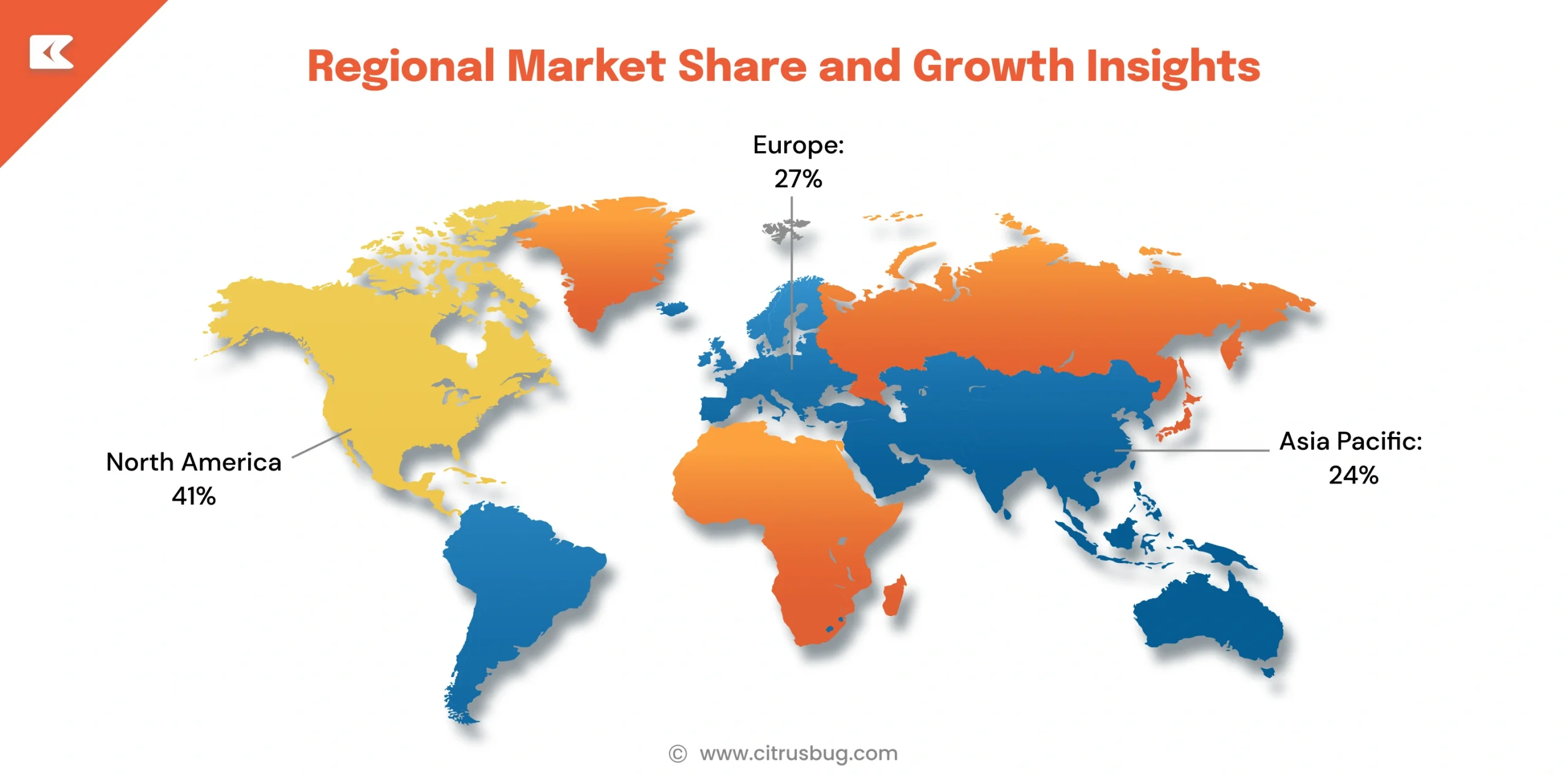
The healthcare virtual assistants market shows distinct adoption profiles across major world regions, shaped by differences in digital health infrastructure maturity, regulatory environment, institutional investment capacity, and patient population demographics.
North America
- North America holds 41% of the global health intelligent virtual assistant market, reflecting a mature digital health ecosystem built on widespread EHR adoption, advanced AI infrastructure, and established reimbursement frameworks that reduce financial risk for organizations investing in virtual assistant platforms. The United States accounts for approximately 38% of global industry revenue, supported by healthcare system scale, sustained technology investment, and strong commercial demand from hospital networks and health insurance organizations managing large, geographically distributed patient populations.
Europe
- Europe accounts for 27% of the global health intelligent virtual assistant market, supported by approximately 78% smartphone penetration across the region, growing institutional investment in chronic disease management, and an expanding focus on digital patient engagement compliance across EU and UK regulatory environments. Germany and the United Kingdom lead adoption within the region, driven by strong national digital health policy frameworks and mature health IT ecosystems.
Asia Pacific
- Asia Pacific holds 24% of the global market, supported by rapid digital health infrastructure expansion across India and China, government-led health digitization programs, and a large base of mobile-first healthcare consumers seeking on-demand, app-based health communication tools. Both India and China are among the highest-growth individual country markets globally, supported by public health investment, increasing smartphone penetration, and large underserved patient populations that benefit significantly from scalable digital triage and scheduling tools.
Future Outlook for the Healthcare Virtual Assistants Market
Forecasts consistently point to strong, sustained expansion of the healthcare virtual assistants market through the next decade. Continued AI model improvement, broader EHR integration, growing telemedicine adoption, and rising patient willingness to engage with digital health tools are all expected to support consistent double-digit growth across market categories through 2032.
- The AI in virtual medical assistants segment is projected to reach USD 8.85 billion by 2030, driven by growing health system investment in clinically validated AI tools for documentation automation, real-time patient triage, chronic disease management support, and personalized medication adherence programs across both inpatient and outpatient care settings globally. As AI model performance continues to improve and regulatory clarity around clinical AI tools increases, adoption in this segment is expected to accelerate further through the end of the decade.
- The broader market in this category is forecast to reach USD 4,440.7 million by 2032, as consistent investment in digital health platforms and intelligent patient engagement systems supports long-term deployment expansion across hospital networks, telehealth providers, and health insurance organizations managing geographically distributed patient populations at enterprise scale.
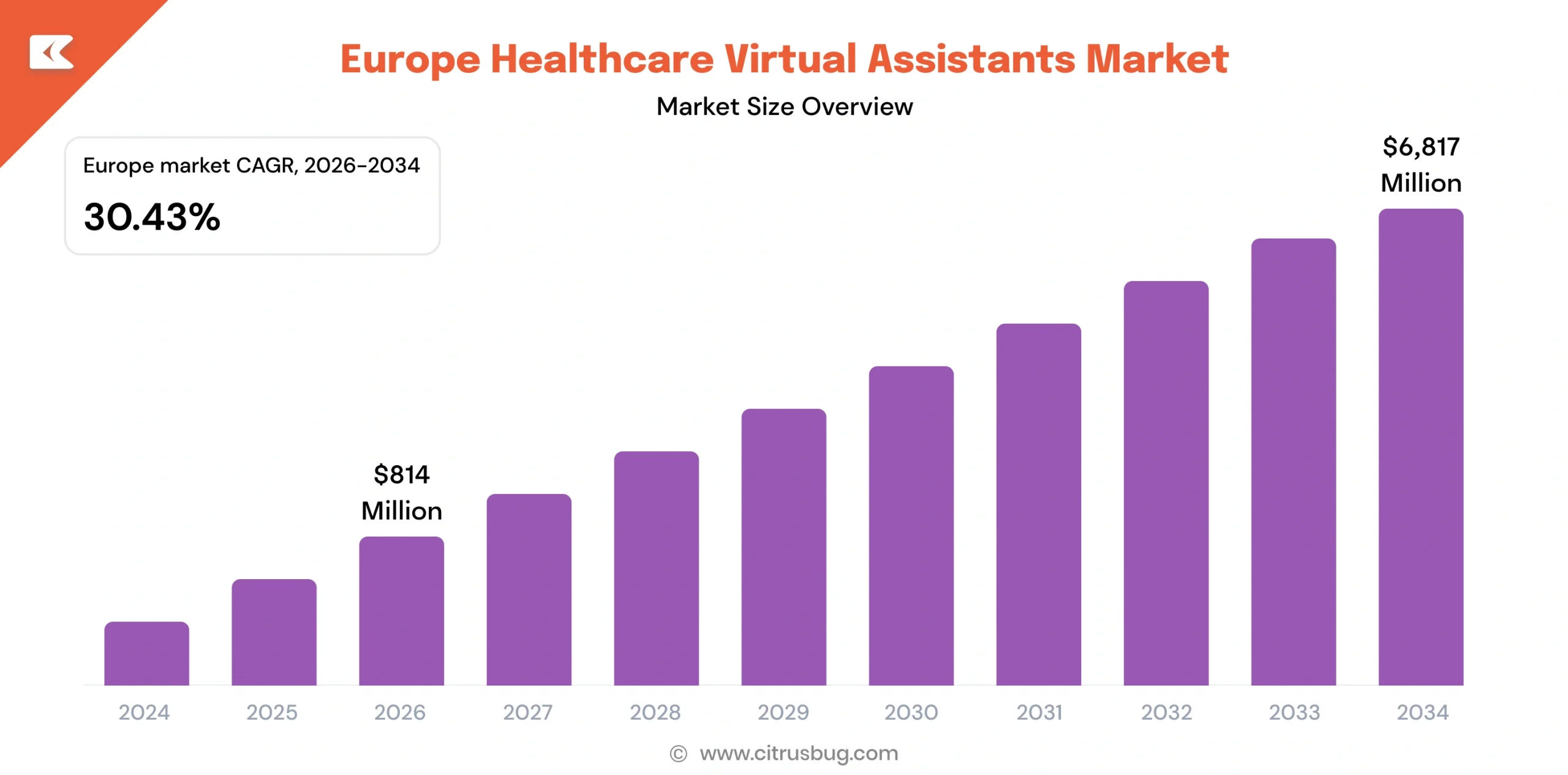
- Europe’s regional market in this segment is projected to reach USD 6,817 million by 2034, advancing at a CAGR of 30.43% from 2026, as national digital health frameworks, updated regulatory guidance on AI tool deployment, and rising smartphone-driven care access drive consistent annual adoption growth across public and private health systems throughout the region. The convergence of chronic disease burden, aging population demographics, and strong mobile infrastructure positions Europe as a sustained high-priority market for virtual assistant investment through the forecast period.
Conclusion
The healthcare virtual assistants market continues to expand at a pace rooted in practical institutional demand across care settings, technology categories, and world regions. From cloud-based chatbot platforms in U.S. hospitals to AI-enabled documentation tools across European health networks, adoption data consistently point to a market deepening its footprint year over year.
For healthcare organizations, the evidence base for virtual assistant investment is already robust. Developing scalable healthcare virtual assistant solutions now positions providers and health networks to lead in patient engagement efficiency, administrative automation, and digital care delivery through 2032 and beyond.