Back
Back






What if your business could predict customer behavior, detect risks before they happen, and make smarter decisions?
That’s what AI predictive analytics can help you with. Instead of only analyzing past data, predictive models use artificial intelligence and machine learning to determine future outcomes.
Various organizations adopt this technology. According to market research, the global predictive analytics market is projected to surpass $21.24 billion in 2026. It is driven by the growing demand for AI-powered decision-making across various industries.
However, building an effective AI predictive analytics model is tough. The advanced models can produce wrong insights if the data is not properly provided or validated. So, how can organizations build predictive models that produce efficient results?
This article discusses what an AI predictive analytics model is and the seven best practices for building an efficient model.
What Is an AI Predictive Analytics Model?
An AI predictive analytics model is a system that analyzes historical and real-time data to predict future events, trends, or behaviors by using machine learning algorithms.
Instead of simply reporting what happened, predictive models answer questions like:
- Which customers are likely to churn?
- Which products will sell the most next quarter?
- Which machines are likely to fail soon?
Take the example of an e-commerce company trying to reduce its cart abandonment rates. By training an AI predictive analytics model on past browsing behavior, purchase history, and engagement data, the system can predict which customers are likely to abandon their carts and trigger targeted offers or reminders.
The results are better decisions, faster actions, and measurable business impact.
This is why predictive data analytics and AI analytics are now used across industries such as finance, healthcare, manufacturing, and marketing.

Why Best Practices Matter in Predictive Modeling
An AI predictive analytics model is powerful, but without the right approach, it can easily produce misleading insights instead of useful predictions.
1. Biased datasets
If the training data contains historical bias or incomplete information, the AI predictive analytics model may learn the wrong patterns. This can lead to inaccurate forecasts or unfair outcomes in areas such as hiring, lending, or performance evaluation.
That’s why you should ensure balanced and representative datasets so that the model generates more reliable predictions.
2. Overfitted models
Sometimes models perform extremely well during training but fail when applied to new data. This happens when the model remembers patterns from the training dataset rather than learning general trends.
Proper validation techniques and testing with unseen data can prevent this issue in AI predictive analytics projects.
3. Lack of real-world validation
A predictive model might look accurate in a testing environment but behave differently in real-world scenarios. Without proper validation using real operational data, organizations may deploy models that do not deliver reliable insights.
Teams should validate predictive models using actual operational data through pilot testing or shadow deployments before full implementation.
4. Poor integration with business workflows
Even a highly accurate AI predictive analytics model becomes useless if teams cannot easily use its predictions.
Models must integrate with existing tools, dashboards, and decision-making processes so that insights can be applied in daily operations.
7 Best Practices for Building an AI Predictive Analytics Model
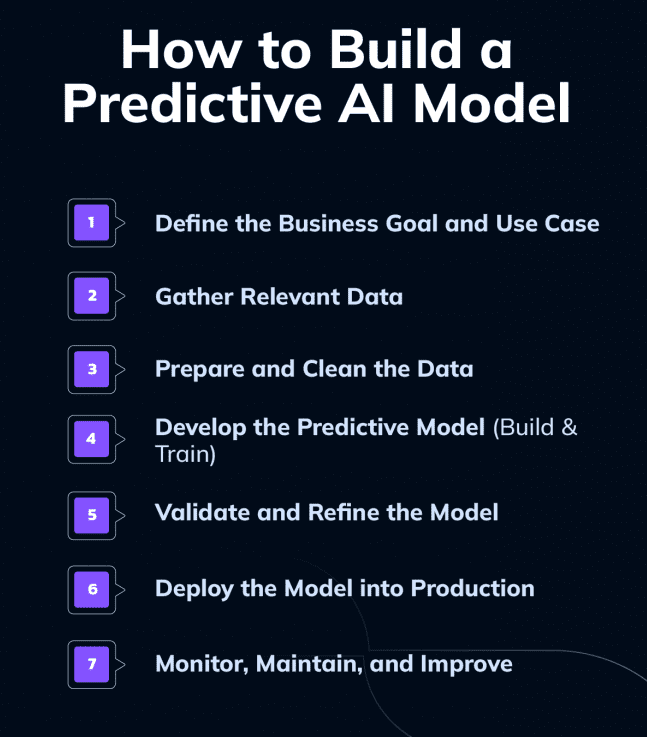
1. Define Business Objective Clearly
One of the most common mistakes many teams make is starting with technology instead of a problem.
Before building an AI predictive analytics model, ask yourself:
- What business problem are we solving?
- What decision will this model support?
- What outcome will define success?
For instance, a telecom company might want to reduce customer churn by 15%. That’s a clear goal. The predictive model would focus on identifying customers at risk of leaving.
Without a clear objective, teams often build models that look impressive technically but deliver little business value.
A good rule: If you can’t explain the model’s purpose in one sentence, the objective probably isn’t clear enough.
2. Collect High-Quality and Relevant Data
Data is the foundation of every AI predictive analytics model. Even the most advanced algorithm cannot compensate for poor or irrelevant data.
That’s why organizations should focus on collecting:
- Accurate historical data
- Diverse datasets
- Real-time behavioral signals
- Clean operational data
For example, a retail company predicting demand should include data like:
- past sales
- seasonal patterns
- promotions
- customer demographics
- market trends
If key data sources are missing, predictions will naturally be flawed. A useful strategy is to conduct a data audit before building the model. This will ensure that your dataset reflects the real-world scenario you’re trying to predict.
3. Perform Thorough Data Cleaning and Preprocessing
Raw data is rarely usable immediately. Before training an AI predictive analytics model, the data must go through preprocessing steps such as:
- removing duplicates
- handling missing values
- normalizing numerical data
- encoding categorical variables
Why is this important?
Imagine a dataset where customer ages are recorded inconsistently: “35”, “Thirty-Five”, and “35 years”. If these inconsistencies remain, the model will interpret them incorrectly. Data cleaning ensures that the predictive model learns true patterns rather than noise.
Interestingly, some teams now use gen AI tools to assist with early-stage data exploration and feature suggestions. This helps analysts identify patterns faster before formal modeling begins.
4. Choose the Right Model and Algorithms
Not every algorithm is suitable for every problem.
Selecting the right model for AI predictive analytics depends on:
- data size
- problem complexity
- prediction type
For example:
Regression models
Best for predicting numerical outcomes, such as revenue or demand.
Classification algorithms
Ideal for predicting categories such as fraud detection or churn.
Time-series models
Useful for forecasting trends over time.
Often, data scientists experiment with multiple models, such as:
- Random Forest
- Gradient Boosting
- Neural Networks
Then they compare performance metrics to choose the best approach. The key is selecting a model that balances accuracy, interpretability, and scalability.
5. Avoid Overfitting With Proper Validation Techniques
As already mentioned, overfitting happens when a model performs exceptionally well on training data but fails on real-world data. This is a common pitfall in AI predictive analytics projects.
To avoid overfitting, teams should use validation techniques like:
- train-test splits
- cross-validation
- regularization methods
For example, if a model memorizes historical sales patterns instead of learning general trends, it may fail when market conditions change.
Validation ensures the model can generalize beyond the training dataset.
Think of it like studying for an examination. Memorizing answers might work for practice questions, but understanding concepts helps you solve new problems.
6. Monitor, Evaluate, and Optimize Model Performance
Building a model is not the final step. Predictive models must be continuously monitored because real-world data changes over time. This phenomenon is called data drift.
For instance, customer behavior may shift due to new market trends, economic changes, or competitor strategies.
Organizations should regularly track metrics like:
- prediction accuracy
- precision and recall
- error rates
If performance declines, the model should be retrained with updated data.
Continuous monitoring ensures that AI predictive analytics models remain reliable and valuable over time.
7. Ensure Ethical AI and Data Security Compliance
Ethical considerations are becoming increasingly important in AI predictive analytics.
Predictive models can unintentionally reinforce biases if training data reflects historical inequalities.
For example:
- Hiring algorithms may favor certain demographics
- Lending models may disadvantage specific groups
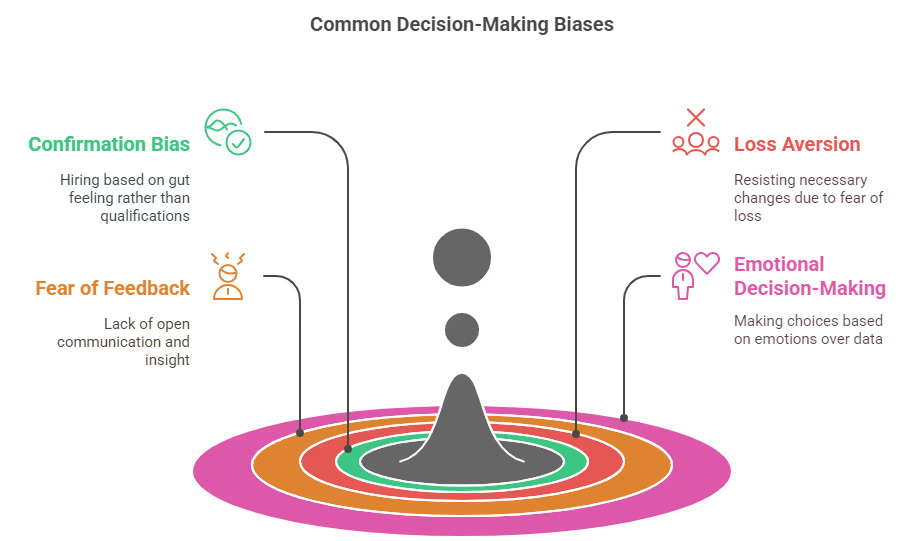
To counter this, organizations should implement safeguards such as:
- bias detection checks
- transparent model documentation
- ethical review processes
Additionally, companies should ensure data security and compliance with privacy regulations. Protecting customer data is essential for maintaining trust. Responsible AI practices help organizations build fair, transparent, and trustworthy predictive systems.
From Predictive Insights to Real Business Impact
Building a successful predictive model requires more than selecting the right algorithm. It relies on clear business goals, high-quality data, proper validation, and continuous monitoring. When these elements align, organizations can transform raw data into smart insights.
An effective predictive analytics model also requires the right data strategy and ongoing refinement. Working with experienced teams like Citrusbug can help you turn raw data into actionable insights effortlessly.