Back
Back






Healthcare providers are expanding remote care programs to monitor patients outside hospitals and clinics. Remote patient monitoring platforms collect health data from connected devices such as blood pressure monitors, glucose meters, and wearable sensors, allowing clinicians to track patient conditions in real time and manage chronic diseases without frequent in-person visits.
Remote monitoring adoption is growing rapidly. According to data, the number of patients using remote patient monitoring solutions worldwide is projected to surpass 115 million by 2027. As this demand increases, many healthcare organizations are evaluating the cost to develop RPM software before launching their own platform, since development expenses depend on features, integrations, and compliance requirements.
What Is Remote Patient Monitoring (RPM) Software?
Remote patient monitoring (RPM) software enables healthcare practitioners to collect patient health data remotely while patients are staying at home. Instead of depending on scheduled clinic visits, doctors can continuously monitor vital signs through the connected medical devices. Devices like blood pressure monitors, glucose meters, pulse oximeters along with wearable sensors, automatically upload the patient data to a digital platform where healthcare teams can monitor the data in real-time.
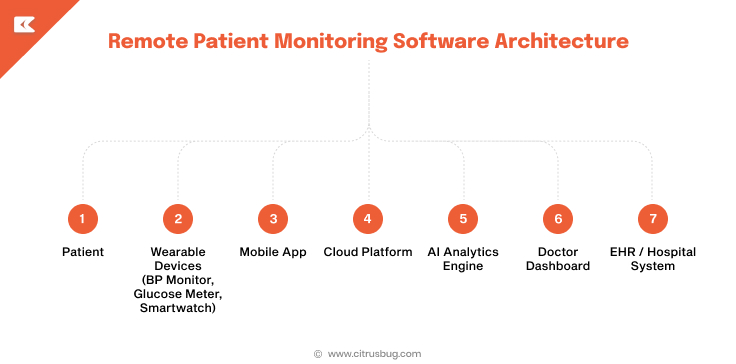
This software essentially serves as the main system that gathers, structures, and displays health information for clinicians. A standard RPM platform usually comprises:
- Patient applications or portals through which patients can enter their vital signs and access their health information
- Device integrations that facilitate the connection of medical devices such as glucose monitors, ECG sensors, or smartwatches
- Provider dashboards enabling clinicians to check patient data, follow patterns, and get notified when measurements are outside the normal range
The overall structure of an RPM platform and how patient data flows between different components is shown below.
Many healthcare organizations invest in RPM software development to create platforms that help in chronic disease management, support patients after their discharge, and keep track of high-risk patients.
Cost to Develop RPM Software in 2026
The RPM software development cost varies based on the platform’s complexity, features, and the healthcare systems it needs to connect with. Some providers start with a simple monitoring platform to test remote care programs, while hospitals and digital health companies often invest in more advanced systems that support multiple devices, analytics, and integrations.
A basic remote monitoring solution usually focuses on core capabilities such as device connectivity, patient data collection, and a clinician dashboard. As platforms expand to include advanced analytics, integrations with hospital systems, and stronger security frameworks, the overall development cost increases.
| Development Type | Estimated Cost |
|---|---|
| Basic RPM solution | $40,000 – $70,000 |
| Mid-level RPM platform | $70,000 – $150,000 |
| Advanced RPM ecosystem | $150,000 – $300,000+ |
The overall cost distribution across different development stages can be better understood in the breakdown below.
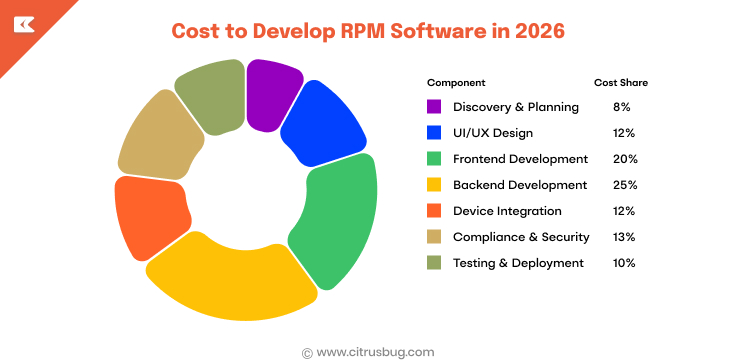
These estimates give a general idea of pricing. The actual cost can change depending on the platform’s functionality, the number of device integrations required, regulatory compliance needs, and the overall development complexity.
Key Factors That Affect RPM Software Development Cost
Several technical and regulatory factors influence the cost of developing remote patient monitoring software. The more capabilities a platform supports, the more development effort, integrations, and testing are required. Below are the key factors that typically impact the final investment.
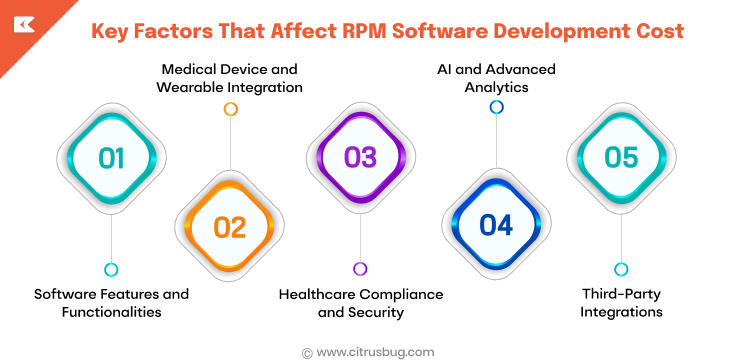
Software Features and Functionalities
The scope of features included in the platform directly affects development time and cost. A basic system may only collect and display patient data, while more advanced platforms include tools that support care management and communication between patients and clinicians.
Common features include:
- Patient dashboards that display real-time health metrics
- Health data visualization through charts and trend reports
- Alerts and notifications for abnormal readings
- Appointment scheduling for follow-up consultations
- Remote consultations through integrated communication tools
Each additional feature requires backend logic, interface design, and testing, which increases the overall development effort.
Medical Device and Wearable Integration
Remote monitoring platforms rely on connected medical devices to collect patient data. Integrating these devices requires specialized APIs, communication protocols, and compatibility testing to ensure accurate data transmission.
RPM platforms commonly connect with:
- Blood pressure monitors
- Glucose meters
- ECG monitoring devices
- Smartwatches and wearable fitness trackers
Supporting multiple devices increases development complexity because each device may use different communication standards. This is where IoT healthcare integration becomes essential, allowing the platform to securely collect and manage data from connected medical devices.
Healthcare Compliance and Security
Handling patient health data requires strict regulatory compliance and security frameworks. Healthcare platforms must meet global privacy regulations and follow industry standards for protecting sensitive information.
Common compliance requirements include:
- HIPAA (Health Insurance Portability and Accountability Act)
- GDPR (General Data Protection Regulation)
- FDA Software as a Medical Device
Meeting these standards involves implementing security measures such as data encryption, secure cloud storage, and role-based access controls. Building and validating these safeguards adds additional development and compliance costs.
AI and Advanced Analytics
Many modern RPM platforms use data analytics to provide deeper clinical insights. Instead of simply collecting patient data, these systems analyze patterns and help healthcare teams identify potential risks earlier. This approach reflects the growing role of AI in healthcare applications, where data is used to support faster and more accurate clinical decisions.
Advanced capabilities may include:
- AI-driven health alerts based on abnormal vital signs
- Predictive analytics for identifying health deterioration
- Patient risk scoring using historical health data
- Automated reporting for clinicians and care teams
Developing these features requires expertise in AI healthcare software and data modeling. Platforms that support predictive patient monitoring typically involve more complex infrastructure and algorithm development.
Third-Party Integrations
RPM platforms often need to connect with other healthcare systems to ensure smooth data exchange across clinical workflows. Integrations allow patient data collected through monitoring devices to be shared with hospital systems and care teams.
Common third-party integrations include:
- EHR or EMR systems
- Pharmacy management systems
- Telemedicine platforms
- Payment and billing systems
Building and maintaining these integrations requires additional APIs, interoperability standards, and testing to ensure accurate and secure data exchange.
Essential Features of Remote Patient Monitoring Software
Remote patient monitoring systems require both patient-facing applications and clinical dashboards to facilitate ongoing care. These features allow health care providers to monitor patient health outcomes, interact with patients remotely, and act promptly when health indicators vary.
Patient Mobile App
A patient mobile application enables people to measure vital signs, add monitoring devices, and provide health information to their care teams. It also offers access to reminders, health updates, and communication tools.
Healthcare Provider Dashboard
A centralized dashboard allows clinicians to review patient data, track health trends, and discover abnormal readings. The dashboard assists care teams in monitoring several patients simultaneously and makes speedier clinical decisions.
Real-time Health Monitoring
RPM platforms constantly gather and present patient data from connected devices. Real-time monitoring can help clinicians anticipate early warning signs and intervene before the conditions undergo further deterioration.
Device Connectivity
The system must connect with the medical devices like blood pressure, glucose meter, pulse oximeter, and wearable sensors. A dependable connection of devices allows patient data to be recorded correctly and sent safely.
Secure Messaging
Secure communication tools enable patients and healthcare providers to communicate with each other using the platform. This quality aids clinicians in giving advice, responding to questions from patients, and sustaining continuous contact.
Video Consultations
Most RPM platforms also have integrated video consultation services, where virtual visits can be made. This enables providers to access the health data of patients and discuss the course of treatment during a remote visit.
Medication Reminders
Medication reminder functions can assist patients in adhering to a treatment plan by providing an alert for overdue medication. This enhances compliance and minimizes the chances of missed medications.
Health Data Analytics
Analytics tools present patient health data in clear charts and reports. Clinicians can analyze trends over time, compare data, and apply insights to inform treatment decisions.
Development Timeline for RPM Software
The remote patient monitoring software development timeline depends on the complexity of the platform, the number of device integrations, and the compliance validation needs. Some healthcare providers start with a minimum viable product, while larger organizations build full-scale monitoring ecosystems. An average RPM platform will need several months to design, develop, test, and roll out.
| Stage | Estimated Time |
|---|---|
| Planning & Research | 2–3 weeks |
| UI/UX Design | 3–4 weeks |
| Development | 3–6 months |
| Testing & Compliance Validation | 4–6 weeks |
| Deployment | 2 weeks |
In the planning and research phase, the development team specifies the clinical workflows, device integrations, and compliance requirements. The design stage is aimed at developing user-friendly interfaces for the patients and medical providers. The development phase entails the creation of the backend infrastructure of the platform, mobile apps, device integration, and data management.
After development, the software undergoes testing and compliance tests to enable secure data management and proper device connection. Once a final validation is complete, the platform proceeds to the deployment stage, where it is deployed to the production environment and made ready to be used in the real world by healthcare providers and patients.
Hidden Costs in RPM Software Development
The initial cost of developing RPM software typically includes design, development, and deployment. Nevertheless, several recurring costs usually come up once the platform has been established. These are the operational and compliance-related expenses that can be considered when long-term budgets of a remote monitoring program are planned.
Cloud Infrastructure
RPM systems constantly gather and store patient health information from connected devices. This demands risk-free cloud services, scalable storage services, and dependable data processing facilities. As patient usage grows, the cloud resources should also be increased, and this raises the total cost of running the RPM platform.
Device Certification
Many monitoring devices have to comply with regulatory and technical requirements before gaining access to healthcare platforms. Ensuring compatibility, testing device communication, and satisfying certification requirements may result in more development and validation costs.
Regulatory Compliance Audits
Healthcare software must comply with medical software and data protection rules. To make sure that patient data is managed appropriately, periodic compliance assessments and security audits may be required within organizations. Such audits not only need technical preparation but also verification.
Ongoing Maintenance
RPM platforms need constant monitoring, bug fixes, performance enhancement, and security updates after deployment. Such operations help in maintaining the healthcare software costs in the long term, which are necessary to keep the platform steady and safe.
Software Updates
Healthcare systems constantly change with new devices, integrations, and regulations coming in. Updating the platform to accommodate more monitoring devices, new security measures or better analytics can be a recurring development expense over time.
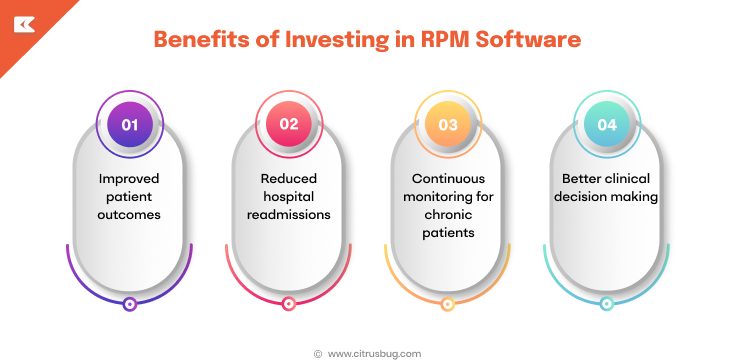
Benefits of Investing in RPM Software
Remote patient monitoring platforms enable healthcare providers to offer care outside the hospital environment and still have a constant view of the health of the patient. With the increased usage of digital healthcare solutions within healthcare systems, RPM software would be significant in enhancing care delivery and operational efficiency.
Improved Patient Outcomes
The constant availability of health information about patients enables clinicians to identify warning signs sooner and adjust treatment plans more quickly. This active strategy can be used to avoid complications and enhance the overall patient outcomes.
Reduced Hospital Readmissions
The RPM programs enable healthcare teams to follow patients once discharged and detect any possible health risks before they turn out of control. For high-risk groups, including patients with chronic heart failure, daily advanced physiological monitoring has been demonstrated to decrease 30-day readmissions by up to 50%. The real-time data enables early intervention and control post-treatment recovery by the provider, avoiding unnecessary hospital visits.
Continuous Monitoring for Chronic Patients
Patients with chronic diseases like diabetes, heart disease, or hypertension need frequent observation. RPM solutions allow continuous monitoring of vital signs, which allows care teams to treat chronic illnesses without visiting the clinic regularly.
Better Clinical Decision Making
Healthcare providers can access patient trends, historical health data, and real-time readings of monitoring devices. Such understandings make decisions more informed and enable clinicians to provide individualized treatment plans. Connected health platforms are becoming common in many organizations as a way of integrating patient monitoring data and enhancing clinical workflows.
How to Reduce RPM Software Development Cost
Healthcare organizations can control the cost to develop RPM software by planning the platform carefully and focusing on essential capabilities first. A phased development approach helps reduce upfront investment while still allowing the platform to expand as remote care programs grow.
Healthcare organizations can control the cost to develop RPM software by strategically planning the platform and ensuring necessary capabilities are met first. The gradual development strategy assists in minimizing investments at the initial stage but still enables the platform to scale up as remote care programs increase.
Start with MVP development
Launching a minimum viable product allows providers to test the platform with core monitoring features before investing in advanced capabilities. An MVP typically involves connectivity of the device, collection of patient data, and a clinician dashboard. This approach helps validate the platform’s value before scaling.
Prioritize essential features
Rather than developing a full-fledged platform initially, look at the functions that could serve urgent clinical requirements. Real-time monitoring, patient dashboards, and alerts should be prioritized, and more advanced analytics or other integrations can be added afterward.
Use a scalable cloud infrastructure
Cloud-based infrastructure allows the platform to scale as more patients and devices are added. This prevents organizations from overinvesting in infrastructure early and helps manage long-term RPM platform operational costs more efficiently.
Partner with an experienced healthcare software development company
Working with a team that understands healthcare regulations, device integrations, and clinical workflows can reduce development delays and costly rework. Experienced AI software development partners can also help design scalable architectures that support long-term platform growth.
Conclusion
Remote monitoring is becoming an essential part of modern healthcare delivery, with RPM statistics showing rapid adoption across healthcare systems. Hospitals, clinics, and digital health companies are investing in RPM platforms to track patient health remotely, improve care coordination, and manage chronic conditions more effectively. As adoption increases, understanding the cost to develop RPM software helps healthcare organizations plan budgets and choose the right development approach.
The final cost depends on features, device integrations, compliance, and operational needs. At Citrusbug Technolabs, we provide expert remote patient monitoring software development to help healthcare organizations build secure, scalable, and reliable connected care platforms.
FAQs
What essential features should an RPM platform include?
Critical features include patient apps, provider dashboards, device connectivity, real-time monitoring, secure messaging, and analytics tools.
How does AI improve remote patient monitoring?
AI analyzes patient data to detect anomalies, predict risks, and generate actionable insights for clinicians, enhancing preventive care.
How is patient data secured in RPM platforms?
RPM software uses encryption, secure cloud storage, and role-based access controls to comply with HIPAA, GDPR, and FDA regulations.
Why is ongoing maintenance important for RPM platforms?
Continuous updates, device certification, cloud scaling, and compliance audits ensure the platform remains secure, reliable, and compliant over time.