Let’s Talk

Medical Imaging Software Development Company for Enterprise Healthcare

Citrusbug builds AI-powered medical imaging platforms for radiology groups, hospital systems, and medtech enterprises. From PACS modernization to FDA-aligned SaMD builds with DICOM, FHIR R4, and IEC 62304 compliance baked in, we deliver imaging infrastructure your clinical and engineering teams can actually rely on.

Medical Imaging Software Development Company for
500+
Projects Delivered
98%
Client Retention

Certified By

HIPAA Compliant HIPAA Compliant
HL7 / FHIR Compatible HL7 / FHIR Compatible
SOC 2 Type II SOC 2 Type II

Trusted by

Certifications and Accreditations

When Imaging Infrastructure Becomes a Clinical Bottleneck

Most radiology and imaging teams are not dealing with theoretical problems. They are managing PACS environments built on proprietary vendor lock-in, DICOM viewers that cannot handle modern study volumes, and AI tools purchased without a clear integration plan.

When an imaging system cannot connect to Epic Hyperdrive via a standards-based FHIR R4 interface, radiologists work around it. When a legacy VNA lacks DICOMweb API support (WADO-RS, STOW-RS), cloud migration stalls entirely. When an AI model flags a finding that cannot be surfaced inside the existing RIS workflow, clinicians stop trusting it.

These are not configuration issues. They are architectural decisions made at build time, and they are expensive to undo without the right development partner.

What Breaks First

  • Proprietary PACS with no DICOMweb API for cloud transition
  • AI model outputs without structured reporting integration
  • Fragmented modality-to-EHR data flows lacking HL7 interface engine support
  • Compliance gaps when FDA’s QMSR (effective February 2026) applies to the existing system

What a Medical Imaging Software Development Company Builds

PACS and VNA Development

  • Custom Picture Archiving and Communication Systems and Vendor-Neutral Archives built on DICOMweb APIs (WADO-RS, STOW-RS, QIDO-RS). Microservices architecture for multi-facility deployment and high-volume study throughput without proprietary lock-in.

AI Diagnostic Models

  • Convolutional neural networks and transformer-based models trained on DICOM datasets using the MONAI framework. Covers lesion detection, image segmentation, anomaly flagging, and structured report generation for CT, MRI, X-ray, and PET modalities.

DICOM Viewer and Worklist Tools

  • Web-based DICOM viewers built on OHIF Viewer architecture, customized for specialty-specific workflows, such as neuroradiology, cardiology, oncology, and mammography. Worklist prioritization with AI-driven triage and critical finding alerts.

FHIR and EHR Integration

  • Imaging data integration with Epic Hyperdrive, Oracle Health, and standalone EHRs using HL7 FHIR R4/R4B APIs. ImagingStudy, DiagnosticReport, and Observation FHIR resource mapping for bi-directional clinical data exchange.

SaMD Development and FDA Clearance Support

  • Full Software as a Medical Device development following FDA’s PCCP guidance (finalized December 2024) and IEC 62304 lifecycle processes. Includes 510(k) documentation, risk analysis under ISO 14971:2019, and software SBOM preparation per FDA’s June 2025 cybersecurity requirements.

Radiology Workflow Automation

  • Structured reporting platforms replacing free-text dictation, automated study routing, and AI-powered worklist management that connects to clinical workflow automation software across the enterprise imaging network.

Your PACS Architecture Shouldn't Be a Clinical Risk

Legacy imaging systems slow diagnostic throughput and widen integration debt. Talk to our team about what a rebuild or modernization actually looks like.

Book a Technical Consultation

Imaging Modalities and Clinical Specialties We Build For


Building an imaging platform requires different architectural decisions depending on modality, study volume, and clinical specialty. A cardiac CT pipeline has different latency tolerances than a whole-slide pathology viewer. A mammography AI model carries different FDA classification implications than a DICOM management tool.

Citrusbug's teams have built across the full modality spectrum and understand what each specialty actually requires at the software architecture layer, not just the feature list.

High-volume DICOM ingestion pipelines, MPR reconstruction, automated windowing, and AI-assisted lesion measurement. Neuroradiology, thoracic, and abdominal CT applications with RECIST-compliant measurement tools.

Brain MRI analysis platforms with volumetric segmentation, CNN-based tumor detection, and comparison study management. FMRI and DTI tractography visualization for research and clinical applications.

Echocardiography analysis software with automated ejection fraction calculation, wall motion scoring, and cardiac CT angiography measurement. Integration with cardiovascular information systems (CVIS) via HL7 feeds.

2D and 3D mammography viewers with AI-powered density classification, lesion detection, and prior comparison tools. FDA 510(k)-cleared CADe algorithm integration or custom model development with PCCP documentation for future updates without re-submission.

Whole-slide image management platforms with tile-based rendering, AI-assisted annotation, and DICOM WSI standard (Supplement 145) compliance for cross-system interoperability.

Real-time ultrasound processing software with automated measurements, AI guidance for image quality assessment, and edge-compute capability for portable and point-of-care deployments.

How We Deliver Medical Imaging Software

1

Clinical and Regulatory Scoping

We map clinical workflows, define intended use, assign FDA SaMD classification, and identify the applicable regulatory pathway (510(k), De Novo, or general controls) before any design work begins. IEC 62304 software safety classification is assigned in this phase.

2

Architecture and DICOM Conformance Design

We produce a full system architecture with DICOM conformance statements, FHIR resource mapping, and integration specifications for target EHR systems. Risk analysis under ISO 14971:2019 starts here, running in parallel with design.

3

AI Model Development and Validation

Training pipelines built on MONAI framework using curated, de-identified DICOM datasets. Model validation covers sensitivity, specificity, and performance across demographic subgroups, addressing the FDA's expectations for medical device software that informs clinical decisions.

4

Integration and Compliance Testing

DICOM conformance testing, HL7 interface validation, FHIR API integration testing, and HIPAA security assessment. We maintain a full traceability matrix linking requirements to test cases per IEC 62304. Healthcare software testing services cover functional, performance, and regulatory compliance validation.

5

Deployment, SBOM Delivery, and Post-Launch Support

Production deployment with documented software SBOM (mandatory for FDA networked device submissions since June 2025). L1/L2/L3 SLA support options. PCCP documentation included for AI components, enabling future model updates without triggering a new 510(k) submission.

Standards-Aligned Imaging Architecture

Citrusbug's imaging platform architecture is designed for regulatory submission from the first sprint, not retrofitted after build. Compliance and interoperability frameworks built into every system we deliver.

Enterprise
DICOM PS3 / DICOMweb
Enterprise
FHIR R4
Enterprise
ISO 13485
Enterprise
IEC 62304
Enterprise
HIPAA

The AI Trust Problem in Clinical Imaging

Hospitals have purchased AI imaging tools that radiologists do not use. The pattern is consistent: the model runs on a separate server, outputs appear in a separate interface, and there is no structured way to surface findings inside the existing RIS or EHR workflow. Radiologists cannot act on what they cannot see in context.

This is a software integration failure, not an AI quality problem. The FDA cleared 295 AI/ML SaMD devices in 2025 – 76% in radiology, but clinical adoption has not kept pace with clearance volume. The bottleneck is integration depth, not AI capability.

Citrusbug builds medical image analysis software where AI outputs surface inside the radiologist’s existing workflow – DICOM viewer annotations, structured report pre-population, and RIS worklist flags rather than requiring a separate application to be opened, checked, and cross-referenced.

How Much Does It Cost to Build Medical Imaging Software?


Medical imaging platform development ranges from $40,000 for focused module builds to $350,000+ for full SaMD development with FDA regulatory documentation. The primary drivers are modality scope, AI model complexity, regulatory pathway, and EHR integration depth.

Share your requirements and we will return a detailed scope estimate within 48 hours.


    Your data and info stays secure. Read our Privacy Policy.


    How Imaging Projects Typically Scope and Cost

    PACS Modernization or Module Build

    • $40,000 – $100,000+ 


      For teams migrating a legacy PACS to cloud-native DICOMweb architecture, adding AI integration to an existing viewer, or building a specific imaging module (structured reporting, worklist, DICOM router).


      Legacy PACS to cloud migration

      DICOMweb API layer development

      AI model integration into existing viewer

      12–20 week timeline

    Full Imaging Platform Build

    • $100,000 – $250,000+ 


      For radiology groups or medtech companies building a complete imaging platform including PACS, DICOM viewer, AI diagnostic layer, and EHR integration from scratch.


      PACS + VNA + DICOM viewer

      AI model development and validation

      FHIR R4 EHR integration

      FDA regulatory documentation support

      24–40 week timeline

    SaMD Development and 510(k) Support

    • $150,000 – $350,000+


      For imaging AI companies building a clinical decision support or diagnostic tool requiring FDA SaMD classification, 510(k) submission, and PCCP documentation for future algorithm updates.


      Full IEC 62304 lifecycle documentation

      ISO 14971 risk management file

      Software SBOM preparation

      510(k) technical file support

      PCCP for algorithm update pathway

    Why Imaging Teams Choose Citrusbug

    Compliance-First Build

    Every imaging project begins with FDA SaMD classification and IEC 62304 safety class assignment before architecture design. Compliance is not a final checklist; it is a built-in constraint from day one.

    DICOM Architecture Depth

    Our teams understand DICOM conformance at the protocol level, conformance statements, SOP class support, transfer syntax negotiation, and DICOMweb API implementation, not just DICOM as a file format. This prevents the integration failures that stall deployment.

    Discovery Before Code

    We produce DICOM conformance statements, FHIR resource maps, system architecture diagrams, and risk analysis starting points before writing a single line of application code. What you see before signing is what gets built.

    Source Code Ownership

    Full source code, model weights, training pipelines, and compliance documentation are delivered to your team at project completion. No licensing dependency on Citrusbug infrastructure for your production system.

    The Development-to-Clearance Gap Most Vendors Leave Open

    Most medical imaging software development companies build technically capable software. The problem is what happens at the intersection of engineering and regulatory submission.


    FDA’s 510(k) process for AI imaging SaMD requires a Software SBOM for networked devices, PCCP documentation if you want to update your AI model post-clearance without re-submission, and a full traceability matrix under IEC 62304 connecting requirements to implementation and test evidence. Teams that treat these as post-build documentation tasks spend six to twelve additional months in remediation before they can submit.


    Citrusbug embeds this documentation discipline into the Secure ADLC delivery methodology from sprint one.


    IEC 62304 traceability matrix maintained throughout development

    ISO 14971 risk management file updated as architecture evolves

    DICOM conformance statement produced alongside the viewer/PACS build

    Software SBOM prepared in parallel with the codebase, not assembled at submission

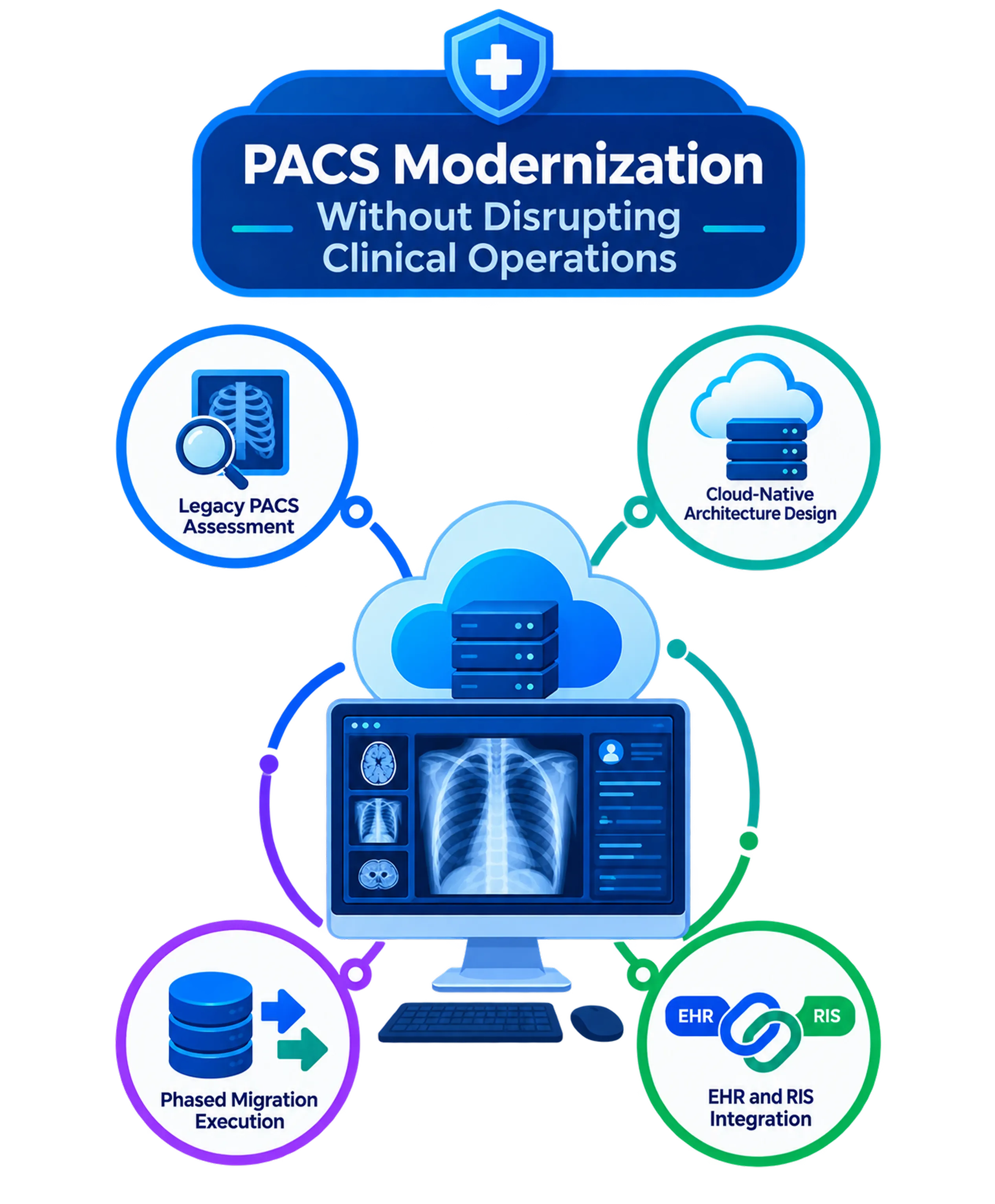
    PACS Modernization Without Disrupting Clinical Operations

    Replacing or migrating a PACS is one of the highest-risk infrastructure projects a radiology group or health system can undertake. Study continuity, DICOM data migration, and zero-downtime switchover during active clinical operations are non-negotiable requirements.


    We approach PACS modernization using a phased migration strategy: the legacy PACS remains live while the new cloud-native system ingests forward-flow studies, followed by retroactive migration of historical studies in priority order (most recent first). DICOM conformance is validated end-to-end before any routing changes affect clinical workflow.

    • Check Icon

      Legacy PACS Assessment: Review of current DICOM conformance, SOP class support, storage architecture, and integration points with RIS and EHR systems.

    • Check Icon

      Cloud-Native Architecture Design: New system architecture using DICOMweb APIs, a Vendor-Neutral Archive layer, and Azure Health Data Services or AWS HealthImaging for compliant cloud storage. Integration with diagnostic imaging systems downstream.

    • Check Icon

      Phased Migration Execution: Forward-flow cutover followed by retroactive migration with DICOM tag validation, lossless transfer verification, and reconciliation reporting. Zero-downtime transition with rollback capability maintained throughout.

    • Check Icon

      EHR and RIS Integration: FHIR ImagingStudy and DiagnosticReport resources connected to Epic Hyperdrive or Oracle Health. HL7 ORM/ORU messages are maintained for legacy RIS compatibility during transition.

    What Gets Handed Over at Project Completion

    Unlike agencies that deliver a running application and a login, Citrusbug delivers the full package required for a production medical imaging system.

    Fully Documented Codebase

    Source code, model weights, training pipelines, infrastructure-as-code, and DICOM conformance statements – all versioned and handed to your team with no Citrusbug dependency for production operation.

    Compliance Documentation Package

    IEC 62304 software development plan, design history file, traceability matrix, ISO 14971 risk management file, and software SBOM prepared to FDA cybersecurity guidance standards. Usable directly in regulatory submissions.

    Integration Specifications

    FHIR API documentation, HL7 interface specifications, DICOM conformance statement, and system integration test reports. Your EHR and PACS integration teams receive what they need to maintain and extend the system.

    Post-Market Surveillance Plan

    For SaMD products: a documented plan for real-world performance monitoring, feedback collection, and PCCP-aligned model update procedures. Meets FDA’s December 2025 Real-World Evidence guidance expectations for AI imaging devices.

    Client Testimonials (We're Rated 4.7 on Clutch)

    Real-world Delivery Success

    View All Case Studies →
    PHARMACY CarePoint

    CarePoint

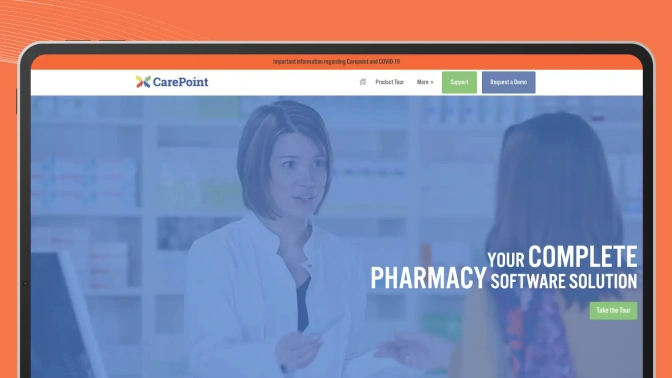
    CarePoint is a comprehensive pharmacy and clinical management solution developed by Citrusbug, centralizing inventory, patient prescriptions, dispensing workflows, and compliance reporting for multi-location healthcare operations.

    Read Case Study →
    FITNESS Mediyoga

    Mediyoga

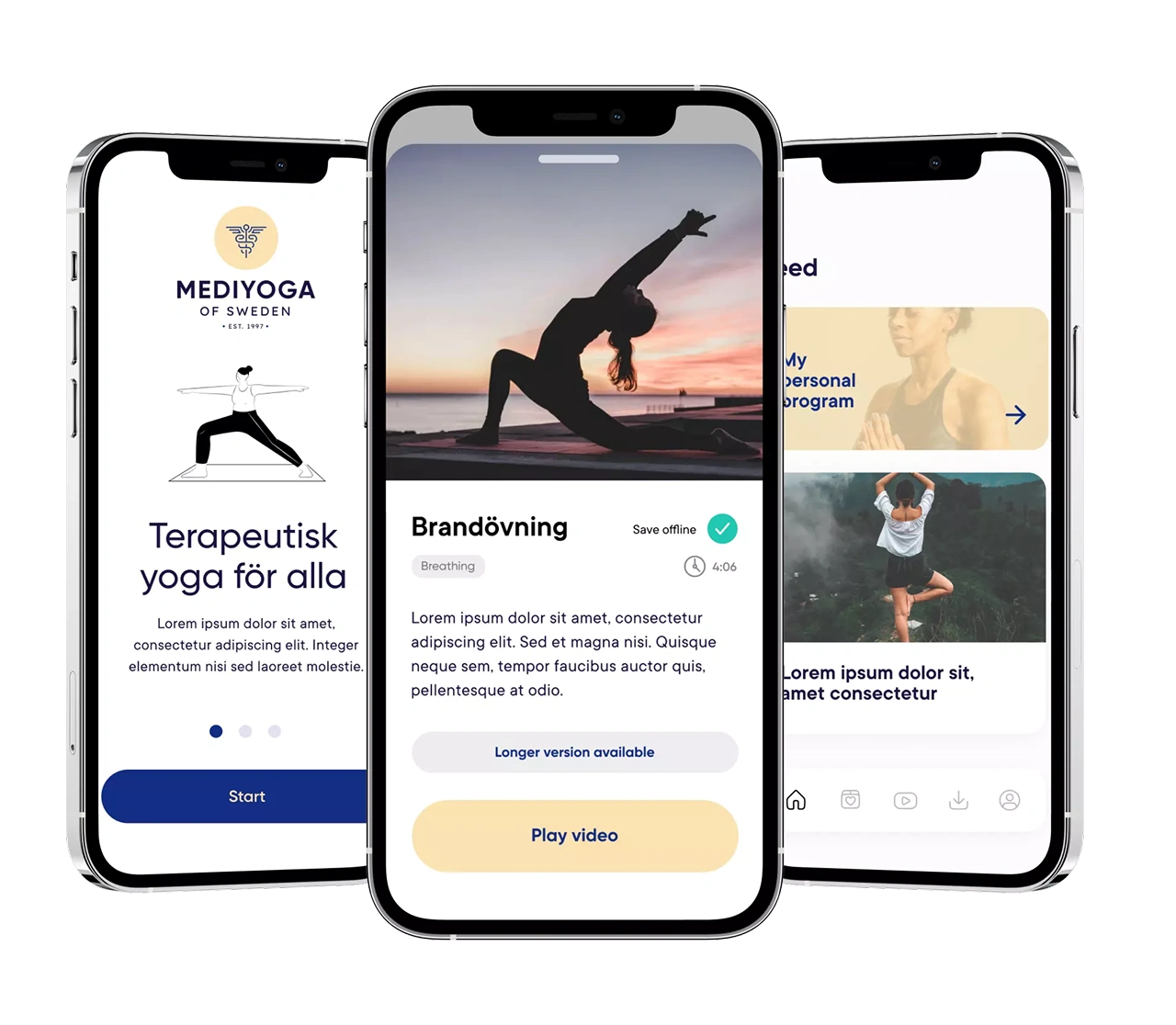
    A state-of-the-art wellness and patient engagement platform built for Mediyoga, integrating guided care programs, health tracking, and provider-patient communication into a unified digital experience.

    Read Case Study →
    HEALTHCARE Brainkey

    Brainkey

    Designed for healthcare providers and researchers, the platform enhances early detection of neurological conditions

    Read Case Study →

    Our Recent Insights on Healthcare

    VIEW ALL
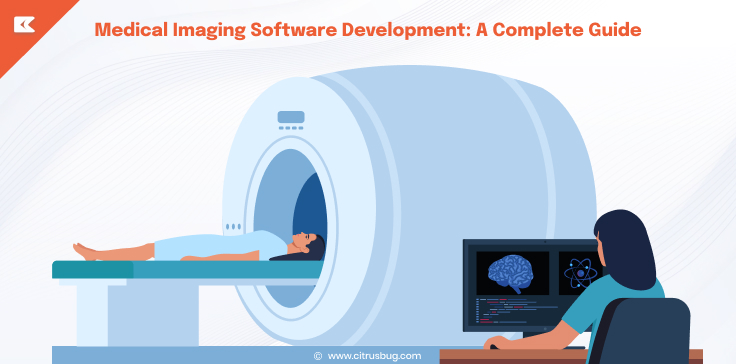
    Medical Imaging Software Development: A Complete Guide
    Medical Imaging Software Development: A Complete Guide Custom Software Development

    Medical Imaging Software Development: A Complete Guide

    Medical imaging software plays an integral part in the modern world of healthcare. It is the engine behind the instruments that allow clinicians to see inside the human body, identify…

    Read Article →
    A Practical Guide to Medical Device Software Integration for Healthcare Providers
    A Practical Guide to Medical Device Software Integration for Healthcare Providers Custom Software Development

    A Practical Guide to Medical Device Software Integration for Healthcare Providers

    Healthcare providers today use a wide range of medical devices, from bedside monitors and ventilators to imaging systems and wearables. Such devices are continuously generating useful patient information, but in…

    Read Article →
    AI in Medical Diagnosis: Develop Cutting-Edge Software with Expert Teams
    AI in Medical Diagnosis: Develop Cutting-Edge Software with Expert Teams Artificial Intelligence

    AI in Medical Diagnosis: Develop Cutting-Edge Software with Expert Teams

    The healthcare sector is riding the wave of more advanced, data-driven modalities, and diagnostics is a part of the paradigm change. The integration of advanced technologies and AI-powered diagnostics means…

    Read Article →

    Questions Buyers Actually Ask About Medical Imaging Software Development

    What is the difference between PACS modernization and building a new imaging platform?

    Modernization migrates existing infrastructure storage, DICOM routing, viewer to a cloud-native or API-based architecture while preserving existing study data and workflows. A new build starts from defined clinical requirements with no legacy constraints. The right choice depends on your current vendor agreements, DICOM data volumes, and integration debt with downstream systems.

    How long does it take to develop FDA-cleared AI imaging software?

    From scoping to 510(k) submission, most AI-enabled imaging SaMD projects run 18 to 30 months. Clinical validation, IEC 62304 documentation, risk management, and software SBOM preparation add 4 to 8 months beyond pure development. Teams that embed compliance from sprint one reduce this by 20 to 30 percent.

    What DICOM standards does our imaging platform need to support?

    At minimum: DICOM PS3 storage SOP classes relevant to your modalities, DICOMweb APIs (WADO-RS, STOW-RS, QIDO-RS) for cloud-native access, and DICOM TLS for encrypted transport. Specialty requirements vary, mammography platforms need DICOM for Mammography (PS3.3 C.8.31), whole-slide imaging requires Supplement 145 support.

    Can you integrate our imaging system with Epic or Oracle Health?

    Yes. We use FHIR R4 ImagingStudy and DiagnosticReport resources for bidirectional integration with Epic Hyperdrive and Oracle Health. Legacy HL7 v2.x ORM/ORU message support is maintained for RIS systems that have not yet moved to FHIR APIs.

    What does a Software Bill of Materials (SBOM) mean for imaging software submitted to the FDA?

    Since June 2025, the FDA requires an SBOM for any networked medical device software submitted for clearance. The SBOM lists all third-party libraries, open-source components, and their versions, enabling ongoing cybersecurity monitoring post-clearance. We build SBOMs in parallel with development so they reflect the production codebase, not a retroactive inventory.

    What is a PCCP and why does it matter for AI imaging tools?

    A Predetermined Change Control Plan documents how your AI model can be updated post-clearance without triggering a new 510(k) submission. FDA finalized PCCP guidance in December 2024. Without a PCCP, every algorithm update requires a new clearance typically adding 3 to 9 months per update cycle. Including PCCP in the initial submission enables your team to retrain and redeploy on new data within a defined validation framework.
    Who owns the source code, model weights, and compliance documentation?

    You do. Full source code, trained model weights, training pipelines, compliance documentation, and DICOM conformance statements are transferred to your team at delivery. Citrusbug retains no licensing rights or infrastructure dependency in your production system.

    Build Imaging Software That Clinical Teams Trust and Regulators Accept

    AI-powered, DICOM-compliant, FHIR-integrated medical imaging platforms for radiology, cardiology, oncology, and enterprise health systems. Citrusbug delivers the architecture, the compliance documentation, and the engineering depth.