


















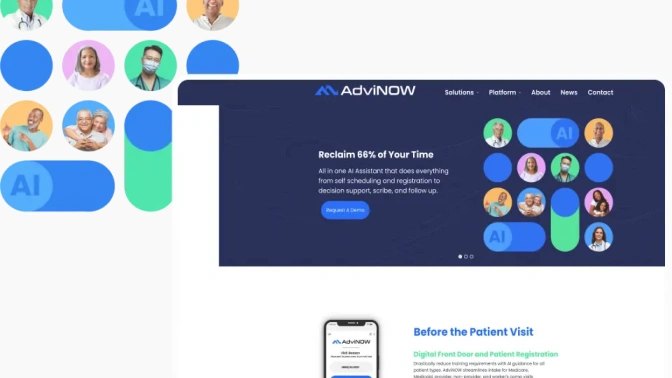
Advinow
It's an AI-driven healthcare platform that automates patient engagement and consultation processes, helping healthcare providers deliver efficient, on-demand services while improving operations for urgent care.

Explore →Transform clinical decision-making using AI-powered medical diagnostic software solutions designed for accuracy, scalability, and seamless integration across healthcare systems. We build intelligent platforms that enhance diagnostic precision while meeting security and regulatory requirements.
Trusted by industry leaders
We design secure, AI-powered medical diagnostic software solutions tailored to clinical workflows, compliance standards, and seamless system integration.
We build intelligent diagnostic imaging platforms based on AI algorithms that can improve image interpretation, detect anomalies at an early stage, provide radiologists with decision-making support, and integrate seamlessly with DICOM and hospital imaging systems.
Our clinical decision support program augments patient data, symptoms, and medical history to offer evidence-based diagnostic insights to enhance clinical accuracy, decrease physician workload, and justify quicker treatment decisions.
We develop secure cloud-based platforms in pathology that allow remote slide analysis, real-time collaboration, automated reporting, and scalable storage and provide HIPAA-compliant data security and high-performance processing.
Our diagnostic software is integrated with EHR and EMR systems based on HL7 and FHIR standards, which allows the exchange of patient data safely, streamlines operations, and enhances clinical coordination within the healthcare setting.
Connect with our healthcare software specialists to design AI-powered diagnostic platforms tailored to clinical workflows, operational needs, and regulatory compliance.
Get Expert Diagnostic GuidanceHigh-performance diagnostic software goes beyond automation. We build AI-powered medical diagnostic software that processes large volumes of clinical data, multimodal inputs, and advanced algorithms for complex diagnostic workflows.
Our diagnostic software development combines scalable cloud infrastructure, optimized data pipelines, and reliable backend architecture to deliver production-grade systems with measurable impact and continuous technological advancement.
Advanced algorithms analyze complex clinical datasets to reduce false positives and false negatives, supporting clinicians with data-driven insights that enhance confidence and improve overall diagnostic precision.
Intelligent workflows and automated data processing reduce the amount of manual intervention, allowing clinicians to speed up clinical assessments and provide healthcare professionals with timely treatment decisions without quality loss.
Our solutions integrate with the existing hospital management systems and operational processes, making them easy to adopt, and can be easily collaborated with the departments and care teams.
With a modular and cloud-friendly design, our platforms can scale to meet the growing patient volumes, multi-location centers, and growing loads of diagnostic data with ease.
Our systems are highly encrypted and controlled, providing strong security measures against sensitive health information without sacrificing regulatory consistency and high-quality security standards.
Our software saves on the administrative load by automating repetitive tasks and streamlining the diagnostic workflows, reducing the operational expenses and enhancing the overall healthcare delivery performance.
The medical diagnostic software development cost typically ranges from $50,000 to $500,000+, depending on AI complexity, compliance requirements, integrations, and deployment scope. Share your requirements to receive a tailored estimate aligned with your clinical and business goals.
We maintain strict NDA practices and transparent communication to protect your clinical ideas, proprietary algorithms, and sensitive healthcare data throughout the development lifecycle.
Structured planning and agile execution ensure your diagnostic software is delivered on schedule, meeting regulatory requirements and technical milestones without compromising quality.
Our engineers specialize in AI integration, healthcare interoperability, and scalable system design, enabling development of high-performance diagnostic platforms from MVP to enterprise-grade solutions.
We provide extensive testing for performance, data validation, and reliability, combined with round-the-clock technical support to ensure continuous, secure, and stable operation.
We start by learning about your clinical processes, diagnoses, compliance needs, and integration needs. Through detailed stakeholder discussions and technical analysis, we define a clear roadmap for your diagnostic software solution.
Our team designs secure, scalable system architectures and intuitive clinical interfaces tailored to diagnostic environments. We focus on data flow optimization, interoperability planning, and user experience aligned with real-world healthcare settings.
With the help of cutting-edge technologies and AI engineering practices, we create high-performance diagnostic platforms that are accurate, reliable, and scalable and ensure high data security and regulatory compliance.
Our development and validation strategy is iterative with rigorous testing and validation to guarantee performance, stability, and clinical readiness before deployment, while continuously refining the system for long-term success.
It's an AI-driven healthcare platform that automates patient engagement and consultation processes, helping healthcare providers deliver efficient, on-demand services while improving operations for urgent care.
Explore →
Carepoint is a solution dedicated to the pharmacy industry with a variety of tools needed to manage any pharmacy.
Explore →
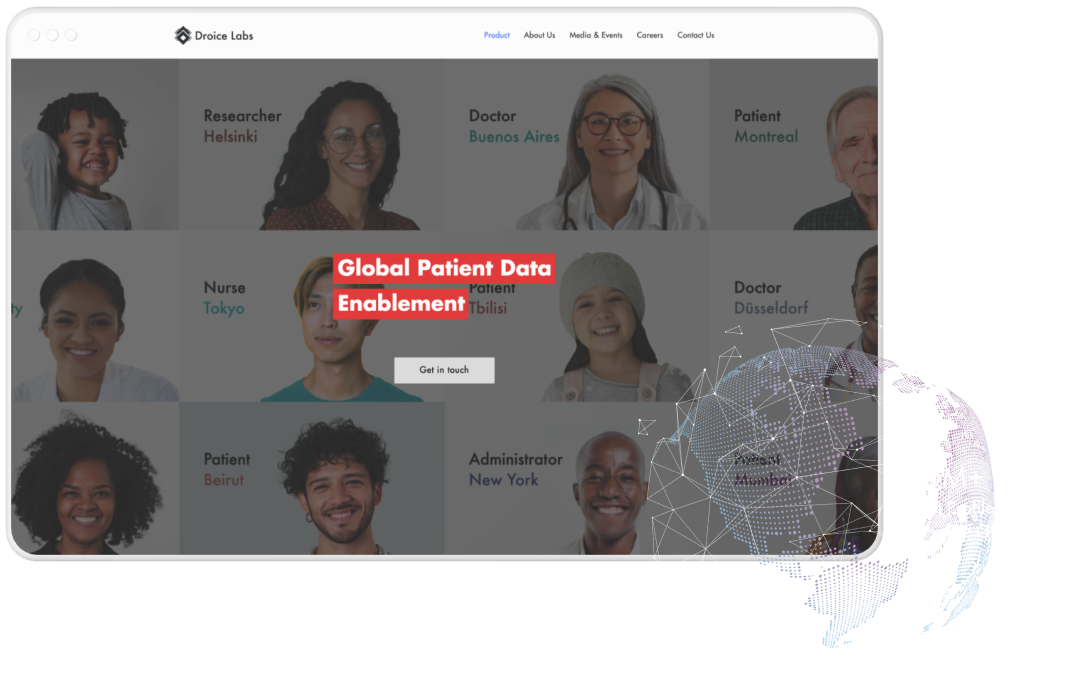
Droice Labs is a middleware designed to transform messy, unstructured patient data into clean, analysis-ready formats for clinical trials.
Explore →Discover how AI in mental health diagnosis improves early detection, personalized treatment, and patient engagement. Learn how custom AI solutions can enhance mental health care.
Read MoreDiscover key features and strategic benefits of billing software for mental health professionals. Improve claims, compliance, and revenue with AI-driven solutions.
Read MoreThis article is about AI in mental health apps which focuses on benefits, limitations, and showcases real-world examples of digital mental healthcare.
Read MoreHealthcare providers use medical diagnostic software solutions to analyze clinical data, medical images and laboratory results to enhance diagnostic accuracy, minimize manual errors and assist in making faster and more data-driven clinical decisions.
These solutions integrate using interoperability standards, such as HL7 and FHIR, which provide the safe sharing of data between diagnostic systems and EHR systems without interrupting the workflow and preserving patient information.
Approval depends on the software's classification and intended use. The diagnostic systems might need to be approved by the FDA or meet some regulatory standards, such as IEC 62304 and other local healthcare compliance regulations.
AI can improve pattern recognition, speed up image and data processing, minimize false positives and negatives, and provide predictive data that increases the confidence of the diagnosis and overall clinical efficiency.
The timeline of development is generally 4 to 12 months, depending on system complexity, training of AI models, scope of integration, or regulatory requirements. Highly regulated or enterprise-level platforms can take longer than 12 months.
The cost varied based on AI complexity, interoperability, regulatory compliance, infrastructure selection, data processing requirements, and validation procedures necessary to deploy AI to clinical environments.
Yes. We offer continuous post-launch services, such as performance maintenance, security, system optimization, regulatory updates, and feature additions to make sure your diagnostic platform is safe, compliant, and in line with changing clinical demands.