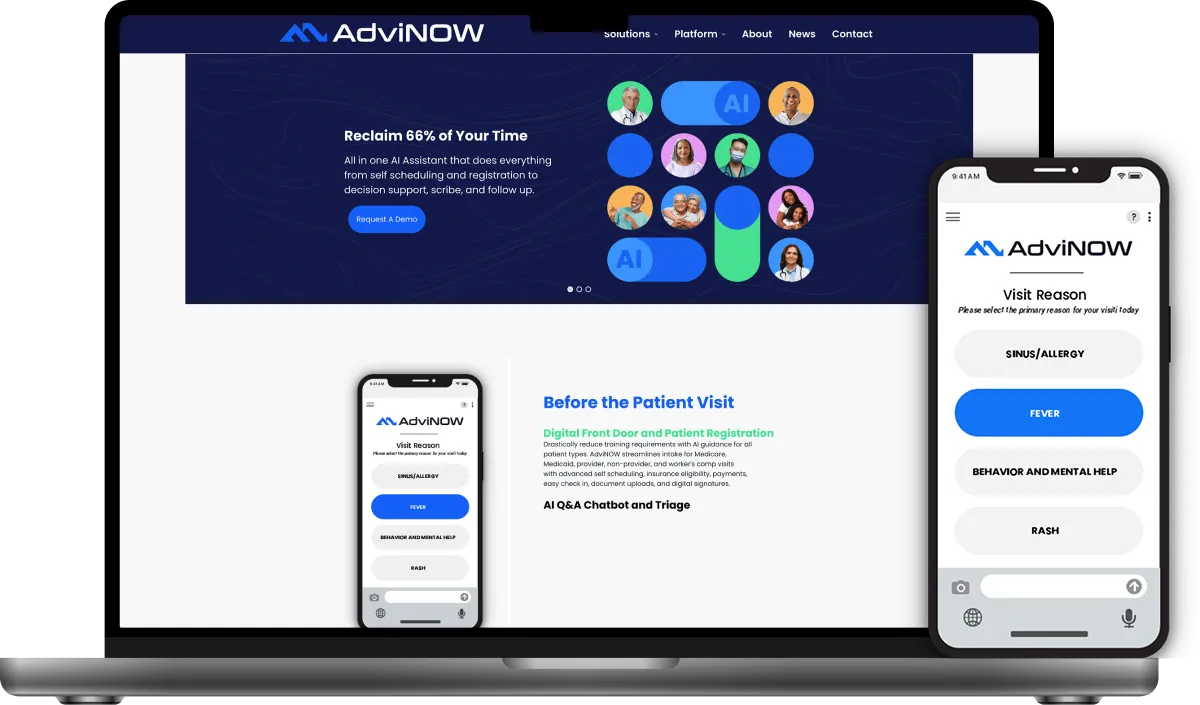
Advinow
It's an AI-driven healthcare platform that automates patient engagement and consultation processes, helping healthcare providers deliver efficient, on-demand services while improving operations for urgent care.
More InfoYour hospital runs on five systems that don't speak to each other, and your staff pays the price every shift. We build connected hospital management software with documented HL7/FHIR interfaces, fully owned architecture, and modules that scale as you add facilities and departments.
Trusted Software Development Company By
Most hospitals do not have one system problem. They have eight small ones - a scheduling tool that does not sync with billing, a pharmacy module that cannot see discharge orders in real time, a lab system that sends results by fax to a PDF inbox, and a finance team reconciling claims in spreadsheets. None of these is catastrophic alone. Together, they add up to hours of manual work per day, delayed discharges, billing errors, and compliance gaps your audit team will eventually find.
A hospital management system only works when every department talks to the same source of truth. We build fully integrated platforms where patient data, clinical events, financial records, and operational metrics all live in one connected architecture. Here is what that covers.
Centralized intake workflows handle demographic data capture, insurance verification, consent management, and bed assignment. The system connects directly to your clinical modules from the moment a patient arrives.
Dedicated IPD and OPD workflows manage doctor assignments, care plans, visit scheduling, observation tracking, and handoff documentation. Both modules share a single patient record layer.
Real-time stock tracking, expiry management, prescription validation against the clinical record, and automated dispensing workflows. Integrated with EHR integration services for medication reconciliation on discharge.
Test ordering, sample tracking, results reporting, and imaging system integration in a single workflow. Results are pushed directly to the treating physician’s clinical view without a manual relay step.
Claims generation, insurance adjudication, payment reconciliation, denial tracking, and financial reporting. Connects to your existing revenue cycle management infrastructure or replaces it end to end.
Real-time bed occupancy dashboards, ward-level allocation, housekeeping coordination, and predictive occupancy modeling for elective admission planning. AI-assisted demand forecasting is configurable at the facility level.
Alerting for drug interactions, dosage thresholds, and protocol deviations built directly into the clinical workflow. Hooks into SNOMED CT and ICD-11 for structured coding at the point of care.
Shift planning, role-based access provisioning, attendance tracking, and payroll data export. Credentialing status and license expiry alerts are surfaced to department heads automatically.
When a hospital engages a software vendor, the conversation usually jumps to features. Which modules. Which integrations. Which UI. The question that determines whether the system actually works at scale comes earlier. Is this a single-facility platform or a multi-facility architecture?
A single-site HMS can share a database, run on one server cluster, and route everything locally. The moment you add a second facility, that model creates silos. Patient records do not follow the patient. Reports at the health-system level require data exports. Role-based access becomes an afterthought.
We build HMS platforms for both contexts, with different data models, API strategies, and deployment architectures. For health systems and multi-hospital networks, we design a federated data layer with FHIR R4 APIs at the integration boundary, shared identity management, and cross-facility analytics built into the reporting layer. For individual hospitals, we design for speed and simplicity, with a clear upgrade path if the organization grows.
Every architecture decision is documented. You do not inherit a black box.
A hospital management system project should end with your team fully in control. That means documentation, not just software. Every engagement we run is structured to hand over a system your internal team or any future vendor can understand, maintain, and extend.
Source code with full ownership transfer and no vendor lock-in
FHIR R4 and HL7 v2.x interface documentation for all active integrations
HIPAA-aligned data flow diagrams and system architecture documentation
Admin credential handover and environment access documentation
User manuals and role-specific training materials for clinical, admin, and IT staff
API documentation for all third-party and internal integration points
QA test plans, regression suites, and defect resolution records
Post-launch SLA support options (L1/L2/L3) with defined response windows
We map every active module, data schema, third-party integration, and custom configuration in the existing system. Nothing gets cut without a replacement plan in place.
Patient records, clinical history, billing data, and operational records are migrated using validated ETL pipelines. Transformation rules are documented and reviewed before any production data moves.
New and legacy systems run simultaneously during an agreed validation window. Clinical staff verify data accuracy. No cutover happens until both teams sign off.
Every HL7 or API connection that existed in the old system gets re-established in the new one, tested end-to-end with the actual receiving system, not a sandbox.
Go-live is phased by department or facility. Our team is on-site or on-call during the first operational weeks to handle edge cases before they become incidents.
We run structured discovery sessions with clinical, administrative, and technical stakeholders. Output: a validated requirements document, user story backlog, and technical architecture proposal. No code until this is signed off.
System architecture, database schema, HL7/FHIR integration mapping, and role-based access model are designed and reviewed. UX wireframes are built for every user type: clinician, administrator, lab staff, finance, and IT.
Development runs in two-week sprints with daily standups and weekly demos. HIPAA-aligned security controls, audit logging, and access management are built in from sprint one, not added at the end.
Every third-party integration is tested against the live receiving system. Penetration testing, HIPAA security rule validation, and load testing for peak patient census scenarios are all part of this phase.
We deploy to your chosen environment: cloud (AWS, Azure, GCP), on-premise, or hybrid. Role-specific training is delivered before go-live. Full documentation and source code are handed over at delivery.
Tell us about your hospital's current systems and operational gaps. We scope the engagement and validate feasibility before any development begins.
Schedule a Discovery CallHospital management software handles protected health information across every department. Compliance is not a checkbox at the end of the project. Every module we build is designed from the start against the following standards.
The Privacy Rule and Security Rule govern how patient data is stored, accessed, and transmitted. Our systems implement role-based access controls, encryption at rest and in transit, audit logging, and breach notification readiness across every module.
HL7 FHIR R4 is the current interoperability standard for healthcare data exchange. We build FHIR-compliant APIs for every integration point, allowing your HMS to connect with EHRs, payer portals, patient apps, and federal reporting systems without custom middleware for each.
Most hospital lab, pharmacy, and imaging systems still communicate over HL7 v2 messaging. We implement and document all active HL7 interfaces, including ADT, ORM, ORU, and DFT message types, so legacy systems communicate with the new platform without a rip-and-replace approach.
For health systems with enterprise procurement requirements, our development environments and delivery processes are structured around SOC 2 Type II controls. We can support your organization's own SOC 2 audit documentation as part of the engagement.
Best for organizations that need scope clarity before committing to full development
End-to-end development with a dedicated team from discovery through deployment
Your existing team drives execution while we embed senior engineers where needed
Every engagement starts with requirements documentation, architecture review, user stories, and wireframes. We do not start building until scope is locked and both teams agree on what gets delivered.
You see the engineers assigned to your HMS project before signing. No bait-and-switch on seniority after kickoff. The team you meet during scoping is the team that builds.
Security controls, audit logging, encryption, and access management are designed into the architecture from day one. Not retrofitted during QA. This cuts remediation cost and accelerates compliance review.
Full source code is yours at delivery. No license dependency, no vendor lock-in, no recurring fees to access your own system. All documentation and environment credentials transfer with the code.
Our healthcare software development practice covers HMS, EHR, RCM, clinical decision support, and patient engagement. The engineers on your project have shipped in this domain before, not just in adjacent verticals.
L1, L2, and L3 support tiers are available after go-live with defined response windows. Citrusbug stays engaged beyond deployment. Critical issues do not go to a ticketing backlog.
Hospital management software development typically ranges from $10,000 to $100,000+ depending on the number of modules, integration complexity, and deployment model. Multi-facility systems and legacy migrations sit at the higher end. Share your scope and we will provide a detailed estimate.
It's an AI-driven healthcare platform that automates patient engagement and consultation processes, helping healthcare providers deliver efficient, on-demand services while improving operations for urgent care.
More Info
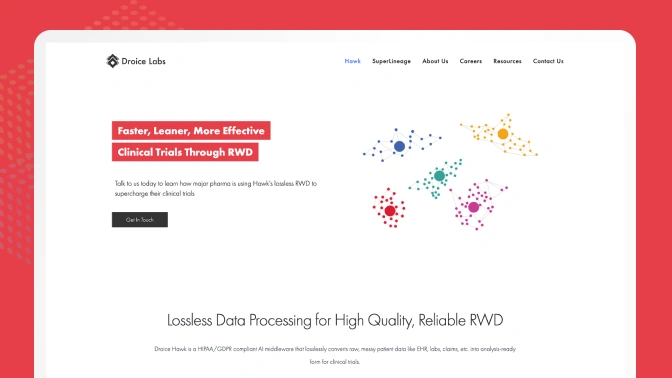
Droice Labs is a middleware designed to transform messy, unstructured patient data into clean, analysis-ready formats for clinical trials.
More Info
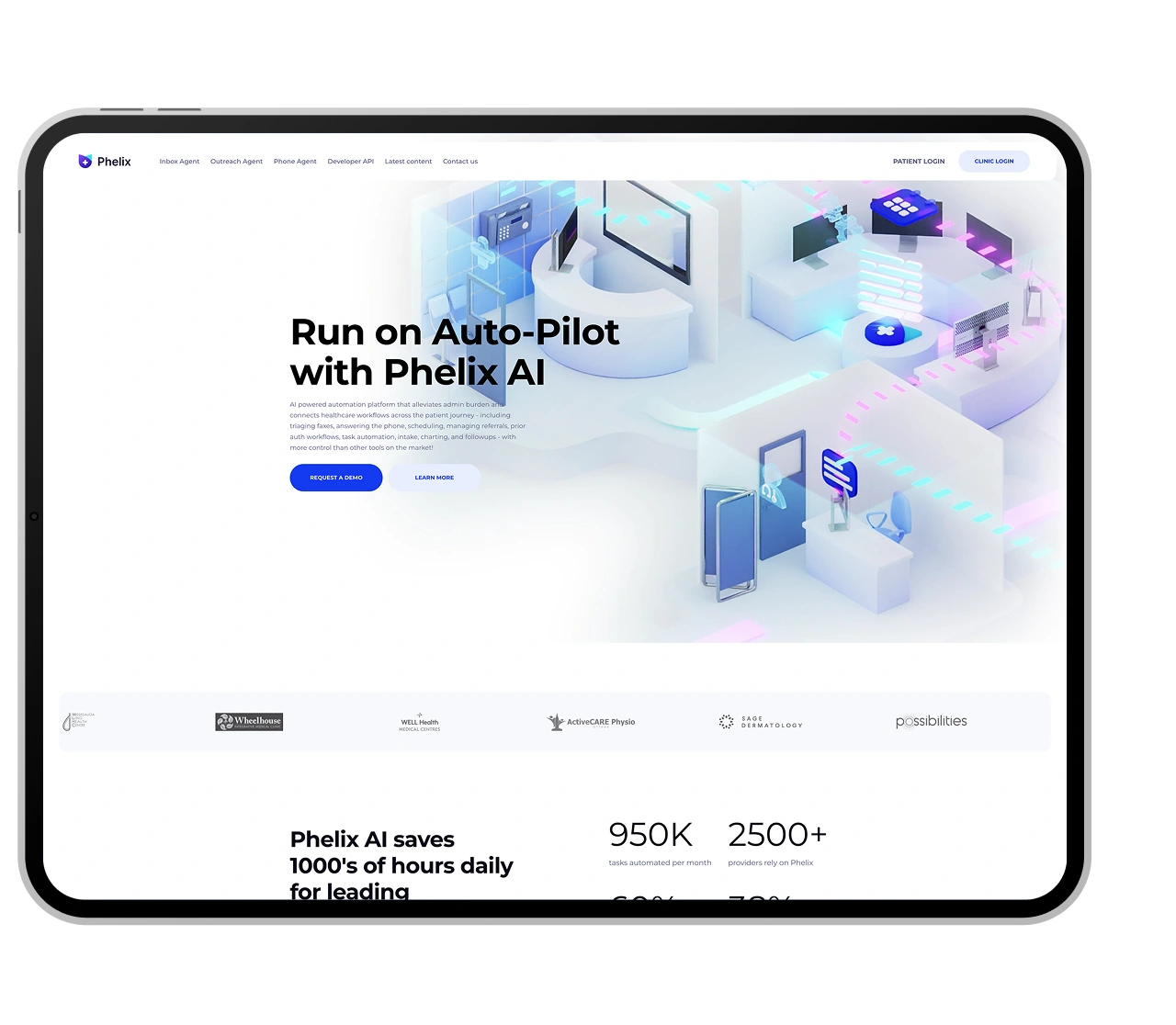
Phelix is a no-code, virtual assistant designed for healthcare workflows by automating patient communication, scheduling, and payment processes.
More Info
The way pharmacies operate has changed dramatically over the past few years. From manual record-keeping and paper prescriptions to fully digital workflows, the shift toward technology-driven pharmacy operations is accelerating…
Read Article →
Chronic conditions such as diabetes, cardiovascular diseases, and respiratory disorders require continuous monitoring, timely interventions, and personalized care plans, something traditional healthcare models often struggle to deliver at scale. This…
Read Article →
Healthcare is shifting from episodic visits to continuous, data-informed support that follows people beyond clinics and hospitals. Digital therapeutics sit at the center of this shift, combining software, clinical protocols,…
Read Article →A full HMS covers patient registration, IPD/OPD management, pharmacy, laboratory, billing, bed management, staff scheduling, and clinical documentation. Most projects also include HL7/FHIR integrations, role-based access management, and reporting dashboards for administrators and department heads
A core HMS platform typically takes 2 to 4 months depending on the number of modules, integration complexity, and whether migration from a legacy system is required. Multi-facility deployments or systems with extensive third-party integrations require longer timelines. Discovery sessions establish a realistic estimate before development begins.
Integration is handled via HL7 v2 messaging or FHIR R4 APIs depending on what your EHR supports. Our team maps every data exchange requirement during discovery, builds and tests each interface against your live systems, and documents the full integration layer as a deliverable. For organizations with complex EHR setups, our EHR integration services team handles this as a standalone workstream.
An EHR is primarily a clinical record system focused on patient health history, diagnoses, and treatment documentation. An HMS covers the broader operational and administrative functions of running a hospital, such as admissions, billing, pharmacy, bed management, staff scheduling, and lab coordination. Many hospitals run both, with the HMS handling operations and the EHR handling the clinical record. Integration between the two is a standard part of how we build.
Yes. We run a parallel operation period where both systems run simultaneously, validate data accuracy with clinical and administrative staff, and phase the cutover by department. No production environment switches until both teams sign off. Data migration pipelines are validated against your actual records, not test data.
Both. We build for AWS, Azure, and GCP deployments as well as on-premise and hybrid configurations. The architecture recommendation depends on your existing infrastructure, data residency requirements, and IT team capacity. Every option is documented and compared during the architecture design phase.
We offer L1, L2, and L3 SLA support tiers with defined response windows after go-live. The first weeks after deployment are covered by a hypercare period where our team is on standby for edge cases. Beyond that, ongoing maintenance, feature additions, and compliance updates are available under a structured support agreement.