CarePoint
CarePoint is a comprehensive pharmacy and clinical management solution developed by Citrusbug, centralizing inventory, patient prescriptions, dispensing workflows, and compliance reporting for multi-location healthcare operations.
Off-the-shelf PMS platforms were designed for average practices. When your group spans multiple specialties, locations, and payer contracts, average is not enough. Citrusbug builds custom practice management systems that connect scheduling, billing, prior authorization, and EHR data into one operational core, built around your workflows, not a vendor's template.
Trusted by Leading Healthcare Innovators
AI-driven scheduling engine accounts for provider availability, appointment type duration, and payer authorization status. Reduces no-show rates through automated SMS/email reminders and predictive slot filling.
Digital intake forms with insurance card scanning and OCR capture. Automated X12 270/271 eligibility verification against payer endpoints before the patient arrives, eliminating front-desk manual lookups.
NLP-assisted prior auth triage identifies which services require authorization by the payer and CPT code. Integrates with CMS-mandated FHIR-based payer APIs (effective 2026 mandate) for automated submission and status tracking.
Clinical documentation triggers automated charge capture mapped to CPT, ICD-10, and LOINC codes. Claims scrubbed before submission via X12 837P/837I to target clearinghouses, cutting first-submission denial rates.
Real-time dashboards surface days in AR by payer, denial rate by CPT code, and clean claim rate by provider. RCM directors get the payer mix visibility they need without pulling separate billing reports.
Bidirectional FHIR R4 APIs connect the PMS to Epic, Oracle Health (Cerner), Athenahealth, and NextGen. HL7 ADT feeds keep patient demographics synchronized. No double-entry. No data silos.
Tell us how your current system is failing and we will show you what a purpose-built PMS looks like.
Schedule a Discovery CallMulti-provider groups running separate scheduling, billing, and EHR tools pay for that fragmentation in ways that compound over time.
Front desk staff manually re-enter insurance details that should flow automatically from registration to billing. Charge capture happens in one system, denial management in another, and the RCM director reconciles across both at month-end. Prior authorization sits in a fax queue while scheduled procedures move forward without confirmed approval, creating claim denials that take 60 to 90 days to recover or write off.
For practices using medical practice management software development at a single-site level, these problems are manageable. For multi-site groups with 10 to 50 providers across specialties, they become structural revenue leaks.
FHIR R4 read/write to Epic, Oracle Health, Athenahealth, and NextGen. SMART on FHIR for patient portal authentication. HL7 ADT for patient demographic sync.
X12 837P/837I claim submission, 835 remittance posting, 270/271 eligibility checks via Waystar, Availity, and Optum. EDI mapping handled at the integration layer.
FHIR-based prior auth submission aligned with the 2026 CMS mandate. Payer portal screen-based automation for payers without FHIR endpoints.
Azure Health Data Services or AWS HealthLake for PHI-classified data storage. HIPAA Business Associate Agreement coverage for all cloud components.
From Discovery to Production-Ready PMS
Map your current scheduling, billing, and intake workflows against your specific payer mix and specialty mix. Document every system your PMS will need to connect to, including EHR vendor version and API capability level.
Design the data schema with PHI classification from day one. Define FHIR resource mappings, access control tiers, encryption requirements, and audit trail architecture. HIPAA and ONC HTI-1 compliance is structural, not a retrofit.
Build scheduling, intake, charge capture, and RCM modules on the shared data layer. EHR and clearinghouse integrations developed in parallel using sandbox credentials. AI scaffolding is built in but activated post-go-live on real operational data.
End-to-end testing across all payer eligibility, claim submission, and remittance posting flows. FHIR conformance testing against your specific EHR version. Load testing for peak scheduling volumes across all locations.
Phased rollout by location or module. AI scheduling and prior auth automation activated as live data trains the models. Post-launch L1/L2/L3 SLA support with healthcare automation solutions monitoring.
Most custom PMS projects range from $40,000 to $180,000+ depending on the number of modules, EHR integrations, and AI layers required. Share your scope and we'll give you a realistic estimate within one business day.
Our Practice Management System Development services deliver secure, cloud-native, AI-powered platforms engineered for automation, interoperability, and performance. We build scalable architectures that improve revenue cycle efficiency, enhance operational visibility, and support long-term enterprise growth strategies.
Online self-scheduling with provider availability rules, appointment type logic, and automated eligibility verification before slot confirmation. Configurable for single-site and multi-location groups.
Mobile-friendly intake forms with e-signature, insurance card photo capture, and OCR processing. Patient demographics sync to EHR via HL7 ADT on intake completion, eliminating front-desk re-entry.
Automated X12 270/271 batch and real-time eligibility checks run at scheduling, the day before the appointment, and at check-in. Alerts surface co-pay amounts and authorization requirements before the patient arrives.
NLP-assisted identification of auth-required CPT codes by payer. Automated submission via FHIR-based payer APIs and EDI-based portals. Status tracking with escalation alerts for pending authorizations tied to scheduled procedures.
Charge capture triggered by clinical encounter documentation. CPT, ICD-10, LOINC, and SNOMED-CT code mapping. AI claim scrubbing before X12 837 submission reduces first-pass denial rate at the source, not after adjudication.
Automated denial categorization by reason code and payer. Workflow queues route appeals to the correct billing staff with payer-specific appeal templates. Tracks resolution rate and financial impact by denial category.
Provider-level and location-level dashboards showing days in AR, clean claim rate, denial rate by CPT and payer, and collection rate by payer contract. Built for RCM directors, not just billing staff.
HIPAA-compliant patient portal authenticated via SMART on FHIR. Automated appointment reminders, no-show reschedule flows, post-visit satisfaction surveys, and balance notifications with integrated payment processing.
The compliance architecture is defined at the schema level, not added to the top of an existing build.
Generic PMS platforms describe AI as a feature. Citrusbug builds it as a configurable layer connected to specific workflow nodes, each mapped to a measurable KPI.
At scheduling, a machine learning model trained on your historical no-show data and provider schedule patterns adjusts slot recommendations in real time. For a 20-provider group, a 12% improvement in no-show prediction translates to hundreds of recaptured appointment slots per month.
At prior auth triage, an NLP classifier reads the scheduled procedure against the patient’s active payer contract and flags auth-required CPT codes before the claim lifecycle begins, not after denial. With the CMS 2026 FHIR-based prior auth mandate requiring payers to expose APIs, this workflow is shifting from manual portal navigation to structured automated submission.
At charge capture, an anomaly detection model flags encounters where documented diagnoses and CPT codes are inconsistent with historical billing patterns for that provider and specialty. This surfaces potential undercoding and compliance risk before the claim leaves the system.
These are not AI marketing claims. They are specific model types, connected to specific EHR integration services data feeds, producing outputs at specific workflow steps. The AI layer runs on your production data and improves as your operational volume grows.
Custom healthcare practice management systems are most valuable when off-the-shelf products force your workflows into rigid templates. Here is where custom PMS development delivers the clearest return.
Every PMS we build uses FHIR R4 as the data exchange standard from day one. Integrations with Epic, Oracle Health, and Athenahealth are built against your specific EHR version and API capability level, not a generic connector.
HIPAA, ONC HTI-1, and HITECH compliance is designed into the data schema and access control model before a single module is built. Audit trails, PHI classification, and BAA-covered cloud infrastructure are baseline, not add-ons.
We build the full revenue cycle into the system: eligibility verification, prior auth tracking, charge capture, claim scrubbing, denial management, and remittance posting. Your RCM director gets one system, not a billing tool bolted to a scheduler.
Every engagement starts with on-site or remote workflow discovery covering scheduling, billing, and intake across all locations and specialties. Requirements, data flow maps, and integration specifications are documented before development starts.
You receive full source code ownership at delivery. No licensing lock-in. No dependency on Citrusbug for ongoing access. The system belongs to your organization.
You see the engineers assigned to your project before you sign. Your lead architect has prior experience with HIPAA-ready application development and healthcare EHR integration projects, not a generalist team rotated in post-contract.
Different practice management modules carry different build complexity and timeline ranges. This gives you a realistic planning baseline before scoping begins.
| Module | Complexity | Estimated Build Time | Key Integration |
|---|---|---|---|
|
Appointment Scheduling
|
Medium |
4-6 weeks |
EHR FHIR R4, provider rules engine |
|
Patient Intake and Registration |
Low |
2-4 weeks |
HL7 ADT, OCR, e-signature |
|
Insurance Eligibility Verification
|
Medium |
3-5 weeks |
X12 270/271, clearinghouse API |
|
Prior Authorization Workflow |
High |
6-10 weeks |
FHIR payer APIs, NLP classifier
|
|
Charge Capture and Claims |
High |
6-9 weeks
|
X12 837P/I, CPT/ICD-10 mapping |
|
Denial Management and Appeals |
Medium |
4-6 weeks |
Clearinghouse 835, denial reason codes
|
|
Revenue Cycle Reporting |
Medium |
3-5 weeks |
Bi-directional EHR, billing data layer
|
|
Patient Portal and Communications |
Medium |
4-7 weeks |
SMART on FHIR, payment gateway |
|
AI Scheduling Optimization |
Very High |
8-12 weeks (post-live training) |
Historical scheduling data, EHR feed |
|
AI Prior Auth Triage |
Very High |
8-14 weeks (post-live training) |
Payer contract data, NLP model |
CarePoint is a comprehensive pharmacy and clinical management solution developed by Citrusbug, centralizing inventory, patient prescriptions, dispensing workflows, and compliance reporting for multi-location healthcare operations.
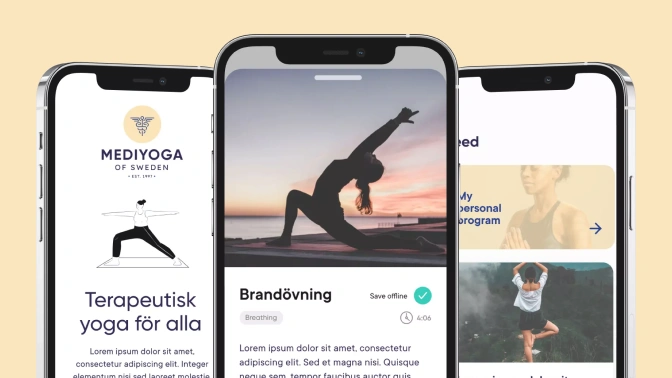
A state-of-the-art wellness and patient engagement platform built for Mediyoga, integrating guided care programs, health tracking, and provider-patient communication into a unified digital experience.
Designed for healthcare providers and researchers, the platform enhances early detection of neurological conditions
Nowadays, digitalization has offered people flexibility and has become a necessity for today’s generation. Business owners are looking to provide solutions by developing digital products. So, what is digital product…
Read Article →
Are you ready to bring your amazing product idea to life? It may seem overwhelming at first, but following the new product development process and implementing the best practices at…
Read Article →
Digital product development in a highly competitive technological scenario today indeed needs to be done at a tremendous pace and agility, along with quality, to keep up with the fast-changing…
Read Article →For a multi-site group practice with EHR integration and RCM modules, expect 20 to 36 weeks. Scope, number of integrations, and payer complexity drive the range. AI layers activate post-go-live on real operational data.
Yes. Integration is scoped against your specific EHR version and API capability level. Epic Hyperdrive and Oracle Health REST/FHIR endpoints are both supported. SMART on FHIR patient portal auth is included where applicable.
It sits alongside and integrates bidirectionally with your EHR via FHIR R4. Clinical documentation stays in the EHR. The PMS owns scheduling, billing, prior auth, and RCM reporting.
For payers without FHIR endpoints, the system uses EDI-based submission and RPA-assisted portal automation. As the CMS 2026 mandate brings more payers to FHIR compliance, the workflow migrates to API-based submission automatically.
Your organization owns the full source code. No licensing arrangement with Citrusbug. No dependency on ongoing access fees. Full transfer of intellectual property is included at delivery.
HIPAA Security Rule controls, HITECH breach notification requirements, and ONC HTI-1 information blocking obligations are built into the architecture. Cloud hosting runs under BAA-covered Azure Health Data Services or AWS HealthLake.
Yes. Location-level and specialty-level scheduling rules, payer contracts, fee schedules, and provider configurations are managed centrally with location-specific overrides. Multi-site RCM reporting is a core output.