Let’s Talk

EHR Integration Services for Connected Clinical Systems

We build and deploy custom EHR integration solutions that connect your electronic health records with the systems your clinical teams actually use. FHIR R4, HL7 v2/v3, SMART on FHIR, CDS Hooks. Full HIPAA compliance. No middleware lock-in. You own the integration layer.

500+
Projects Delivered
98%
Client Retention

Certified By

HIPAA Compliant HIPAA Compliant
HL7 / FHIR Compatible HL7 / FHIR Compatible
SOC 2 Type II SOC 2 Type II
ISO 27001 ISO 27001

Trusted By

Certifications and Accreditations

EHR Integration Services We Deliver

From FHIR-based API connections to full-scale clinical ecosystem integrations, we cover every layer of the interoperability stack.

HL7 and FHIR API Integration

HL7 and FHIR API Integration

We build RESTful FHIR R4 APIs and HL7 v2/v3 interfaces that enable structured, standards-compliant data exchange between your EHR and third-party systems. Includes resource mapping, validation, and transformation logic.

EHR to Third-Party Software Integration

EHR to Third-Party Software Integration

Connect your EHR with laboratory information systems (LIS), radiology systems (RIS/PACS), pharmacy management platforms, billing systems, and practice management tools. We handle bidirectional data flow and conflict resolution at the message layer.

SMART on FHIR App Integration

SMART on FHIR App Integration

We build and integrate SMART on FHIR applications that launch directly inside EHR workflows. This includes OAuth 2.0 authorization scopes, CDS Hooks implementation, and EHR-contextual data access without disrupting the clinical interface.

Health Information Exchange (HIE) Connectivity

Health Information Exchange (HIE) Connectivity

Connect your organization to regional, state, and national HIE networks using Direct Protocol, XCPD, XCA, and FHIR subscription feeds. We configure both query-based and event-driven data exchange models.

EHR to Payer and Eligibility Integration

EHR to Payer and Eligibility Integration

We integrate EHR systems with payer platforms for real-time eligibility verification, prior authorization automation, and claims data exchange using X12 EDI and FHIR-based payer APIs under the CMS Interoperability Rule.

Telehealth and Remote Monitoring Integration

Telehealth and Remote Monitoring Integration

Bi-directional healthcare API integration between your EHR and telehealth platforms or RPM devices. Patient vitals, visit notes, and encounter data flow back into the EHR record automatically.

Not Sure Where Your Integration Starts?

We scope EHR integration projects in a free technical consultation - no pressure, no pitch deck.

Book a Free Consultation

What Happens When EHR Systems Don't Talk to Each Other

Most healthcare organizations are not dealing with a single fragmented system. They are managing five to fifteen different platforms, each with its own data model and API behavior, none of which were designed to work together.

Clinical staff enter the same patient data three times across three systems. Lab results land in a separate portal the ordering physician may or may not check. Billing disputes surface two weeks after the encounter because the charge capture system never received the discharge record. Referral coordinators fax documents that should have been routed electronically.

This is not an operational inconvenience. It is a patient safety issue and a revenue loss issue running in parallel. Organizations that have moved to connected EHR software systems report significant reductions in duplicate data entry and fewer missed referrals. The path to that outcome is a correctly designed integration layer, not another middleware license.


How We Build EHR Integration That Lasts

Most integration projects fail at the architecture stage, not the implementation stage. A system that works on day one but breaks whenever a vendor updates their API is not a successful integration. We start every engagement with a discovery phase, mapping your current systems, identifying data flows, reviewing existing API documentation, and establishing a target state architecture. The build follows a defined spec. The integration is yours to own.

We map your existing EHR environment, connected systems, and data exchange patterns before writing a line of integration code. Discovery outputs include a system inventory, data flow diagram, API capability review, and integration spec. This phase takes two to four weeks depending on ecosystem complexity.

We build integration using FHIR R4 (RESTful APIs, Subscriptions, Bulk Data Access), HL7 v2.x/v3 messaging, CDA document exchange, X12 EDI for payer transactions, and DICOM for imaging where applicable. We do not build proprietary connectors that break when a vendor changes their schema.

Every integration layer includes encrypted data transit (TLS 1.2+), access controls, audit logging, and data minimization practices aligned with the HIPAA Security Rule. We produce integration compliance documentation as a project deliverable.

Integration testing covers unit tests at the message level, end-to-end workflow testing in a staging environment that mirrors production, and user acceptance testing with your clinical and IT teams. We support go-live and remain available through the first 30 days of production operation. EHR system automation testing is included for workflow-critical integrations.

We offer L1/L2/L3 SLA support tiers after go-live. Your team gets named contacts, defined response windows, and a clear escalation path. We also monitor integration pipeline health on an ongoing basis for organizations on managed support agreements.

Technical Capabilities Across the Integration Stack

EHR Platform Connectors

  • We build and maintain integration connectors for Epic (MyChart, App Orchard), Oracle Cerner (Millennium, PowerChart), athenahealth, eClinicalWorks, Allscripts, NextGen, and OpenEMR. Each connector accounts for platform-specific API behaviors and versioning.

AI-Augmented Data Mapping

  • Automated data transformation logic built on LLM-assisted field mapping tools reduces manual mapping time on large integrations. Our AI layer identifies schema mismatches, flags anomalous values, and suggests transformation rules before clinical teams validate the output.

Bidirectional Sync Architecture

  • We design integration layers that write data back to the source EHR, not just read from it. Clinical decision support results, care plan updates, and patient-generated health data from healthcare automation solutions all flow back into the EHR record in structured form.

Integration Monitoring and Alerting

  • Every integration pipeline includes real-time monitoring, error alerting, and message queue management. Failed transactions are captured, logged, and routed to a resolution queue before they cause downstream data gaps.

Compliance Documentation as a Deliverable

  • We produce integration compliance documentation as a formal deliverable: data flow diagrams, HIPAA Security Rule checklist, API access control matrix, and audit log configuration. Your compliance team receives these at project close.

Legacy Interface Modernization

  • If your organization relies on outdated VPN-tunneled HL7 v2 feeds or point-to-point database connections, we migrate those interfaces to standards-based FHIR or HL7 MLLP configurations without disrupting live clinical operations.

FHIR R4 Integration Architecture

A production EHR integration layer includes multiple components working in sequence. The diagram shows how data flows from source EHR systems through the integration middleware, transformation engine, and into the target platform.

FHIR R4
SMART on FHIR
HL7 v2/v3
CDS Hooks
OAuth 2.0
MLLP

The EHR Integration Delivery Process

1

Discovery and Scoping

We audit your current EHR environment, connected systems, and clinical workflows - output: integration architecture document, system map, and a fixed-scope delivery plan.

2

Integration Design and API Specification

We write the full technical specification before development begins. This includes FHIR resource mapping, HL7 message schemas, data transformation rules, and access control design. Your technical team reviews and approves this before any code is committed.

3

Integration Build and Standards Configuration

Development follows the approved spec. We build API connectors, configure transformation logic, set up integration monitoring, and implement healthcare IT consulting guidance on access controls and audit logging in parallel.

4

Testing and Validation in Staging

End-to-end integration testing covers message-level validation, workflow simulation, edge case handling, and HIPAA compliance checks. We use a staging environment that mirrors your production configuration before any go-live occurs.

5

Go-Live and Hypercare Support

We support the production launch directly. A dedicated technical contact manages the first 30 days post-launch, monitoring pipeline performance, resolving edge cases, and confirming clinical workflow continuity before transitioning to standard support.

Technologies and Platforms We Use

LangChain
Haystack
OpenAI GPT-4
Anthropic Claude
OpenAI GPT-4
Google Dialogflow
Rasa
Vapi.ai
Azure Prompt flow
DALL-E
DALL-E
Stable Diffusion
Stable Diffusion
TensorFlow
Hugging Face Transformers
Amazon Glu
Amazon Glu
Pandas
Pandas
Numpy
Numpy
Redshift
Redshift
opencv
OpenCV
Tesseract OCR
Tesseract OCR

EHR Platforms and Integration Types We Cover

1

EHR Platform Coverage


  • Epic (MyChart, App Orchard, FHIR R4 APIs)
  • Oracle Cerner (Millennium, CDS Hooks)
  • athenahealth (Marketplace API)
  • eClinicalWorks (FHIR, webhooks)
  • Allscripts / Veradigm
  • NextGen Healthcare
  • OpenEMR and LibreHealth (open-source)
  • AdvancedMD, Practice Fusion, Kareo
2

Integration Types We Implement


  • Laboratory and pathology results integration (LIS/LIS to EHR)
  • Radiology and imaging system integration (RIS, PACS, DICOM)
  • Pharmacy and ePrescribing integration (Surescripts, pharmacy management)
  • Payer and eligibility verification (X12 270/271, CMS FHIR APIs)
  • Patient portal and engagement platform integration
  • Telehealth platform bidirectional sync
  • Remote patient monitoring (RPM) and wearable device data ingestion
  • HIE network connectivity (Direct Protocol, CommonWell, Carequality)

How Much Does EHR Integration Cost?

EHR integration costs depend on the number of systems being connected, the standards involved (FHIR R4, HL7, X12 EDI), and the complexity of clinical workflows being automated. Most mid-complexity integrations connecting two to four systems range from $15,000 to $60,000. Enterprise-scale or multi-system integration programs vary significantly. We work across different engagement structures depending on your scope. Our free consultation includes a project scope assessment and a ballpark cost range before you commit to anything.


    Custom Integration vs. Off-the-Shelf Middleware: The Right Call for Your Organization

    Before committing to a vendor, organizations should understand what each path actually delivers.

    Factor Custom EHR Integration (Citrusbug) Off-the-Shelf Middleware EHR Vendor Native Tools
    Platform Flexibility Any EHR, any endpoint Limited to supported connectors Single-vendor ecosystem only
    FHIR R4 / SMART on FHIR Full support, custom scope Varies by vendor Dependent on EHR roadmap
    Integration Ownership You own the integration layer Vendor license dependency Vendor controls updates
    Customization Built to your workflow spec Configurable within limits Minimal
    Compliance Documentation Delivered as part of project Shared responsibility Vendor-managed, limited access
    AI-Augmented Mapping Available Rarely included Not typically available
    Cost Model Scope-based or phased, client-owned Annual subscription Included but constrained
    Post-Launch Control Full – you modify as needed Vendor approval required Vendor roadmap dependent

    Engagement Models for EHR Integration

    Choose an engagement model based on how defined your integration scope is and how much ongoing ownership you need from our team.

    Fixed-Price Integration

    Fixed-Price Integration

    Best for defined-scope projects where discovery is complete and integration requirements are fully documented before development begins.

    • Single or dual-system integration
    • Agreed spec, timeline, and deliverables upfront
    Sprint-Aligned Integration

    Sprint-Aligned Integration

    Best for organizations with evolving requirements or phased integration roadmaps that need a dedicated team working in structured delivery cycles.

    • Two-week sprints with regular demos
    • Scope adjusts between phases as clinical workflows are validated
    Full Integration Ownership

    Full Integration Ownership

    Ideal for organizations requiring a dedicated integration team across complex healthcare systems.

    • Dedicated senior engineers assigned to your program
    • Covers design through post-launch SLA support

    What Makes Our EHR Integration Work Different

    Discovery Before Build

    Discovery Before Build

    We produce a complete integration architecture document before development starts. No surprises mid-project. Your team reviews and approves the spec, the data flow, and the compliance controls before a single API call is written.

    Senior Engineers

    Senior Engineers

    The engineers building your integration are introduced before the contract is signed. You know who is on the project, what they have built before, and how to reach them directly throughout the engagement.

    HIPAA-Grade Delivery

    HIPAA-Grade Delivery

    Every integration we ship includes TLS-encrypted data transit, role-based access control, audit logging aligned with the HIPAA Security Rule, and a compliance documentation package delivered at project close.

    AI-Augmented Mapping

    AI-Augmented Mapping

    We use LLM-assisted tools to accelerate data field mapping across large, complex EHR schemas. This reduces mapping errors and cuts the time clinical informaticists spend validating transformation logic.

    Source Code Ownership

    Source Code Ownership

    You receive complete source code for every integration component we build. No proprietary connector lock-in. Your internal team or any future vendor can maintain, extend, or modify the integration layer without coming back to us.

    Post-Launch SLA Support

    Post-Launch SLA Support

    We offer structured L1/L2/L3 support tiers after go-live. Defined response times, named contacts, and monitored pipeline health for organizations that need ongoing integration reliability guarantees.

    Frequently Asked Questions

    What does an EHR integration service actually include?

    It covers the full process: discovery and architecture, API development (FHIR R4, HL7, or vendor-specific), data transformation, compliance configuration, testing, go-live support, and documentation. The exact scope depends on how many systems you are connecting and what data needs to flow between them.

    Which EHR platforms do you integrate with?

    We build integration connectors for Epic, Oracle Cerner, athenahealth, eClinicalWorks, Allscripts, NextGen, OpenEMR, and several others. If your EHR has an API or supports HL7 messaging, we can connect to it.

    Do you support FHIR R4 and SMART on FHIR?

    Yes. We build FHIR R4 RESTful APIs, implement SMART on FHIR application authorization flows, and support CDS Hooks for clinical decision support integrations. We also work with HL7 v2.x and v3 for organizations on older messaging infrastructure.

    How long does a custom EHR integration project take?

    A standard integration connecting two systems typically takes six to twelve weeks from discovery to go-live. Multi-system or enterprise-scale integrations take longer. We publish a delivery timeline after the discovery phase, not before, because scope drives duration.

    How do you handle HIPAA compliance during integration?

    Data in transit is encrypted using TLS 1.2 or higher. Access controls follow the principle of least privilege. Audit logs capture all data access and modification events. We deliver a compliance documentation package, including a data flow diagram and access control matrix, at project close.

    Can you take over an existing integration that is broken or stalled?

    Yes. We assess what was built, identify the failure points, and either repair the existing integration or rebuild it correctly. We have taken over several stalled EHR integration projects and delivered them to production.

    Do you work with digital health startups building EHR-connected apps?

    Yes. We work with startups that need SMART on FHIR app development, EHR App Orchard submissions, and FHIR-based patient data access for their platforms. We have experience with both the technical build and the EHR vendor review process.

    Client Testimonials (We're Rated 4.7 on Clutch)

    Healthcare Software in Action

    Secure, compliant, high-performing solutions
    View All Case Studies →
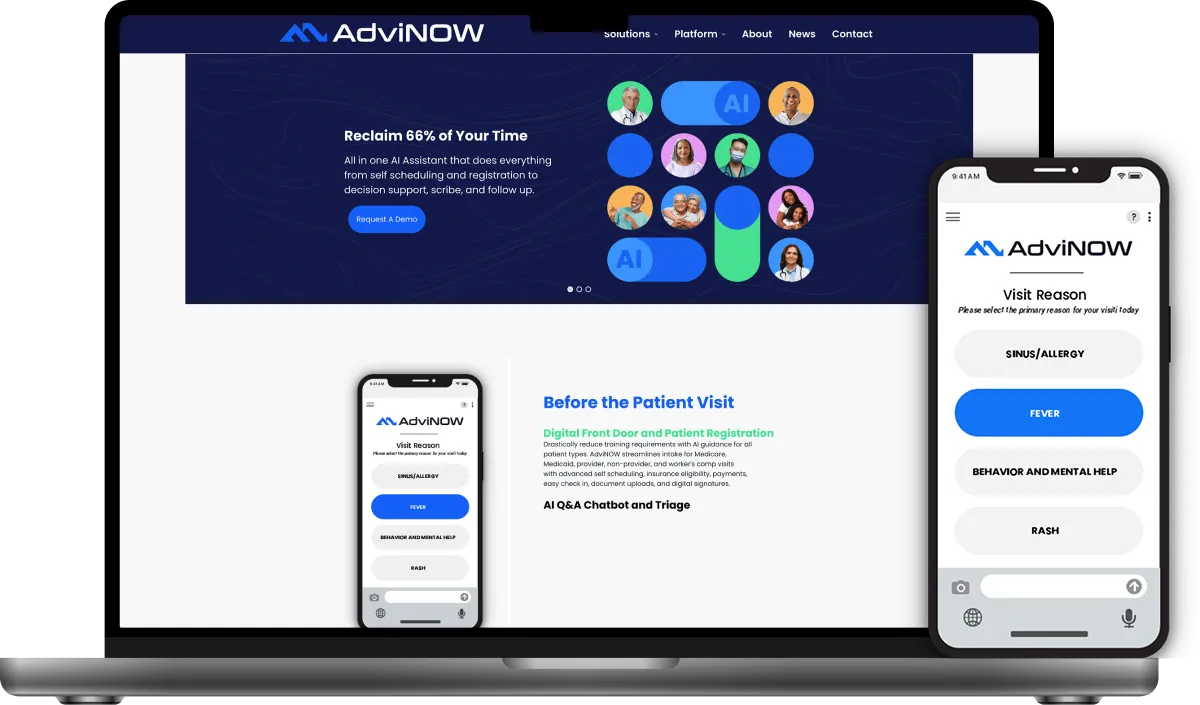
    Healthcare Advinow

    Advinow

    It's an AI-driven healthcare platform that automates patient engagement and consultation processes, helping healthcare providers deliver efficient, on-demand services while improving operations for urgent care.

    Read Case Study
    Healthcare Carepoint

    Carepoint

    Carepoint is a solution dedicated to the pharmacy industry with a variety of tools needed to manage any pharmacy.

    Read Case Study
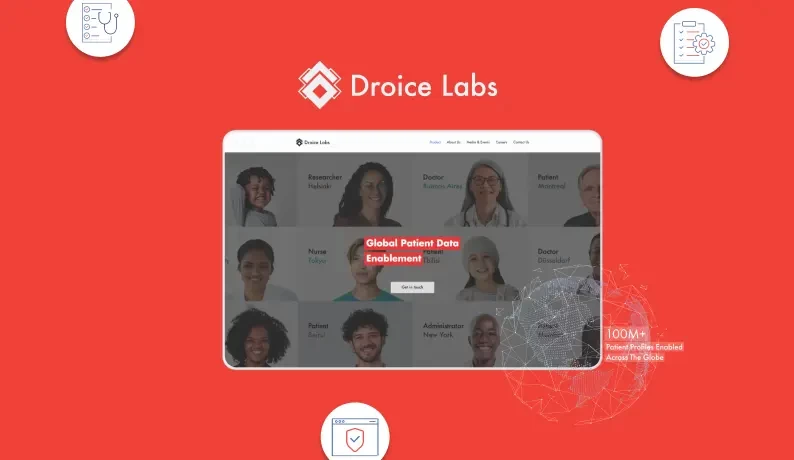
    Healthcare Droice Labs

    Droice Labs

    Droice Labs is a middleware designed to transform messy, unstructured patient data into clean, analysis-ready formats for clinical trials.

    Read Case Study

    Our Recent Blogs on Healthcare

    VIEW ALL
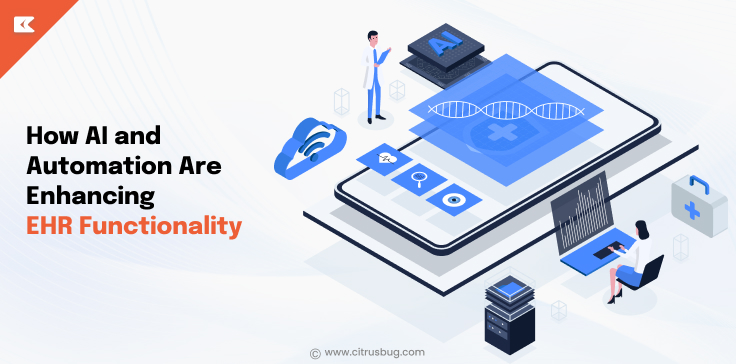
    How AI and Automation Are Enhancing EHR Functionality?
    How AI and Automation Are Enhancing EHR Functionality? Custom Software Development

    How AI and Automation Are Enhancing EHR Functionality?

    In the past, Electronic Health Records (EHRs) served solely to keep databases of patients’ information. However, in this modern era of medicine, doing just that is not sufficient. What healthcare…

    Read Article →
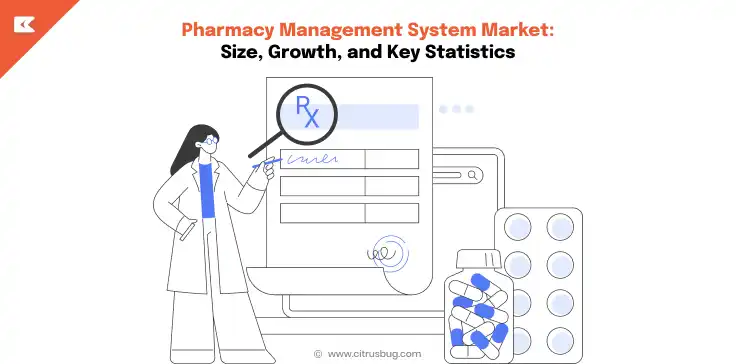
    Pharmacy Management System Market: Size, Growth, and Key Statistics
    Pharmacy Management System Market: Size, Growth, and Key Statistics Custom Software Development

    Pharmacy Management System Market: Size, Growth, and Key Statistics

    The way pharmacies operate has changed dramatically over the past few years. From manual record-keeping and paper prescriptions to fully digital workflows, the shift toward technology-driven pharmacy operations is accelerating…

    Read Article →
    AI Trends in Healthcare: Transforming Future of Medical Innovation
    AI Trends in Healthcare: Transforming Future of Medical Innovation Artificial Intelligence

    AI Trends in Healthcare: Transforming Future of Medical Innovation

    AI technology is revolutionizing healthcare delivery by increasing efficiency and accessibility to medical services. AI’s role in healthcare advancement has been unparalleled – from aiding in accurate diagnoses to driving…

    Read Article →

    Your EHR Systems Should Work as One

    Talk to our integration team and get a technical scope assessment for your project.