Droice Labs
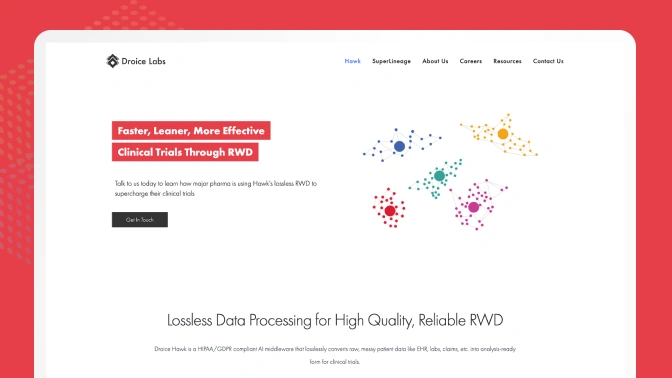
Droice Labs is a middleware designed to transform messy, unstructured patient data into clean, analysis-ready formats for clinical trials.
We build custom software for biotech companies, research labs, pharma firms, and MedTech teams that need systems compliant with FDA 21 CFR Part 11, GxP, and HIPAA from day one. LIMS, drug discovery platforms, bioinformatics pipelines, and clinical trial management tools - built to the standards your science demands.
Trusted by industry leaders
Laboratory information management systems that automate sample tracking, chain-of-custody documentation, and workflow orchestration. Integrated with lab instruments and compliance-ready for GLP and 21 CFR Part 11.
AI-powered platforms for target identification, molecular docking, compound library screening, and generative chemistry workflows. Built to reduce the time from target selection to candidate shortlisting.
Custom pipelines for genomic, proteomic, and transcriptomic data analysis. We build tools for sequence alignment, variant calling, and multi-omics data integration using Python, Nextflow, and cloud HPC environments.
End-to-end clinical trial management software for study design, patient enrollment, adverse event reporting, and eTMF document management, built to ICH E6 R2 GCP standards.
Real-time monitoring platforms for bioreactors, fermenters, and upstream/downstream processing equipment. IoT-connected dashboards with configurable alert thresholds and audit trail generation.
Secure SDMS platforms for storing, organizing, and sharing experimental datasets across research teams. Role-based access controls, version history, and integration with ELN tools and cloud repositories.
Our engineers have delivered LIMS, drug discovery, and bioinformatics platforms for research labs and pharma teams globally.
Schedule a ConsultationBiotech software projects are not standard development work. Off-the-shelf platforms constrain your data models, cannot meet your compliance documentation requirements, and break when your research scales. You end up building workarounds that slow your team down and introduce audit risk.
Genomic data sits in one system. Lab results are in spreadsheets. Clinical observations live in a separate tool. Building unified pipelines that move data without losing traceability is where most generic vendors fall short.
FDA 21 CFR Part 11, GxP, and EU MDR/IVDR are not checkboxes you add at the end. They shape database structure, access controls, audit trail architecture, and validation documentation from the first sprint. Teams that discover this late pay the cost twice.
Systems built to 21 CFR Part 11 requirements: time-stamped, tamper-evident audit logs, controlled access, electronic signature workflows, and compliant data retention policies baked into the architecture.
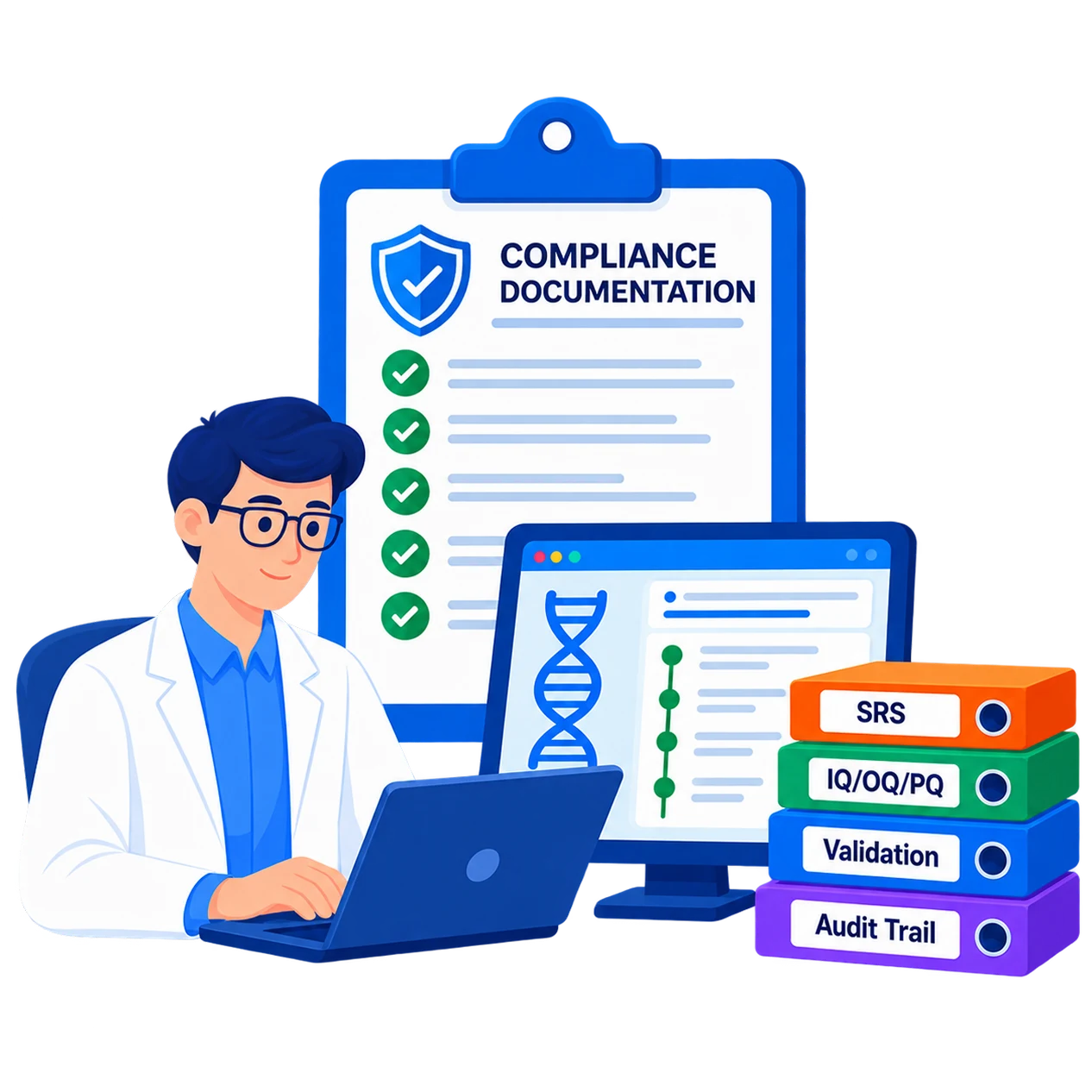
Our Secure ADLC methodology embeds validation checkpoints throughout the development cycle. IQ/OQ/PQ documentation, test protocols, and validation summaries are produced as project deliverables, not afterthoughts.
We build bidirectional integrations with Thermo Fisher, Agilent, Beckman Coulter, Sartorius, and other lab platforms. ASTM E1394, HL7, and vendor API protocols handled by engineers who have done this before.
Compliant cloud environments on AWS, Azure, or GCP for storing and processing genomic datasets, imaging data, and multi-site clinical data. Data residency controls and encrypted-at-rest configurations for GDPR and HIPAA coverage.
We follow a structured delivery model designed specifically for regulated software environments, where documentation, traceability, and review checkpoints are built into every phase.
We review your regulatory environment, existing infrastructure, and data requirements. We produce a requirements specification, user stories, and a compliance documentation plan before the build starts.
Our team designs the system architecture with your QA and regulatory affairs leads in the loop. Data flow diagrams, access control models, and integration maps are reviewed and signed off before development.
We build in two-week sprints with daily updates and formal sprint demos. Your team sees working software at every stage, not at the end of a six-month engagement.
We run IQ/OQ/PQ validation cycles, produce test protocols, and generate the documentation your regulatory team needs for internal review, audit, or submission support.
At delivery, you receive full source code ownership, validated documentation, and a structured L1/L2/L3 support SLA. We offer fixed-price post-launch maintenance periods so your team is never left without coverage.
A scoped LIMS implementation starts at $40,000 to $120,000 depending on integration depth and validation requirements. AI-powered platforms and clinical data systems are priced based on technical scope and compliance documentation load. Fill in the form and we will give you an estimate within 48 hours.
Python (FastAPI, Flask)
Node.js
Java / Spring Boot
PostgreSQL / TimescaleDB
GraphQL / REST APIs
Nextflow / Snakemake
PyTorch / TensorFlow
Apache Spark / Kafka
Snowflake / Databricks
HL7 FHIR / ASTM E1394
AWS GovCloud / Azure Health Data Services
Kubernetes / Docker
Terraform / Ansible
HIPAA-compliant cloud storage
CI/CD with audit trail integration
Biotech buyers often discover too late that their software vendor treated regulatory documentation as something to produce at the end, if at all. At Citrusbug, validation artifacts are scoped and produced alongside the software itself.
Every engagement includes a defined documentation plan. Your team knows at kickoff exactly which documents will be produced and when.
IQ/OQ/PQ Protocols: Installation, operational, and performance qualification documents produced per GAMP 5 guidelines, formatted for direct use by your QA team.
Electronic Records Validation Summary: Full validation summary report covering 21 CFR Part 11 requirements, including audit trail design, access control review, and electronic signature implementation.
System Requirements Specification (SRS): Traceable requirements document that maps each feature to its regulatory basis, test case, and validation evidence. Built for audit readiness from day one.
Ongoing Audit Trail Integrity: We configure tamper-evident, time-stamped logging at the database and application layers, with access reports your team can pull on demand.
Whether you are building from scratch or modernizing a fragmented system, these are the scenarios we handle every week.
We design audit trail structures, access control models, and data retention policies before writing code. Regulatory requirements shape the architecture, not the other way around.
IQ/OQ/PQ protocols, electronic records validation summaries, and SRS documents are part of every regulated engagement. Your QA team receives audit-ready documentation at each milestone.
You review the engineers assigned to your project before signing. No junior developers learning on your compliance-sensitive system, no rotating team members mid-engagement.
Full source code, documentation, and IP transfer at delivery. You own what we build. No vendor lock-in, no dependency on our team to maintain or extend the system.
Our team has built ML pipelines for medical diagnostic software and AI-powered analysis tools across genomics, imaging, and compound screening workflows.
L1, L2, and L3 support options with defined response SLAs. We offer a free maintenance period after launch, with structured escalation paths for production incidents.
Droice Labs is a middleware designed to transform messy, unstructured patient data into clean, analysis-ready formats for clinical trials.
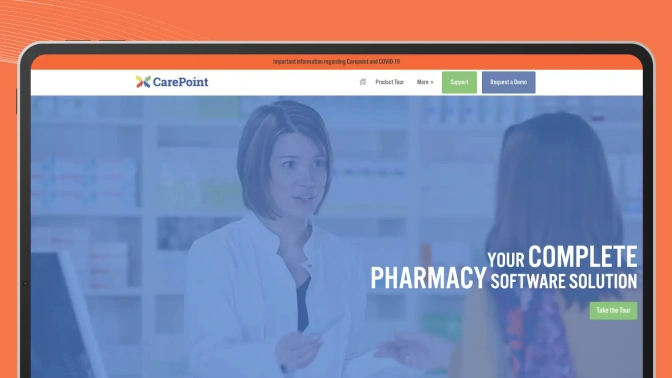
Carepoint is a solution dedicated to the pharmacy industry with a variety of tools needed to manage any pharmacy
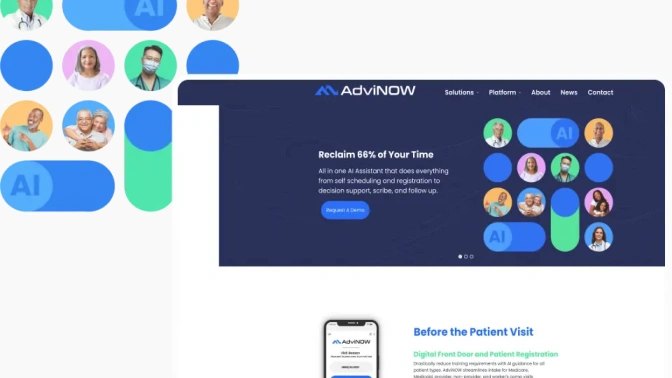
Advinow is an AI-driven healthcare platform that automates patient engagement and consultation processes, helping healthcare providers deliver efficient, on-demand services while improving operations for urgent care.
We build LIMS, drug discovery platforms, bioinformatics pipelines, clinical trial management systems, bioprocess monitoring tools, SDMS platforms, and companion apps for medical devices. Each system is scoped around your specific research or commercial workflow.
Compliance architecture is designed before development begins. We produce IQ/OQ/PQ validation documents, configure audit trails at the application and database layer, and build electronic signature workflows into the system specification from the start.
A LIMS for a research institution typically runs 2 to 4 months. A drug discovery platform with AI integration runs 4 to 10 months. Timeline depends on integration scope, regulatory documentation requirements, and validation depth.
Yes. We build integrations with Thermo Fisher, Agilent, Beckman Coulter, and Sartorius platforms using ASTM E1394, HL7, REST, and vendor APIs. We also integrate with ELN tools, EHR systems, and cloud data platforms.
We build custom pipelines for genomic sequencing analysis, variant calling, multi-omics integration, and proteomics data processing using Python, Nextflow, Snakemake, and cloud HPC environments on AWS and Azure.
A scoped LIMS implementation typically starts at $40,000 to $120,000 depending on instrument integrations and validation scope. AI-powered platforms start higher. We offer Fixed-Price, Time and Material, and Dedicated Team engagement models.
You receive full source code, validated documentation, and IP transfer. We offer L1/L2/L3 support SLAs, a structured free maintenance window post-launch, and a one-click re-engagement path for future feature development.
We have experience building SaMD products aligned to IEC 62304 software lifecycle requirements and EU MDR/IVDR technical documentation. Our team can support design history file preparation alongside the build.