
 Back
Back







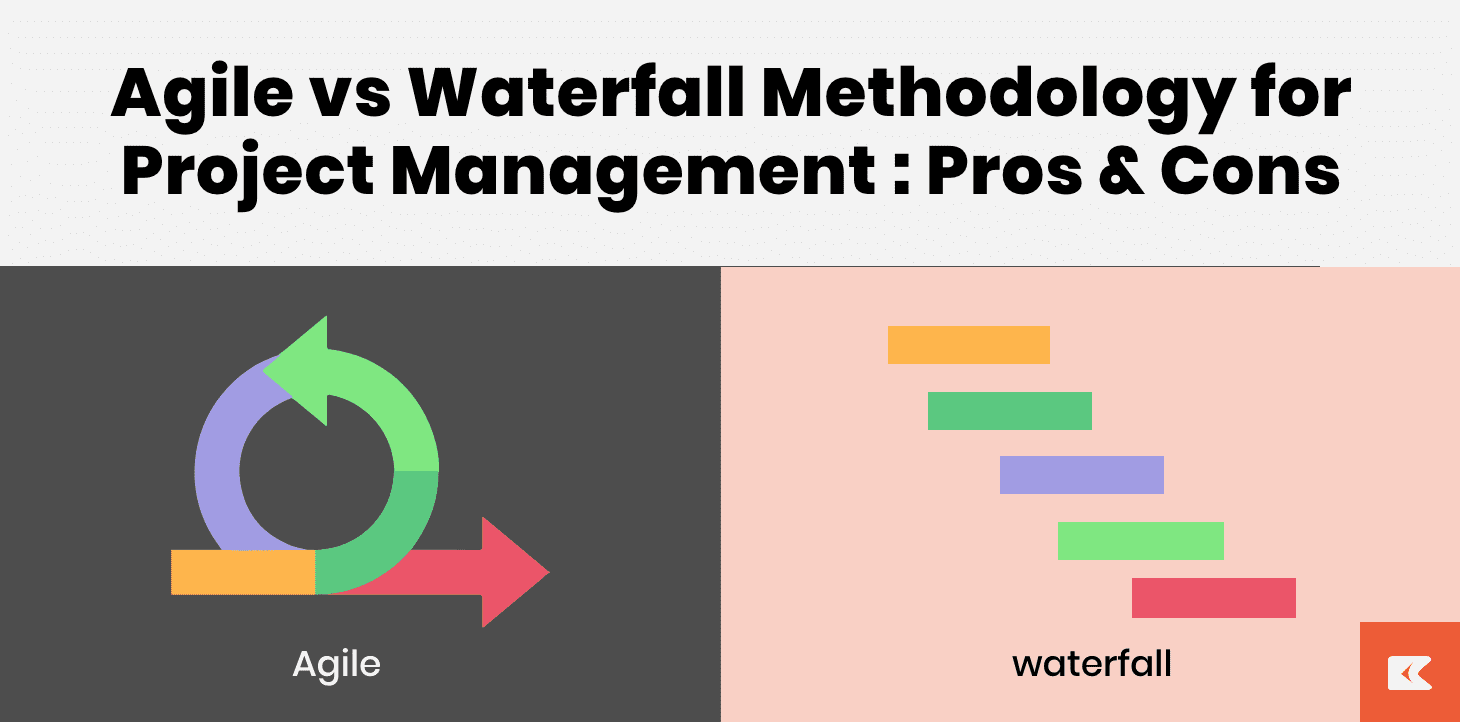
Before jumping into the debate of the Agile vs Waterfall methodology for project management, let us first understand the importance and essence of these methodologies and how they have emerged over the period of time in software development.
Introduction
Software development has evolved considerably over the past decade. Businesses have started to build their technology on solid and scalable platforms and programming languages with the aim of making the solution extensible for future additions of features and capabilities.
While the number of frameworks, platforms, and programming languages has grown several-fold, there is an equally important evolution that has happened in the way software development initiatives are managed.
Project management has diversified into a comprehensive practice that aims not only to deliver software on time, but also to ensure zero defects, provide accurate forecasting for stakeholders, and enable seamless visibility and transparency between dependent teams in a project.
While traditional project management focused on the waterfall development principle, today successful technology projects have transitioned into agile and scrum-based project management methodologies to deliver more value for the invested effort.
What is Agile Project Management?
Agile project management is a dynamic, iterative approach that prioritizes flexibility, collaboration, and continuous improvement. Instead of following a rigid, linear structure like the traditional Waterfall model, Agile enables teams to deliver incremental updates, incorporating feedback at every stage.
This adaptive methodology enhances speed, efficiency, and responsiveness—key factors in today’s fast-paced business landscape. By allowing teams to pivot based on evolving requirements, Agile ensures higher customer satisfaction and better project outcomes. It also plays a crucial role in DevOps, fostering seamless collaboration between development and operations teams to drive continuous delivery and innovation.
Pros and Cons of Agile
Pros
- Early and continuous delivery of working software keeps stakeholders engaged and informed throughout the project.
- Teams adapt quickly to shifting requirements without restarting the entire project from scratch.
- Short feedback loops surface design or functionality problems before they become expensive to reverse.
- Sprint reviews give product owners visibility into real, testable progress at least every two weeks.
- Cross-functional teams reduce handoff delays and keep specialist bottlenecks to a minimum.
Cons
- Estimating total project cost and timeline upfront is inherently difficult in a fully iterative model.
- Success depends on an engaged, available product owner who can review and prioritize work each sprint.
- Agile can feel chaotic to clients who need a fixed scope, a firm price, and a signed-off change log.
- Senior developers are often required every sprint, making Agile more resource-intensive in cost-constrained teams.
What is Waterfall Project Management?
Waterfall project management is a traditional, linear approach where each phase of a project follows a sequential order—planning, design, development, testing, and deployment. Once a phase is completed, it is difficult to go back and make changes, making this method best suited for projects with well-defined requirements and minimal expected changes.
This structured approach ensures clarity, thorough documentation, and predictable timelines, making it ideal for industries like construction, manufacturing, and large-scale software development. While Waterfall lacks the flexibility of Agile, it provides a clear roadmap, reducing uncertainty and ensuring all project milestones are met systematically.
Pros and Cons of Waterfall
Pros
- Clearly defined deliverables make it straightforward to manage external vendors and subcontractors.
- Phase-gate approvals create a documented audit trail that regulated industries require for compliance.
- The structured approach reduces ambiguity for large teams working across multiple time zones.
- Progress is easy to measure because each phase has defined entry and exit criteria that everyone can track.
Cons
- Any requirement missed during planning is expensive to address once development is underway.
- Changing requirements mid-project requires a formal change-control process that can stall the schedule.
- Bugs found during testing may require revisiting design decisions made months earlier, raising costs.
- Waterfall performs poorly for consumer-facing products where real user feedback should shape the build.

Agile vs Waterfall: Difference between Project Management Methodologies
| Agile Methodology | Waterfall Methodology |
|---|---|
| Follows an iterative and flexible development approach. | Follows a linear and sequential development process. |
| Requirements can be updated during the project lifecycle. | Requirements are finalized before development begins. |
| Delivers software in smaller releases or sprints. | Delivers the complete product at the end of the project. |
| Encourages continuous client feedback and collaboration. | Has limited client involvement after the planning stage. |
| Best suited for dynamic and fast-changing projects. | Best suited for fixed-scope and well-defined projects. |
Where Agile and Waterfall Are Used Across Industries
Agile dominates product companies, startups, and SaaS businesses. SaaS development relies on continuous deployment cycles where product-market fit is still being validated; Agile’s sprint cadence maps directly to that need.
E-commerce platforms, mobile apps, and consumer fintech products also run on Agile because user behavior data feeds back into the backlog weekly. Teams running DevOps services pair Agile with CI/CD pipelines to push tested code to production multiple times per week.
Waterfall remains dominant for regulated or large fixed-scope builds. Defense, aerospace, and government IT procurement still mandate it for auditability. Hospitals and medical device manufacturers use it when FDA approval requires complete documentation before clinical deployment.
Large enterprise application development projects, ERP rollouts, and core banking replacements often use Waterfall for the platform, then run Agile sprints on configuration and feature work.
This hybrid pattern is increasingly common in custom software development engagements where architecture is fixed, but the feature roadmap is not capturing Waterfall’s structural predictability and Agile’s delivery flexibility in the same project.
CONCLUSION
In the battle of Agile vs Waterfall, you can see here, Agile methodology is clearly a step ahead of the Waterfall model in terms of successfully orchestrating a winning journey for your digital application development. For large enterprise software development initiatives, the right choice is Agile as it offers flexibility, speed and ease of project management which greatly impact the quality of software delivered.
The graph below of Agile vs Waterfall compares various matrices such as errors, functionality, progress etc.
 Nevertheless, if the technology is not your core business, then you need the advisory and support of a trusted software development partner to deliver agile or waterfall-based software development activities for your digital ecosystem.
This is where Citrusbug can change the game for you. Whether it’s a Custom Software Development, Web Application Development or Mobile Application Development, we’re committed to following the right methodology for you (Agile or Waterfall whichever is suitable). Get in touch with us to identify the right software ecosystem, the right project management and the best-fit journey to success for your software development needs.
Frequently Asked Questions About Agile vs Waterfall
When should you use Agile instead of Waterfall?
⇒ Use Agile when requirements will change, early market validation matters, or the team can commit to sprint ceremonies. Consumer apps, SaaS platforms, and data products where user feedback shapes the roadmap are natural fits.
Which methodology is cheaper to use?
⇒ Waterfall can cost less when the scope is perfectly defined because fixed-price contracts are easier to structure. Agile can cost less overall by catching wrong assumptions before they become expensive rework. Both overrun when managed poorly.
Can Agile and Waterfall be combined?
⇒ Yes. The “Water-Scrum-Fall” hybrid uses Waterfall for requirements and design upfront, then switches to Agile sprints for development. Teams get a stable architecture foundation while preserving flexibility during the feature-building phase.
Does Agile have a better future than Waterfall?
⇒ Agile is the default for most software product companies, and that trajectory is not reversing. Waterfall remains dominant in defense, government, and regulated healthcare. The future is about applying the right method per project, not one winning globally.
Which methodology works best for startups?
⇒ Agile is almost always the right choice for startups. Early-stage products require rapid iteration based on user feedback, and requirements change faster than any fixed-scope plan can accommodate. Waterfall’s planning overhead would cost months before a feature ships.
Can you migrate from Waterfall to Agile mid-project?
⇒ It is possible but disruptive. Migration requires rebuilding a product backlog from remaining work, training the team on sprint rituals, and gaining stakeholder buy-in for a new cadence. Most teams switch at a natural phase boundary rather than mid-build.