
 Back
Back







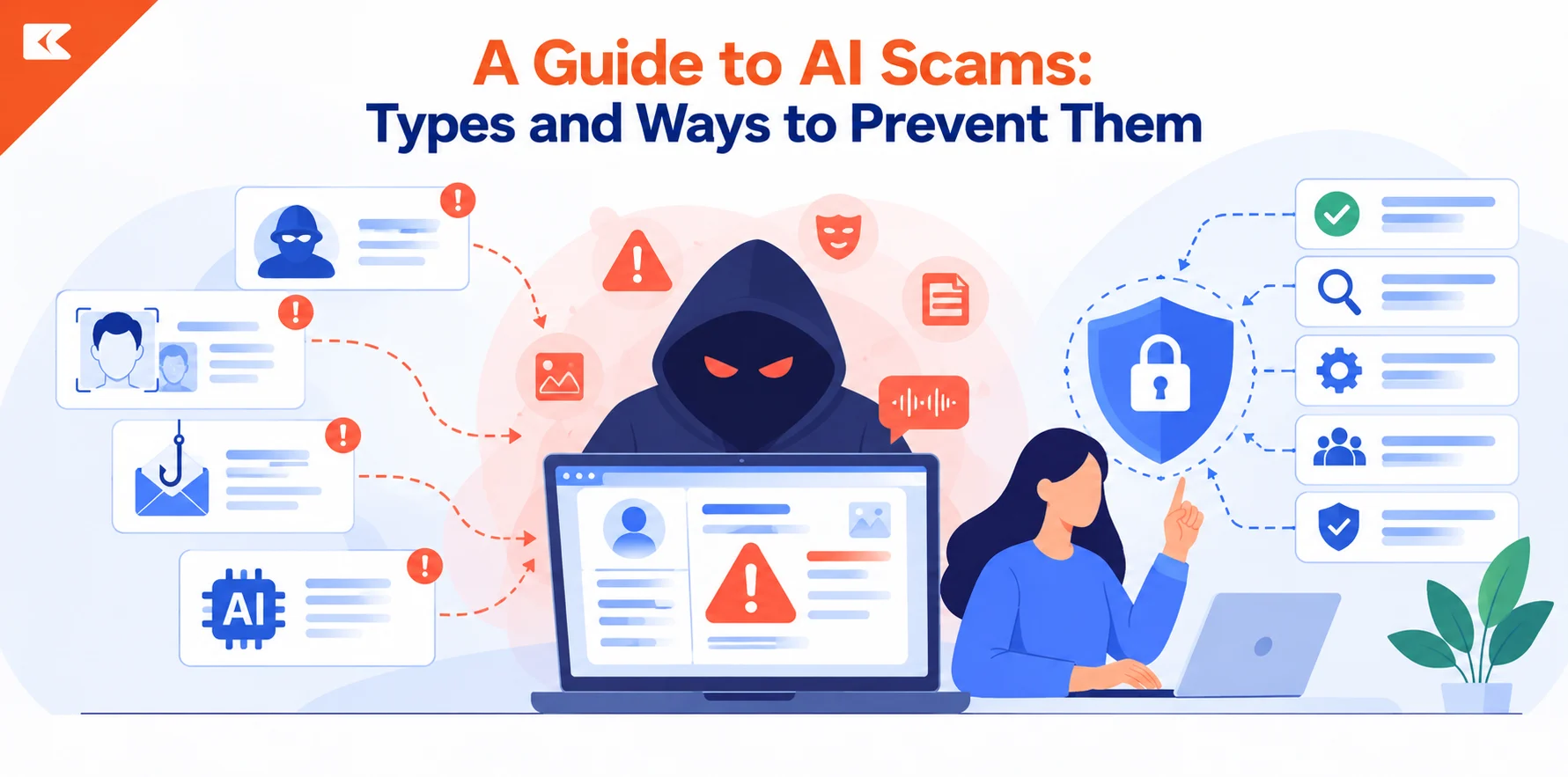
When we talk about Artificial Intelligence, we talk about how it has made it easier for people to handle personal and professional tasks.
But there is a darker side to how AI is being used these days.
Artificial intelligence is now being weaponized, and modern scammers are the biggest examples of it.
These scammers are using fake phone calls, receipts generated with AI, deepfake video calls, and AI-generated phishing emails that are very realistic and convincing. As a result, people end up believing them and exposing sensitive information or taking a costly action.
So, how do you fight back against these scams? Well, that’s precisely what this article is going to be about. Here, we will break down AI scams and help you safeguard yourself against them. Let’s start.
What are AI Scams?
AI scams are a form of fraud scheme that uses Artificial Intelligence to be more convincing and persistent to people. These scams use technologies like AI image and video generation, voice cloning, deepfakes, and AI agents to target people more successfully.
A few years ago, scams used to be created and executed by humans. It took a lot of effort to create multiple scams that were convincing enough to fool people. Those schemes were very faulty and only affected people who were not very vigilant and alert.
AI has changed this.
It is now creating more convincing scam calls, helping scammers clone the voices of people that you trust, and generating realistic images and even live video calls for fraud.
How do AI Scams Work?
Smart scammers are not using general AI tools to send fake receipts to fool people. They are using a complete technical procedure.
Creating a convincing bait
The success of a scam depends on the bait. The whole procedure begins with creating a bait that is convincing enough to make you click on an email, reply to a text message, or set up a meeting.
AI uses publicly available information to create this type of bait that will make even the smartest person click instantly.
Distributing the bait
After creating the bait, scammers make sure it reaches you. They use different types of data for this. Some create hundreds of AI phishing emails, and some manipulate your search results so that websites, accounts, and login pages show up first in your search before the authentic ones.
Keeping the victim engaged
Scammers don’t ask you to take action immediately since it would look suspicious. They take their time. They keep you engaged by sending more convincing phishing emails, setting up more meetings, or sharing more images and videos. Some scammers also use trained AI chatbots to chat with you regularly and in a more natural way.
Completing the scam
Since AI scams are natural and more consistent, the victim naturally falls for the trap. Once they trust the message or the video, they take the action that the scammers want them to take. It usually includes things like giving bank account information, sharing personal information, giving up passwords, etc.
Finally, the scam is successful, and the victim has to pay a huge price.
What are the Major Types of AI Scams?
There are several types of AI scams. Each one of them is designed for a different set of people and to hit a different type of goal.
- AI-generated phishing: This is the most common type. It includes AI-generated phishing content, such as messages and emails.
- AI-generated images: They usually include fake receipts, identity documents, and screenshots.
- AI-generated videos: This is a very convincing type. It includes deepfake videos of people doing or saying something to fool the victim.
- AI-voice calls: This type uses voice cloning technology to impersonate someone else to make the victim take some action.
- AI-chatbots: AI-chatbots are placed on websites. People chat with them for information and end up giving their sensitive data.
| Scam Type | Common Examples |
| AI-generated phishing | AI-written emails, text messages, fake login pages |
| AI-generated images | Fake receipts of payments, invoices, identity documents |
| AI-generated videos | Deepfake/stolen videos of officials, celebrities, or someone you know |
| AI voice calls | Cloned voice calls of officials or someone close to you |
| AI chatbots | AI customer support chatbots on different websites and apps |
How to Fight Back Against AI Scams?
AI scams are efficient. But they’re not impossible to spot and deal with. By following a few strategies and rules, you can fight back and keep yourself or your business safe.
Pause and think before trusting
The first thing you need to do is pause and think before you trust anything. It’s very natural to believe emergency messages. For example, you may receive a message saying your bank account has been blocked. Or you may receive a video saying you have to provide your Social Security number to complete some identity verification.
No matter how authentic the message looks, make sure you pause and analyze before making a decision.
Verify the source
If a message looks authentic, it doesn’t mean it was sent from an authentic source. Scammers can clone websites and contact information to send you a convincing message. So, it’s important that you verify the source before believing a message.
There are different things you can do for this. For example, you can contact the official organization to confirm that they have sent a message or email to you. These small precautions can prevent you from falling for the scam.
Check Video Authenticity
It’s normal for scammers to steal a video from an online platform, make a few changes to it, and then use it for scams. This is why checking a video’s authenticity and context is important before believing it.
The best way to do this is by doing a reverse video check with tools like reverse-videosearch.com. These tools are designed to check your video deeply and see if it has already been uploaded online. You can find the original video, understand its context through its title and caption, and get similar videos as well.
This information helps you know whether a video is authentic or the scammer has downloaded it from another source and shared it with you.
Verify if the Video is Generated with AI or Deepfake
Stealing videos from other sources isn’t the only strategy scammers use when it comes to using videos to fool people. They also generate videos with AI or Deepfake to create more convincing scams.
The problem with AI or Deepfake videos is that they are extremely realistic. It can be very hard to know if they are real or not just by watching them carefully.
In such cases, you can use AI video detector tools like Truthscan.com. These tools use advanced AI detection models that analyze visual and audio patterns to detect if a video is generated using AI and Deepfake tools. As a result, you can keep yourself safe from such an advanced form of online scams.
Do not share sensitive information
A rule of thumb you should keep in mind is that authorities rarely ask for your personal information. For example, a bank’s employee will never ask for your account PIN code. In the same way, government agencies never ask for your OTP or account passwords.
So, whenever someone asks for your sensitive information, it’s likely a scam.
Improve your online security
Another safety tactic that you can use to stay safe from scammers is to improve your online security. Make sure all of your emails have 2-factor authentication enabled. Use different passwords for different platforms. Also, make sure your passwords have unique characters so scammers and hackers can’t guess them.
Stay educated
No matter how careful you are, scammers will keep on coming up with new tactics to use AI for scamming. You should keep yourself educated and updated with new schemes that are going around online.
Join different online communities and follow technology blogs to keep an eye on the ongoing situations of AI scams. It will help you remain vigilant and recognize advanced scam tactics before they affect you.
Final Thoughts
AI is a huge asset but also a big weapon against your personal security. Scammers are using Artificial Intelligence in dozens of different ways to scam people online. They are using AI-generated images and videos, voice cloning, and deepfakes to trick people into sharing sensitive data. Although AI scams are becoming more and more convincing, you can keep yourself safe by being careful and doing research before believing a suspicious message.
Use online resources and tools to verify videos and images you receive before believing them. Also, stay updated with the latest scam techniques to keep yourself safeguarded against hackers and scammers.