
 Back
Back







Key Takeaways
- Global crypto wallet users surpassed 420 million in 2025, spanning more than 190 countries.
- The global crypto wallet market grew from $13.82 billion in 2024 to $17.02 billion in 2025, with Asia-Pacific holding the largest regional share.
- Blockchain wallet adoption rose 61% between 2023 and 2024, one of the sharpest year-over-year increases the sector has recorded.
- Hot wallets account for 61.5% of market revenue thanks to convenience, despite higher exposure to online security threats.
- Nearly 49% of crypto users report concerns about phishing and unauthorized access, keeping security a top purchase driver.
Introduction
Digital ownership now runs through a small piece of software that most people carry on their phone. Web3 wallets have moved from a niche tool for early crypto adopters into an everyday gateway for payments, games, and decentralized finance. Wallet providers are racing to serve a fast-growing, security-conscious user base spread across dozens of markets worldwide.
Web3 wallet statistics offer a grounded view of where this shift stands today. They reveal how many people actually hold a wallet, which regions are pulling ahead, and where the market is heading as institutions and retail users both increase their exposure to digital assets and blockchain-based finance.
This report walks through market size, adoption patterns, regional performance, segmentation, emerging trends, security concerns, and the growth trajectory expected through the early 2030s.
What Is a Web3 Wallet?
A web3 wallet is software or hardware that stores the cryptographic keys needed to access, send, and receive digital assets on a blockchain network. It also lets users connect directly to decentralized applications, marketplaces, and gaming platforms without a centralized intermediary.
Wallets matter because they replace the traditional bank account as the entry point to digital ownership. Every trade, NFT purchase, or DeFi transaction depends on a wallet to hold the keys and authorize the transfer, and that role makes it the foundation of the broader Web3 economy.
Web3 Wallet Statistics: Global Market Overview
The market backing web3 wallets spans several overlapping categories, from dedicated crypto wallet platforms to the wider Web3 infrastructure that supports them. Recent figures show steady expansion across each of these layers as user counts and transaction activity both climb, and more traditional finance players are now building wallet features directly into their own products.
Crypto Wallet Market Value
Dedicated crypto wallet platforms form the most direct slice of this market, and their growth has been consistent year over year. Rising token ownership and expanding exchange integrations continue to push new users toward both software and hardware wallet products, fueling steady demand for cryptocurrency platform development among exchanges and custodians alike.
- The global crypto wallet market was valued at USD 13.82 billion in 2024. This total captures the early scale of dedicated wallet platforms across software, hardware, and mobile formats.
- That figure climbed to USD 17.02 billion in 2025. User counts and transaction volumes both increased across major exchanges and self-custody platforms during the same period.
Web3 Market Size and Growth Rate
Beyond wallets alone, the broader Web3 category captures blockchain layers, decentralized applications, and the infrastructure that ties them together. This wider view helps explain why wallet demand keeps climbing even as individual product categories mature.
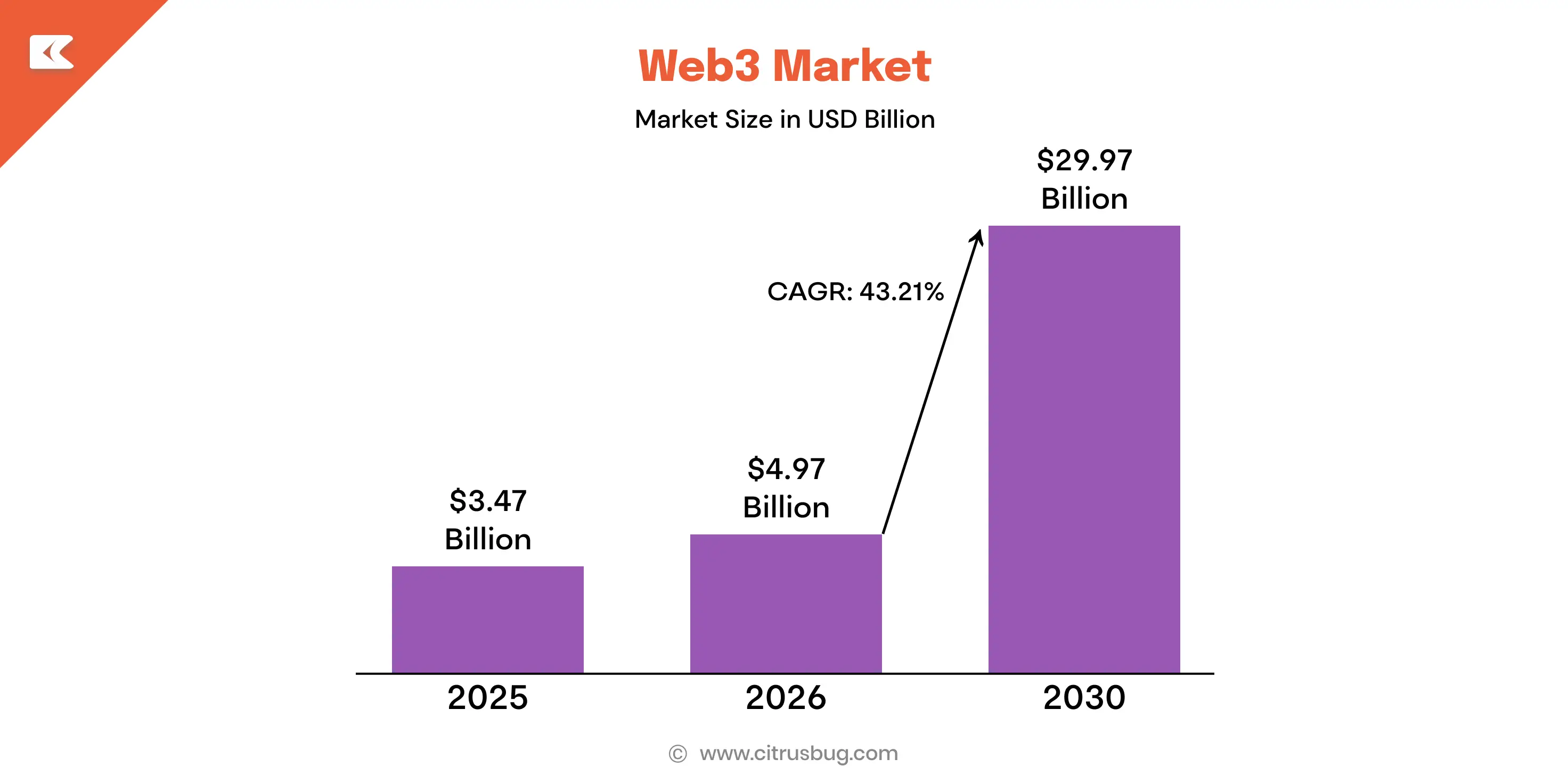
- The broader Web3 market reached USD 4.97 billion in 2026. That total covers blockchain layers, decentralized applications, and wallet infrastructure together.
- This segment is expanding at a compound annual growth rate of 43.21% between 2026 and 2031, one of the fastest paces among emerging technology categories.
Web 3.0 Market Expansion
A related but distinct category, the Web 3.0 market, focuses more narrowly on the blockchain-driven applications and services reshaping how people interact online. Its growth mirrors the same demand that is pushing wallet adoption higher.
- The Web 3.0 blockchain segment specifically stood at USD 2.8 billion in 2024. Public blockchain networks and enterprise pilots exploring decentralized infrastructure anchored most of that value.
- The wider Web 3.0 market, which includes decentralized finance, gaming, and social applications, was valued at USD 4.62 billion in 2025.
Across all three categories, the pattern is consistent. Value is climbing year over year, and wallet infrastructure sits at the center of nearly every transaction these markets record.
Web3 Wallet Adoption and Usage Patterns
Adoption numbers tell a clearer story than market value alone. They show how many people actually open wallets, connect to applications, and put digital assets to use rather than simply watching the space from the sidelines, and they help separate genuine usage from short-term speculative interest.
Global Wallet User Base
The overall size of the wallet-using population is one of the clearest signals of how mainstream this technology has become. It also shows how far reach has extended beyond the small circle of early blockchain enthusiasts.
- Global crypto wallet users surpassed 420 million in 2025. This total spans software, hardware, and mobile-first wallet formats used for everyday transactions.
- This user base now stretches across more than 190 countries. That reach shows how quickly wallet access has spread beyond early adopter markets into mainstream retail use.
Active Web3 Participation
User counts only tell part of the story, since not every wallet holder actively engages with decentralized applications. Active participation numbers show how many people put their wallets to consistent use.
- More than 100 million people engaged in at least one Web3 activity in 2024. This activity included crypto trading, NFT purchases, DeFi, or wallet-based transactions.
- Blockchain wallet adoption rose by 61% between 2023 and 2024, one of the sharpest year-over-year increases the sector has recorded to date.
NFT and Digital Asset Engagement
Wallet-driven activity extends well beyond simple asset storage into active trading and collecting. This part of the web3 wallet statistics picture shows how transaction-level demand has held steady even as broader crypto prices fluctuate.
- Total NFT sales volume reached USD 1.5 billion between January and March 2025. This segment depends entirely on wallet connectivity to function.
- This volume reflects renewed retail interest in tokenized collectibles and points to steady wallet-driven transaction activity beyond simple asset storage.
These figures together show a user base that has grown well past its early speculative phase. Hundreds of millions of people now treat wallets as a routine financial tool rather than an experimental one.
Regional Web3 Wallet Market Share and Growth
Wallet adoption is not spreading evenly. Some regions are pulling ahead on raw market value while others are posting the fastest expansion rates, and the differences say a lot about where digital asset infrastructure is maturing fastest.
- Asia Pacific: The region held the dominant share of the crypto wallet market at USD 3.92 billion in 2025, or roughly 32.13% of the global total. Favorable regulatory activity and a wave of new Web3 gaming platforms have both supported this lead, alongside a growing base of local wallet providers competing with global exchanges.
- North America: The region reached USD 2.27 billion in 2025. Early cryptocurrency adoption and a dense network of regulated exchanges and fintech firms back this figure, and institutional participation adds further depth beyond retail activity alone.
- Europe: The region touched USD 2.20 billion in 2025, while the continent’s broader digital coin market reached USD 0.77 trillion in 2026. Clearer regulatory frameworks around digital assets have encouraged more structured, compliance-friendly adoption across the region.
- India: The country’s crypto wallet market reached USD 1.03 billion in 2025. Rising +participation among younger digital asset investors and growing smartphone-based access to trading platforms both drive this figure.
- Middle East and Africa: The regional digital wallet market is projected to climb to USD 103.76 billion by 2032, at a compound annual rate of 19.61%. Smartphone penetration and ongoing financial inclusion efforts continue to accelerate wallet access across the region.
Taken together, this regional spread shows a market where value currently concentrates in a handful of established economies. The fastest percentage growth is happening in regions that are still building out their digital finance infrastructure from a smaller base.
Web3 Wallet Market Segmentation
Wallet demand splits across a few clear categories once market value is broken down by how people actually connect to and use these tools. These segments show where providers are concentrating product development.
Hardware Wallet Connectivity
Connection type plays a meaningful role in how hardware wallets are designed and priced, since it affects both manufacturing cost and ease of use for the end buyer. USB remains the most common approach among current devices on the market, though wireless options are gradually gaining ground.
USB-based connectivity holds the largest share among hardware wallet types at 40% of the segment. This dominance reflects the simplicity and lower manufacturing cost of USB devices compared with Bluetooth or NFC alternatives, and it appeals most to users who prioritize offline key storage above wireless convenience.
Wallet Type Preference
Whether a wallet stays connected to the internet or remains offline shapes both its convenience and its risk profile. This split between hot and cold storage remains one of the clearest lines in the wallet market, and it continues to guide how new products are positioned.
Hot wallets connect to the internet through a browser, mobile app, or desktop client, and they account for 61.5% of overall wallet market revenue. Their convenience for everyday trading and transfers keeps them ahead of offline cold storage options despite the added exposure to online threats that comes with constant connectivity.
Primary Use Case Demand
Beyond storage type, the reason someone opens a wallet in the first place also shapes how the market is segmented. Trading activity continues to outpace other use cases by a wide margin, well ahead of remittance or e-commerce related transactions.
Trading remains the leading application among wallet users at 44.2% of application-based revenue. Rising transaction volumes on exchanges fuel this demand, along with a growing habit of connecting a personal wallet directly to trading platforms rather than relying solely on custodial accounts.
Emerging Web3 Wallet Trends
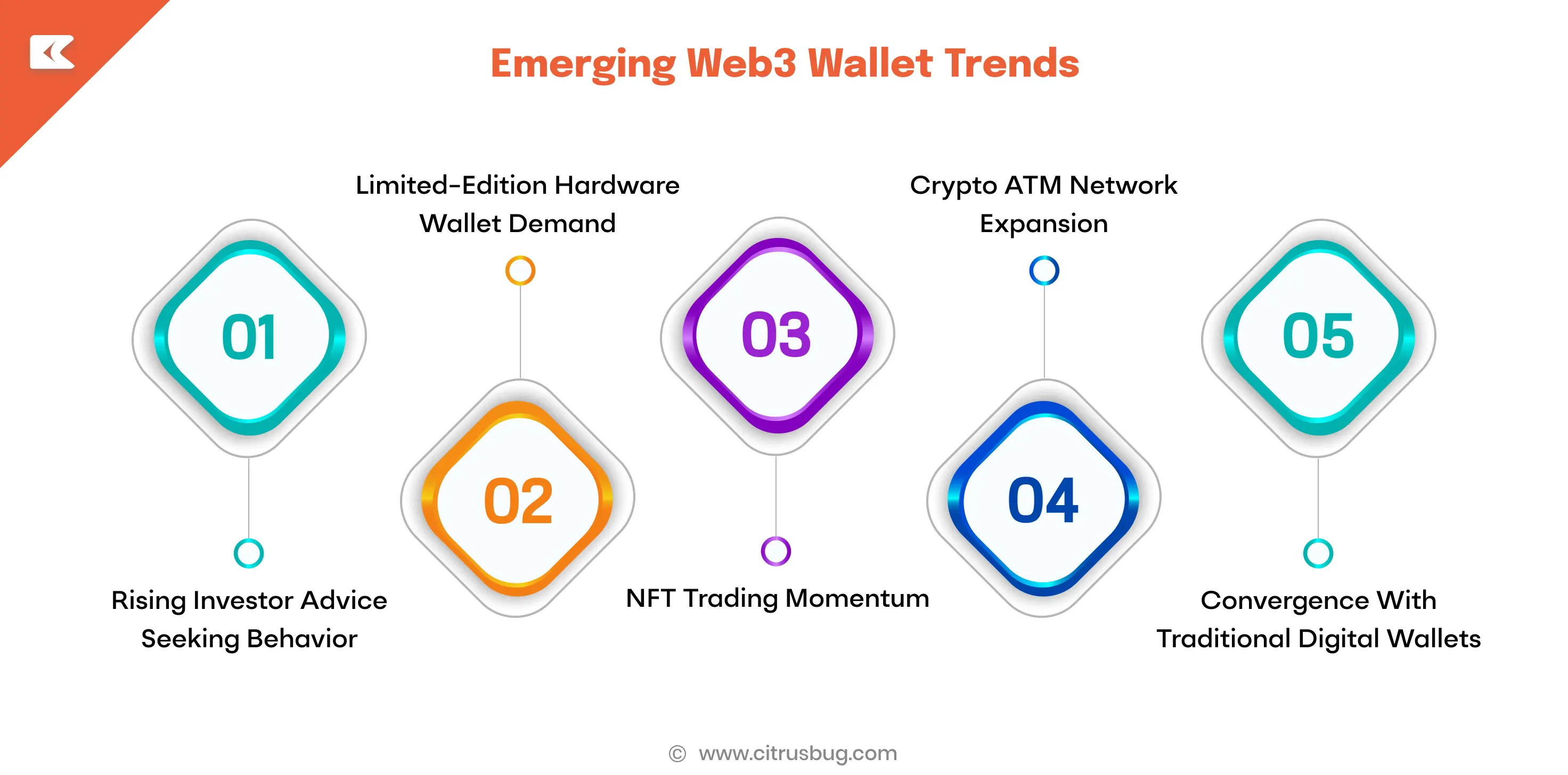
A handful of behavioral and product shifts are shaping how people choose, use, and secure their wallets heading into the next few years.
Rising Investor Advice-Seeking Behavior
Digital asset holders increasingly treat their crypto exposure the way they would a traditional investment portfolio. This shift shows up clearly in how often investors now seek outside guidance before making decisions about where and how to store their holdings.
Around 71% of investors sought or planned to seek professional crypto investment advice in 2024. This behavior suggests digital asset holders treat their portfolios with the same seriousness as traditional investments rather than as speculative side bets, and it raises expectations for the wallets and platforms that manage those assets.
Limited-Edition Hardware Wallet Demand
Manufacturers are testing exclusivity as a sales strategy rather than relying solely on standard product lines. Early results suggest collectors and security-focused buyers respond strongly to scarcity.
A limited-run hardware wallet capped at 2,100 units sold out shortly after its January 2025 launch. The response signaled strong appetite among collectors and security-focused investors alike, and it points to room for premium, design-driven products within an otherwise utilitarian device category.
NFT Trading Momentum
Trading activity within the NFT space continues to rely entirely on wallet infrastructure to function, which keeps this corner of the market closely tied to overall wallet health. Volume trends here offer a useful proxy for broader digital collectible demand.
NFT trading volume reached USD 8.83 billion in 2024. Wallet-based marketplaces remain central to how digital collectibles change hands, since every transaction in this space still routes through a connected wallet rather than a passing add-on to the broader crypto ecosystem.
Crypto ATM Network Expansion
Physical infrastructure still plays a role in bringing new users into the wallet ecosystem, particularly for people without easy access to online exchanges. ATM growth reflects this ongoing demand for offline entry points.
More than 40,000 crypto ATMs were installed worldwide by 2024, with over 80% concentrated in the United States. These machines give cash-based users a physical bridge into wallet ownership without needing a bank account or online exchange first.
Convergence With Traditional Digital Wallets
The line between crypto-native wallets and everyday payment apps is also starting to blur. As more banks, neobanks, and fintech platforms add token support alongside card and bank transfers, the broader discipline of digital wallet app development increasingly overlaps with Web3 wallet infrastructure rather than sitting apart from it. This convergence gives users a single interface for both fiat and digital assets, and it’s pushing wallet providers on both sides to borrow security and UX practices from one another.
Each of these trends points toward the same conclusion. Wallets are being pulled into more corners of everyday financial life, from professional advisory relationships to physical retail locations.
Web3 Wallet Security and Compliance Challenges
Security and regulation remain the two areas wallet providers cannot afford to overlook as adoption scales into the mainstream. Both concerns shape how users choose a wallet, how confidently they use it, and how quickly newer entrants can build lasting trust with cautious investors.
- Phishing and unauthorized access: Nearly 49% of cryptocurrency users report concerns about phishing attempts, wallet hacking, and unauthorized access to their holdings. This figure underscores why security features remain a top purchase driver for both new and experienced users.
- Regulatory compliance pressure: About 34% of blockchain companies say shifting digital asset regulations create ongoing compliance challenges for their operations. Rules continue to evolve across different jurisdictions, and that pace slows down product rollouts in certain markets.
Neither concern is likely to disappear soon, but both are pushing providers toward stronger authentication methods and clearer communication about how user funds stay protected.
Future Outlook for Web3 Wallet Adoption
Forecasts through the early 2030s point to sustained growth across nearly every wallet-related category, from broad market infrastructure down to specific device types. These projections build directly on the current web3 wallet statistics already shaping the market today, and the next phase of growth looks set to come as much from product diversity as from raw user counts.
- Web3 market growth through 2031: The overall Web3 market is projected to reach USD 29.97 billion by 2031. Enterprise and consumer adoption are both expected to scale in tandem to reach that total.
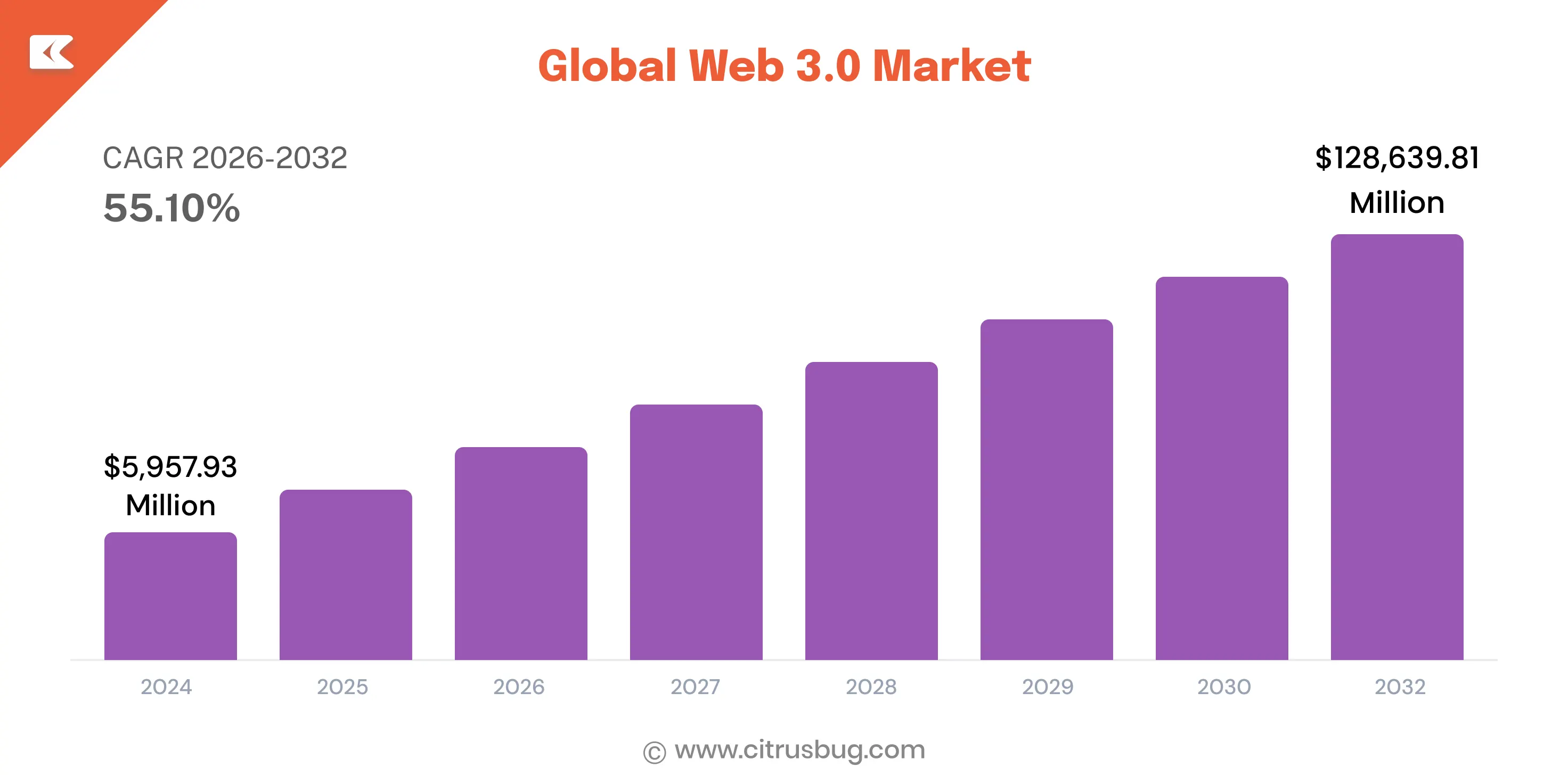
- Web 3.0 market expansion by 2032: The wider Web 3.0 market is forecast to hit USD 128,639.81 million by 2032 as investment continues in decentralized applications, infrastructure, and the wallets that connect users to them.
- Web3 gaming wallet demand: The Web3 gaming market, which depends heavily on in-game wallet integration, is set to reach USD 103.99 billion by 2032. This segment carries a projected 19.2% compound annual growth rate through the same year as more titles add native asset ownership.
- Hardware wallet market forecast: The hardware wallet segment is expected to climb to USD 1,600.30 million by 2030. Cold storage demand keeps growing among long-term holders who want offline protection for larger portfolios.
- Non-custodial wallet growth: The non-custodial wallet market is projected to reach USD 3.5 billion by 2031. This trajectory mirrors the broader shift toward users holding their own private keys instead of relying on exchanges for custody.
- Institutional custody demand: The crypto asset management market supporting institutional wallet oversight is forecast to reach USD 9.36 billion by 2030, at a compound annual rate of 30.2% as more funds bring digital asset custody in-house rather than outsourcing it.
These combined projections suggest that growth will not stay limited to a single wallet type or use case. It will instead spread across gaming, institutional finance, and everyday retail storage at a similar pace, and that spread reinforces wallets as permanent financial infrastructure rather than a temporary trend.
Conclusion
Web3 wallet statistics point to a market that has moved well past its experimental phase. Hundreds of millions of users now rely on wallets daily, regional markets are scaling at different but consistently positive rates, and forecasts through the early 2030s show no sign of that momentum slowing.
The road ahead still involves real friction, from phishing risks to shifting compliance rules, but the underlying direction is clear. As wallet infrastructure matures alongside stronger security practices, continued web3 wallet development will keep pushing digital asset ownership toward becoming a standard part of how people manage money online.