


Custom cannabis app development
Cannabis App Development Company
Citrusbug is a cannabis app development company developing custom ordering, dispensary, delivery, and medical patient apps for licensed operators in the US and Canada. Each app integrates with your POS and state track-and-trace system, with age and ID verification and payment workflows designed around applicable cannabis regulations.

500+
Projects Delivered
98%
Client Retention
Certified
 ISO 27001
 SOC 2
Trusted By











Certified & Compliant








What Makes Cannabis App Development Different?
Cannabis applications must account for operational and regulatory requirements that standard e-commerce platforms may not support out of the box. Inventory synchronization, buyer verification, purchase limits, and transaction records need to work together across the ordering process.
Custom cannabis app development allows operators to accommodate requirements such as POS and seed-to-sale integrations, multi-location inventory, medical patient eligibility, and jurisdiction-specific restrictions. These workflows should be considered during architecture and development, not added as afterthoughts.
Cannabis App Development Services
Citrusbug is a cannabis app development company that builds custom applications around your licensing requirements, existing POS, inventory systems, and operational workflows. Whether you operate a single dispensary or manage multiple licensed locations, each application is scoped to your business needs.

Dispensary Ordering and Pickup Apps
Give customers a convenient way to browse products, check availability, and place orders for in-store pickup. Our dispensary app development includes product catalogs, shopping carts, order-ahead functionality, POS inventory synchronization, and age verification.

On-Demand Cannabis Delivery Apps
Support cannabis delivery operations with connected customer, driver, and dispatcher applications. Features include delivery zone management, order assignment, driver tracking, doorstep ID verification, and delivery manifests.

Medical Marijuana Patient Apps
Simplify medical cannabis access with applications that support patient registration, medical certification uploads, eligibility checks, and purchase limit tracking. Role-based access and patient records can be structured around applicable state medical cannabis program requirements.

Dispensary Web Storefronts
Extend your dispensary’s digital presence with a web storefront connected to the same product catalog, pricing, and inventory as your mobile app. Product pages, online menus, order management, and supported payment options keep the shopping experience consistent across channels.

Loyalty and Retention Apps
Encourage repeat purchases through custom loyalty programs with points, membership tiers, referrals, and personalized offers. Campaign rules and promotional features can account for applicable cannabis advertising and marketing restrictions.

Multi-Store Management Dashboards
Manage multiple dispensary locations through a centralized dashboard for inventory visibility, product pricing, sales reporting, and authorized stock transfers. Role-based permissions help managers and compliance teams oversee location-specific operations.

B2B Wholesale Ordering Portals
Connect cultivators, manufacturers, distributors, and retailers through wholesale ordering platforms. Product catalogs, buyer-specific pricing, order approvals, account management, and transfer documentation support transactions between licensed businesses.

Inventory and Back-Room Apps
Give dispensary staff tools for receiving stock, conducting inventory counts, recording adjustments, and managing transfers. Barcode scanning, audit trails, and variance reports support daily inventory operations. These applications can also integrate with your existing cannabis inventory management software.
Planning a Cannabis App for Your Business?
Whether you're launching a dispensary app, building a medical cannabis platform, or streamlining multi-location operations, let's discuss your requirements and define the right development approach.
Discuss Your Cannabis App ProjectCompliance and Operational Features for Cannabis Apps
Cannabis applications need to account for regulatory requirements and operational workflows across the supply chain. Citrusbug develops features for customer verification, purchase restrictions, inventory tracking, order management, staff permissions, and compliance reporting based on your license type and business operations.

Age and Identity Verification
Integrate third-party identity verification tools to check customer age during registration and applicable pickup or delivery handoffs. Store verification results and timestamps to support internal reviews and audit requirements.
Purchase Limits and Patient Eligibility
Configure purchase restrictions based on product categories, customer eligibility, and applicable state regulations. Medical cannabis workflows can also account for patient certifications, qualifying conditions, and authorized caregiver access.

Cannabis Payment Integration
Integrate payment methods supported by your business model and eligible cannabis payment providers. Payment workflows can accommodate approved bank transfers, cash collection, and other supported options without tightly coupling payment logic to checkout.

Order and Transaction Management
Manage incoming orders, order status, substitutions, approvals, and fulfillment across retail and wholesale workflows. POS and inventory integrations help keep transaction records consistent across connected systems.

Role-Based Access and Audit Trails
Assign permissions to budtenders, managers, drivers, warehouse staff, and compliance personnel based on their responsibilities. Maintain activity logs for important changes to inventory, pricing, orders, and customer records.

Compliance Reporting and Records
Generate reports covering sales, inventory movements, order history, and authorized transfers. Structure records to support internal reviews, audit requests, and applicable regulatory reporting requirements.
Cannabis App Integrations With POS and Track-and-Trace Systems
Cannabis applications often need to exchange data across ordering platforms, POS systems, state-mandated track-and-trace platforms, and financial software. Citrusbug develops integrations that keep orders, inventory movements, and transaction records synchronized across these systems.
Integration workflows account for order status, inventory updates, payment confirmation, and regulatory submissions. Automated reconciliation can compare application orders, POS transactions, and track-and-trace records, flagging discrepancies for review instead of leaving staff to identify them manually. Failed submissions and duplicate transaction risks are also handled through appropriate retry and validation mechanisms.
Integration workflows account for order status, inventory updates, payment confirmation, and regulatory submissions. Automated reconciliation can compare application orders, POS transactions, and track-and-trace records, flagging discrepancies for review instead of leaving staff to identify them manually. Failed submissions and duplicate transaction risks are also handled through appropriate retry and validation mechanisms.

Connect your cannabis app with POS and menu platforms to synchronize product catalogs, pricing, inventory availability, and order status. Integration scope depends on vendor API access, supported functionality, and rate limits. Platforms may include Dutchie, Treez, Flowhub, Cova, and Blaze.

Integrate with seed-to-sale tracking platforms such as Metrc and BioTrack, along with applicable state-specific reporting systems. Data exchange can cover inventory movements, sales, transfers, and required transaction records, subject to platform access and jurisdictional requirements.

Connect supported payment providers and banking services to manage transaction initiation, payment status, and settlement records. Payment options are scoped around provider capabilities, business eligibility, and applicable cannabis payment restrictions.

Integrate third-party identity verification, age-checking, and address validation services. For delivery operations, geofencing and routing APIs can help enforce service boundaries and support delivery coordination.

Connect order, inventory, and transaction data with your existing cannabis ERP software or accounting platform. These integrations support financial reconciliation, cost-of-goods tracking, tax reporting, and operational visibility.
Cannabis App Store Distribution on iOS and Android
Cannabis app distribution requires platform-specific planning. Apple's guidelines allow certain licensed cannabis businesses to distribute sales-enabled apps in legal jurisdictions, subject to App Review requirements. Google Play prohibits apps that facilitate cannabis sales, including pickup and delivery ordering. Citrusbug plans native and web app experiences around these restrictions, with age verification, geographic controls, and platform-specific functionality considered during development.
| Platform | Development considerations |
|---|---|
|
Apple App Store |
Eligible legal business entity, applicable licensing, and geographic restrictions to jurisdictions where cannabis sales are legal. Apps remain subject to Apple’s review. |
|
Google Play |
Prohibits apps that facilitate cannabis sales, including shopping carts, pickup, and delivery arrangements. |
|
Mobile Web App (PWA) |
Supports browser-based product catalogs, customer accounts, and ordering workflows, with appropriate age verification and location restrictions. |
Business Benefits of Owning a Cannabis App

First-Party Customer Data
Keep customer profiles, order histories, preferences, and consent records within your own application infrastructure. This data can inform retention campaigns, product planning, and customer engagement without depending entirely on third-party marketplace reporting.

More Direct Repeat Orders
Encourage customers to order through your branded app with saved preferences, quick reordering, and loyalty programs. Direct ordering gives your business greater control over the customer experience and can reduce reliance on third-party ordering channels and their associated fees.
Less Manual Reconciliation
Connect inventory and transaction records across your app, POS, and track-and-trace systems. Automated synchronization and discrepancy alerts help staff identify mismatches earlier and spend less time comparing records manually.

More Efficient Counter Operations
Let customers place orders in advance so staff can prepare purchases before pickup. Organized order queues, verification status, and POS integration help budtenders manage incoming orders and reduce avoidable delays during busy periods.
AI Features to Add to Your Cannabis App
AI can extend cannabis applications beyond ordering and inventory management. As part of our cannabis app development services, we integrate AI features that help operators personalize product discovery, assist customers, forecast demand, and identify unusual business activity. These capabilities are scoped around available data, existing systems, and operational requirements.

AI-Powered Product Recommendations
Help customers discover relevant products through recommendations based on purchase history, product preferences, terpene profiles, and available inventory.
• Purchase history and preference analysis
• Product matching based on attributes
• Inventory-aware recommendations
• Marketing rules aligned with applicable state restrictions

AI Shopping Assistant
Give customers an interactive assistant that answers product availability, store hours, ordering, and account questions using your live menu and business information.
• Responses grounded in current menu data
• Order status and account queries
• Escalation to staff for medical questions
• Conversation history for review

Demand Forecasting and Inventory Planning
Analyze historical sales, seasonal patterns, and store-level demand to help purchasing teams plan inventory and identify products that may need replenishment.
• SKU-level and store-level demand forecasts
• Seasonal and event-based demand patterns
• Reorder point recommendations
• Inventory variance alerts

Transaction Anomaly Detection
Identify unusual patterns in discounts, refunds, voids, and inventory adjustments. AI-based monitoring can flag exceptions for manager review, helping operators investigate potential discrepancies.
• Unusual discount and refund detection
• Inventory adjustment monitoring
• Employee-level exception reports
• Review queues with supporting transaction records
Cannabis App Development Process From Scoping to Store Launch
01
Discovery Scoping
We map your license type, POS, state system, and payment rails, then confirm API access and sandbox requirements before estimating, so the budget reflects the real integration work.
02
Design and Architecture
Wireframes, user stories, the order-event model, and role permissions are drafted and reviewed with your compliance lead before engineers write any production code, which keeps rework low.
03
Build and Integrate
Two-week sprints with demos deliver customer, staff, and admin apps alongside POS and track-and-trace connectors, each tested against sandbox data from the first sprint onward.
04
Test and Validate
End-to-end tests cover age checks, purchase limits, payment failures, and state submission retries, followed by security testing and store-submission preparation for iOS and web releases.
05
Launch and Support
Rollout runs store by store with staff training and monitoring for sync failures, backed by post-launch support options at L1, L2, and L3 service levels.
Delivery Proof
View All Case Studies →
Explore Our Application Development Portfolio
FINTECH


LOGISTICS
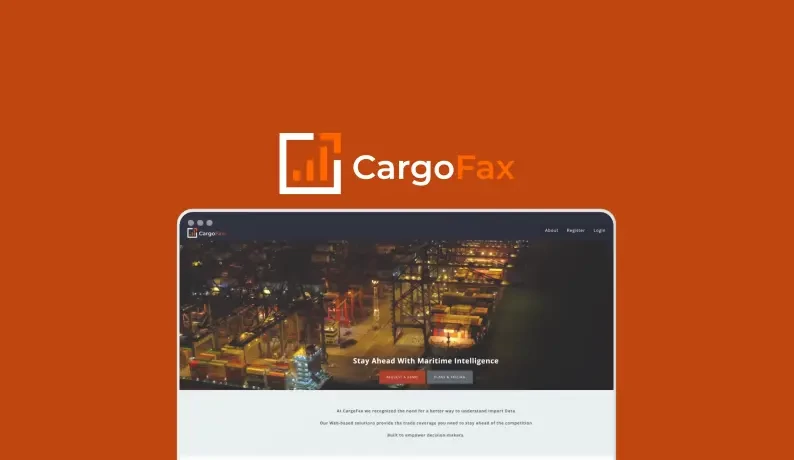
CargoFax
A data-driven import insights platform designed to help businesses make smarter import decisions.
View Case Study →Client Testimonials (We're Rated 4.7 on Clutch)
THE PROJECT
Web & AI Development for Education Company
AI Development, Custom Software Development
Nov. 2024 - Ongoing
THE REVIEW
Their agile way of working, competence, and friendliness are impressive.December 7, 2024
PROJECT SUMMARY:
Citrusbug Technolabs handles a data extraction project for an education company. They're also responsible for managing an AI generation project for the client.
FEEDBACK SUMMARY:
Citrusbug Technolabs has laid out and followed a clear project outline and consistently met deadlines. The team communicates well and demonstrates a strong understanding of the client's vision and goals. Their agile approach, high level of competence, and personable approach stand out.
THE REVIEWER
 Read More
 Read More
THE PROJECT
Custom Automated System Dev for Veteran Medical Co
Generative AI, Application Testing, Custom Software Development
Aug. - Oct. 2024
THE REVIEW
Their communication and ability to capture exactly what I was asking for were impressive.November 14, 2024
PROJECT SUMMARY:
Citrusbug Technolabs built an automated system for a veteran medical company. The system needed to collect and store user data, generate customized letters based on surveys, and use AI to summarize reviews.
FEEDBACK SUMMARY:
Citrusbug Technolabs delivered a functional automated system that successfully organized the client's records and auto-generated statements. The team was quick to respond, addressed all roadblocks, and communicated effectively. Overall, their ability to understand the client's needs stood out.
THE REVIEWER
Read More
Read More
THE PROJECT
MVP Development for Freight & Capacity Marketplace
Custom Software Development
$10,000 to $49,999
Jan. 2024 - Feb. 2025
THE REVIEW
They were very calm and talented, and they did bring some of their own ideas.January 28, 2025
PROJECT SUMMARY:
Citrusbug Technolabs has developed an MVP for a freight and capacity marketplace. The team has created three different interfaces for three market segments.
FEEDBACK SUMMARY:
Citrusbug Technolabs has successfully developed an effective MVP. The team has delivered the project on time and almost within budget. Moreover, their responses have been timely. Overall, the team has been calm, talented, and innovative. This has led to the client's satisfaction.
THE REVIEWER
Read More
Read More
THE PROJECT
Web & Mobile App Development for Education Company
Custom Software Development, DevOps Managed Services
$10,000 to $49,999
THE REVIEW
What stood out most about them was their personalized approach and sense of ownership in every aspect of the project."February 27, 2024
PROJECT SUMMARY:
Citrusbug Technolabs built a Flutter cross-platform mobile app for an education company. They also developed two web apps and an admin panel and provided DevOps support for the client's infrastructure.
FEEDBACK SUMMARY:
Citrusbug Technolabs' support successfully boosted the client's user engagement by 8x, resulting in an 85% retention rate. The reliable team demonstrated a dedication to delivering on time and promptly responding to concerns and adjustments. Their personalized, client-centric approach stood out.
THE REVIEWER
Read More
Read More
THE PROJECT
Mobile App Development for Healthcare Company
Custom Software Development Mobile App Development UX/UI Design
$10,000 to $49,999
June 2023 - Jan. 2024
THE REVIEW
They didn't like the phrase "impossible to do", which made them very solution-oriented.February 19, 2024
PROJECT SUMMARY:
A healthcare company hired Citrusbug Technolabs to design and develop a user-friendly application. The team provided tailored assistance to meet the client's requirements.
FEEDBACK SUMMARY:
Citrusbug Technolabs successfully delivered an application that was ready for market. The team was highly professional and well-organized; they stayed focused throughout the engagement and were receptive to changes. Overall, they stood out for their trustworthiness and commitment to excellence.
THE REVIEWER
Read More
Read More
THE PROJECT
Custom Web App Dev & Design for Financial Technology Firm
Mobile App Development UX/UI Design Web Design
Sep. 2023 - Ongoing
THE REVIEW
They're 100% on time and transparent throughout each stage of the project.February 24, 2024
PROJECT SUMMARY:
A financial technology company has hired Citrusbug Technolabs to build a custom web application. The team handles the development and design of the app.
FEEDBACK SUMMARY:
The project is ongoing, but the client has been satisfied with Citrusbug Technolabs' services. The team is very professional — they always respect timelines and provide regular updates to ensure everyone's on the same page. Also, their transparent approach makes them a trustworthy partner.
THE REVIEWER
Read More
Read More
THE PROJECT
Staff Augmentation for Singaporean Development Company
Mobile App Development
$10,000 to $49,999
THE REVIEW
"I do believe they are exceptional at where they stand."
PROJECT SUMMARY:
Citrusbug Technolabs took on a mobile app development project for a Singapore-based development house. They were provided with UX designs to execute. Currently, they're finalizing and fine-tuning the product.
FEEDBACK SUMMARY:
Citrusbug Technolabs contributed to the successful launch of the product, which has garnered over 10,000 users in just three months. The product has also received support from investors. They consistently followed-up with their progress and delivered at a speedy rate. The team is truly stellar.
THE REVIEWER
Read More
Read More
Cannabis App Development Company Engagement Models

Fixed-Price Build
Defined scope, agreed budget
- Suits a first release or MVP
- Scope locked after discovery
- Milestone-based payments
- Change requests priced separately
- Source code handed over at delivery

Time and Material
Evolving scope, steady pace
- Suits platforms still taking shape
- Priorities set sprint by sprint
- Billing on hours worked
- Demos at the end of every sprint
- Scope adjusts without contract rework

Dedicated Team
Long-term product capacity
- Suits multi-store roadmaps
- Engineers, QA, and a project lead
- Embedded in your standups and tools
- Monthly retainer billing
- Team scales up or down with notice
Factors That Affect Cannabis App Development Cost
Cannabis app development costs depend on the application's features, third-party integrations, regulatory requirements, and operational complexity. A basic ordering app requires less development effort than a multi-location platform connecting POS, inventory, payment, and track-and-trace systems.

App Features and User Workflows
Menu browsing, product catalogs, and checkout
Customer registration, profiles, and loyalty programs
Custom workflows, user roles, and order management
Age Verification and Compliance
Third-party age and identity verification
Purchase limits and medical patient eligibility
Audit trails and jurisdiction-specific requirements
POS and Inventory Integrations
POS and inventory system connections
Product, pricing, and stock synchronization
Multi-location inventory and custom data mapping
Payment Gateway Integrations
Eligible cannabis payment provider integrations
Supported payment methods and transaction workflows
Payment status tracking and settlement reconciliation

AI Features and Automation
Product recommendations and personalized discovery
AI shopping assistants and customer support
Demand forecasting and transaction anomaly detection
Track-and-Trace and Business Management
Metrc, BioTrack, and applicable state system integrations
Regulatory submissions and inventory reconciliation
Multi-location dashboards, staff permissions, and consolidated reporting
How Much Does It Cost to Develop a Cannabis App?
Cannabis app projects typically range from $25,000 to $180,000+, depending on integrations, compliance logic, and AI scope. Share your requirements for a scoped estimate.
Why Choose Citrusbug as Your Cannabis App Development Company
Our cannabis app development team scopes integrations before coding and provides clear ownership, communication, and support throughout the project.
Discovery Before Code
Requirements, user stories, wireframes, and integration plans are defined before development begins. This helps establish scope around your POS, track-and-trace systems, and business workflows.

Full Source Code Ownership
NDAs are standard from the first discussion, and complete source code and IP ownership transfer to you at delivery. Your application remains under your control.

Daily Progress Updates
Daily written updates and regular sprint demos keep your product lead informed. You can review progress and make decisions without waiting for status meetings.

Stalled Build Rescue
We assess unfinished cannabis apps, document existing functionality, identify gaps, and plan the remaining work needed to reach a working release.

MVP Validation Support
Test core workflows through a proof of concept or MVP before investing in a full platform. Early validation helps confirm requirements and integration feasibility.

Post-Launch SLA Support
L1, L2, and L3 support options cover monitoring, bug fixes, and integration issues. Response expectations are agreed upon before go-live.
Explore More About Custom App Development
View All Articles →
 Application Development
Cannabis Delivery App Development Costs & Timelines: What to Expect
The cannabis industry is rapidly expanding due to legalization and increasing demand for both medical and recreational use. As the industry continues to grow, technology is one of the most…
Read Article → Application Development
AI App Development Cost in 2026: A Complete Guide for Businesses
Artificial Intelligence (AI) has rapidly evolved from a futuristic concept to a business-critical technology. AI has applications in nearly every aspect of running a business, from offering users predictive healthcare…
Read Article → Custom Software Development
How To Choose Dedicated Digital Team For Your Projects?
Operating with a committed group means recruiting the people you need to handle the jobs you can’t (or choose not to) do at work. There are a number of occasions…
Read Article →FAQs About Cannabis App Development Company
How do I choose a cannabis app development company?

Look for POS and track-and-trace integration experience, a clear plan for iOS and Android store policies, source code ownership, and a discovery phase that produces an estimate before development begins.
Can you integrate with Metrc and BioTrack?
Yes. We build connectors for Metrc, BioTrack, and state-built systems after confirming API access and sandbox requirements for your state. Access terms vary by state, so we check them during discovery.
Can a cannabis app be listed on Google Play?
Google Play does not allow apps that facilitate cannabis sales, so Android customers usually order through a web app while the Play listing stays informational. Apple permits licensed dispensary apps with geo-restriction.
Is it legal to build a cannabis app?
Software for licensed cannabis businesses is built and used routinely. Your license, state rules, age limits, and delivery regulations govern how the app can operate. We build with those rules in mind, and your compliance counsel confirms their interpretation.
What payment methods work in a cannabis app?
Common options are pay-by-bank ACH, PIN debit, and cash on pickup or delivery, because major card networks restrict cannabis purchases. We keep payment logic modular so providers can be swapped.
Should I hire custom cannabis app developers or use a template platform?
A template platform suits a simple menu and checkout. Custom cannabis mobile app development fits operators with multi-store inventory, medical patient rules, bespoke loyalty, or delivery zones that need their own logic.
Do you build marijuana apps for medical dispensaries?
Yes. As a marijuana app development company for US operators, our team adds patient registration, certification checks, and per-patient limits, keeping medical and adult-use records separable as federal rules change.
Who owns the source code?
You do. Source code ownership transfers at delivery, and NDAs are standard from the first call.
Can AI be added to a cannabis app?
Yes. Common first features are product recommendations, a guided shopping chatbot, demand forecasting, and anomaly detection, added after core ordering is stable and tuned to state advertising limits.