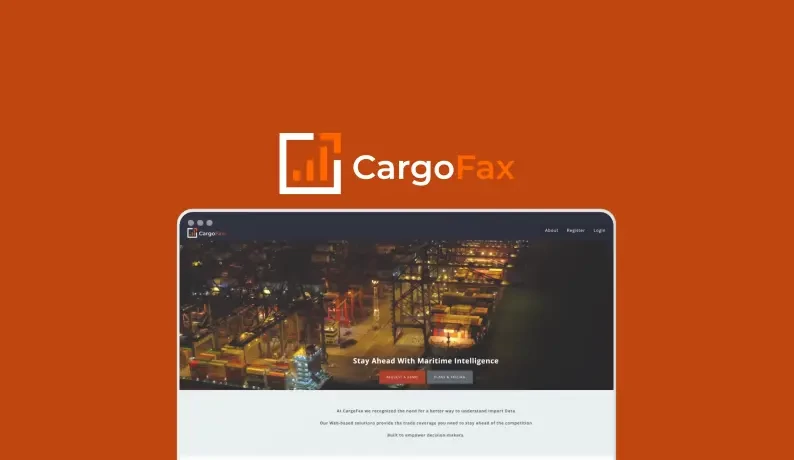
CargoFax
A data-driven import insights platform designed to help businesses make smarter import decisions.
View Case Study →Trusted By Industry Leaders
Each engagement draws from the same four disciplines, scoped to what your architecture actually needs right now.
Architecture decisions get made once, on purpose, across AWS, Azure, and GCP. We design VPC and VNet segmentation, identity federation, and hybrid connectivity so workloads run on the platform each one actually fits, not whichever account existed first.
Every environment ships as version-controlled Terraform, not manual console clicks. Landing zones define account structure, networking, and governance guardrails upfront, so new environments deploy in hours instead of accumulating configuration drift over months.
Legacy workloads move in phases, with a rollback plan at every stage. We sequence database migrations, containerize monolithic services where it earns its complexity, and validate performance before cutting production traffic over.
Tagging frameworks, budget alerts, and rightsizing policies get built into the architecture, not added after the first surprise invoice. Cloud cost optimization runs by team and workload, matching how the FinOps Foundation’s Inform-Optimize-Operate model actually works.
A focused assessment can uncover unnecessary spend, architectural constraints, reliability risks, and scaling issues before they become expensive to fix.
Plan Your Next Cloud Move
Proprietary configurations, provider-specific services, and undocumented dependencies can make future migrations expensive and slow.
Without consistent tagging, budgets, and ownership, teams struggle to understand which workloads drive spend or where optimization will have the greatest impact.
Dev, staging, and production configurations gradually diverge, creating inconsistent controls and making it harder to verify what is actually deployed.
Manually provisioned infrastructure makes capacity planning harder and leaves teams rebuilding patterns that should have been defined in the architecture.
Account or subscription hierarchy, networking topology, and governance policies deployed as a reusable Terraform module set.
VPC or VNet design with private subnets, transit gateway connectivity, and VPN or dedicated link for hybrid access.
Federated identity, least-privilege IAM roles, and secrets management so credentials never live inside application code.
Centralized logging, metrics, and alerting wired into the DevOps automation and incident response runbooks your team actually uses.
Backup, replication, and failover patterns matched to the recovery time your workload can tolerate, not a generic template.
We start by mapping your current environment, not assuming what it should look like. This means reviewing existing accounts, workload patterns, compliance obligations, and the systems your infrastructure needs to talk to. Most assessments run one to two weeks and end with a documented list of architecture gaps, not a generic checklist.
Target architecture gets designed with your team in the room, covering networking, identity, security controls, and cost structure together rather than as separate afterthoughts. Every significant decision gets written into an architecture decision record explaining what was chosen and why, so the reasoning survives past the engagement itself.
Terraform modules get built for the account structure, network layer, and security baseline first, since everything else depends on getting that foundation right. Modules are tested in a non-production environment before anything touches live traffic, with version control from the first commit rather than retrofitted afterward.
Workloads move in sequenced phases with a rollback plan at each stage, not a single weekend cutover. Database migrations, DNS changes, and traffic shifts get scheduled around your actual usage patterns, so customers do not notice the infrastructure underneath them changed.
Tagging frameworks, budget alerts, and a spend dashboard get configured before the engagement closes, along with documentation and a knowledge transfer session with your engineering team. You leave with infrastructure your team can extend, not a system only we understand.
A data-driven import insights platform designed to help businesses make smarter import decisions.
View Case Study →
An institutional-grade global financial trading platform.
View Case Study →
An advanced logistics and fleet delivery management platform.
View Case Study →Cloud infrastructure consulting can cost $5,000 for a focused architecture assessment to $40,000+ for a broader engagement covering architecture, Terraform, landing zones, governance, and migration planning. The final cost depends on your cloud estate, workload complexity, environments, and compliance requirements. Share your requirements to get a precise, tailored estimate.
Healthcare and fintech workloads carry compliance obligations that generic cloud templates were not built to handle, from HIPAA-aligned data handling to PCI DSS network segmentation for payment flows.
Engagement shape depends on how much of the architecture already exists and how fast you need to move. Most projects fit one of the three timelines below.
Fast-turnaround assessment of your current setup with a prioritized findings report.
Full architecture design and Terraform implementation for a production-ready foundation.
Continued cost governance and architecture support after the initial build ships.
We treat Terraform as part of the architecture process, not documentation added after infrastructure has already been configured in a console. Architecture decisions such as VPC segmentation, IAM permissions, and security boundaries are defined as version-controlled Terraform modules before they reach production.
That makes infrastructure changes reviewable and repeatable from the start. A second engineer can inspect a proposed security-group rule or IAM change before deployment, while version history provides a clear record of what changed and why.
Your team also inherits infrastructure it can understand and extend. Architecture decision records document the reasoning behind key modules, so engineers can trace a network or access design back to the workload requirements that shaped it. This gives your enterprise architecture a documented foundation rather than leaving its intent buried inside a running environment.
You get the actual infrastructure-as-code repository, not a vendor-managed black box. Every module is documented and version-controlled, handed over at delivery so your team can extend it without calling us first.
Cost governance gets designed into the architecture at the start, not bolted on after the first surprise invoice. Tagging, rightsizing, and budget alerts ship with the initial build.
We map your workload patterns, compliance obligations, and existing systems before recommending a single service, so the architecture fits how your team actually operates.
L1, L2, and L3 support options carry the environment past handover, covering incident response and ongoing tuning without a new vendor search.
One of the eminent open-source JavaScript frameworks invented by Facebook has become a hot choice for every frontend engineer because of its imperative functionalities and performance. statistics reveal that it…
Read Article →
Introduction In today’s business world, several buzzwords have become increasingly popular, and one of the most prominent is digital transformation. However, the term is often used superficially without a clear…
Read Article →
DevOps has emerged as a culture that is transformational for software development, and the wider software development statistics confirm how central this methodology has become to modern engineering teams. For…
Read Article →Architecture design, Terraform-based implementation, security baseline setup, and cost governance configuration. Scope varies by engagement type, from a focused assessment to a full landing zone build and migration.
Assessments run one to two weeks. Landing zone builds typically take six to eight weeks. Full migrations range two to four months depending on workload count and complexity.
All three, plus hybrid connectivity back to on-premises systems. Platform recommendations come from your workload requirements and existing investments, not a default vendor preference.
Yes. We review existing Terraform state and architecture decisions before rebuilding anything, so a stalled migration does not automatically mean starting over from zero.
You do. Full source code and documentation transfer at delivery, with no ongoing dependency on Citrusbug to read or modify your own infrastructure.
Cost governance, including tagging and budget alerts, gets configured early in the build, not left until after go-live, so spend stays visible throughout.
Yes. Architecture designs account for HIPAA, SOC 2, and PCI DSS requirements from the start, rather than treating compliance as a review step at the end.
No. Engagements include knowledge transfer sessions so your existing engineers can maintain the infrastructure, even without a dedicated DevOps hire on staff yet.