
















CargoFax
A data-driven import insights platform designed to help businesses make smarter import decisions.
Trusted Construction ERP Software Development By
Labor hours, material deliveries, and equipment days get tagged to a cost code the moment they happen, not reconciled three weeks later against a spreadsheet someone forgot to update. Your PMs see actual-versus-budget while there’s still time to act on it.
Purchase orders, vendor pricing, and material receipts flow into the same cost structure as labor and equipment, so material overruns show up in the job cost report the same week they happen, not at closeout.
Foremen log daily reports, photos, and time from a phone on-site, with offline capture that syncs once there’s a signal again. Nobody’s re-keying a paper daily log into the system three days after the fact.
Progress billing, retainage, and schedule of values run through the same engine as job costing, so a pay application actually matches what the job cost report says, not a separate spreadsheet somebody built in earlier.
Get a system built around how your projects actually run, not a generic ERP with construction bolted on.
Talk to Our EngineersMost ERP platforms were built for a warehouse or a factory floor, then retrofitted with a construction skin. That works for the back office. It falls apart the moment a foreman needs to log a delay from a truck bed with one bar of signal, or a controller needs a schedule of values that actually reconciles against job cost the same week, not at month-end.
We’ve taken over more than one construction software development project that stalled because a generic platform got customized past what its architecture could handle. The fix usually isn’t more customization. It’s a system designed around construction’s actual unit of work, the job, not the department.
Most vendors write "compliance" as a bullet point. We build to the specific documents your finance team actually has to produce, correctly, every billing cycle.
Pay applications generate directly from the schedule of values, with column totals that actually reconcile between the G702 summary and the G703 continuation sheet, the single most common reason payment applications get kicked back.
Retainage holds and releases automatically at the line-item or contract level, tracked separately from net payment so it never gets mistaken for cash you can spend.
Conditional and unconditional lien waivers are generated and routed for signature tied to each payment event, so a subcontractor payment doesn’t clear without the paperwork that protects you if a dispute comes up later.
Davis-Bacon certified payroll reports and state-level prevailing wage calculations run per trade and per union classification, built for public works contracts where a manual error can hold up an entire draw.
A live work-in-progress schedule across every open project, without exporting five spreadsheets into one and hoping the totals still match.
Certificates of insurance get tracked to expiration, with automatic payment holds when a sub’s coverage lapses, before it becomes your liability instead of theirs.
RFIs, submittals, budgets, and commitments sync both directions without a manual export step, so field and office data actually agree with each other.
Cost data flows from takeoff and preconstruction directly into your job cost structure, so a change in the model shows up in the budget the same day.
General ledger, AP, and payroll connect natively for firms that want to keep their existing accounting platform and add a construction-specific ERP on top of it.
For firms moving off spreadsheets entirely, we handle the cloud migration and data cleanup so historical job cost data doesn’t get lost in the switch.
Construction ERP rollouts don't usually fail because the software was wrong. They fail because a foreman who's run jobs for twenty years without a tablet decides the new system is more trouble than the paper log it replaced. We design the field-facing side for someone standing in mud with gloves on, not someone sitting at a desk. That means fewer taps, bigger buttons, and a system that works when the signal doesn't.
A data-driven import insights platform designed to help businesses make smarter import decisions.
A one-stop online marketplace for building supplies and hardware catering to homeowners and local artisans in Kenya and East Africa.
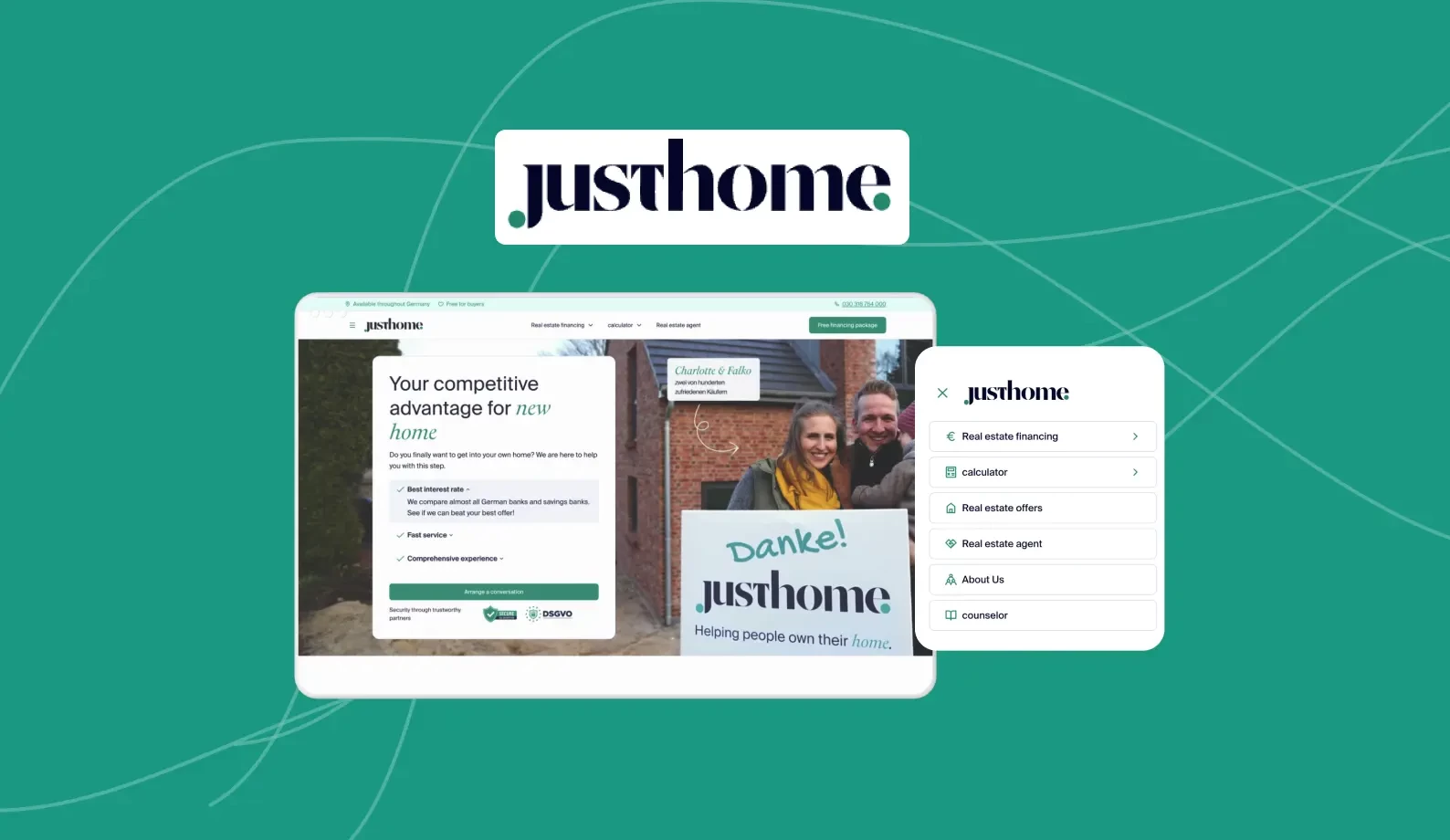
Just Home’s platform revolutionizes homeownership in Germany by streamlining the home search, financing, and ownership processes.
We map how job costing, billing, and field reporting actually happen today, not how the org chart says they should, including which spreadsheets and side systems have quietly become load-bearing.
We design the data model job by job, not department by department, and decide upfront which systems (Procore, Autodesk Forma, Sage) the ERP needs to sync with rather than replace.
AIA billing, retainage, lien waivers, and certified payroll get built against the actual forms your finance team files, tested against real pay application cycles before anyone sees a demo.
The system runs on one active job first, with real foremen logging real daily reports, so ERP automation gets stress-tested against actual job site conditions before a company-wide rollout.
We roll out project by project or region by region, not all at once, with L1/L2 support in place so a billing cycle never gets stuck waiting on a support ticket.
Most custom builds run $25,000 for a core system to $150,000 or more for a full enterprise-grade platform with certified payroll and multi-entity financials. Share your modules and integrations for an exact estimate.
Generative AI in construction is changing how companies manage risks. The industry faces constant challenges like delays, budget overruns, and safety hazards. McKinsey found that large projects run 20% longer…
Read Article →
Design is the pillar of any construction project. This phase in the construction industry determines cost, safety, efficiency, and performance over the long run. However, traditional methods face difficulties in…
Read Article →
The transformation of the manufacturing industry might be the most obvious change that has occurred in the recent past. Machines are no longer completing tasks, but they learn, predict and…
Read Article →Core systems typically take 2-4 months. Full enterprise builds with certified payroll and multiple integrations run 5-8 months or longer, depending on module count.
We handle the migration and data cleanup as part of the build, so historical job cost and billing data carries over instead of starting from a blank system.
Yes. We audit what exists, decide what's salvageable, and rebuild the rest rather than starting the whole project over from scratch.
Field data capture syncs once a connection is available, so a foreman logging a daily report doesn't lose it waiting for a signal bar.
Yes, through native API connections built into the architecture from the start, not bolted on after the fact.
You do. Full source code ownership transfers at delivery, with no vendor lock-in on your own project data.
Yes, including Davis-Bacon certified payroll and state-level prevailing wage calculations by trade and union classification.
L1, L2, and L3 support options are available post-launch, so a billing cycle or integration issue doesn't sit unresolved during an active project.