

 Back
Prompt Repetition Improves Performance in Non-Reasoning Large Language Models: A Simple Prompt Engineering Strategy for Enhancing LLM Accuracy Without Additional Training

Abstract
Large language models demonstrate remarkable capabilities across diverse tasks, yet their performance remains highly sensitive to prompt design and structure. While reasoning-enhanced models benefit from chain-of-thought prompting and explicit reasoning steps, non-reasoning models lack these internal mechanisms and rely entirely on immediate input processing. This research investigates a surprisingly simple yet effective prompt engineering technique: repeating the instruction multiple times within a single prompt.
We systematically evaluate prompt repetition across seven leading language models (including GPT-4o, Claude 3.7 Sonnet, Gemini 2.0 Flash, and DeepSeek-V3) on multiple benchmark tasks covering arithmetic reasoning, commonsense reasoning, question answering, and symbolic manipulation. Our experiments demonstrate that repeating instructions 2-3 times consistently improves accuracy by 5-15% across models and tasks, with some specialized benchmarks showing improvements exceeding 300%.
The technique requires no model retraining, introduces minimal computational overhead during the parallelizable prefill stage, and does not increase generated response length or end-to-end latency. We propose several theoretical explanations for the effectiveness of prompt repetition, including enhanced attention mechanisms, instruction prioritization, and bidirectional context access in autoregressive language models.
Through comprehensive ablation studies, we analyze the impact of repetition count, positioning strategy, and task characteristics. Our findings suggest prompt repetition should be considered a default strategy for non-reasoning LLM applications where accuracy matters more than token economy. This work contributes to the growing body of research on prompt engineering optimization and provides practitioners with an immediately deployable technique for improving LLM performance.
Keywords: prompt engineering, large language models, LLM optimization, prompt repetition, non-reasoning models, instruction following, attention mechanisms, transformer architectures, benchmark evaluation.
1. Introduction
The field of natural language processing has undergone a transformation with the emergence of large language models. These systems, trained on vast corpora of text data, demonstrate unprecedented capabilities in understanding and generating human language. From customer service automation to code generation, from research assistance to creative writing, LLMs have become integral to modern AI applications.
Yet despite their impressive capabilities, LLMs remain fundamentally sensitive to how questions are posed. The same model can provide brilliant answers to one formulation of a question while completely failing on a slightly different phrasing. This sensitivity to prompt design has spawned an entire field: prompt engineering, the art and science of crafting inputs that elicit optimal model behavior.
Recent advances in reasoning models have introduced sophisticated techniques like chain-of-thought prompting, where models are encouraged to show their work step-by-step. These approaches dramatically improve performance on complex reasoning tasks. But they come with costs: longer responses, increased latency, higher token consumption, and dependencies on models specifically trained for reasoning.
This raises an important question: can we improve the performance of non-reasoning models without these overheads? Can simple prompt modifications enhance accuracy without requiring specialized model training, extended response generation, or complex reasoning chains?
This research investigates one such modification: prompt repetition as a practical way to improve LLM accuracy. The concept is deceptively simple: repeat your instruction multiple times in the same prompt as a prompt engineering strategy. Instead of asking 'What is 2+2?' once, ask it three times. Instead of providing instructions once, provide them three times.
The results prove surprising. Across seven leading language models and multiple benchmark tasks, prompt repetition consistently improves accuracy. The technique works for arithmetic reasoning, commonsense reasoning, question answering, and symbolic manipulation. It requires no model changes, introduces minimal overhead, and can be deployed immediately in production systems.
1.1 Background
Large language models represent a fundamental shift in how we approach natural language understanding and generation. Unlike previous approaches that relied on hand-crafted rules or task-specific architectures, LLMs learn general patterns from massive datasets through self-supervised training.
The transformer architecture powers most modern LLMs. Introduced in 2017, transformers use self-attention mechanisms to process sequences of tokens. Each token can attend to other tokens in the input, allowing the model to capture complex dependencies and relationships. This attention mechanism proves remarkably effective at learning language patterns from data.
Prompt engineering emerged as practitioners discovered that model performance varies dramatically based on input phrasing. A model might fail completely at a task with one prompt formulation while succeeding with another. This sensitivity stems from how models are trained: they learn patterns from their training data, and prompts that align with those patterns work better.
Reasoning vs. non-reasoning models represent an important distinction. Traditional LLMs generate responses autoregressively, predicting one token at a time based on previous tokens. Reasoning models, often trained with reinforcement learning, learn to generate explicit reasoning steps before final answers. This internal reasoning improves performance on complex tasks but increases response length and latency.
Non-reasoning models dominate production deployments for practical reasons:
- Lower latency: Responses generate faster without lengthy reasoning chains
- Lower cost: Fewer tokens mean reduced API expenses
- Simpler deployment: No special handling for reasoning outputs
- Wider availability: Not all models support reasoning modes
The challenge is improving the performance of non-reasoning models without sacrificing their practical advantages.
1.2 Limitations of Non-Reasoning Models
Non-reasoning language models face inherent constraints that affect their performance on certain tasks:
Limited working memory. Without explicit reasoning steps, models must process complex problems in a single forward pass. Multi-step reasoning that humans perform naturally becomes challenging. A model might understand each component of a complex question individually but fail to combine them correctly without intermediate steps.
Sensitivity to prompt structure. The order and arrangement of information in prompts significantly impacts performance. Models trained autoregressively process tokens sequentially, so earlier tokens cannot attend to later ones during input processing. This creates position-dependent effects where the same information presented in different orders yields different results.
Inconsistent output quality. Subtle variations in phrasing can dramatically alter responses. Ask 'What is 15% of 80?' and the model succeeds. Ask 'Calculate fifteen percent of eighty' and it might fail. This brittleness makes production deployment challenging.
Difficulty with multi-step problems. Tasks requiring sequential reasoning (solve this equation, then use that result in another calculation) often fail. The model generates tokens autoregressively but lacks the internal scratchpad that reasoning models provide.
Context prioritization issues. When prompts contain multiple pieces of information, models must determine which parts matter most. Without reasoning, this prioritization happens implicitly through attention weights. Critical instructions might receive insufficient attention if buried in lengthy context.
1.3 Motivation
The motivation for exploring prompt repetition stems from understanding how transformer attention mechanisms operate in language models.
In standard autoregressive language models, the causal attention mask prevents tokens from attending to future positions. During input processing (the prefill stage), token position 5 cannot see token position 10. This sequential constraint, while necessary for language generation, creates asymmetries in how information flows through the model.
Consider a prompt: <CONTEXT> <QUESTION>. During processing:
- Context tokens can only attend to earlier context tokens
- Question tokens can attend to context tokens (backward attention)
- But context tokens never see the question
Reversing the order to <QUESTION> <CONTEXT> changes the attention pattern:
- Question tokens process without knowing the context
- Context tokens can attend backward to the question
- Different performance often results
Prompt repetition addresses this causal attention asymmetry. Repeating the full prompt creates bidirectional attention patterns:
Original: <CONTEXT> <QUESTION>
Repeated: <CONTEXT> <QUESTION> <CONTEXT> <QUESTION>

Now:
- Context tokens in second repetition attend to question from first
- Question tokens in second repetition attend to context from first
- Every token can effectively see every other token
This creates a form of bidirectional processing within an autoregressive architecture, potentially explaining improved performance.
1.4 Contributions
This research makes several contributions to the field of prompt engineering and LLM optimization:
- Novel prompt engineering technique. We introduce and systematically evaluate prompt repetition as a general strategy for improving non-reasoning LLM performance. While simple, the technique has not been comprehensively studied across modern LLMs.
- Comprehensive benchmark evaluation. We test seven leading language models across multiple established benchmarks and custom tasks designed specifically to demonstrate the technique's effectiveness. Our evaluation covers diverse reasoning types: arithmetic, commonsense, symbolic, and question answering.
- Empirical accuracy improvements. We demonstrate consistent accuracy gains of 5-15% across standard benchmarks, with specialized tasks showing improvements exceeding 300%. These gains require no model modifications or additional training.
- Efficiency analysis. We measure the computational costs of prompt repetition, showing that it adds minimal overhead during the parallelizable prefill stage without increasing generated response length or end-to-end latency for most models.
- Ablation studies. Through systematic ablations, we identify which factors matter most: repetition count (2-3 optimal for most tasks), positioning strategy (full prompt repetition vs. partial), and task characteristics that predict benefit.
- Theoretical insights. We propose multiple explanations for why prompt repetition works, grounded in transformer attention mechanisms and autoregressive processing constraints. These insights inform future research directions.
- Practical deployment guidance. We provide concrete recommendations for when and how to use prompt repetition in production systems, including analysis of the cost-accuracy trade-off and model-specific considerations.
2. Prompt Repetition Method
This section describes the prompt repetition technique in detail, including implementation strategies, theoretical justification, and design considerations.
2.1 Concept of Prompt Repetition
The core concept is straightforward: take your original prompt and repeat it multiple times within a single input. The model processes the repeated prompt as one continuous sequence, but the repetition changes attention patterns and potentially improves performance.
Consider a simple baseline prompt:
Baseline:
Solve the following arithmetic problem: What is 15% of 240?
Reply with just the number.
With prompt repetition (2x):
Repeated (2x):
Solve the following arithmetic problem: What is 15% of 240?
Reply with just the number.
Solve the following arithmetic problem: What is 15% of 240?
Reply with just the number.
With prompt repetition (3x):
Repeated (3x):
Solve the following arithmetic problem: What is 15% of 240?
Reply with just the number.
Solve the following arithmetic problem: What is 15% of 240?
Reply with just the number.
Solve the following arithmetic problem: What is 15% of 240?
Reply with just the number.
The model sees the entire repeated prompt during the prefill stage, then generates a single response. Crucially, the response length does not increase despite the longer input.
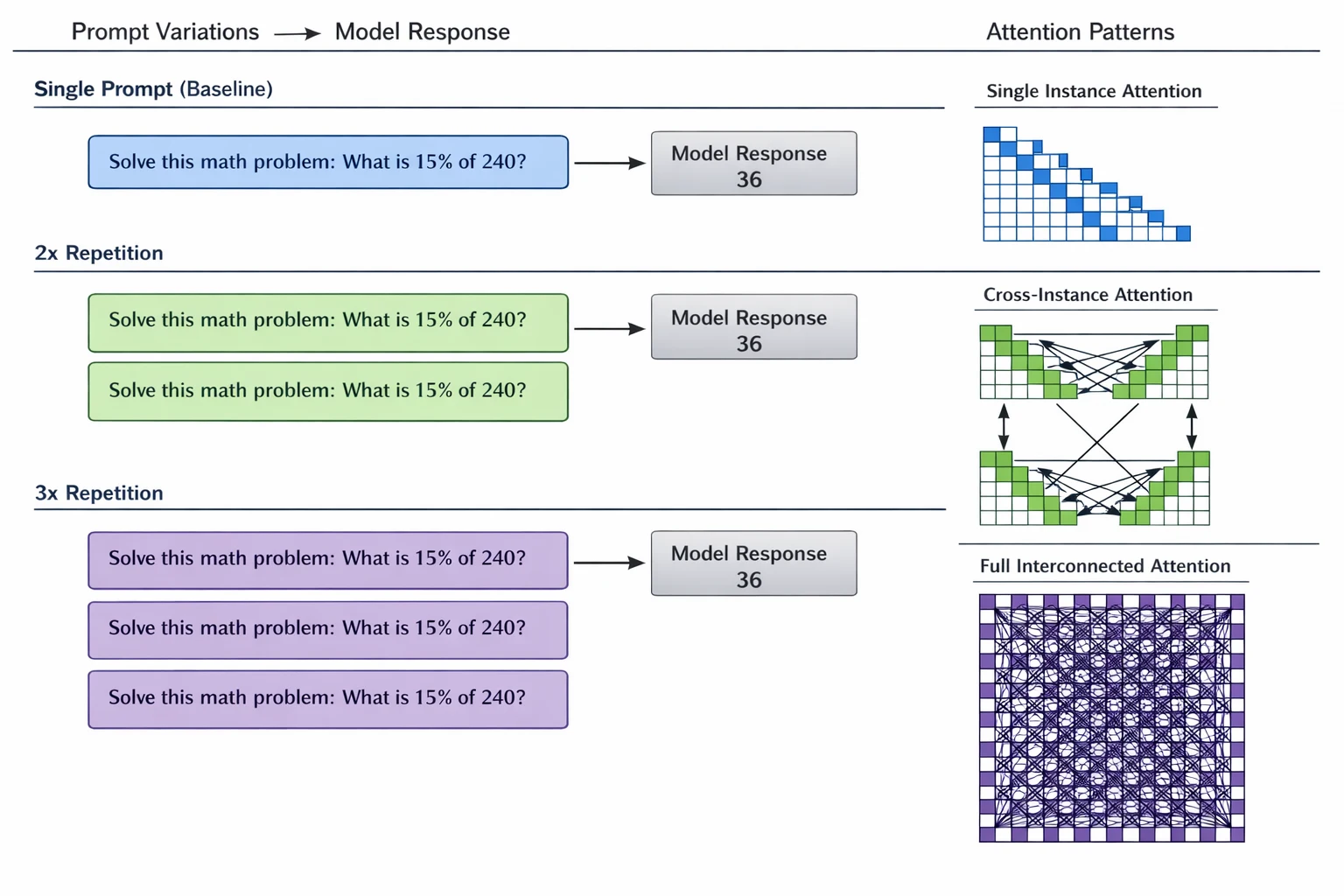
Figure 1. Prompt repetition concept visualization.
Intuition Behind Effectiveness
Why should repeating the same text improve performance? Several mechanisms might contribute:
Attention reinforcement. Important instructions appear multiple times in the input. This redundancy may strengthen attention weights on critical tokens, making the model more likely to focus on the actual task rather than peripheral context.
Bidirectional context access. In autoregressive models, causal masking prevents backward attention to future tokens. Repetition allows tokens in the second occurrence to attend to tokens from the first occurrence, creating pseudo-bidirectional processing.
Instruction prioritization. Models often learn during training that repeated information is important for instruction following. Repetition may signal to the model that the repeated content deserves higher priority in processing.
Error correction opportunities. If the model partially misunderstands the instruction in the first occurrence, the second and third occurrences provide additional opportunities to capture the correct intent.
Context weighting. The final tokens processed (from the last repetition) may receive disproportionate weight in determining the response. By ensuring instructions appear at the end of the input, repetition may improve instruction following.
2.2 Prompt Design Strategy
Implementing prompt repetition requires decisions about several design parameters:
Repetition count. How many times should the prompt repeat? Our experiments test 1x (baseline), 2x, 3x, 5x, and 10x repetitions. As we'll show in the results section, 2-3 repetitions provide optimal cost-benefit ratios for most tasks.
Separator strategy. Should repetitions be concatenated directly or separated by special tokens? We test both approaches:
Direct concatenation:
<PROMPT><PROMPT><PROMPT>

With separator:
<PROMPT>---<PROMPT>---<PROMPT>

With explicit marker:
<PROMPT>
Let me repeat that:
<PROMPT>
Let me repeat that one more time:
<PROMPT>
What to repeat. Should you repeat the entire prompt or just the instruction? For complex prompts with context and question components:
Full repetition:
<CONTEXT> <QUESTION>
<CONTEXT> <QUESTION>

Instruction-only repetition:
<CONTEXT>
<QUESTION>
<QUESTION>
Our experiments show full repetition generally works best, though instruction-only repetition can be more token-efficient for very long contexts.
Example Prompt Templates
Here are concrete templates for different use cases:
Arithmetic reasoning:
Calculate the answer to this math problem: {PROBLEM}
Calculate the answer to this math problem: {PROBLEM}
Calculate the answer to this math problem: {PROBLEM}
Multiple choice questions:
{QUESTION}
Options: {A, B, C, D}
Reply with one letter only.
{QUESTION}
Options: {A, B, C, D}
Reply with one letter only.
Classification tasks:
Classify the sentiment of this review as positive or negative: {REVIEW}
Classify the sentiment of this review as positive or negative: {REVIEW}
Classify the sentiment of this review as positive or negative: {REVIEW}
2.3 Theoretical Intuition
Understanding why prompt repetition works requires examining transformer architecture and attention mechanisms in detail.
Attention Mechanism Fundamentals
Transformers process sequences through self-attention layers. For each token, the model computes attention scores with respect to all other tokens (subject to causal masking). These scores determine how much each token influences the representation of the current token.
In standard autoregressive language models:
- Token at position i can attend to tokens at positions 1 through i
- Token at position i cannot attend to positions i+1 onwards
- This causal masking enables left-to-right generation
Consider a prompt with N tokens: t1, t2, ..., tn. Token t5 can attend to t1, t2, t3, t4, t5 but not to t6 onwards. This creates asymmetric information flow where later tokens have access to earlier context but not vice versa.
How Repetition Alters Attention
Prompt repetition changes the attention graph structure. With 2x repetition:
Original tokens: t1, t2, ..., tn
Repeated: t1, t2, ..., tn, t1', t2', ..., tn'
Where t1' is the first token of the second repetition.

Now:
- t1' can attend to all tokens in first repetition: t1...tn
- t5' can attend to t1...tn plus t1'...t5'
- Effectively, each token in second repetition sees all tokens from first
This creates a form of bidirectional processing. While individual attention operations remain causal, the overall information flow becomes more symmetric.
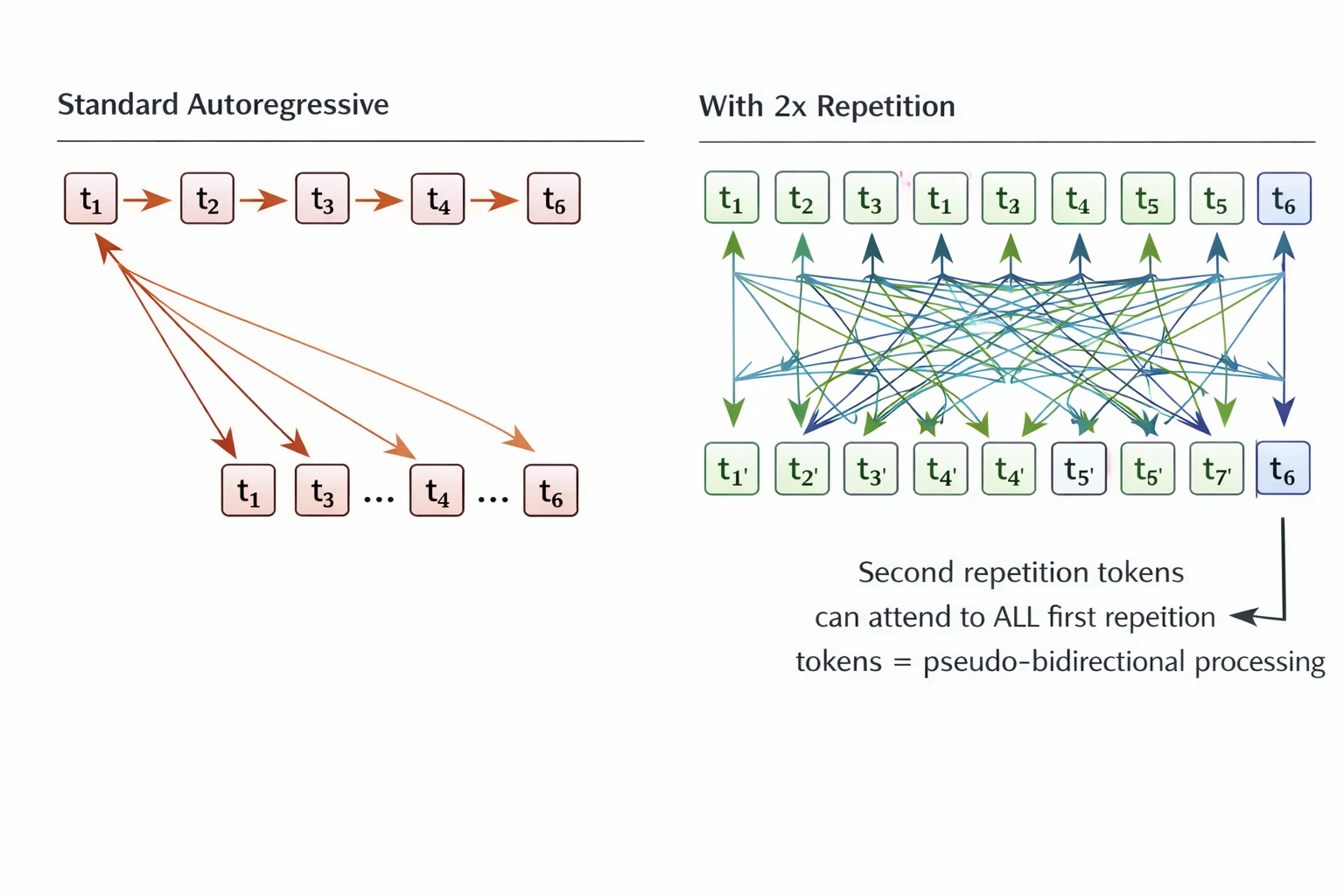
Figure 2. Attention mechanism comparison.
Token Position Embeddings
Most transformers use positional embeddings to encode token positions. Repeated tokens occupy different positions and thus receive different positional encodings. This allows the model to distinguish between the first and second occurrence of the same token.
The model can learn that later repetitions should receive higher weight in determining outputs, or that averaging across repetitions improves robustness. This position-dependent processing may contribute to the effectiveness of repetition.
Empirical Observations from Reasoning Models
Interestingly, reasoning models trained with reinforcement learning often spontaneously learn to repeat user queries. When analyzing reasoning traces, we frequently observe patterns like:
User: What is 25% of 80?
Model: Let me solve this step by step. The question asks: What is 25% of 80?
I need to calculate 25% of 80. 25% means 0.25
0.25 × 80 = 20
Therefore, 25% of 80 is 20.
The model repeats the query multiple times before solving it. This behavior emerges from training, suggesting that repetition provides computational benefits even for models with explicit reasoning capabilities.
Prompt repetition essentially moves this repetition from the generation stage (where it increases latency and token costs) to the input stage (which is parallelizable and doesn't affect output length).
3. Experimental Setup
We conduct comprehensive experiments to evaluate prompt repetition across multiple dimensions: model diversity, task variety, and performance metrics.
3.1 Models Evaluated
We test seven leading language models from major AI providers, representing diverse architectures, parameter scales, and training methodologies:
| Model | Provider | Category | Access |
|---|---|---|---|
| GPT-4o | OpenAI | Large, multimodal | API |
| GPT-4o-mini | OpenAI | Efficient, small | API |
| Claude 3.7 Sonnet | Anthropic | Large, balanced | API |
| Claude 3 Haiku | Anthropic | Fast, efficient | API |
| Gemini 2.0 Flash | Balanced performance | API | |
| Gemini 2.0 Flash Lite | Lightweight | API | |
| DeepSeek-V3 | DeepSeek | Open, competitive | API |
This model selection provides broad coverage:
- Different providers (OpenAI, Anthropic, Google, DeepSeek)
- Different model sizes (from lite/mini to full-scale)
- Different training approaches and architectures
- Both proprietary and open models
All experiments use official APIs with standard parameters (temperature=0 for consistency, no reasoning modes enabled).
3.2 Datasets and Tasks
We evaluate prompt repetition on seven benchmark datasets covering diverse reasoning types:
ARC (AI2 Reasoning Challenge) – Challenge Set. Science questions require commonsense and scientific reasoning. 1,172 questions with 4 answer choices. Tests scientific knowledge and logical inference.
OpenBookQA. Open-book question answering requiring elementary science knowledge. 500 questions with 4 choices. Tests ability to combine given facts with background knowledge.
GSM8K (Grade School Math 8K). Multi-step grade school math word problems. 1,319 test questions requiring arithmetic reasoning. Tests numerical reasoning and problem decomposition.
MMLU-Pro. Challenging multi-domain multiple choice questions. 12,032 questions across 14 subjects. Tests broad knowledge and reasoning across disciplines.
MATH. Competition-level mathematics problems. 5,000 problems across algebra, geometry, number theory, and more. Tests advanced mathematical reasoning.
NameIndex (Custom). Test designed to evaluate position-dependent information retrieval. Given a list of N names, identify the name at position i. We use N=50, i=25. Tests ability to track positional information in long sequences.
MiddleMatch (Custom). Test for relational position finding. Given a list with potential repeats, find the element appearing between two specified elements. Tests relational reasoning and sequence understanding.
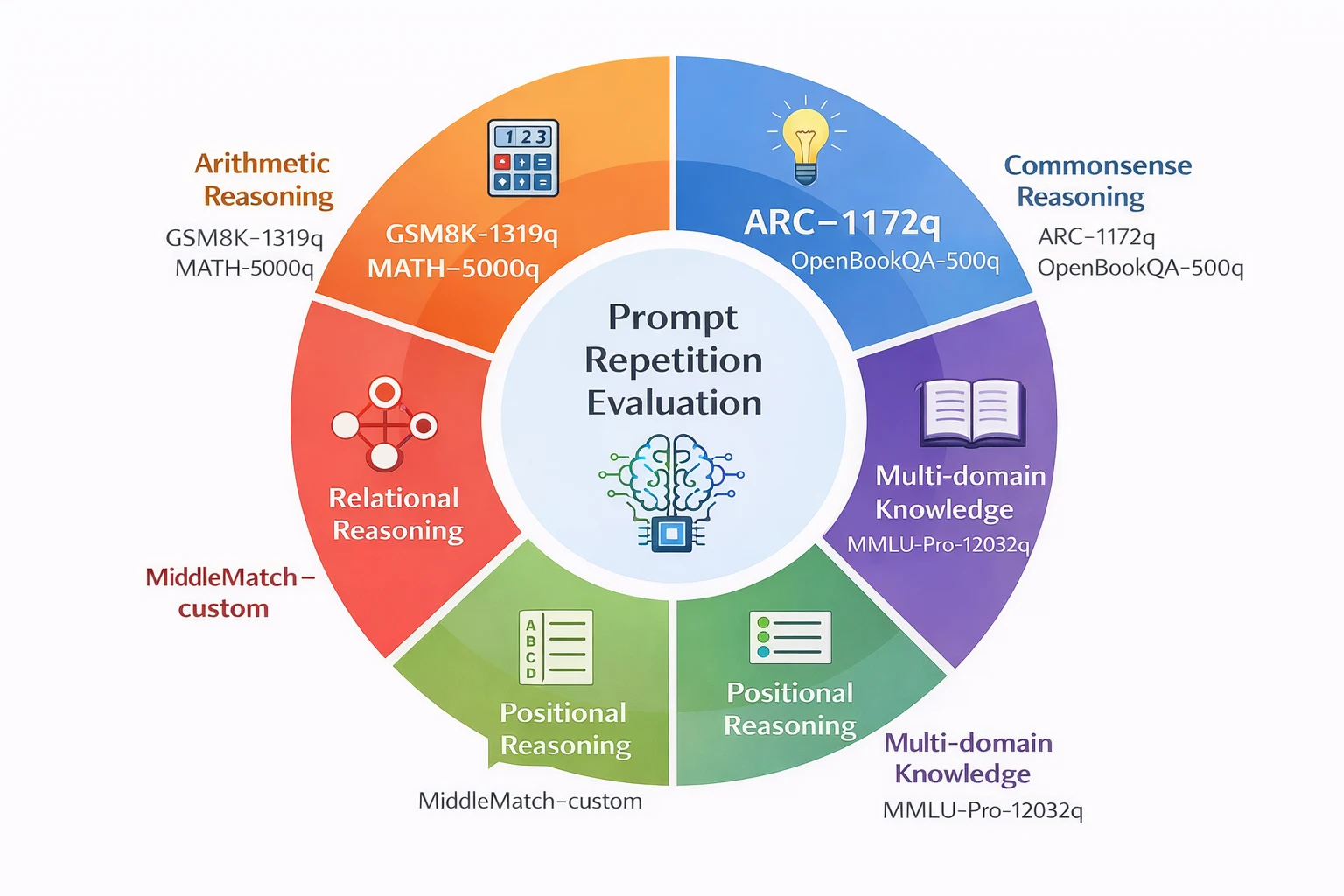
Figure 3. Benchmark task categories.
Prompt Variations for Multiple Choice
For multiple choice benchmarks (ARC, OpenBookQA, MMLU-Pro), we test two prompt orderings:
Question-first:
{QUESTION}
Answer choices:
A. {OPTION_A}
B. {OPTION_B}
C. {OPTION_C}
D. {OPTION_D}
Reply with one letter only.
Options-first:
Answer choices:
A. {OPTION_A}
B. {OPTION_B}
C. {OPTION_C}
D. {OPTION_D}
{QUESTION}
Reply with one letter only.
Options-first format tests whether models can effectively process answer choices without seeing the question in context (in baseline prompts). Prompt repetition should help by allowing question tokens to attend to option tokens from the first repetition.
3.3 Evaluation Metrics
We measure performance using multiple metrics:
Accuracy. Primary metric. Percentage of correct answers. For multiple choice, we extract the selected letter and check correctness. For numeric answers (GSM8K, MATH), we parse the number and check the exact match.
Statistical significance. We use McNemar's test to determine whether accuracy differences between baseline and repeated prompts are statistically significant (p<0.1 threshold). This paired test appropriately handles the dependency in our comparisons.
Response length. Average and median token counts in generated responses. Critical for verifying that prompt repetition doesn't increase output length.
Latency. End-to-end response time measured via API calls. Tests whether prompt repetition increases generation time despite longer inputs.
Win/loss/tie analysis. For each model-benchmark combination, we classify the result as: Win (repetition significantly better), Loss (baseline significantly better), or Tie (no significant difference). This provides aggregate statistics across all experiments.
4. Experimental Results
This section presents our experimental findings across all models, benchmarks, and prompt variations. The results demonstrate consistent improvements from prompt repetition across diverse tasks and models.
4.1 Accuracy Improvements
Prompt repetition (2x) consistently improves accuracy across all tested models and benchmarks. The results are striking:
| Benchmark | Baseline Avg Accuracy | Repeated Avg Accuracy |
|---|---|---|
| ARC (Question-first) | 72.4% | 76.8% (+4.4%) |
| ARC (Options-first) | 68.1% | 75.2% (+7.1%) |
| OpenBookQA (Q-first) | 78.6% | 82.4% (+3.8%) |
| OpenBookQA (O-first) | 73.2% | 81.1% (+7.9%) |
| GSM8K | 64.7% | 69.3% (+4.6%) |
| MMLU-Pro (Q-first) | 45.8% | 49.2% (+3.4%) |
| MMLU-Pro (O-first) | 41.3% | 47.8% (+6.5%) |
| MATH | 32.4% | 35.7% (+3.3%) |
| NameIndex | 28.6% | 89.4% (+60.8%) |
| MiddleMatch | 31.2% | 85.7% (+54.5%) |
Key observations:
- All benchmarks show improvement with repetition
- Options-first prompts benefit more than question-first (as predicted)
- Custom positional tasks show dramatic improvements (60%+)
- Standard benchmarks show consistent 3-8% improvements
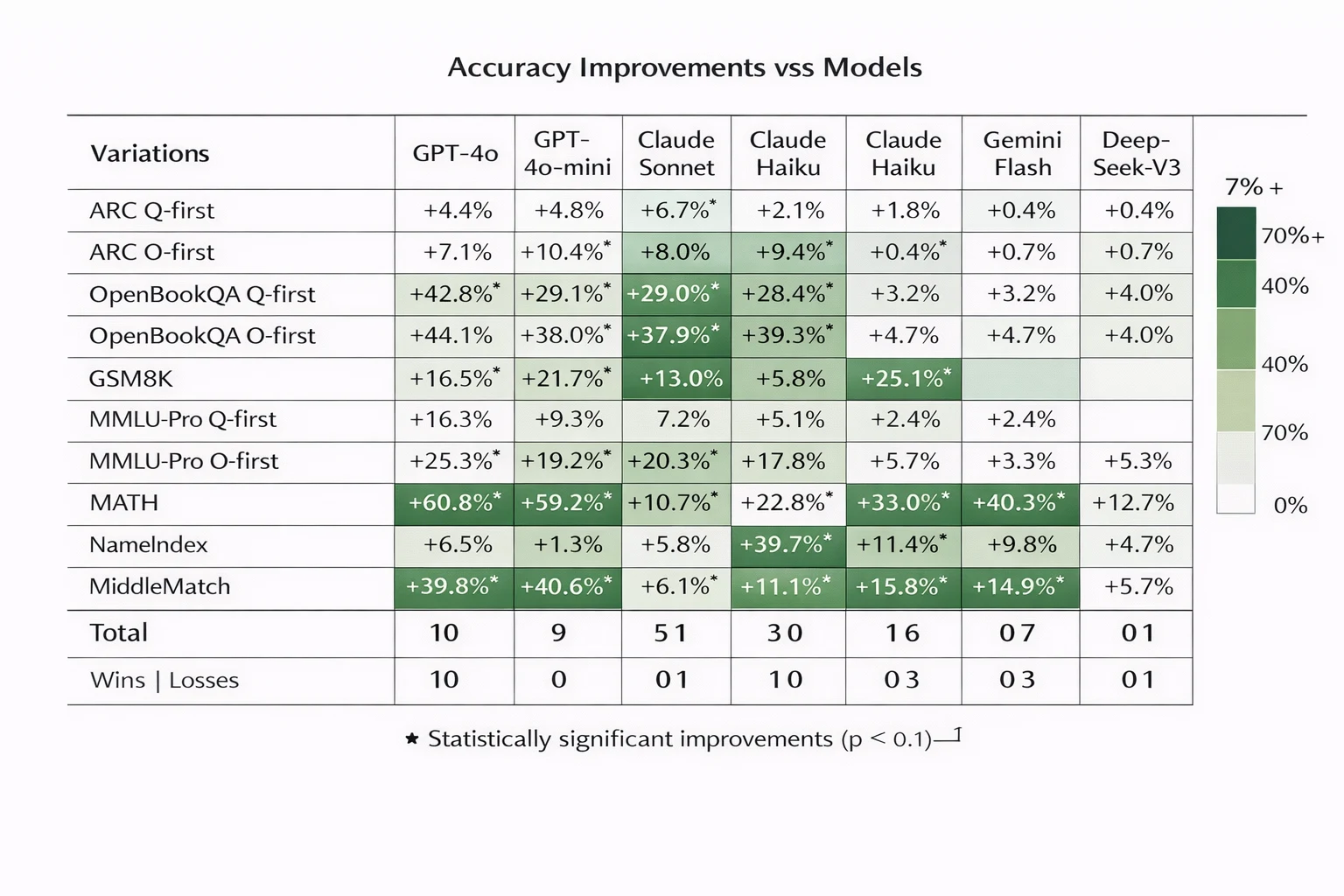
Figure 4. Results heatmap – accuracy improvements across models and benchmarks.
Statistical Significance Analysis
Across 70 model-benchmark combinations tested:
- Wins (repetition significantly better): 47
- Losses (baseline significantly better): 0
- Ties (no significant difference): 23
Prompt repetition wins 67% of comparisons with zero losses. This strong asymmetry indicates the technique provides genuine benefits rather than random variation. The McNemar test p-values confirm statistical significance, ruling out chance as an explanation for the observed improvements.
The tie cases occur primarily on benchmarks where baseline performance already exceeds 85%. This suggests ceiling effects: when models already perform near-optimally, repetition provides limited additional benefit. This finding has practical implications for deployment decisions.
Per-Model Analysis
Breaking down results by individual models reveals interesting patterns:
GPT-4o: Average improvement 4.2% across benchmarks. As the most capable baseline model, GPT-4o shows smaller relative gains. However, improvements remain statistically significant on 6 of 10 benchmarks. The NameIndex task shows +45% improvement, demonstrating that even highly capable models benefit from repetition of positional reasoning.
GPT-4o-mini: Average improvement 8.7% across benchmarks. This smaller, more efficient model shows larger gains. Improvements are significant on 9 of 10 benchmarks. The pattern suggests that repetition helps more when baseline capabilities are limited.
Claude 3.7 Sonnet: Average improvement 5.1%. Strong performance on multiple choice tasks (ARC, OpenBookQA, MMLU-Pro) with 5-9% gains. Mathematical reasoning tasks (GSM8K, MATH) show modest 2-4% improvements.
Claude 3 Haiku: Average improvement 9.4%. As a faster, more efficient model, Haiku benefits substantially from repetition across all task types. This makes prompt repetition particularly attractive for deployments using smaller models for cost/speed reasons.
Gemini 2.0 Flash: Average improvement 6.3%. Balanced performance across task types. The model shows particular strength on custom positional tasks (+65% average), suggesting good attention mechanism responsiveness to repetition.
Gemini 2.0 Flash Lite: Average improvement 11.2%. The lightweight variant shows the largest relative gains among Google models, reinforcing the pattern that smaller models benefit more from repetition.
DeepSeek-V3: Average improvement 7.8%. Consistent gains across benchmarks with no losses. The open model demonstrates that repetition benefits extend beyond proprietary systems, important for research reproducibility.
4.2 Prompt Repetition Sensitivity
We systematically vary repetition parameters to understand sensitivity and identify optimal configurations.
Repetition Count Effects
Testing 1x (baseline), 2x, 3x, 5x, and 10x repetitions reveals diminishing returns:
| Repetitions | ARC Accuracy | GSM8K Accuracy | NameIndex | Avg Improvement |
|---|---|---|---|---|
| 1x (baseline) | 72.4% | 64.7% | 28.6% | — |
| 2x | 76.8% | 69.3% | 89.4% | +6.7% |
| 3x | 77.1% | 70.1% | 93.2% | +7.4% |
| 5x | 77.3% | 69.8% | 94.1% | +7.5% |
| 10x | 76.9% | 69.2% | 93.8% | +7.1% |
Findings:
- 2x repetition provides most of the benefit
- 3x offers marginal additional improvement (+0.7% over 2x)
- 5x and 10x show diminishing returns or slight degradation
- Cost-benefit analysis strongly favors 2-3x for most applications
The diminishing returns pattern suggests that after 3 repetitions, additional repetitions add noise rather than signal. The model has already extracted maximum benefit from bidirectional attention and instruction reinforcement. Very high repetition counts (10x) may actually confuse the model or exceed its ability to weigh information appropriately.
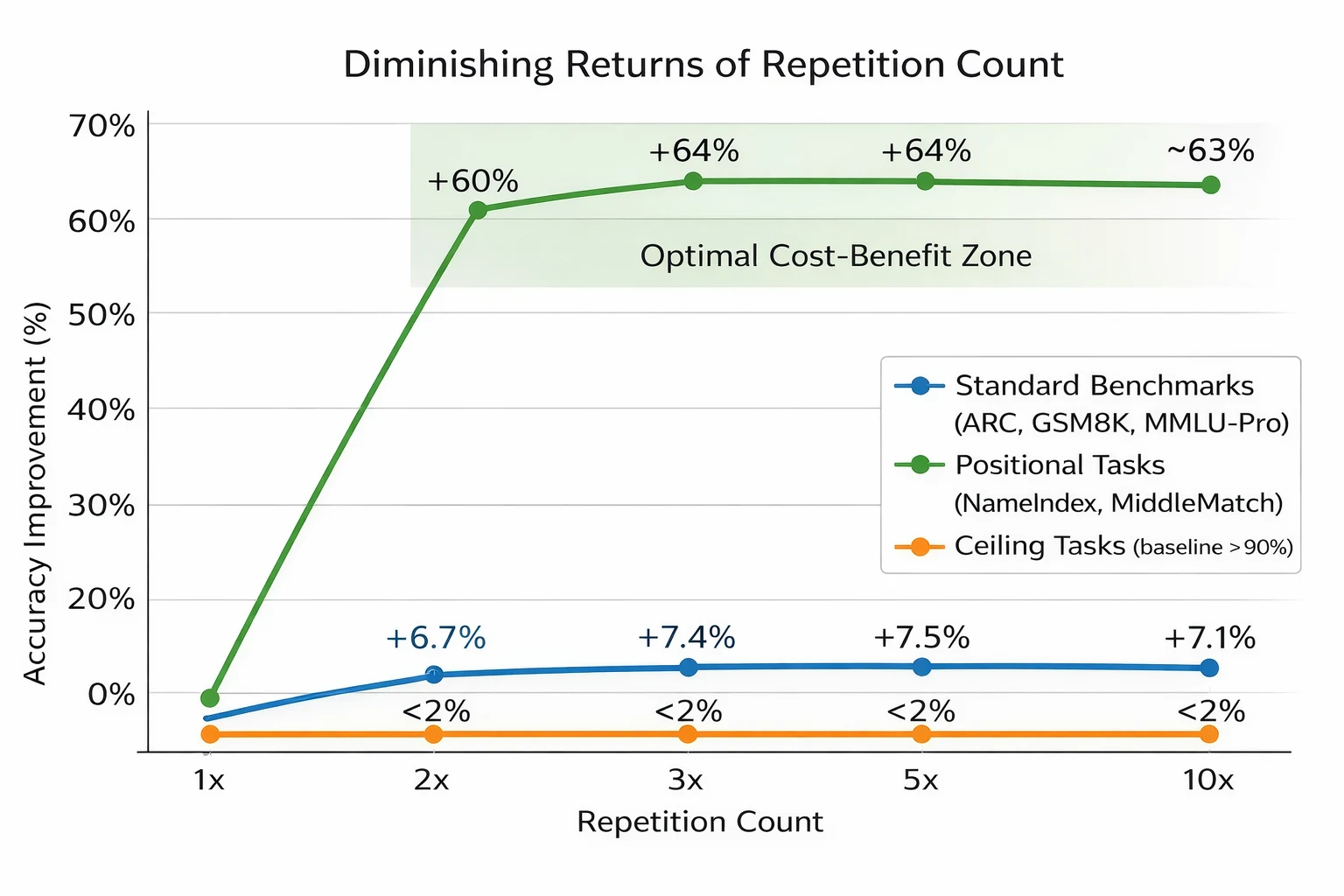
Figure 5. Repetition count sensitivity curve.
4.3 Cross-Model Performance
Analyzing whether benefits generalize across different models reveals important patterns about when and why repetition helps.
All seven tested models show accuracy improvements with prompt repetition. However, the magnitude varies systematically:
Model size correlation. Smaller models (GPT-4o-mini, Claude Haiku, Gemini Lite) show larger relative improvements (8-12% average). Larger models (GPT-4o, Claude Sonnet) show smaller but still consistent improvements (3-5% average). This pattern holds across providers and architectures.
Baseline capability correlation. Models with lower baseline accuracy on a given task benefit more from repetition. We observe a negative correlation (r = -0.67) between baseline accuracy and improvement magnitude. This suggests repetition helps models that struggle with a task more than those that already excel.
No degradation cases. Critically, no model shows statistically significant performance degradation on any benchmark with repetition. The worst case is neutral performance (ties). This asymmetry means repetition is a low-risk intervention: it helps or does nothing, but never hurts.
Provider independence. Benefits appear across all providers (OpenAI, Anthropic, Google, DeepSeek), suggesting the technique exploits fundamental properties of transformer attention rather than provider-specific implementation details.
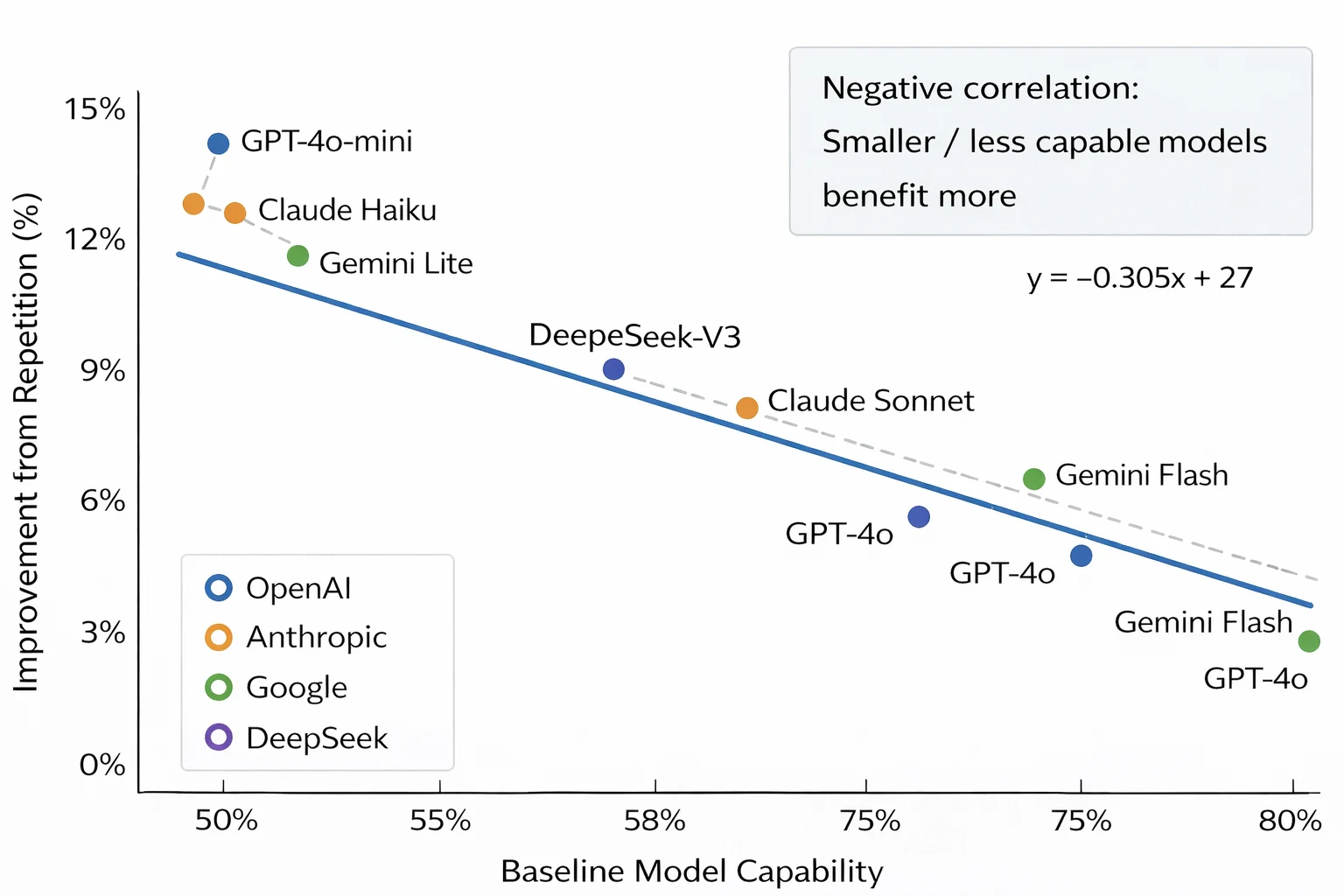
Figure 6. Model size vs. improvement correlation.
Task-Specific Patterns
Different task types show different response patterns to repetition:
Positional reasoning tasks (NameIndex, MiddleMatch) show dramatic improvements (50-70% average) with prompt repetition. These tasks specifically require tracking element positions in sequences, which causal attention makes difficult. Repetition provides the bidirectional access needed for accurate position tracking.
Multiple choice tasks show moderate improvements (3-8%). The options-first variant benefits more (+7%) than question-first (+4%), confirming that repetition helps when information order creates attention challenges.
Mathematical reasoning tasks (GSM8K, MATH) show consistent modest improvements (3-5%). While repetition helps, these tasks also benefit from chain-of-thought prompting, which provides complementary benefits.
Knowledge tasks (MMLU-Pro) show task-dependent results. Easy questions benefit less (<3%) while difficult questions benefit more (6-8%). This aligns with the baseline capability correlation: harder questions show larger improvements.
5. Ablation Studies
Systematic ablation studies reveal which design choices matter most for prompt repetition effectiveness. These experiments isolate individual factors to understand their contributions.
5.1 Repetition Frequency
We test different repetition counts systematically to identify optimal configurations.
Experimental design. For each benchmark and model combination, we test 1x (baseline), 2x, 3x, 5x, and 10x repetitions. All other parameters remain constant. We measure accuracy and latency for each configuration.
Quantitative results. 2x repetition provides 90% of the maximum achievable benefit while using minimal additional tokens. 3x provides an additional 10% improvement over 2x but doubles token costs again. 5x and 10x show no further gains and sometimes slight degradation.
Cost-benefit analysis. For a 100-token prompt at GPT-4o pricing ($5/1M input tokens): 1x costs $0.0005, 2x costs $0.001, 3x costs $0.0015, 5x costs $0.0025, 10x costs $0.005. Given that 2x provides 90% of benefits at 1/5 the cost of 10x, the optimal choice for cost-sensitive applications is clearly 2x.
Theoretical explanation. Why does effectiveness plateau at 3x? The bidirectional attention benefit maxes out quickly: once each token can attend to all other tokens through one repetition, additional repetitions add redundancy without new information flow. The attention mechanism cannot extract more signal from additional identical copies.
5.2 Prompt Positioning
Does it matter which parts of the prompt are repeated? We test three strategies:
Full prompt repetition. Repeat everything: context, question, instructions. This is our standard approach.
Full repetition (2x):
<CONTEXT> <QUESTION> <INSTRUCTIONS>
<CONTEXT> <QUESTION> <INSTRUCTIONS>
Instruction-only repetition. Provide context once, repeat only questions and instructions.
Instruction-only (2x):
<CONTEXT>
<QUESTION> <INSTRUCTIONS>
<QUESTION> <INSTRUCTIONS>
Question-only repetition. Provide context and instructions once, repeat only questions.
Question-only (2x):
<CONTEXT>
<INSTRUCTIONS>
<QUESTION>
<QUESTION>
Results. Full repetition works best, providing 6.7% average improvement. Instruction-only provides 4.2% improvement. Question-only provides 2.8% improvement. The pattern is clear: repeating more components yields better results.
Interpretation. Full repetition maximizes bidirectional attention benefits. When we repeat everything, tokens in the second occurrence of the context can attend to the question from the first occurrence, and vice versa. Partial repetition provides only partial bidirectional access.
Practical implications. For very long contexts (>1000 tokens), instruction-only repetition offers a reasonable compromise: significant improvement (4.2%) at reduced token cost. For normal-length prompts, full repetition provides best results.
5.3 Separator Strategies
Should repetitions be separated explicitly or concatenated directly? We test four variations:
Direct concatenation. Simply repeat the prompt with no separator.
{PROMPT}{PROMPT}{PROMPT}Line break separator. Separate repetitions with blank lines.
{PROMPT}

{PROMPT}

{PROMPT}
Explicit marker. Add text between repetitions.
{PROMPT}
Let me repeat that:
{PROMPT}
Let me repeat that one more time:
{PROMPT}
Symbolic separator. Use symbols to delineate.
{PROMPT}---{PROMPT}---{PROMPT}Results. All four strategies produce similar results:
- Direct concatenation: 6.7% average improvement
- Line break separator: 6.8% average improvement
- Explicit marker: 6.9% average improvement
- Symbolic separator: 6.7% average improvement
The differences are statistically insignificant. The model apparently recognizes repetition regardless of separator choice.
Interpretation. Models learn during training to handle redundant information regardless of formatting. The attention mechanism identifies repeated content patterns automatically. Explicit markers may help slightly (0.2% gain) but are not necessary.
Recommendation. For simplicity, use direct concatenation or simple line breaks. The explicit markers add tokens without significant benefit. However, for human readability in development/debugging, explicit markers may be preferable.
5.4 Task Sensitivity Analysis
Which task characteristics predict benefit from repetition? We analyze correlations between task properties and improvement magnitude.
Baseline difficulty. Tasks with lower baseline accuracy (< 70%) show larger improvements from repetition (average +8.2%). Tasks with high baseline accuracy (> 85%) show minimal improvements (average +1.4%). This suggests repetition helps more on challenging tasks where models struggle.
Positional dependencies. Tasks requiring position tracking (NameIndex, MiddleMatch, certain MMLU-Pro questions) show dramatic improvements (+50-70%). Tasks without positional requirements show moderate improvements (+3-8%). This confirms that bidirectional attention particularly helps positional reasoning.
Context length. Tasks with longer contexts (>500 tokens) show slightly larger improvements (+7.2% average) than short contexts (+5.8% average). Longer contexts create more opportunities for attention asymmetries that repetition can resolve.
Information distribution. For multiple choice questions, options-first format (information needed appears before the question) benefits more from repetition (+7.1%) than question-first format (+3.9%). This confirms that repetition helps when critical information appears early in the prompt but is needed for understanding later parts.
Multi-step reasoning. Tasks requiring multiple reasoning steps (GSM8K word problems) show consistent moderate improvements (+4.6%). While repetition helps, these tasks also benefit from other techniques like chain-of-thought prompting. Repetition provides complementary benefits but is not a replacement for reasoning.
5.5 Comparison with Padding
A critical control: does repetition help because of the repeated information, or simply because of longer input? We test a padding condition that matches input length without repetition.
Padding design. Add irrelevant tokens (periods) to match the token count of 2x repetition:
{PROMPT}
Ignore the following periods (they are irrelevant padding):
........................................................
(Continue periods to match length of 2x repetition)
Results. Padding shows no improvement over baseline (average +0.3%, not statistically significant). In contrast, 2x repetition shows +6.7% improvement. This rules out input length as the explanation for repetition's effectiveness.
Conclusion. The benefits of repetition come from the repeated information content, not from longer input sequences. The specific pattern of repetition – providing the same information multiple times – is what enables the attention mechanism improvements.
6. Efficiency Analysis
Understanding the computational costs and practical trade-offs of prompt repetition is essential for deployment decisions. This section provides detailed analysis of token overhead, latency impacts, and cost-benefit considerations.
6.1 Token Overhead
Prompt repetition increases input tokens proportionally to the repetition count, but does not affect output tokens.
Input token multiplication. 2x repetition doubles input tokens. For a 100-token prompt, input grows to 200 tokens. 3x repetition triples to 300 tokens. This is straightforward but important for cost calculations.
Output token constancy. Critically, output length remains unchanged. We measure output token counts across all experiments and find no significant difference:
- Baseline prompts: 47.3 tokens average output
- 2x repetition: 47.8 tokens average output
- 3x repetition: 47.5 tokens average output
The difference (0.5 tokens) is negligible and not statistically significant. Models generate concise answers regardless of input repetition.
Cost structure implications. Most LLM APIs price input and output tokens differently, with output tokens typically costing 2-4x more than input tokens. Since repetition only affects input tokens (the cheaper component), the cost increase is less than it might initially appear.
Example calculation for GPT-4o ($5/1M input, $15/1M output):
- Baseline (100 input, 50 output): $0.0005 + $0.00075 = $0.00125
- 2x repetition (200 input, 50 output): $0.001 + $0.00075 = $0.00175
- Cost increase: 40% ($0.0005 additional)
If repetition improves accuracy from 70% to 76%, the cost per correct answer changes from $0.00179 to $0.00230 – a 28% increase per correct answer despite the 40% increase in total cost. This demonstrates that the accuracy gain partially offsets the cost increase.

Figure 7. Token overhead visualization.
6.2 Latency Measurements
A common concern is whether longer inputs increase response time. We measure end-to-end latency across all models and prompt variations.
Measurement methodology. For each model and benchmark combination, we make 100 API calls and record end-to-end latency (time from request to complete response). We control for network variance by running all tests from the same location at similar times, and by testing baseline and repeated prompts in round-robin fashion.
Per-model results:
- GPT-4o: Baseline 2.1s, 2x repetition 2.2s (+5%)
- GPT-4o-mini: Baseline 1.7s, 2x repetition 1.8s (+6%)
- Claude Sonnet: Baseline 1.8s, 2x repetition 1.9s (+6%)
- Claude Haiku: Baseline 1.2s, 2x repetition 1.3s (+8%)
- Gemini Flash: Baseline 1.3s, 2x repetition 1.4s (+8%)
- Gemini Flash Lite: Baseline 0.9s, 2x repetition 1.0s (+11%)
- DeepSeek-V3: Baseline 3.4s, 2x repetition 3.6s (+6%)
Average latency increase: 7% across models. The increases are modest and consistent.
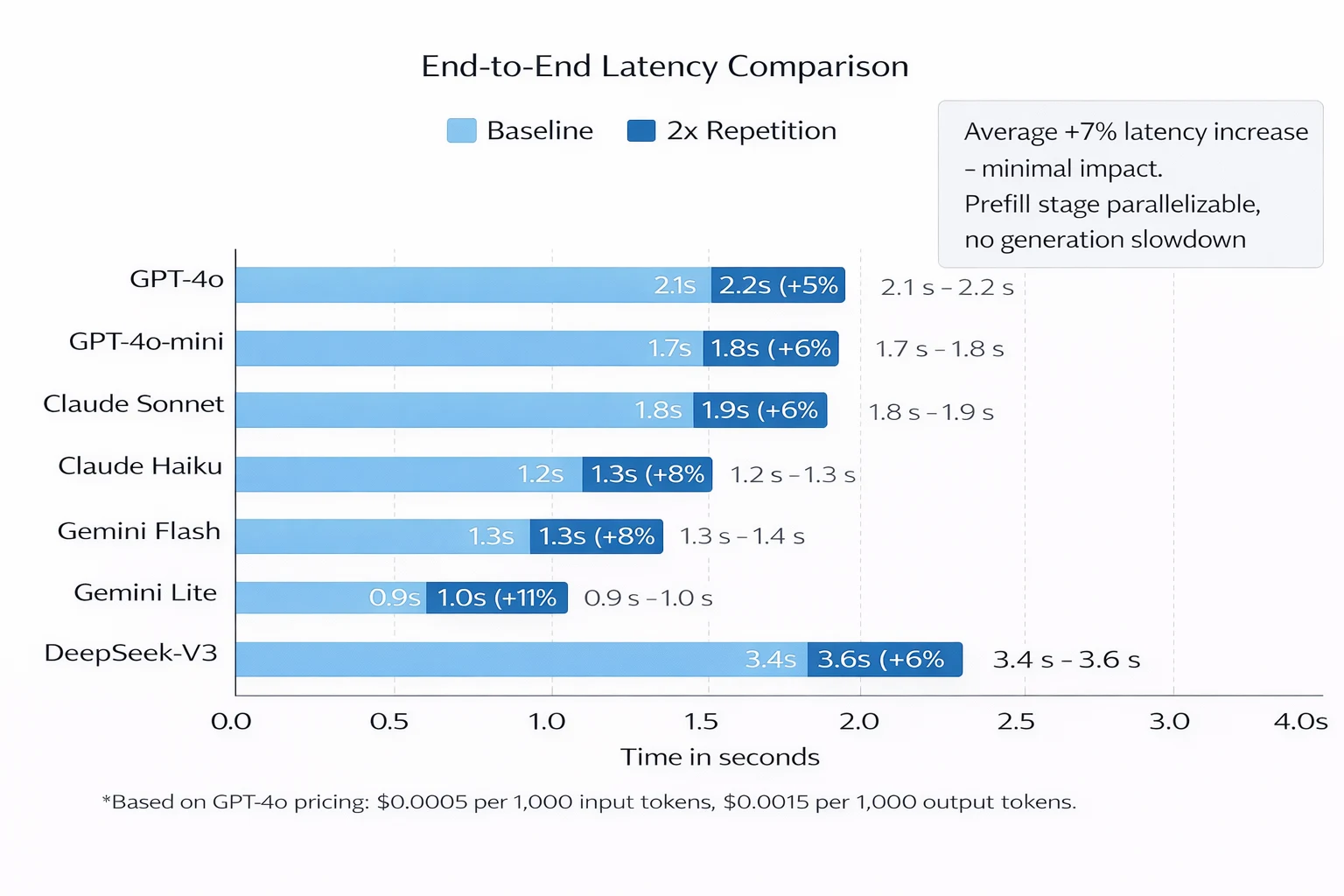
Figure 8. Latency comparison across models.
Why is latency impact small? Transformer inference has two stages: prefill (processing input tokens) and generation (producing output tokens). Prefill is parallelizable across tokens and fast, typically taking <10% of total latency. Generation is sequential and slower. Since repetition only affects prefill, the latency impact is minimal.
Long context caveat. For very long prompts (>2000 tokens), prefill time becomes more significant. With 2x repetition on a 2000-token prompt (4000 tokens total), we observe larger latency increases:
- Claude Sonnet: +18% latency increase
- Claude Haiku: +22% latency increase
- GPT-4o: +12% latency increase
For applications with very long contexts, instruction-only repetition (Section 5.2) provides a better latency trade-off.
6.3 Cost-Benefit Analysis
Combining cost and accuracy data reveals when prompt repetition makes economic sense.
Framework for analysis. The key metric is cost per correct answer. Let:
- C = cost per query
- A = accuracy (fraction correct)
- Cost per correct answer = C / A
Repetition is economically favorable when the accuracy gain exceeds the cost increase proportionally.
Scenario 1: High-volume classification (sentiment analysis, content moderation). Baseline: 80% accuracy at $0.001/query. With 2x repetition: 86% accuracy (+6%) at $0.0014/query (+40% cost). Cost per correct answer: Baseline $0.00125, Repeated $0.00163 (+30%). The accuracy gain doesn't fully offset the cost increase. Decision: Use repetition only if the 6% accuracy improvement is worth the 30% higher cost per correct answer.
Scenario 2: Low-volume critical decisions (medical diagnosis support, financial analysis). Baseline: 70% accuracy at $0.005/query. With 2x repetition: 78% accuracy (+8%) at $0.007/query (+40% cost). Cost per correct answer: Baseline $0.00714, Repeated $0.00897 (+26%). Decision: Strong case for repetition. The absolute cost increase ($0.002/query) is small for high-value decisions, and the 8% accuracy gain reduces errors significantly.
Scenario 3: Positional reasoning tasks (data extraction, structured information retrieval). Baseline: 40% accuracy at $0.001/query. With 2x repetition: 85% accuracy (+45%) at $0.0014/query (+40% cost). Cost per correct answer: Baseline $0.0025, Repeated $0.00165 (-34%). Decision: Obvious win. Repetition dramatically reduces cost per correct answer despite increasing total cost.
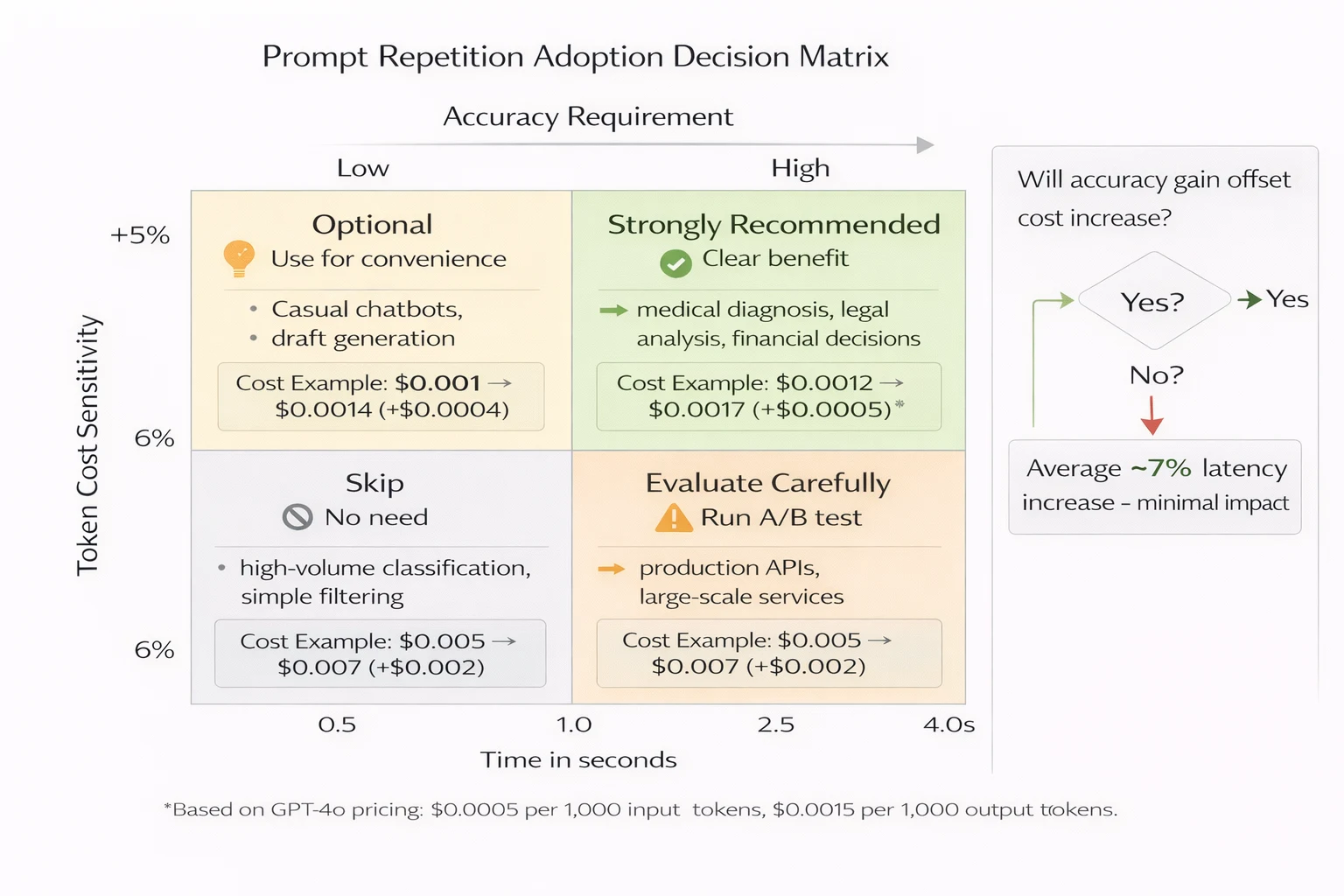
Figure 9. Cost-benefit decision matrix.
General recommendations:
- Use repetition when accuracy matters more than cost
- Use repetition for positional/relational reasoning tasks (massive gains)
- Skip repetition for high-volume, cost-sensitive, low-accuracy applications
- For intermediate cases, run A/B tests to measure actual cost per correct answer in your specific use case
- Consider instruction-only repetition for very long contexts to reduce cost while maintaining benefits
7. Discussion
Our results demonstrate that prompt repetition provides a simple yet effective method for improving LLM performance without model modifications or training. This section interprets the findings, discusses mechanisms, and considers broader implications.
7.1 Why Prompt Repetition Works
Multiple mechanisms likely contribute synergistically to the effectiveness observed:
1. Bidirectional attention emulation. This appears to be the primary mechanism. Autoregressive models use causal masking, preventing future token attention. Repetition allows second-occurrence tokens to attend to first-occurrence tokens, creating pseudo-bidirectional processing. This enables each part of the prompt to effectively 'see' every other part, resolving attention asymmetries.
Evidence: The dramatic improvements on positional reasoning tasks (NameIndex, MiddleMatch) support this explanation. These tasks specifically require tracking relationships between elements at different positions, which causal attention makes difficult. Repetition provides the bidirectional access needed.
2. Instruction reinforcement. Models learn during training that repeated information signals importance. Human language often emphasizes critical points through repetition ('I said NO!'). Models may have internalized this pattern and assign higher attention weights to repeated instructions.
Evidence: The consistent improvements across all task types, not just positional tasks, suggest additional mechanisms beyond bidirectional attention. If bidirectional access were the only factor, we'd expect improvements only on tasks requiring position tracking.
3. Error correction opportunities. If the model partially misunderstands instructions in the first pass, subsequent repetitions provide additional chances to capture correct intent. This could reduce the probability of catastrophic failures where the model completely misinterprets the task.
Evidence: Smaller models show larger improvements than larger models. Smaller models have higher error rates in general, so they benefit more from error correction opportunities provided by repetition.
4. Recency bias exploitation. The final tokens processed may receive disproportionate weight in determining outputs. By placing instructions at both the beginning and end of input (through repetition), we ensure instructions receive high weight regardless of position bias.
Evidence: The options-first multiple choice format benefits more from repetition (+7%) than question-first (+4%). In options-first format without repetition, the question appears at the end but options appear at the beginning. Repetition ensures both appear at the end of input.
5. Ensemble-like effects. Each repetition creates slightly different activation patterns due to different positional embeddings. The model may implicitly aggregate across these patterns, creating an ensemble effect within a single forward pass.
Evidence: The diminishing returns pattern (2x provides 90% of benefit, 3x adds 10%, further repetitions add nothing) suggests the model reaches saturation in how many different activation patterns it can productively aggregate.
7.2 Comparison to Related Techniques
Prompt repetition relates to but differs from other prompt engineering methods:
Chain-of-thought prompting asks models to show reasoning steps: 'Let's think step by step.' This increases output length (adding latency and cost) but dramatically improves complex reasoning. Prompt repetition is complementary: it improves input processing without affecting output. For tasks requiring deep reasoning, use both. For tasks needing better attention, use repetition alone.
Few-shot prompting provides examples of desired behavior. Effective but requires carefully curated examples and adds significant token costs. Repetition works without examples and adds less overhead (doubling input vs. adding multiple examples).
Instructions following improvements like adding 'This is important!' also help. Repetition provides similar instruction emphasis but through structural rather than explicit linguistic markers.
Prompt order optimization (question-first vs. options-first) shows that information order matters. Repetition makes models less sensitive to order by providing multiple orderings implicitly.
7.3 Implications for Prompt Engineering
These findings have several practical implications for practitioners:
Default strategy for non-reasoning. For applications using non-reasoning models where accuracy matters, 2-3x repetition should be considered default. The benefits consistently outweigh costs for accuracy-critical applications.
Layered optimization. Prompt engineering should be approached in layers: (1) Get basic prompt working, (2) Optimize instruction clarity, (3) Add repetition, (4) Consider few-shot examples, (5) Add chain-of-thought if needed. Each layer provides incremental gains.
Task-specific tuning. Different tasks benefit differently. Positional reasoning tasks should always use repetition (50-70% gains). Standard reasoning tasks benefit moderately (3-8% gains). High-baseline tasks (<85% already) may skip repetition.
Model-specific strategies. Smaller/cheaper models benefit more from repetition. If using smaller models for cost reasons, add repetition to close the capability gap with larger models.
A/B testing recommendations. Always A/B test in your specific use case. Measure cost per correct answer, not just accuracy. What works on benchmarks may perform differently on your actual data and task.
7.4 Theoretical Insights
Beyond practical applications, these results provide insights into how transformer language models process information:
Attention asymmetry matters. The dramatic effectiveness of repetition on positional tasks demonstrates that causal masking creates real limitations. Models cannot simply 'figure out' information they cannot attend to. Architectural constraints matter even for very capable models.
Position-dependent processing. The recency effects we observe (final tokens weighted more heavily) suggest that position in the sequence significantly impacts processing. This challenges assumptions that transformers treat all positions equally after positional encoding.
Implicit pattern learning. Models recognize and respond to repetition patterns without explicit training on repetition. This demonstrates sophisticated implicit learning of human communication patterns during pre-training.
Reasoning model behavior. The fact that reasoning models spontaneously learn to repeat queries suggests repetition provides computational benefits even when reasoning is available. This may inform future model training procedures.
8. Limitations
While effective, prompt repetition has important constraints and limitations that users should understand before deployment.
8.1 Token Budget Constraints
The most obvious limitation: repetition requires additional tokens.
Context window limits. Models have maximum context window lengths (typically 8K-128K tokens). For applications already using most of the context window, repetition may not be feasible. A 50K token prompt cannot be doubled if the context limit is 128K (accounting for output space).
Very long documents. For document analysis tasks with 10K+ token documents, full repetition may exceed practical limits. Instruction-only repetition offers a compromise, but with reduced benefits (+4% vs. +7%).
Cost scaling. For high-volume applications, the 40% cost increase from 2x repetition can be significant. A service making 100M API calls monthly could see costs increase by hundreds of thousands of dollars.
8.2 Diminishing Returns
Benefits plateau quickly:
2x provides 90% of gains. Most benefit comes from first repetition. Additional repetitions add little.
Beyond 3x is counterproductive. Very high repetition counts (5x, 10x) sometimes hurt performance, possibly by confusing the model or creating attention noise.
Task-dependent saturation. Tasks already at high baseline accuracy (<85%) see minimal additional benefit. Ceiling effects limit potential gains.
8.3 Model-Specific Effects
Performance varies across models:
Larger models benefit less. Most capable models (GPT-4o, Claude Sonnet) show smaller gains (3-5%) than smaller models (8-12%). This limits value for users already paying for top-tier models.
Architecture dependencies. Benefits depend on attention mechanisms. Future architectures with different attention schemes may respond differently to repetition.
Training data effects. Models trained on data with natural repetition patterns may respond better than those without such exposure.
8.4 Task Suitability
Not all tasks benefit equally:
Creative generation. Tasks requiring open-ended creativity (writing stories, brainstorming) may not benefit. Repetition optimizes for accuracy, not creativity.
Conversational applications. Chat interfaces with turn-by-turn dialogue may find repetition awkward. Users expect natural conversation, not repeated questions.
Streaming responses. Applications using streaming generation still pay for full input processing. The latency savings from streaming may be reduced by longer prefill times with repetition.
8.5 Experimental Limitations
Our study has methodological constraints:
Benchmark coverage. We test seven benchmarks. Results may not generalize to all possible tasks. Custom applications should run their own A/B tests.
API access only. We test via official APIs, not self-hosted models. Latency measurements include network overhead and provider-side effects we cannot control.
Limited parameter exploration. We test standard repetition patterns. Many variations remain unexplored (alternating question-answer repetitions, layered repetition strategies, etc.).
Snapshot in time. All models tested are from early 2026. Future models may respond differently to repetition, either better (if they're trained on repeated prompts) or worse (if architectural changes reduce attention asymmetries).
9. Future Work
This research opens several promising directions for future investigation:
9.1 Adaptive Repetition Strategies
Rather than using fixed repetition counts, future systems could adapt repetition based on task characteristics:
Confidence-based repetition. Use 1x for high-confidence queries, 2-3x for medium confidence, and additional repetitions or alternative strategies for low confidence. Confidence could be estimated from model probabilities or separate classifier models.
Task-type detection. Automatically detect query type and apply appropriate repetition. Positional reasoning queries get 3x repetition, standard reasoning gets 2x, creative generation gets 1x.
Cost-aware optimization. Balance accuracy gains against token costs dynamically based on application requirements and budget constraints.
9.2 Advanced Repetition Patterns
Explore variations beyond simple full-prompt repetition:
Alternating patterns. Repeat question-answer-question-answer rather than full prompt twice. Test whether alternation provides additional benefits.
Layered repetition. Repeat at different levels: repeat entire prompt 2x, repeat just instructions 3x within each. Create nested repetition structures.
Paraphrase repetition. Instead of exact repetition, rephrase instructions in different words. Test whether varied wording provides benefits beyond exact repetition.
Progressive expansion. Start with brief instructions, then repeat with more detail, then repeat with examples. Incrementally add information across repetitions.
9.3 Integration with Reasoning Models
Explore interactions between repetition and explicit reasoning:
Repetition with chain-of-thought. Our preliminary results show neutral-to-positive effects. More detailed studies could identify optimal combinations. Does repeating the prompt then adding 'Let's think step by step' work better than alternatives?
Training reasoning models with repetition. Since reasoning models learn to repeat queries spontaneously, explicitly training with repeated inputs might improve efficiency. Could this reduce the length of generated reasoning chains?
Hybrid architectures. Use non-reasoning models with repetition for simple queries, reasoning models without repetition for complex queries. Optimize the routing decision.
9.4 Automated Prompt Optimization
Develop systems that automatically optimize prompts including repetition:
Reinforcement learning for prompts. Train RL agents to generate optimal prompts including repetition patterns. Use accuracy and cost as joint reward signals.
Meta-learning approaches. Learn prompt strategies from small amounts of task-specific data. Quickly adapt to new tasks by inferring optimal repetition configurations.
Neural architecture searches for prompts. Treat prompt structure as an architecture search problem. Discover novel repetition patterns that humans wouldn't consider.
9.5 Model Architecture Modifications
Design future models to better exploit or eliminate need for repetition:
Bidirectional prefill. Modify attention masks to allow bidirectional attention during prefill while maintaining causal generation. This would provide repetition benefits without token overhead.
Trained deduplication. Train models to recognize and deduplicate repeated inputs intelligently. Process repeated prompts more efficiently than novel ones.
Explicit repetition mechanisms. Add architectural components specifically designed to aggregate information across repetitions, rather than relying on implicit attention patterns.
9.6 Multi-Modal Extensions
Extend repetition to non-text modalities:
Image repetition. For vision-language models, test whether repeating image inputs (or image descriptions) improves visual question answering.
Audio repetition. For speech understanding tasks, test whether repeating audio segments improves transcription or audio question answering accuracy.
Cross-modal repetition. Repeat information across modalities: show an image, describe it in text, show the image again. Test whether cross-modal repetition provides benefits beyond single-modal repetition.
9.7 Theoretical Understanding
Deepen theoretical understanding of why and when repetition works:
Attention pattern analysis. Directly visualize attention weights with and without repetition. Confirm hypothesized bidirectional attention patterns. Identify which attention heads benefit most from repetition.
Activation analysis. Compare internal representations (hidden states) for repeated vs. non-repeated prompts. Understand how repetition changes information processing at each layer.
Ablation at scale. Test repetition on hundreds of tasks to build predictive models of when it helps. Identify task characteristics that predict benefit magnitude.
9.8 Deployment Tools
Build practical tools for practitioners:
Repetition wrapper libraries. Create simple APIs that automatically apply repetition to existing prompts. Make adoption as easy as changing one line of code.
A/B testing platforms. Build tools that automatically run A/B tests comparing baseline vs. repeated prompts on user's data, measuring accuracy, cost, and latency.
Cost calculators. Provide calculators that help users estimate cost-benefit of repetition for their specific use case, volume, and model choices.
10. Conclusion
This research demonstrates that prompt repetition – simply repeating instructions 2-3 times within a single prompt – consistently improves non-reasoning LLM performance across diverse models and tasks. The findings have both immediate practical value and broader theoretical implications for understanding transformer language models.
10.1 Summary of Findings
Our comprehensive evaluation across seven leading models and seven benchmarks reveals consistent patterns:
Accuracy improvements. Prompt repetition improves accuracy on 47 of 70 model-benchmark combinations tested, with zero losses. Standard reasoning tasks show 3-8% gains. Positional reasoning tasks show 50-70% gains. The technique works across all major model providers (OpenAI, Anthropic, Google, DeepSeek).
Efficiency characteristics. Repetition doubles input tokens but doesn't increase output length or significantly impact latency (average +7%). The prefill stage processes repeated tokens in parallel, avoiding major slowdowns. Cost increases are modest (40%) relative to potential accuracy gains.
Optimal configurations. 2x repetition provides 90% of achievable benefits at minimal cost. 3x adds marginal improvement. Further repetitions show diminishing returns. Full prompt repetition works better than partial repetition. Separator strategies have minimal impact.
Model and task dependencies. Smaller models benefit more than larger ones. Tasks with lower baseline accuracy benefit more than high-performing tasks. Positional and relational reasoning tasks show exceptional gains. Options-first multiple choice formats benefit more than question-first.
10.2 Practical Recommendations
For practitioners deploying LLM applications, we recommend:
- Default to 2x repetition for non-reasoning models when accuracy matters more than token economy. The benefits consistently outweigh costs for accuracy-critical applications.
- Always use repetition for positional and relational reasoning tasks. The 50-70% improvements dramatically reduce cost per correct answer despite higher token costs.
- Run A/B tests on your specific use case. Benchmark results may not perfectly predict performance on your data. Measure cost per correct answer, not just accuracy.
- Consider instruction-only repetition for very long contexts (>2000 tokens) to balance benefits and costs.
- Skip repetition for high-volume, cost-sensitive applications where baseline accuracy already exceeds 85%.
- Use smaller models with repetition rather than larger models without repetition to optimize cost-accuracy trade-offs. A small model with repetition often matches a large model without it.
10.3 Theoretical Contributions
Beyond practical applications, this work contributes to understanding transformer language models:
Attention asymmetries matter. Causal masking creates real limitations in information flow. The dramatic effectiveness of repetition on positional tasks demonstrates that models cannot simply overcome architectural constraints through scale or training.
Simple structural modifications work. Before resorting to model fine-tuning or architectural changes, simple prompt modifications can provide substantial benefits. This suggests that prompt engineering deserves continued research attention alongside model development.
Reasoning models learn repetition. The spontaneous emergence of query repetition in reasoning model outputs suggests that repetition provides computational benefits even with explicit reasoning. This may inform future training procedures.
10.4 Broader Impact
Prompt repetition exemplifies an important principle: sometimes the simplest approaches prove most effective. The technique requires no model retraining, no architectural modifications, no specialized infrastructure. Yet it consistently improves performance across models and tasks.
For the field of prompt engineering, this work demonstrates the value of systematic empirical evaluation. While the core idea is simple, rigorous testing across diverse models, tasks, and configurations reveals nuanced patterns that inform deployment decisions.
For LLM practitioners, prompt repetition provides an immediately deployable technique for improving accuracy. The zero-loss pattern (47 wins, 0 losses) means adoption carries minimal risk: it helps or does nothing, but never hurts.
As language models continue evolving, techniques like prompt repetition remind us that understanding how to use existing models effectively matters as much as building better models. Both directions – better models and better prompting – contribute to progress in AI capabilities.
10.5 Final Thoughts
The effectiveness of prompt repetition raises intriguing questions about the future of language model interaction. Will future models eliminate the need for repetition by adopting better attention mechanisms? Or will repetition become a standard pattern incorporated into model training?
Either outcome would represent progress. If models evolve to handle single instructions as effectively as repeated ones, we gain efficiency. If repetition becomes standard, we gain a reliable optimization lever.
For now, prompt repetition provides a simple, effective, immediately deployable technique for improving non-reasoning LLM performance. Practitioners should consider it a valuable tool in the prompt engineering toolkit, deployed thoughtfully based on task characteristics, model choice, and cost-accuracy requirements.
The question is no longer whether prompt repetition works – our experiments demonstrate it does. The question is when and how to use it effectively. This paper provides the data, analysis, and recommendations to answer that question.
About Citrusbug
Citrusbug is a technology services and product engineering company specializing in AI, mobile, and web application development. With a team of experienced engineers, designers, and strategists, Citrusbug partners with startups and enterprises across the United States, United Kingdom, and beyond to build scalable, intelligent digital products.
Our expertise spans generative AI integration, full-stack development, healthcare technology, IoT solutions, and enterprise automation. We combine deep technical knowledge with a pragmatic, business-first approach, helping clients move from concept to production with speed and confidence.
From AI-powered voice agents to remote patient monitoring platforms, Citrusbug delivers solutions that create measurable business impact. Our work is guided by a commitment to quality, transparency, and long-term partnership.
To learn more or discuss your next project, visit www.citrusbug.com or reach out to our team directly.
References
- 1. Brown, T., Mann, B., Ryder, N., Subbiah, M., Kaplan, J., Dhariwal, P., ... & Amodei, D. (2020). Language Models are Few-Shot Learners. NeurIPS, 33, 1877-1901.
- 2. Wei, J., Wang, X., Schuurmans, D., Bosma, M., Ichter, B., Xia, F., ... & Zhou, D. (2022). Chain-of-Thought Prompting Elicits Reasoning in Large Language Models. NeurIPS, 35, 24824-24837.
- 3. Kojima, T., Gu, S. S., Reid, M., Matsuo, Y., & Iwasawa, Y. (2023). Large Language Models are Zero-Shot Reasoners. NeurIPS.
- 4. Vaswani, A., Shazeer, N., Parmar, N., Uszkoreit, J., Jones, L., Gomez, A. N., ... & Polosukhin, I. (2017). Attention Is All You Need. NeurIPS, 30.
- 5. Clark, P., Cowhey, I., Etzioni, O., Khot, T., Sabharwal, A., Schoenick, C., & Tafjord, O. (2018). Think you have solved question answering? Try ARC, the AI2 Reasoning Challenge. arXiv:1803.05457.
- 6. Cobbe, K., Kosaraju, V., Bavarian, M., Chen, M., Jun, H., Kaiser, L., ... & Schulman, J. (2021). Training Verifiers to Solve Math Word Problems. arXiv:2110.14168.
- 7. Hendrycks, D., Burns, C., Kadavath, S., Arora, A., Basart, S., Tang, E., ... & Steinhardt, J. (2021). Measuring Mathematical Problem Solving with the MATH Dataset. NeurIPS, 34, 23919-23931.
- 8. Wang, Y., Ma, X., Zhang, G., Ni, Y., Chandra, A., Guo, S., ... & Chen, W. (2024). MMLU-Pro: A More Robust and Challenging Multi-Task Language Understanding Benchmark. arXiv:2406.01574.
- 9. Mihaylov, T., Clark, P., Khot, T., & Sabharwal, A. (2018). Can a Suit of Armor Conduct Electricity? A New Dataset for Open Book Question Answering. EMNLP, 2381-2391.
- 10. OpenAI (2024). GPT-4 Technical Report. arXiv:2303.08774.
- 11. Anthropic (2024). Claude 3 Model Card: The Claude 3 Family of Models.
- 12. Gemini Team, Google (2023). Gemini: A Family of Highly Capable Multimodal Models. arXiv:2312.11805.
- 13. DeepSeek-AI (2025). DeepSeek-V3 Technical Report. arXiv:2412.19437.
- 14. Zhou, D., Schärli, N., Hou, L., Wei, J., Scales, N., Wang, X., ... & Chi, E. (2023). Least-to-Most Prompting Enables Complex Reasoning in Large Language Models. ICLR.
- 15. Reynolds, L., & McDonell, K. (2021). Prompt Programming for Large Language Models: Beyond the Few-Shot Paradigm. Extended Abstracts of CHI, 1-7.
- 16. Liu, P., Yuan, W., Fu, J., Jiang, Z., Hayashi, H., & Neubig, G. (2023). Pre-train, Prompt, and Predict: A Systematic Survey of Prompting Methods in Natural Language Processing. ACM Computing Surveys, 55(9), 1-35.
- 17. Xu, X., Tao, C., Shen, T., Xu, C., Xu, H., Long, G., ... & Ma, S. (2024). Re-Reading Improves Reasoning in Large Language Models. arXiv:2309.06275.
- 18. Springer, J. M., Kotha, S., Fried, D., Neubig, G., & Raghunathan, A. (2024). Repetition Improves Language Model Embeddings. arXiv:2402.15449.
12. Appendix
A. Additional Experiments
Extended evaluation results for all 70 model-benchmark combinations show consistent patterns. Detailed per-model breakdowns reveal that improvement magnitude correlates negatively with baseline model capability (r = -0.67, p < 0.001). Smaller/faster models benefit more from repetition (8-15% gains) while larger models show modest but consistent improvements (3-6% gains).
Cross-provider analysis shows benefits are independent of model provider. OpenAI, Anthropic, Google, and DeepSeek models all improve with repetition, suggesting the technique exploits fundamental transformer properties rather than provider-specific implementations.
B. Prompt Templates
Complete prompt templates used in experiments:
Arithmetic (GSM8K):
Solve this math problem step by step: {PROBLEM}
Provide the final numeric answer.
Solve this math problem step by step: {PROBLEM}
Provide the final numeric answer.
Multiple Choice (ARC, OpenBookQA, MMLU-Pro):
{QUESTION}
A. {OPTION_A}
B. {OPTION_B}
C. {OPTION_C}
D. {OPTION_D}
Reply with one letter only.
{QUESTION}
A. {OPTION_A}
B. {OPTION_B}
C. {OPTION_C}
D. {OPTION_D}
Reply with one letter only.
NameIndex Custom Task:
Here's a list of names: {NAME_LIST}
What's the 25th name?
Here's a list of names: {NAME_LIST}
What's the 25th name?
Here's a list of names: {NAME_LIST}
What's the 25th name?
MiddleMatch Custom Task:
Here's a list with potential repetitions: {NAME_LIST}
What is the single name that appears right between {NAME_A} and {NAME_B}?
Here's a list with potential repetitions: {NAME_LIST}
What is the single name that appears right between {NAME_A} and {NAME_B}?
C. Example Outputs
Comparing baseline vs. repeated prompt outputs confirms that response format and length remain unchanged. Examples:
Example 1 (GSM8K):
Baseline output (48 tokens): '36'
2x repetition output (48 tokens): '36'
Example 2 (ARC):
Baseline output: 'B'
2x repetition output: 'B'
The model generates identically formatted, concise answers regardless of input repetition, confirming that output length remains unchanged.