


Ecommerce

 Citrusbug Healthcare →
A rough idea, a stalled backlog, or an AI-generated prototype rarely survives contact with a real build. Our project discovery services turn it into an architecture your engineers can build from, a roadmap with real priorities, and an estimate that holds up once work starts. Senior architects run the process. Account managers don't.
 ISO/IEC 27001
 GDPR
GDPR
 SOC 2 Type II
Trusted by industry leaders















Certifications and Accreditations



No shared definition of what the release needs to achieve, so every stakeholder is optimizing for something slightly different.
Requirements that surface mid-sprint instead of before estimation, each one reopening the budget conversation.
Vibe-coded MVPs that work in a demo but were never reviewed for data architecture, integration debt, or production security.
Tech stack and architecture choices made verbally, never written down, so switching teams later means re-discovering the whole system.
No team composition or delivery plan attached to the roadmap, so staffing becomes a guess instead of a plan.
Get a senior architect on your project before the first sprint gets estimated, not after.
Book a Free 30-Min CallA proper discovery engagement produces documents your team can actually build from, not a slide deck that gets skimmed once and archived.
We work with your stakeholders to pin down what the release needs to achieve and how you’ll measure it, before any feature list gets written.
Functional and non-functional requirements documented in enough detail that engineers can estimate against them without guessing at edge cases.
We map two or three viable architectures against your constraints, covering technology architecture consulting considerations like integration debt and vendor lock-in, then recommend one.
If you’re starting from a vibe-coded MVP, we audit it for data model soundness, security gaps, and what can survive into production versus what needs a rebuild.
Key user journeys mapped and wireframed so stakeholders can react to something concrete instead of a written description.
A documented list of what’s in and out of the first release, plus the technical risks most likely to blow the timeline.
Requirements broken into what ships first, what waits, and why, written from the end user’s perspective.
Frontend, backend, data layer, and third-party integrations mapped out, including where an existing AI-generated prototype’s architecture needs to change.
An interactive walkthrough built through our clickable prototyping process, ready to show investors or internal stakeholders before a line of production code exists.
Not just a list of tools. A written case for why each one fits your constraints, your team’s existing skills, and your integration needs.
Named roles, not job titles, for who would actually build this, along with the sprint cadence and cost that feeds directly into MVP development planning.
A defensible range tied to the backlog and architecture, with assumptions documented so you can challenge any number in it.
We run structured sessions with your business and technical stakeholders to agree on goals, users, constraints, and what the first release actually needs to achieve. This step alone prevents most of the scope creep that shows up three sprints into a build.
For an existing product, or an existing AI-generated prototype, we map what's already working, what's fragile, and what data or integration debt is hiding under the surface. For a greenfield idea, we validate the assumptions behind it before design work starts.
We document functional requirements, non-functional constraints like latency and uptime, and two or three viable system architectures, then walk through the tradeoffs with your technical stakeholders directly.
We now run AI-assisted synthesis across interview transcripts and existing user data as a standard part of research, not an add-on, cutting the time between raw feedback and a usable pattern from weeks to days.
Key journeys get wireframed and built into a clickable prototype so stakeholders can react to something real instead of a written spec, catching usability issues before engineering time gets booked.
Everything gets converted into a phased roadmap, a team composition, and a cost range, delivered as a document set your existing team or ours can build from immediately.
Most discovery engagements end with a requirements document. Ours is designed to answer the harder questions: what should be built, what can be reused, what needs to change, and what will it take to deliver.
Already have a working prototype? We review the codebase for architectural weaknesses, security gaps, technical debt, and scalability concerns, then separate what is worth keeping from what needs to be rebuilt. When a critical assumption needs proving, we validate it through a proof-of-concept validation before further development spend is committed.
The final discovery output can become the foundation for a detailed statement of work, with requirements, architecture, team composition, milestones, and estimates tied together. The senior architect involved in discovery can continue into delivery, so your build team starts with context instead of repeating the discovery process.
You know who will actually lead the engagement before work begins. The assigned architect and business analyst are introduced upfront, giving you visibility into the people responsible for turning your requirements into a build-ready plan.

For a rough idea that needs direction fast. 1-2 weeks, one business analyst and one architect.

For teams ready to move into a funded build. 3-4 weeks, business analyst, architect, and UX designer.

For teams starting from an existing AI-generated prototype. 3-5 weeks, adds a senior architect-led code review.
Most engagements run $6,000 to $18,000 depending on scope and whether an existing AI-generated prototype needs a full code audit.
Book a call, and we'll scope the range against your actual project.
Their agile way of working, competence, and friendliness are impressive.December 7, 2024
Citrusbug Technolabs handles a data extraction project for an education company. They're also responsible for managing an AI generation project for the client.
Citrusbug Technolabs has laid out and followed a clear project outline and consistently met deadlines. The team communicates well and demonstrates a strong understanding of the client's vision and goals. Their agile approach, high level of competence, and personable approach stand out.
 Read More
Their communication and ability to capture exactly what I was asking for were impressive.November 14, 2024
Citrusbug Technolabs built an automated system for a veteran medical company. The system needed to collect and store user data, generate customized letters based on surveys, and use AI to summarize reviews.
Citrusbug Technolabs delivered a functional automated system that successfully organized the client's records and auto-generated statements. The team was quick to respond, addressed all roadblocks, and communicated effectively. Overall, their ability to understand the client's needs stood out.
Read More
They were very calm and talented, and they did bring some of their own ideas.January 28, 2025
Citrusbug Technolabs has developed an MVP for a freight and capacity marketplace. The team has created three different interfaces for three market segments.
Citrusbug Technolabs has successfully developed an effective MVP. The team has delivered the project on time and almost within budget. Moreover, their responses have been timely. Overall, the team has been calm, talented, and innovative. This has led to the client's satisfaction.
Read More
What stood out most about them was their personalized approach and sense of ownership in every aspect of the project."February 27, 2024
Citrusbug Technolabs built a Flutter cross-platform mobile app for an education company. They also developed two web apps and an admin panel and provided DevOps support for the client's infrastructure.
Citrusbug Technolabs' support successfully boosted the client's user engagement by 8x, resulting in an 85% retention rate. The reliable team demonstrated a dedication to delivering on time and promptly responding to concerns and adjustments. Their personalized, client-centric approach stood out.
Read More
They didn't like the phrase "impossible to do", which made them very solution-oriented.February 19, 2024
A healthcare company hired Citrusbug Technolabs to design and develop a user-friendly application. The team provided tailored assistance to meet the client's requirements.
Citrusbug Technolabs successfully delivered an application that was ready for market. The team was highly professional and well-organized; they stayed focused throughout the engagement and were receptive to changes. Overall, they stood out for their trustworthiness and commitment to excellence.
Read More
They're 100% on time and transparent throughout each stage of the project.February 24, 2024
A financial technology company has hired Citrusbug Technolabs to build a custom web application. The team handles the development and design of the app.
The project is ongoing, but the client has been satisfied with Citrusbug Technolabs' services. The team is very professional — they always respect timelines and provide regular updates to ensure everyone's on the same page. Also, their transparent approach makes them a trustworthy partner.
Read More
"I do believe they are exceptional at where they stand."
Citrusbug Technolabs took on a mobile app development project for a Singapore-based development house. They were provided with UX designs to execute. Currently, they're finalizing and fine-tuning the product.
Citrusbug Technolabs contributed to the successful launch of the product, which has garnered over 10,000 users in just three months. The product has also received support from investors. They consistently followed-up with their progress and delivered at a speedy rate. The team is truly stellar.
Read More
Good discovery depends on more than workshops and documentation. It requires technical judgment, clear ownership, and experience recognizing the risks that can change a project's cost or delivery path.
Every discovery deliverable, from requirements and wireframes to architecture diagrams and technical recommendations, is handed over to your team. You retain ownership of the work produced for your project without licensing restrictions.
Discovery is shaped by engineers and architects who understand how software gets built, integrated, tested, secured, and maintained. Recommendations account for implementation effort, existing technical debt, third-party dependencies, and long-term ownership.
Every discovery engagement starts under NDA. Your product concept, requirements, business information, and prototype code remain confidential throughout the engagement.
Experience across healthcare, fintech, logistics, real estate, and other complex domains helps identify risks that generic discovery checklists can miss, from interoperability and compliance requirements to payment flows, third-party integrations, and role-based workflows.
 React
React
Are you ready to bring your amazing product idea to life? It may seem overwhelming at first, but following the new product development process and implementing the best practices at…
Read Article → Artificial Intelligence
Enterprise AI adoption has shifted from experimentation to operational reality across major functions. As models become more accessible through cloud platforms and packaged tools, enterprises are funding production use cases…
Read Article →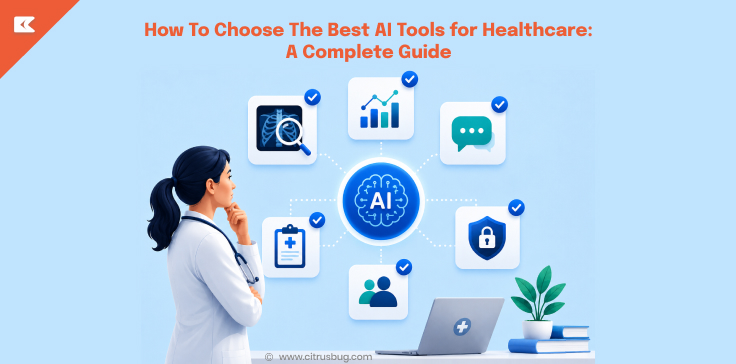 Artificial Intelligence
The global healthcare AI market is projected to surpass $188 billion by 2030, and most healthcare organizations already know they need AI in their workflows, the harder question is where…
Read Article →A standard discovery sprint runs 1-4 weeks. Adding an AI-generated code audit typically adds 1-2 weeks for the architecture and security review.
Everything, including wireframes, architecture diagrams, and documentation. The outputs are built to brief another vendor if you choose not to continue with us.
Yes. A senior architect audits the existing codebase for architecture soundness, security gaps, and technical debt before recommending rebuild versus extend.
You get honest options: simplify, phase the release, or change direction, backed by the specific technical reason. That's a better outcome than finding out mid-build.
A business analyst and senior architect, with a UX designer added for the Full Discovery tier. You see their names before the engagement starts.
A defensible estimate range tied to the documented backlog and architecture, with assumptions stated so you can challenge specific line items.
Expect 8-12 hours across stakeholder workshops and prototype reviews over the engagement. We keep touchpoints structured so your team isn't pulled into daily meetings.
Yes. Documentation and architecture diagrams are written to brief an internal team directly, not just to justify continuing with Citrusbug.
