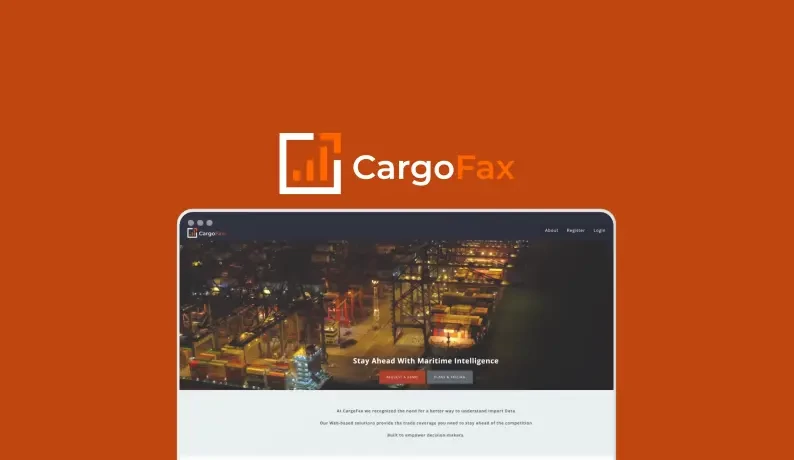
CargoFax
A data-driven import insights platform designed to help businesses make smarter import decisions.
View Case Study →Trusted By Industry Leaders
Applications migrated without a cloud migration and modernization strategy run on cloud infrastructure priced for elasticity they never use.
Environments grown service by service, with no shared blueprint, become unmanageable to secure or cost-audit.
Permissions accumulate faster than reviews happen, widening the blast radius of any single compromised credential.
Different teams on different providers with no shared cost or security standard means nobody owns the full picture.
A structured architecture review shows exactly what's driving cloud cost, security risk, and scalability issues before you commit to a redesign.
Talk to a Cloud Architect
We assess current-state infrastructure, evaluate cloud readiness, and design target architecture across AWS, Azure, GCP, or hybrid environments, backed by architecture decision records your team keeps regardless of what happens next.
Application portfolio analysis and workload classification drive the migration pathway, whether that’s a straightforward rehost or a full re-architecture, sequenced with dependency mapping so cutover doesn’t stall production.
Containerization with Docker and Kubernetes, microservices decomposition, and DevOps automation pipelines replace monolithic deployment patterns with event-driven, independently scalable services.
Beyond initial design, we build the tagging, budget alerting, and cloud cost optimization engagement structure that keeps spend accountable to a specific team and workload, not a lump-sum invoice.
Not every workload needs the same migration strategy. Applying a single approach across an application portfolio can increase cost, technical risk, and downtime. Our cloud architecture consultants evaluate each workload based on business criticality, technical debt, dependencies, and cloud-native fit, then recommend the migration path that best supports your timeline and long-term goals. Network topology, security controls, and data residency requirements are designed around that decision.
• Rehost: Move as-is when the timeline is tight and the application isn’t worth re-engineering yet.
• Replatform: Swap in managed services (managed databases, container orchestration) without touching core application logic.
• Refactor: Rebuild for cloud-native patterns when the application is core to the business and the current architecture is the bottleneck.
• Retire: Some workloads should not migrate at all. Decommissioning is a legitimate architecture recommendation, not a missed opportunity.
We evaluate existing infrastructure, workload patterns, and business objectives to scope the engagement and surface constraints early.
Target architecture, landing zone structure, and governance guardrails get documented before any environment gets touched.
Sequencing, dependency mapping, and cutover planning happen before migration starts, not during it.
Architecture gets tested against security benchmarks and relevant compliance frameworks before production traffic touches it.
We monitor production performance, cloud spend, resource utilization, and operational health after deployment, then refine the architecture as workloads and business requirements evolve.
Most cloud architecture consulting still treats every workload like a stateless web app, which is a problem now that GPU-bound inference, vector search, and autonomous agents are landing in production. Not an afterthought. We design for these workloads from the blueprint stage, not as a retrofit once the AI team hits a wall.
We plan compute placement, autoscaling policy, and cost attribution specifically for GPU-bound inference workloads, which behave nothing like standard web application scaling and get expensive fast when architected like one.
Retrieval infrastructure gets its own network path, latency budget, and data residency plan, separate from transactional databases, so retrieval-augmented generation systems don't inherit constraints built for a different workload type.
Autonomous agents that call tools and trigger downstream actions need their own blast-radius boundaries and per-agent cost tracking, or a runaway loop becomes a production incident and a surprise invoice at once.
A well-designed architecture degrades the moment ten engineers start provisioning against it without guardrails. A platform engineering layer keeps the architecture’s intent intact as your team scales.
Golden Path Templates: Pre-approved infrastructure patterns let engineers provision new services without re-litigating the architecture decisions every time.
Policy-as-Code Guardrails: Security and compliance rules get enforced at admission control, using tools like OPA or Kyverno, not caught in a review three sprints later.
Self-Service Provisioning: Engineers get infrastructure on demand within approved boundaries, cutting the ticket queue that usually forms around a central cloud team.
Cost Visibility at Deploy Time: Spend estimates surface before a resource gets provisioned, not after the monthly bill lands on someone’s desk.
We match each workload’s latency, compliance, and cost profile against AWS, Azure, and GCP’s actual strengths rather than defaulting to whichever provider signed the enterprise agreement first.
A well-structured account and landing zone hierarchy contains blast radius and keeps billing, access, and environment boundaries clean from day one.
Federated identity across providers, least-privilege role design, and regular access reviews close the gap between “we have IAM” and “we can prove who can touch what.”
Secure connectivity between clouds, on-premise systems, and edge locations gets designed as a single topology, not stitched together provider by provider.
Data placement decisions account for regulatory residency requirements and NIS2-adjacent sovereignty considerations before a single database gets provisioned, not after an auditor asks.
We benchmark existing environments against the AWS Well-Architected Framework’s six pillars and produce a prioritized remediation plan, not just a findings report nobody actions.
Cloud cost optimization works best when controls are built into the architecture rather than added after spending gets out of hand. Our approach combines FinOps practices with resource tagging, right-sizing, capacity planning, and ongoing cost visibility so teams can track ownership, eliminate waste, and make informed infrastructure decisions as workloads scale.
| Cost Governance Practice | What It Does | Typical Impact |
|---|---|---|
|
Tagging and Cost Allocation |
Attributes every resource to a team, project, or workload |
Medium |
|
Right-Sizing Automation |
Continuously matches instance size to actual utilization |
High |
|
Reserved and Spot Capacity Mix |
Balances committed-use discounts against workload volatility |
High |
|
Idle Resource Elimination |
Flags and removes unused storage, compute, and orphaned volumes |
Medium |
|
Showback and Chargeback Reporting |
Makes cloud spend visible and accountable at the team level |
Low |
A data-driven import insights platform designed to help businesses make smarter import decisions.
View Case Study →
An institutional-grade global financial trading platform.
View Case Study →
An advanced logistics and fleet delivery management platform.
View Case Study →A structured audit of your current environment plus a target architecture blueprint, with no delivery commitment attached.
Same assessment and design work, carried through implementation and migration by the team that designed it.
An ongoing architecture function embedded with your team for ongoing governance, not a one-time engagement.
Cloud architecture consulting typically costs $10,000 to $65,000+, depending on infrastructure complexity, workload scope, security requirements, and implementation needs.
Share your requirements to get a scoped estimate.
Compliance bolted onto a finished architecture is where most audits go badly. We build zero-trust principles, encrypted data paths, and access controls into the architecture itself, so meeting SOC 2, ISO 27001, or sector-specific requirements is a byproduct of the design rather than a separate project afterward.
Work with a team that designs for scale, engineers for security, and governs for cost, from first blueprint through years of production traffic.
FinOps isn't a phase we add after deployment. Tagging, budgets, and right-sizing get designed into the architecture from the first blueprint, not bolted on later.
AWS, Azure, and GCP expertise means the provider recommendation is based on your workload fit, not which certification happens to be easiest to staff.
Every environment we design ships as version-controlled infrastructure as code, owned by you, not locked in a console only we know how to navigate.
Every engagement starts under NDA, and full source code and architecture documentation transfer to you at delivery, with no vendor lock-in built into the handover.
One of the eminent open-source JavaScript frameworks invented by Facebook has become a hot choice for every frontend engineer because of its imperative functionalities and performance. statistics reveal that it…
Read Article →
Introduction In today’s business world, several buzzwords have become increasingly popular, and one of the most prominent is digital transformation. However, the term is often used superficially without a clear…
Read Article →
DevOps has emerged as a culture that is transformational for software development, and the wider software development statistics confirm how central this methodology has become to modern engineering teams. For…
Read Article →Current-state assessment, target architecture design across AWS, Azure, or GCP, migration pathway planning, security and compliance validation, and a governance model for ongoing cost and access control.
All three, plus hybrid and multi-cloud setups. Provider selection follows your workload requirements, not a single-vendor bias.
Yes. Most engagements start with an environment that already exists. We assess what's salvageable and re-architect around it rather than defaulting to a rebuild.
GPU-bound inference, vector databases, and agent workloads get their own placement, scaling, and cost-attribution model, since standard web application patterns don't fit their behavior.
Full architecture documentation, infrastructure as code, and source ownership transfer to you. Nothing is retained on our side that locks you into continued engagement.
Assessment and design typically run 8 to 16 weeks depending on environment complexity. Implementation timelines are scoped separately once the target architecture is confirmed.
Tagging, budget alerts, and right-sizing automation are built into the architecture itself, and our Embedded Architecture Partner model adds ongoing review if ongoing governance is preferred.
Alongside. Most engagements embed with your team, transferring architecture knowledge as we go rather than operating as a black box.