



Custom Software Engineering
Software Development Company in Virginia
500+
Projects Delivered
98%
Client Retention
Certified
 ISO 27001
 SOC 2
 HIPAA
Trusted By













Certified & Compliant

Custom Software Development Services for Virginia Businesses

Workflow-Specific Custom Software
Internal tools, enterprise ERP and CRM extensions, and case or work-order systems shaped around how your team processes work. Role-based access and a data model that matches your records ship in the first release.

Web Applications and Portals
Web application development for customer, partner, and staff portals, with authentication, dashboards, reporting, and document workflows on React, Angular, or Vue front ends and Python or PHP back ends.

iOS and Android Apps
Native and cross-platform mobile app development with offline modes, push notifications, and device features such as camera and location, backed by an admin panel and APIs your web platform can share.

Multi-Tenant SaaS Platforms
Tenant isolation, subscription billing, usage analytics, and admin tooling for software you sell to customers. SaaS development starts with the data and permission model that every later feature depends on.

AI Software and LLM Features
Document extraction, RAG search over internal knowledge, and agent workflows reach production through AI software development that includes evaluation and monitoring, so output quality stays measurable.

Legacy System Modernization
End-of-support stacks and tightly coupled monoliths are refactored or rebuilt in stages, with data migration plans and parallel runs so daily operations continue while the new system takes over.

Cloud Migration and DevOps
Containerized deployments, CI/CD pipelines, infrastructure as code, and monitoring on the major cloud platforms, plus cutover plans for existing workloads and runbooks your operations team can follow.

API and Third-Party Integration
Payment gateways, identity providers, ERP and accounting systems, and partner APIs connect through documented, versioned interfaces with retry logic and logging, so data stays consistent across tools.
When Custom Software Development Fits Better Than Off-the-Shelf Tools
A workflow that lives in spreadsheets, a SaaS tool configured past what it was built for, and two systems that disagree about the same customer record are the usual signs that packaged software has run out of room.
Buying is the right call for payroll, email, and accounting. Building is the right call for the process your customers choose you for, because that process needs to change on your schedule.
Signals That Point to a Custom Build
• Staff re-key the same data between two systems
• Per-seat licensing grows faster than the team
• A contract or regulatory rule has no home in any packaged tool
A software development company in Virginia should be able to tell you which of these apply before proposing a build, and Citrusbug’s custom software development process starts with exactly that check.
Scope and Estimate Your Software Project Before You Commit
Share your requirements, and our engineers will outline scope, timeline drivers, and a cost range for your build.
Schedule a 30-Min Call
Industries
Industry Experience Across Key Sectors
VIEW ALL INDUSTRIES →Our Custom Software Development Process
01
Sprint Planning
The approved scope is split into prioritized sprints with named deliverables. Architecture decisions are recorded, environments are provisioned, the team roster is confirmed, and the first demo date is fixed before engineers start building.
02
Build and Demo
Engineers ship working increments in short sprints, and each cycle ends with a demo of the running software for your team, so feedback lands while changes are still small and inexpensive to make.
03
Test and Harden
QA runs regression, performance, and security checks against the acceptance criteria from discovery, and Secure ADLC practices bring security review into every sprint as the code is written, with findings tracked to closure.
04
Release and Support
Deployment moves through a staged pipeline, then monitoring and L1, L2, and L3 SLA support options keep the release stable as usage grows and new requests arrive from your team and your customers.
How Virginia Compliance Requirements Shape Software Scope
Choosing a software development company in Virginia means considering how applicable regulations affect your product’s architecture, data handling, integrations, and testing. Citrusbug identifies relevant requirements during discovery to help define the technical safeguards needed for your project. Final compliance determinations remain with your organization and its qualified advisors.
-

Federal Contractor Requirements: Projects involving Controlled Unclassified Information (CUI) may need safeguards aligned with NIST SP 800-171 and applicable federal contract clauses.
-
Virginia Consumer Data Protection Act: Where the VCDPA applies, software may need workflows for consumer data access, correction, deletion, and consent based on the information collected and processed.
-
Healthcare Data Protection: Applications handling protected health information may require technical safeguards aligned with HIPAA, including access controls, audit logging, and encryption.
Recent Builds
View All Case Studies →
Custom Software Projects Delivered by Citrusbug
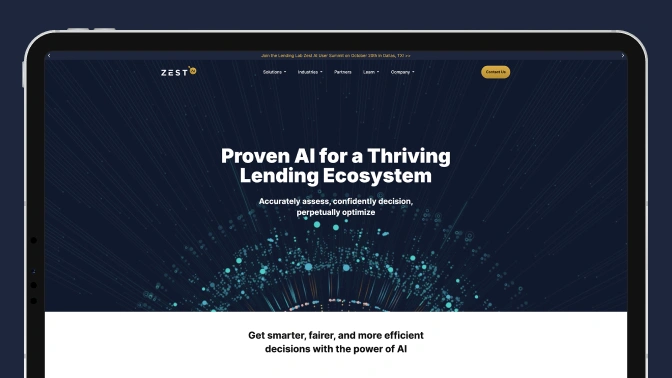
Zest AI
Zest AI is a leading AI-powered lending technology company helping banks, credit unions, and financial institutions make faster, smarter, and more inclusive credit decisions. By leveraging machine learning, predictive analytics,…
View Case Study →
HEALTH AND FITNESS


Client Testimonials (We're Rated 4.7 on Clutch)
THE PROJECT
Web & AI Development for Education Company
AI Development, Custom Software Development
Nov. 2024 - Ongoing
THE REVIEW
Their agile way of working, competence, and friendliness are impressive.December 7, 2024
PROJECT SUMMARY:
Citrusbug Technolabs handles a data extraction project for an education company. They're also responsible for managing an AI generation project for the client.
FEEDBACK SUMMARY:
Citrusbug Technolabs has laid out and followed a clear project outline and consistently met deadlines. The team communicates well and demonstrates a strong understanding of the client's vision and goals. Their agile approach, high level of competence, and personable approach stand out.
THE REVIEWER
 Read More
 Read More
THE PROJECT
Custom Automated System Dev for Veteran Medical Co
Generative AI, Application Testing, Custom Software Development
Aug. - Oct. 2024
THE REVIEW
Their communication and ability to capture exactly what I was asking for were impressive.November 14, 2024
PROJECT SUMMARY:
Citrusbug Technolabs built an automated system for a veteran medical company. The system needed to collect and store user data, generate customized letters based on surveys, and use AI to summarize reviews.
FEEDBACK SUMMARY:
Citrusbug Technolabs delivered a functional automated system that successfully organized the client's records and auto-generated statements. The team was quick to respond, addressed all roadblocks, and communicated effectively. Overall, their ability to understand the client's needs stood out.
THE REVIEWER
Read More
Read More
THE PROJECT
MVP Development for Freight & Capacity Marketplace
Custom Software Development
$10,000 to $49,999
Jan. 2024 - Feb. 2025
THE REVIEW
They were very calm and talented, and they did bring some of their own ideas.January 28, 2025
PROJECT SUMMARY:
Citrusbug Technolabs has developed an MVP for a freight and capacity marketplace. The team has created three different interfaces for three market segments.
FEEDBACK SUMMARY:
Citrusbug Technolabs has successfully developed an effective MVP. The team has delivered the project on time and almost within budget. Moreover, their responses have been timely. Overall, the team has been calm, talented, and innovative. This has led to the client's satisfaction.
THE REVIEWER
Read More
Read More
THE PROJECT
Web & Mobile App Development for Education Company
Custom Software Development, DevOps Managed Services
$10,000 to $49,999
THE REVIEW
What stood out most about them was their personalized approach and sense of ownership in every aspect of the project."February 27, 2024
PROJECT SUMMARY:
Citrusbug Technolabs built a Flutter cross-platform mobile app for an education company. They also developed two web apps and an admin panel and provided DevOps support for the client's infrastructure.
FEEDBACK SUMMARY:
Citrusbug Technolabs' support successfully boosted the client's user engagement by 8x, resulting in an 85% retention rate. The reliable team demonstrated a dedication to delivering on time and promptly responding to concerns and adjustments. Their personalized, client-centric approach stood out.
THE REVIEWER
Read More
Read More
THE PROJECT
Mobile App Development for Healthcare Company
Custom Software Development Mobile App Development UX/UI Design
$10,000 to $49,999
June 2023 - Jan. 2024
THE REVIEW
They didn't like the phrase "impossible to do", which made them very solution-oriented.February 19, 2024
PROJECT SUMMARY:
A healthcare company hired Citrusbug Technolabs to design and develop a user-friendly application. The team provided tailored assistance to meet the client's requirements.
FEEDBACK SUMMARY:
Citrusbug Technolabs successfully delivered an application that was ready for market. The team was highly professional and well-organized; they stayed focused throughout the engagement and were receptive to changes. Overall, they stood out for their trustworthiness and commitment to excellence.
THE REVIEWER
Read More
Read More
THE PROJECT
Custom Web App Dev & Design for Financial Technology Firm
Mobile App Development UX/UI Design Web Design
Sep. 2023 - Ongoing
THE REVIEW
They're 100% on time and transparent throughout each stage of the project.February 24, 2024
PROJECT SUMMARY:
A financial technology company has hired Citrusbug Technolabs to build a custom web application. The team handles the development and design of the app.
FEEDBACK SUMMARY:
The project is ongoing, but the client has been satisfied with Citrusbug Technolabs' services. The team is very professional — they always respect timelines and provide regular updates to ensure everyone's on the same page. Also, their transparent approach makes them a trustworthy partner.
THE REVIEWER
Read More
Read More
THE PROJECT
Staff Augmentation for Singaporean Development Company
Mobile App Development
$10,000 to $49,999
THE REVIEW
"I do believe they are exceptional at where they stand."
PROJECT SUMMARY:
Citrusbug Technolabs took on a mobile app development project for a Singapore-based development house. They were provided with UX designs to execute. Currently, they're finalizing and fine-tuning the product.
FEEDBACK SUMMARY:
Citrusbug Technolabs contributed to the successful launch of the product, which has garnered over 10,000 users in just three months. The product has also received support from investors. They consistently followed-up with their progress and delivered at a speedy rate. The team is truly stellar.
THE REVIEWER
Read More
Read More
How to Choose a Software Development Company in Virginia
Before selecting a development partner, compare how each team handles delivery, scope changes, project visibility, and post-launch support. These factors help you assess whether a company can meet your technical requirements and business priorities.
Relevant Experience and Delivery Evidence
Review projects that demonstrate experience with similar workflows, integrations, and technical requirements. Ask for concrete examples of what the team delivered and how the software is used.
• Relevant case studies and project scope
• Client references where available
• Live products or working demonstrations
Scope and Change Management
Understand how new requirements are evaluated, priced, and approved. A documented process helps keep budget and timeline decisions transparent as the project evolves.
• Written change request process
• Estimates approved before additional work
• Clear milestone and payment terms
Project Visibility and Communication
Regular demonstrations and shared tracking help you review progress, identify gaps, and make decisions before they affect later stages of development.
• Scheduled sprint demos and updates
• Shared project board and task status
• Defined escalation process for blockers
Post-Launch Support and Maintenance
Confirm who handles production issues after release and how ongoing maintenance is organized. Clear support terms help your team plan for fixes, updates, and operational needs.
• Documented support response times
• Monitoring and security patching arrangements
• Defined defect warranty period
Engagement Models That Match How Your Scope Is Defined

Fixed-Price Project
DEFINED SCOPE
- Scope and deliverables agreed in writing
- Milestones tied to documented deliverables
- Best when discovery output is stable
- Changes handled through a formal estimate
- One team accountable for delivery

Time and Material Sprints
EVOLVING REQUIREMENTS
- Priorities adjusted sprint by sprint
- Billing follows actual engineering effort
- Suited to MVPs and early products
- Backlog reviewed with you every cycle
- Scope can grow or shrink with feedback

Dedicated Development Team
ONGOING ROADMAP
- Engineers work exclusively on your product
- Capacity scales as the roadmap changes
- Embedded in your standups and tooling
- Product knowledge carries across releases
- Suited to long-running platforms
How Much Does It Cost to Develop Custom Software in Virginia?
Custom software projects typically start around $25,000, and enterprise-scale platforms can pass $180,000, depending on complexity, integrations, and compliance scope. Share your requirements for an estimate tailored to your project.
Our Value
Why Choose Citrusbug as Your Software Development Company in Virginia?
Stalled or unfinished projects taken over and delivered
Cloud deployments sized to keep hosting costs lean
Upwork Top Rated Plus with a 97% job success score
Free maintenance offered after launch
One team covering web, mobile, cloud, and AI work
NDA signed before requirements are shared
Engineering Insights
Our Recent Blogs on Software Development
View All Articles →
 Custom Software Development
How To Choose Dedicated Digital Team For Your Projects?
Operating with a committed group means recruiting the people you need to handle the jobs you can’t (or choose not to) do at work. There are a number of occasions…
Read Article → Python
How to Find and Hire Expert Python Developers
Python is a high-level object-oriented programming language. It is one of the most popular programming languages that is currently used by more than 48% of developers as per the latest…
Read Article → Custom Software Development
Proven Minimum Viable Product (MVP) Examples to Validate Your Product Idea
Minimum Viable Product examples from companies like Dropbox, Airbnb, and Uber prove that billion-dollar businesses often launch with stripped-down versions of their final product. An MVP enables founders to test…
Read Article →Questions to Ask a Software Development Company in Virginia
How much does custom software development cost in Virginia?

Cost follows scope. Integrations, user roles, data volume, and compliance needs set the range, and a discovery phase turns those inputs into a documented estimate you can compare across proposals.
How long does a custom software project take?
Timeline depends on scope, integrations, and how quickly approvals move. Discovery produces a sprint plan with dated milestones, so you can track progress against it from the first demo onward.
Who owns the source code Citrusbug writes?
The client does. Full source code ownership transfers at delivery, along with repositories, documentation, and environment access, so your team or another vendor can maintain the software.
Can Citrusbug build software that must meet HIPAA or NIST SP 800-171 requirements?
Citrusbug builds HIPAA-ready software with access controls, audit logging, and encryption. Where a project handles federal contract data, requirements such as NIST SP 800-171 are mapped during discovery and confirmed with your compliance team.
Can Citrusbug take over a software project another team started?
Yes. Citrusbug reviews the codebase, infrastructure, and documentation first, then agrees on a plan to stabilize and finish the build, adding tests and deployment pipelines where they are missing.
Can Citrusbug add AI features to software we already run?
Yes. LLM-based search, document extraction, and agent workflows connect to existing applications through APIs, with evaluation and monitoring in place so output quality stays measurable after launch.