Botpenguin
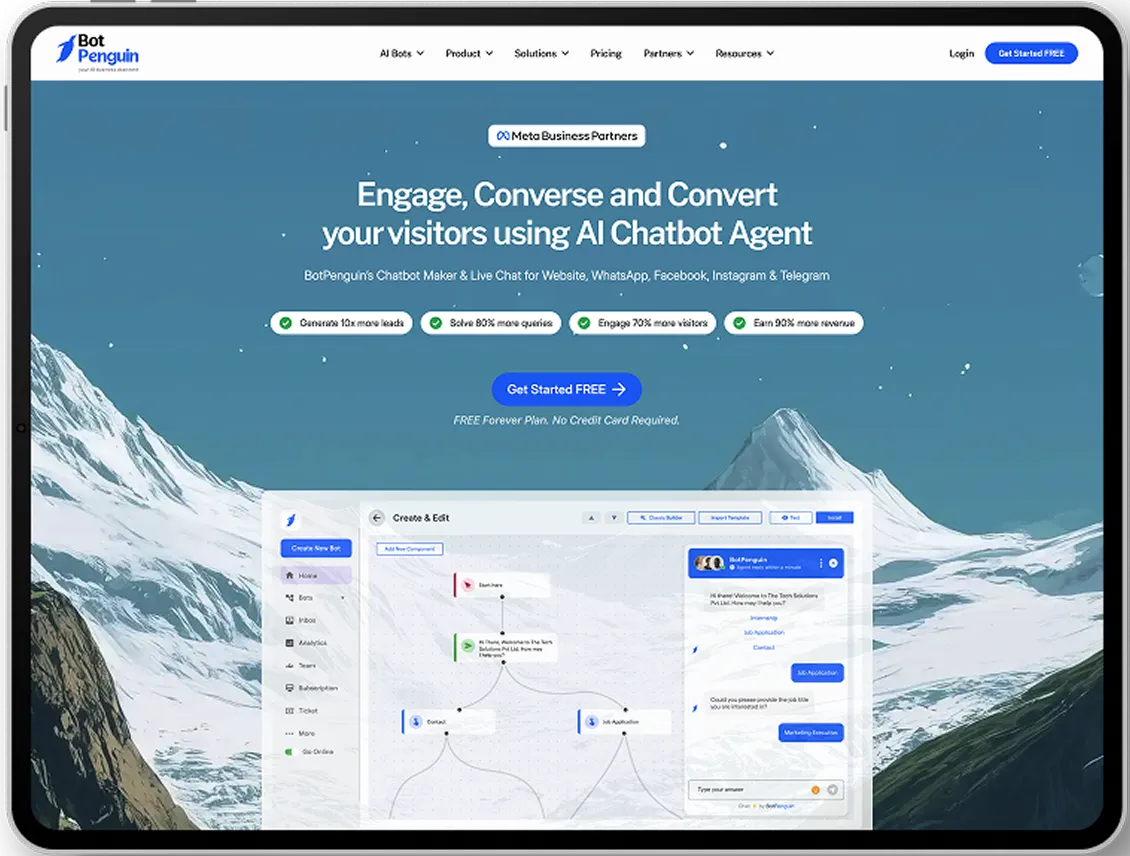
AI course recommendation bot is a virtual academic advisor that can help students select the most suitable courses based on their academic history, interests, career goals, and past performance without any information bias.
More InfoFrom AI-powered tutoring platforms to enterprise LMS solutions, our education app development services help design and build applications that keep learners engaged, drive measurable outcomes, and scale without breaking. Trusted by EdTech startups, global enterprises, and educational institutions worldwide.
Trusted by industry leaders
Whether you are launching your first EdTech product or modernizing a legacy training platform, our education app development team has built for your use case before.
Our education app development services help institutions, EdTech companies, and businesses create engaging and scalable digital learning platforms. We build feature-rich applications that support interactive learning, content management, real-time collaboration, and seamless user experiences.
We build web and mobile eLearning applications from scratch, designed around your specific learner journey. From onboarding flows to content libraries and progress dashboards, every feature is built with engagement and retention in mind. Supports iOS, Android, and web with a single codebase using React Native or Flutter.
We design and build LMS platforms that handle course creation, enrollment management, automated assessments, and detailed reporting for administrators. Our LMS solutions are SCORM and xAPI compliant and integrate with HR tools, Salesforce, and third-party content libraries.
Adaptive learning is no longer a differentiator; it is an expectation. We build AI tutoring platforms that adjust lesson difficulty in real time, identify knowledge gaps before they widen, and deliver personalized content paths for each learner. Built on production-tested AI models and integrated with speech recognition for voice-based tutoring experiences.
We build employee training and onboarding applications with role-based access, compliance tracking, certification management, and manager dashboards. Our corporate eLearning solutions have helped enterprise clients reduce training time by streamlining content delivery and automating assessment workflows.
Real-time video sessions, collaborative whiteboards, breakout rooms, and attendance tracking, we build virtual classroom environments that replicate the structure of in-person learning without the friction. Integrated with Zoom SDK, WebRTC, and LMS platforms for a seamless instructor and student experience.
Time to market matters when you are building an EdTech startup. We scope and deliver validated MVPs in 8-12 weeks, focusing on the core learning loop that proves your concept to early users and investors. We have helped EdTech founders raise their first rounds with working product demos, not just mockups.
We build natively optimized applications for every platform your learners use. Whether your audience is desktop-first enterprise users or mobile-first students, our apps are built for performance, accessibility, and offline mode support.
Bite-sized learning modules, push notifications, streak tracking, and peer learning features — we build microlearning apps that fit into the 5-minute windows employees actually have. Proven to improve knowledge retention and reduce content abandonment.
Talk to our education app developers about your idea. We will help you scope the right solution in a 30-minute call.
Book a Free Scoping CallMost software agencies claim EdTech expertise. We can point to it.
Citrusbug has designed and shipped education applications used by learners across the US, Europe, and the Middle East. Our work includes voice-based reading tutors powered by NLP, AI course recommendation engines, next-generation LMS platforms for enterprise clients, and eLearning applications that drove 8x growth in user engagement within months of launch.
We combine deep AI and machine learning engineering with a practical understanding of how learners actually behave – what keeps them engaged, what makes them drop off, and what genuinely improves knowledge retention over time.
Our team works with EdTech-specific standards and integrations: SCORM, xAPI, LTI, Moodle, Canvas, and major SIS platforms. We are not generalists applying a template, we are engineers who have solved the specific problems your team is facing.
Our broader eLearning software development practice covers the full spectrum of digital education technology, from standalone mobile apps to enterprise-grade learning ecosystems.
Our K-12 and higher education platforms are designed to protect student educational records under the Family Educational Rights and Privacy Act.
Applications serving users under 13 are built with parental consent flows, restricted data collection, and age-gating mechanisms.
For platforms deployed to users in the EU, we implement data minimization, consent management, right-to-erasure workflows, and cross-border transfer controls.
All LMS and eLearning content delivery systems are built to SCORM 1.2, SCORM 2004, and xAPI (Tin Can) specifications for interoperability with major content libraries and authoring tools.
SSO integration, multi-factor authentication, and granular role permissions for students, instructors, and administrators.
End-to-end encryption for data in transit and at rest, hosted on SOC 2-aligned cloud infrastructure (AWS, GCP, Azure).
Our education app development team works with a purpose-built technology stack selected for performance, scalability, and eLearning-specific requirements.
We use OpenAI APIs, custom-trained transformer models, and real-time ML pipelines for adaptive learning, content personalization, automated assessment scoring, and intelligent course recommendations.
We integrate large language models to automate course content generation, quiz creation, feedback synthesis, and multilingual content adaptation. This significantly reduces the cost and time of content authoring for education platforms.
Cross-platform mobile development that delivers a native-quality experience on both iOS and Android from a single codebase. Supports offline learning mode, push notifications, and deep linking for learner re-engagement.
Fast, accessible, SEO-friendly web applications for learner portals, admin dashboards, and instructor tools. Optimized for Core Web Vitals and built for high-concurrency environments. This is important for platforms handling simultaneous live sessions.
Every LMS and content delivery system we build supports SCORM 1.2, SCORM 2004, xAPI (Tin Can), and LTI 1.3. This ensures compatibility with content authoring tools like Articulate and Adobe Captivate, as well as existing institutional LMS platforms.
Scalable, resilient cloud architecture designed for education platforms that need to handle concurrent live learning sessions, video streaming, and large-scale data analytics. Auto-scaling, CDN delivery, and disaster recovery are built in from day one.
Points, badges, leaderboards, streaks, and unlockable content, we implement gamification systems proven to increase course completion rates and daily active usage. Built using configurable rules engines so your team can adjust reward logic without a developer.
We build real-time analytics dashboards that surface actionable learner data such as engagement patterns, completion rates, time on task, assessment performance, and early churn signals. Built on scalable data warehouses like BigQuery and Redshift with custom BI layers for educators and administrators.
The cost of developing an education app can range from $20,000 for a basic version to over $250,000 for a feature-rich, enterprise-grade solution.
Since the exact cost depends on features, integrations, and scalability, share your requirements with us to get a personalized estimate tailored to your idea.
We start with a structured discovery session to understand your learners, your content model, your compliance requirements, and your success metrics. Deliverables include a detailed product requirements document, technology recommendation, and a fixed-scope project plan you can present to your board or stakeholders.
Learner-centered design is not the same as general UX. We design interfaces that reduce cognitive load, guide learners through complex content without losing them, and give instructors and administrators control without overwhelming them. All designs go through accessibility review (WCAG 2.1 AA).
We work in 2-week sprints with a shared project board, weekly stakeholder demos, and documented acceptance criteria for every feature. You see working software at the end of each sprint, not only status updates. Your team has direct access to the development Slack channel throughout.
Before launch, every education app we ship goes through functional testing, performance testing under load, accessibility testing, and a compliance review against applicable standards (FERPA, COPPA, GDPR, SCORM). We prepare app store submissions, configure analytics, and set up monitoring before handing over.
We offer post-launch support packages that include bug resolution, performance optimization, feature additions, and ongoing analytics review. Most of our education app clients continue working with us on roadmap iterations after the initial release.
Rated 4.7 on Clutch | 97% Job Success on Upwork
We do not bolt AI features onto traditional app frameworks. Our education apps are architected with AI as a core layer from day one, which enable adaptive learning, intelligent content recommendations, and automated assessment scoring that actually works in production.
We have shipped education products to real users, including AI-powered learning tools, enterprise learning platforms for multilingual corporate teams, and AI-driven academic advisors. These platforms are actively used in real-world environments.
Security and compliance are engineering requirements, not post-launch checklists. Our team knows FERPA, COPPA, GDPR, and SCORM. Your legal and compliance team will not need to retrain us.
Every project runs on a documented milestone plan with defined deliverables, acceptance criteria, and payment tied to completed work. No surprises, no scope creep, no silent delays. You get a weekly update and a shared tracker your team can check at any time.
Our engineering team is structured for global client collaboration with developers available across US, European, and Middle East business hours. Clients in Norway, the UAE, Singapore, and the US have all run successful projects with us without timezone friction.
Our clients tell us we pick up the phone. Post-launch support is available via Slack, email, and scheduled calls. We respond to critical issues within 4 hours and have a dedicated account lead for every active project.
AI course recommendation bot is a virtual academic advisor that can help students select the most suitable courses based on their academic history, interests, career goals, and past performance without any information bias.
More Info
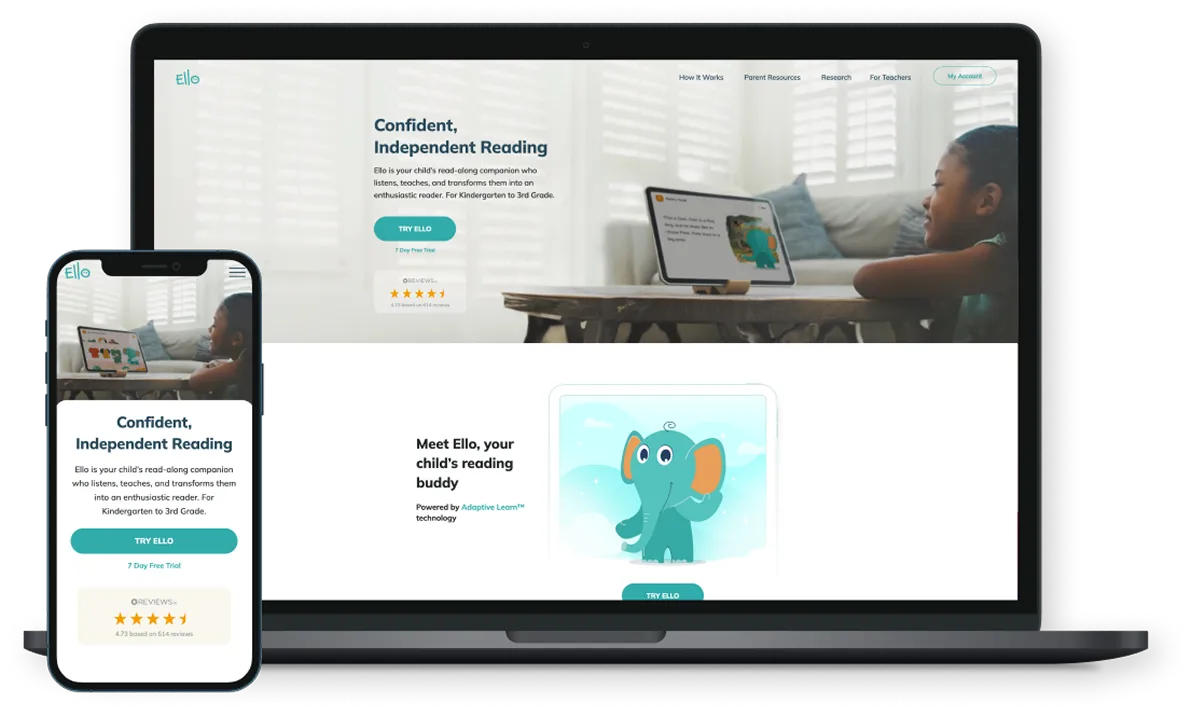
Ello is a voice tutoring system that leverages AI to provide an interactive, hands-free learning experience for children without relying on screens.
More Info
YouHues project focuses on transforming social and emotional learning (SEL) across the globe.
More InfoDive into the upcoming trends of EdTech for 2025 that are shaping the future of education.
Read MoreDiscover the top education app development companies in USA offering LMS, mobile learning apps, and secure, scalable cloud-based EdTech solutions.
Read MoreFind out which AI education apps in 2026 are reshaping study habits.
Read MoreThe global education technology market is approaching $400 billion. The platforms built today need to support the learning experiences learners and institutions will expect over the next five to ten years. Here is where we are focusing our engineering investment:
We build the full spectrum of education technology, including custom eLearning apps, LMS platforms, AI-powered tutoring systems, virtual classrooms, corporate training apps, EdTech MVPs, mobile learning apps, and assessment and certification platforms. We work with EdTech startups, enterprise L&D teams, educational institutions, and SaaS companies adding learning features to existing products.
Yes. All LMS and content delivery systems we build support SCORM 1.2, SCORM 2004, and xAPI (Tin Can API) specifications. This ensures compatibility with major content authoring tools such as Articulate and Adobe Captivate, along with interoperability with existing institutional LMS platforms.
Yes, we build eLearning applications for web, iOS, and Android platforms, ensuring a seamless and optimized experience across all devices. Our cross-platform solutions provide enhanced accessibility and user engagement.
We support FERPA for US K-12 and higher education data, COPPA for platforms serving users under 13, GDPR for European users, and WCAG 2.1 AA for accessibility. Our builds also target SOC 2 aligned cloud infrastructure and include role-based access control and secure authentication as standard.
Yes. We have built integrations with major SIS platforms, HR tools, Salesforce, and third-party content libraries. If you use Canvas, Moodle, Blackboard, Workday, or SAP SuccessFactors, we have experience working with their APIs and can build clean integrations without disrupting your existing workflows.
An LMS, or Learning Management System, is a purpose-built platform for managing, delivering, and tracking educational courses at scale. It is typically used by organizations with large learner populations. A custom education app is a broader category that includes any application designed for learning. This can include a standalone mobile tutoring app, a skills assessment tool, a virtual classroom, or a gamified learning experience. Many clients start with an MVP and gradually evolve it into a full LMS.
A basic MVP or eLearning app typically takes 8 to 12 weeks. A full-featured LMS or AI-powered platform takes 16 to 24 weeks, depending on integration complexity, compliance requirements, and the number of user roles. We provide a fixed project plan with milestone dates during the discovery phase so you can plan effectively.
We work with both. We have supported EdTech founders building their first product and enterprise clients deploying corporate training platforms across large user bases. Our engagement model scales based on the size and stage of your organization.
AI enables personalization at scale, which is difficult to achieve manually across large learner groups. In our platforms, AI is used for adaptive content delivery that adjusts difficulty based on learner performance, intelligent course recommendations, automated assessment feedback, early dropout prediction, and conversational tutoring through voice and chat interfaces.
Costs typically range from approximately $20,000 for a basic MVP to $200,000 or more for an enterprise-grade, AI-powered eLearning ecosystem. The exact cost depends on scope, number of platforms, AI features, compliance requirements, and integrations. Share your requirements with us and we will provide a detailed estimate within 24 hours.
Yes. Most of our education app clients continue working with us after launch for performance optimization, new feature development, and platform scaling. We offer structured post-launch support packages with defined SLAs.