





















Explore our Healthcare Technology Offerings Citrusbug Healthcare → Citrusbug Healthcare →
Let’s Talk

Web3 Wallet Development Company Users Actually Trust

A Web3 wallet is how your users hold, move, and manage crypto assets and NFTs across chains and dApps. Citrusbug builds custom, non-custodial wallets engineered for security and real adoption, matched to your business model instead of forced into someone else's template.

Web3 Wallet Development Company Users Actually Trust
500+
Projects Delivered
98%
Client Retention

Certified Web3 Wallet Developers By

PCI DSS PCI DSS
GAAP GAAP
SOC 2 SOC 2
GDPR GDPR

Trusted Software Development Company By

Bosch
Deloitte
eClinicalWorks
Epic Systems
Flipkart
McKinsey
HSBC
Softbank
Allianz
Airbnb
United Health
Phelic
Sun Pharma
Target
US Foods
Advinow

Certifications and Accreditations

Custodial, Non-Custodial, or MPC: The Business Call Behind the Wallet Model

The model you choose decides who's liable when a key is lost, whether MiCA's licensing rules apply to your business, and what your support team spends its time on. Here's the actual tradeoff behind each option, not just a security comparison.

Non-Custodial Wallets

Users hold their own private keys, and your business never touches them. Keeps you outside MiCA's CASP licensing scope by default.

  • Check Icon Fits consumer dApps and DeFi front ends
  • Check Icon Needs guardian-based recovery, not password resets
  • Check Icon No custodial liability if a key is lost
  • Check Icon Gives users complete control over their digital assets

Custodial Wallets

Your business holds and manages keys on the user's behalf, closer to how digital wallets built for both fiat and crypto balances already work.

  • Check Icon Triggers CASP-style licensing obligations
  • Check Icon Removes recovery burden from users entirely
  • Check Icon Fits exchanges and payroll-style products
  • Check Icon Simplifies onboarding for users with traditional Web2 experiences

MPC (Threshold Signature) Wallets

Private keys are split into encrypted shares across multiple parties, so no single device or person ever holds the whole key.

  • Check Icon Built for institutional-scale balances
  • Check Icon Removes any single point of failure
  • Check Icon Adds engineering and audit overhead
  • Check Icon Enables secure transaction approvals across distributed teams

Hybrid / Smart-Contract (Account Abstraction)

Built on ERC-4337, these wallets let you set your own rules for recovery and spending without giving up user self-custody.

  • Check Icon Removes the seed-phrase onboarding cliff
  • Check Icon The default choice for new consumer Web3 products
  • Check Icon Still non-custodial under MiCA
  • Check Icon Supports programmable features like spending limits and social recovery

Not Sure Which Wallet Model Fits Your Product?

Thirty minutes with our Web3 architects tells you which model actually fits your regulatory posture and user base.

Talk to an Architect

Web3 Wallet Types We Build

A wallet's custody model decides who holds the keys. Its form factor decides where and how your users actually reach it.

Mobile Web3 Wallet Apps

  • Native iOS and Android wallets with biometric login, QR-based transactions, and push notifications for pending approvals. Built for products where the wallet is a daily-use app, not a backend utility.

Browser Extension Wallets

  • Lightweight wallets that inject directly into the browser for one-click dApp connections and token swaps. The default entry point for DeFi platforms and NFT marketplaces where users are already at their desktop.

Desktop Wallets

  • Standalone applications with offline key storage and hardware wallet pairing for users managing larger balances who prioritize air-gapped security over mobile convenience.

Cross-Chain & Multi-Chain Wallets

  • A single interface across EVM and non-EVM chains, so users manage assets, swap tokens, and bridge liquidity without switching wallets between networks. Built with chain abstraction so the underlying network stays invisible to the user.

Smart Contract (Account Abstraction) Wallets

  • Built on ERC-4337 and EIP-7702, these wallets support gasless transactions, session keys for scoped dApp permissions, and guardian-based recovery instead of a seed phrase. This is where most new Web3 products are landing in 2026.

Enterprise Treasury Wallets

  • MPC-backed wallets with multi-level approval policies, spending controls, and full audit trails, built for businesses managing crypto balances on behalf of clients or internal operations rather than individual end users.

Why Seed Phrases Stopped Being the Default

By mid-2026, smart account deployments on Ethereum and its rollups had passed 30 million, and EIP-7702 let existing wallets borrow smart contract behavior, batched transactions, sponsored gas, and session-scoped permissions without users migrating a single asset. The technical excuse for forcing every new user through a seed phrase and a gas top-up before their first transaction is gone.

Products that still onboard this way are leaking users at the door. The ones winning right now sponsor the first transaction, let users recover access through trusted guardians instead of a 12-word phrase, and treat the wallet as part of the product surface instead of external infrastructure bolted on afterward.

How a Web3 Wallet Actually Makes Money

Transaction Fees

A fixed or percentage-based fee charged per on-chain action.


  • Works at any transaction volume
  • Simplest model to implement and explain to users
  • Scales directly with adoption, not just balances held
Outcome:
predictable revenue that grows with usage, not with market conditions.

Swap and Exchange Integration Fees

A margin captured when users swap assets inside the wallet, often routed through a live cryptocurrency exchange platform or a DEX aggregator.


  • No separate fee prompt, folded into the exchange rate
  • Higher margin than flat transaction fees
  • Requires liquidity routing infrastructure to do well
Outcome:
revenue tied to trading activity rather than raw transaction count.

DeFi Integration Revenue

A cut of yield or interest when users stake, lend, or farm through DeFi lending, staking, and yield protocols connected directly inside the wallet.


  • Turns idle balances into a revenue source
  • Deepens user retention since funds stay in-wallet longer
  • Requires real protocol vetting to avoid exposing users to bad yield
Outcome:
recurring revenue from balances that would otherwise sit idle.

Premium and Institutional Tiers

Paid tiers for higher transaction limits, dedicated support, or MPC-grade treasury controls sold to business and institutional users.


  • Highest revenue per account among the four models
  • Justifies the extra engineering cost of MPC or multi-approval workflows
  • Fits enterprise treasury and B2B wallet products specifically
Outcome:
fewer accounts, meaningfully higher revenue per account.

Specialized Web3 Wallets We Build

Beyond the core form factors, some products need a wallet purpose-built for a specific use case from the ground up.

NFT Wallets

Built for minting, storing, and transferring collectibles, with direct integrations into NFT and token platforms so users can list, trade, and verify provenance without leaving the wallet.

DeFi Wallets

Native support for token swaps, staking, and liquidity access, including hooks for automated crypto trading bots for users who want strategy execution without manual monitoring.

Smart Contract (AA) Wallets

Programmable wallets with gasless transactions, session keys, and social recovery built on ERC-4337. Security and convenience stop being a tradeoff once the account itself is the logic layer.

Enterprise Crypto Treasury Wallets

Institutional-grade wallets with policy controls, multi-level approvals, and full audit visibility, built for businesses that need every movement of funds accountable to a named approver.

Client Testimonials (We're Rated 4.7 on Clutch)

How We Engage on Web3 Wallet Builds

How much oversight do you want over the build, and how much do you want us to own outright? Most Web3 teams land on one of three shapes.

Audit Only

Best for teams with existing wallet code who need a security review before mainnet.

  • Smart contract and key management audit
  • Threat model review against your specific architecture
  • Written findings with remediation guidance

Build With Your Team

Best for teams with in-house engineers who need specialized Web3 expertise embedded alongside them.

  • Citrusbug engineers work inside your existing sprint cadence
  • You retain architectural decision-making
  • Knowledge transfer built into every milestone

Full Build and Ownership

Best for founders who need the wallet built end-to-end without hiring a blockchain team first.

  • Discovery through mainnet launch
  • Full source code ownership at delivery
  • Post-launch support included through stabilization

Our Web3 Wallet Development Process

1

Discovery and Architecture Decision

We map your target users, transaction volumes, and regulatory posture, then work through the custodial, non-custodial, or MPC decision with you directly instead of defaulting to whichever model is fastest to ship. This stage ends with a documented architecture, not a guess.

2

Security and Compliance Design

We design the key management approach, threat model, and recovery flow before any UI work starts. If your wallet touches exchange withdrawals or fiat on-ramps, we design the Travel Rule verification hooks into the architecture now rather than retrofitting them post-launch.

3

Development and Chain Integration

We build the wallet on your chosen stack- EVM, Solana, or a cross-chain configuration, wiring in the specific protocols, dApp connections, and account abstraction features your architecture calls for. Integration testing runs alongside development, not after it.

4

Independent Audit and Testing

Every wallet goes through smart contract and key management testing before launch, plus an independent third-party security audit for anything handling real user funds. We treat this as a gate, not a formality, nothing ships until it clears.

5

Launch and Post-Launch Support

We deploy to mainnet, monitor the first transaction cycles closely, and stay available for bug fixes, security patches, and feature additions as your chain integrations and standards evolve. Free maintenance is included through the initial stabilization period.

What Web3 Wallet Regulation Actually Requires in 2026

Compliance for a Web3 wallet is narrower than most vendors make it sound. Here's what actually applies, and what doesn't, as of mid-2026.

Regulation Who It Applies To What It Means for Your Wallet

EU MiCA (full enforcement since July 1, 2026)

Custodial wallet providers, exchanges, and other CASPs

Non-custodial wallets sit outside CASP licensing entirely. If your wallet connects to exchange withdrawals, build in support for the Travel Rule ownership check exchanges must run above €1,000.

US GENIUS Act (effective May 1, 2026)

Stablecoin issuers

Self-custody wallets are explicitly exempt. If you integrate stablecoins, track the issuer’s reserve and authorization status, not your own wallet’s status.

FATF Travel Rule

VASPs and exchanges handling transfers

Your wallet itself has no reporting obligation, but supporting a signed-message ownership proof makes your users’ exchange withdrawals faster and less likely to get flagged.

Smart contract audit expectations

Any wallet with on-chain logic (AA wallets, custom contracts)

Not a legal requirement everywhere, but the de facto standard institutional users and serious dApps now expect before they’ll connect.

Why a Purpose-Built Wallet Outperforms a Generic Template

Your architecture matches your actual custody model and regulatory posture, not a one-size-fits-all default

Key management and recovery flows are designed around your specific user base, not bolted on afterward

Chain support and integrations are scoped to what your product actually needs, not padded for a sales sheet

You own the full codebase and IP at delivery, with no dependency on a vendor's shared infrastructure

How Much Does It Cost to Develop a Web3 Wallet?

Developing a Web3 wallet typically costs between $30,000 and $250,000+, depending on custody model, chain integrations, and audit scope.


    Your data and info stays secure. Read our Privacy Policy.


    Our Work Portfolio

    View All Case Studies →
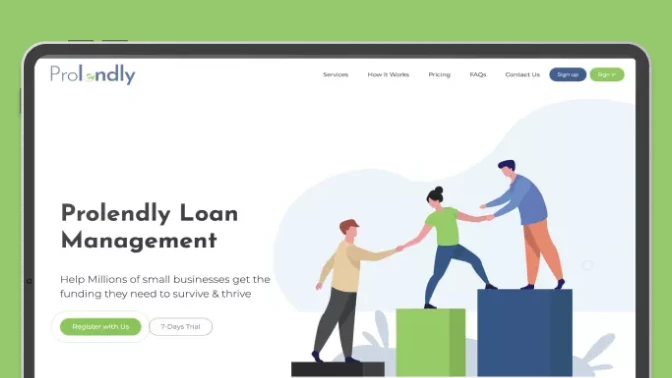
    Fintech Prolendly

    Prolendly

    Prolendly is a FinTech SaaS platform that connects startups and small businesses with funding opportunities, lenders, and capital consulting resources.

    Read Case Study
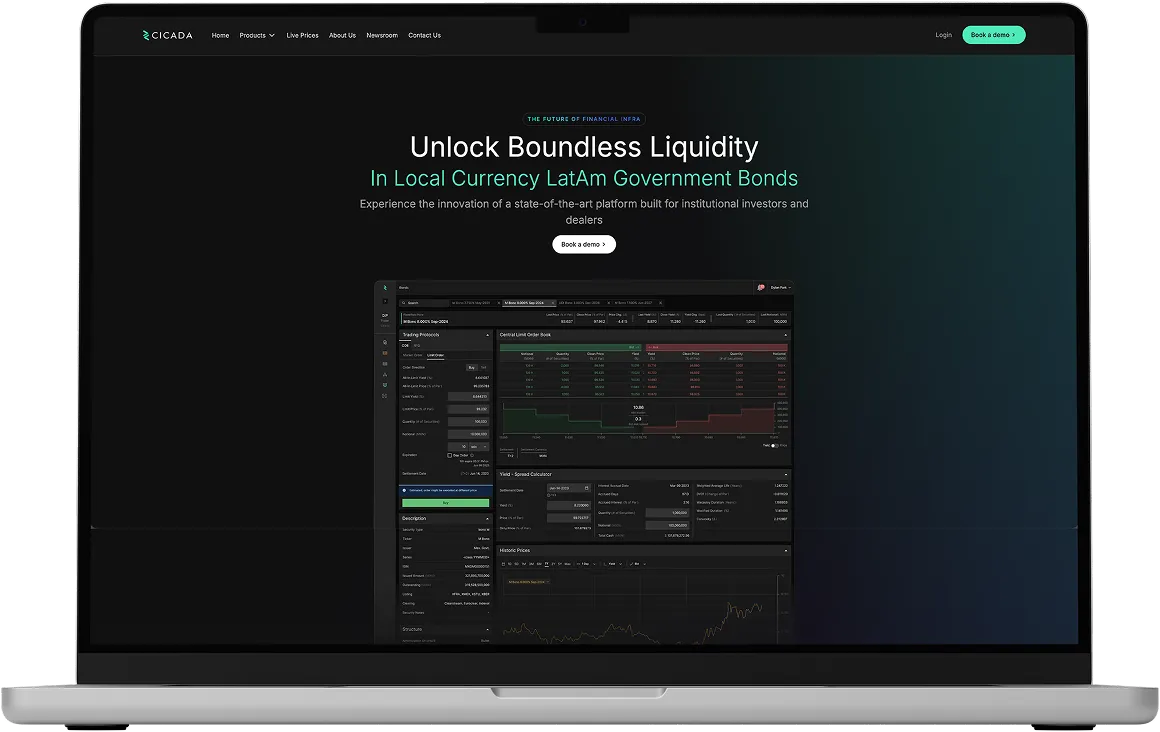
    Fintech Cicada

    Cicada

    Cicada is a comprehensive trading platform designed for accessible and powerful financial market interaction.

    Read Case Study
    Fintech Clover Mortgage

    Clover Mortgage

    Clover Mortgage Brokers provides tailored mortgage solutions for home buyers across Toronto

    Read Case Study

    Why Web3 Teams Build With Citrusbug

    Architecture Before Code

    Architecture Before Code

    We map your custody model, chain requirements, and compliance posture before any development starts. You get a documented architecture decision, not a template with your logo on it.

    Security Embedded From Day One

    Security Embedded From Day One

    Our Secure ADLC methodology builds threat modeling and key management review into every sprint, not as a final pre-launch scramble once the deadline is already close.

    You Own What You Paid For

    You Own What You Paid For

    Full source code ownership at delivery, NDA by default, and no vendor lock-in on the infrastructure your wallet runs on.

    Recent Thinking on Fintech and Wallet Infrastructure

    VIEW ALL
    How AI Is Transforming Fraud Detection in Fintech in 2026: Capabilities, Use Cases, and Real-World Examples
    How AI Is Transforming Fraud Detection in Fintech in 2026: Capabilities, Use Cases, and Real-World Examples Custom Software Development

    How AI Is Transforming Fraud Detection in Fintech in 2026: Capabilities, Use Cases, and Real-World Examples

    Digital fraud is on the rise, particularly in the fintech industry. Studies show that 35% of banks and fintechs experienced over 1000 fraud attempts last year. These fraudulent activities led…

    Read Article →
    Top Fintech App Development Companies in USA
    Top Fintech App Development Companies in USA Application Development

    Top Fintech App Development Companies in USA

    Financial services are moving fast toward mobile-first experiences. Businesses that fall behind risk losing ground to faster-moving competitors. Building a secure, regulation-ready fintech application demands more than coding talent. It…

    Read Article →
    10 Best Web Development Frameworks in 2026 (Frontend & Backend)
    10 Best Web Development Frameworks in 2026 (Frontend & Backend) React

    10 Best Web Development Frameworks in 2026 (Frontend & Backend)

    Having a website for your business in this digital age has become a must. It opens up the possibility for your enterprise to reach a wider audience base and attract…

    Read Article →

    FAQs on Web3 Wallet Development

    Should I build a custodial or non-custodial wallet?

    It depends on who's liable for lost keys and your regulatory appetite. Non-custodial keeps you outside MiCA's CASP licensing; custodial puts recovery in your hands but adds compliance obligations.

    What does account abstraction actually change for my users?

    ERC-4337 and EIP-7702 let wallets sponsor gas, use session keys for dApps, and recover access through guardians instead of a seed phrase, without giving up self-custody.

    How long does Web3 wallet development take?

    Typically 8 to 20 weeks, depending on custody model, chain integrations, and audit scope. MPC and multi-chain builds run toward the longer end.

    Do you handle the smart contract audit, or do we need a separate vendor?

    We build in security testing throughout development and arrange an independent third-party audit before mainnet launch for anything handling real user funds.

    Does MiCA affect wallets that don't touch fiat at all?

    If the wallet is genuinely non-custodial, no. MiCA's CASP licensing targets providers that control user keys or run exchange-like services, not the self-custody wallet itself.

    Can you migrate an existing wallet to account abstraction?

    Yes. EIP-7702 specifically supports adding smart account features to existing wallets without migrating user funds to a new address.

    What chains do you build on?

    Ethereum, Solana, Polygon, BNB Chain, and other EVM-compatible chains, plus cross-chain configurations using chain abstraction so users don't have to think about the underlying network.

    Do you support NFT and DeFi integrations inside the wallet?

    Yes, including NFT storage and marketplace connections, token swaps, staking, and direct dApp access through protocols like WalletConnect.

    Do you provide support after launch?

    Yes, including bug fixes, security patches, and compatibility updates as chains and standards evolve, with free maintenance included through initial stabilization.

    Ready to Build a Web3 Wallet That Fits Your Business?

    Talk to our Web3 architects about your custody model, chain requirements, and launch timeline.