
 Back
Back







The Increasing Trend of Django Websites and Applications
The trend of web development with Python is enormously growing along with its involvement in domains like artificial intelligence, machine learning, data science etc. And the most used framework of Python language for web development is – Django. There is no shortage of awesome Django website examples and mobile applications as well.
If you’re looking for a leading Python development company, you’ll find a wealth of talent and expertise within the Django community to help bring your projects to life. This framework was introduced back in 2005 and maintained by an American non-profit organization named Django Software Foundation (DSF). It is particularly free and open-source and follows the Model-template-views (MTV) architecture pattern. Django strongly follows the principle of “DON’T REPEAT YOURSELF” emphasizing pluggability and reusability with less code, low coupling and rapid development. For Django development services, you can rely on Citrusbug to meet your project requirements efficiently
Below are some of the fascinating features of Django:-
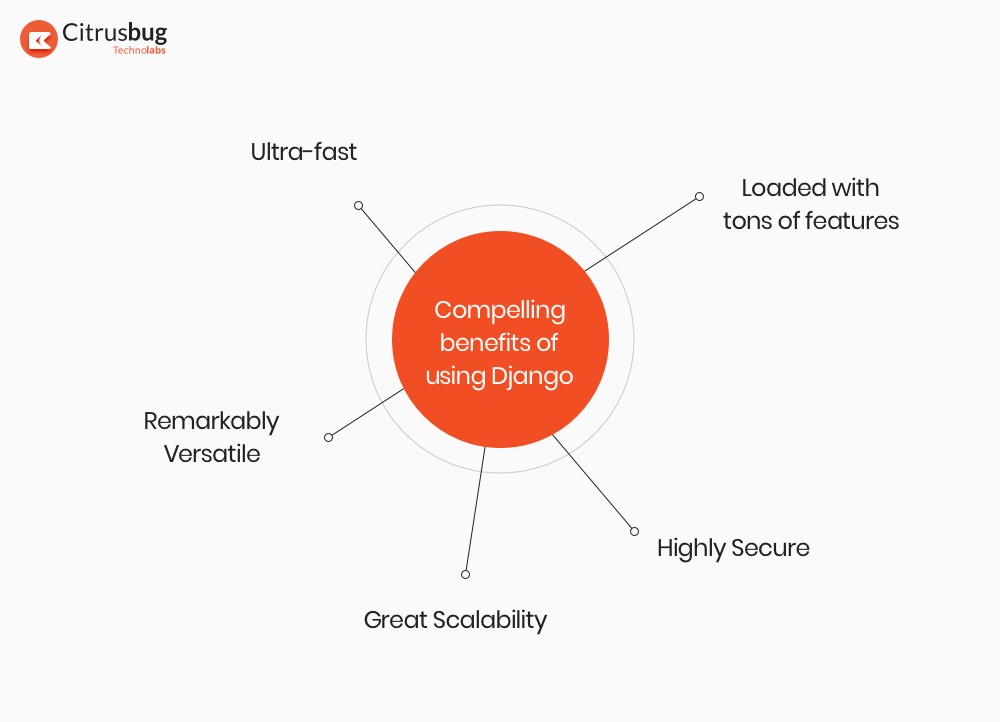
- Ultra-fast
- Loaded with tons of features
- Highly Secure
- Great Scalability
- Remarkably Versatile
Due to these astonishing features which are very much adored by all backend web developers, usage of Django has experienced a huge spike in the web development industry. Following this many popular brands and companies have opted for this framework. Let’s look at some of the thriving Django website examples.
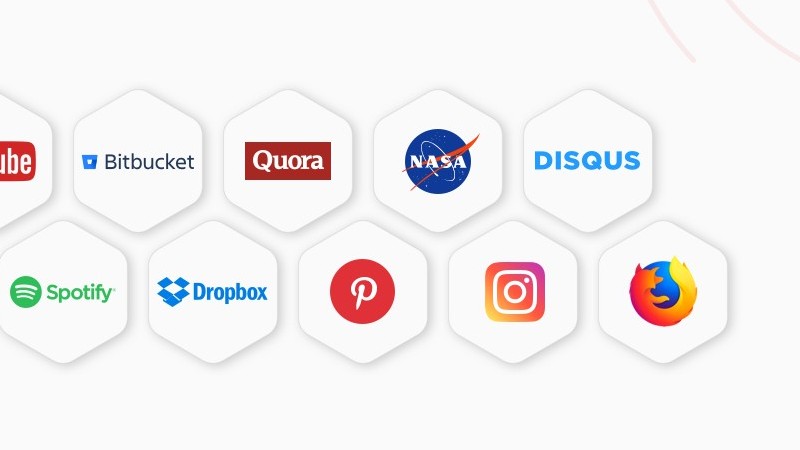
Top Django Website and Application Examples

1. Disqus
Disqus is a website comment plugin service that enables users to engage in the comment box and helps website owners to mitigate spammers. This is by far the most popular comment plugin that offers vast customization.
With the capability of handling thousands of users at a time, the development team at Disqus cannot think of any other better framework than Django as it offers vast scalability options laced with blazing speed.
2. YouTube
This online video sharing platform which was acquired by Google in 2006 needs no introduction. Having a user base of over 2 billion, it is also regarded as the second most used search engine followed by Google. This is indeed the best example of a Django website that handles a ginormous amount of data and users simultaneously.
3. Instagram
Owned by Facebook, Instagram is a social media platform that focuses on visuals more than text. This image and video-sharing platform has been growing rapidly and has already crossed the milestone of active 2.3 billion users.
Ui and Ux of this application have alway been stunning, all thanks to Django which allowed frontend developers to seamlessly focus on the user-side without worrying about the backend processes.
4. Spotify
This Django app – Spotify is a gold mine for music lovers and gained much popularity recently with a massive subscriber count of over 124 million. The main objective of developers at Spotify preferring Django is because of its imperative machine learning capability aligned with a fast backend.
5. Bitbucket
This Django website example is for developers and programmers itself acting as an alternative to GitHub. Bitbucket is regarded as one of the popular destinations for developers to store the code. This code-hosting website also has a massive user base of tech-savvy people and contains some fascinating functionalities.
6. Dropbox
This American company is accredited as one the most valuable start-ups with a valuation of 10 billion + USD. Offering innovative file storage solutions and syncing all your devices together, Dropbox has garnered the attention of many small and big companies and is regarded as one the best cloud-based SaaS (software as a service).
Python has really helped it to operate smoothly and make the processes speedy. With that said, Dropbox stands as a strong Django website example that can integrate with cloud-storage paradigms.
7. Mozilla
Mozilla Firefox is still recognized as a strong rival to Google Chrome browser and remains a prime choice for desktop browsing. It was initially developed in PHP with cakePHP framework but later moved on to Python’s Django. This clearly demonstrates the adequacy of Django to fit in different types of web and mobile software.
8. Pinterest
Another famous image-sharing social media platform which is mostly used within the USA is a great example of Django website. Followed by Instagram, the developers of Pinterest have also been thinking along the same lines about this Python framework’s capability of handling enormous amounts of data with blazing speed and elite artificial intelligence algorithms.
9. NASA
By visiting their website, it might seem that this is a simple Django website example. Well, it is true relative to other astonishing websites developed in Django but you might have not looked at their page containing ultra-high definition videos of space in which they have embedded some gobsmacking videos of earth and beyond.
10. Quora
Last but not least, Quora – the most popular question-and-answer platform cannot be ignored as another brilliant Django website example. Many popular queries on quora dominate the Google search results and with many industry experts sharing knowledge and experience on this platform, it has registered the interest of users of every field.
Conclusion
The Django website examples listed above clearly demonstrate why this Python framework continues to be a top choice for businesses of all scales. From handling billions of users on YouTube and Instagram to powering data-intensive platforms like Spotify and Dropbox, Django has proven its ability to deliver speed, scalability, and security.
Its versatility across industries makes it suitable for startups and enterprises alike. If you are planning to build a robust and scalable web application, Django is truly worth considering. You can partner with Citrusbug to bring your Django project to life with expert guidance.
Frequently Asked Questions About Django Websites and Applications
What is Django used for in web development?
⇒ Django is a Python-based web framework used for building secure, scalable, and high-performing web applications. It handles backend operations like database management, URL routing, user authentication, and server-side logic, allowing developers to build complex websites rapidly.
Who uses Django for their websites and applications?
⇒ Some of the biggest companies in the world use Django, including YouTube, Instagram, Spotify, Pinterest, Dropbox, NASA, Mozilla, and Quora. It is trusted by startups and large enterprises alike for its speed, security, and scalability.
Why do developers prefer Django over other backend frameworks?
⇒ Developers prefer Django because of its “batteries-included” approach, which provides built-in tools for authentication, admin panels, ORM, and security. It also follows the DRY (Don’t Repeat Yourself) principle, which reduces development time and keeps the codebase clean.
Is Django suitable for building large-scale applications?
⇒ Yes, Django is highly suitable for large-scale applications. Platforms like YouTube and Instagram handle billions of users using Django. Its built-in scalability features and support for caching, load balancing, and database optimization make it ideal for high-traffic applications.
Is Django free to use for commercial projects?
⇒ Yes, Django is completely free and open-source. It is maintained by the Django Software Foundation and can be used for both personal and commercial projects without any licensing fees.
What type of businesses should consider using Django?
⇒ Django is suitable for businesses of all sizes. Startups benefit from its rapid development capabilities, while enterprises leverage its scalability and security. It is especially well-suited for data-heavy platforms, social networks, SaaS products, content management systems, and e-commerce websites.