Explore our Healthcare Technology Offerings Citrusbug Healthcare → Citrusbug Healthcare →
Let’s Talk
Django Development Services

Django Development Company

Your backend runs on Django. The data models, API layer, async workers, and deployment pipeline need to work together under real traffic, real integrations, and real production constraints. Citrusbug is a Django development company that builds Python web applications with architecture-first delivery and full code ownership at handover.

Hero Image
500+
Projects Delivered
98%
Client Retention
13+
Years in Software Engineering

Certified By

ISO 27001 ISO 27001
SOC 2 SOC 2
GDPR GDPR
PCI DSS PCI DSS

Trusted By Industry Leaders

Bosch
Deloitte
eClinicalWorks
Epic Systems
Flipkart
McKinsey
HSBC
Softbank
Allianz
Airbnb
United Health
Phelic
Sun Pharma
Target
US Foods
Advinow

Certifications and Accreditations

Django Development Services We Cover

Citrusbug delivers Django development services across the full project lifecycle, from initial data modeling through post-launch support. Every engagement starts with architecture planning and ends with source code your team owns. Our Python development team works on Django 5.2 LTS and maintains codebases across multiple Django versions in active production.

Custom Django Web Applications

Business-critical platforms built on Django’s ORM and templating engine, with PostgreSQL as the production database and role-based access controls configured from the first sprint.

Django REST Framework API Development

RESTful and versioned APIs built with Django REST Framework, supporting token authentication, serializer validation, pagination, and throttling for mobile and third-party integrations.

Django Migration and Version Upgrades

Controlled migration from Django 4.2 or older codebases to Django 5.2 LTS, covering deprecated function replacement, database schema adjustments, and dependency compatibility testing.

Django CMS and Content Platforms

Content management systems built on Wagtail or Django CMS, with structured content models, draft-publish workflows, and editorial permissions for multi-author teams.

Django SaaS Backend Development

Multi-tenant architectures using schema-level or row-level tenant isolation, with Celery task queues, Stripe/payment gateway integration, and usage-based billing logic.

Django eCommerce Backend Engineering

Order management, inventory tracking, and checkout workflows built on Django with PostgreSQL, integrated with payment processors and shipping APIs through structured service layers.

Legacy Application Modernization to Django

Assessment and rewrite of PHP, Rails, or older Python applications into Django, preserving business logic while replacing fragmented codebases with maintainable, testable Python modules.

Django Support and Long-Term Maintenance

Ongoing framework upgrades, security patching, performance profiling, and dependency management for Django applications in production. Includes monitoring setup with Sentry and structured release cycles.

Have a Django Project That Needs Architecture Review?

Whether you are starting from scratch or inheriting a codebase, a 30-minute call with an engineer can clarify your next step.

Talk to an Engineer

Django Challenges That Surface in Production

Django applications can become harder to maintain and scale when key framework-specific decisions are left until after development. These are some of the areas that typically need attention as the application moves from development to production.

Database Performance

  • Inefficient ORM queries, missing indexes, and growing data volumes can create database bottlenecks as usage increases.

Background Processing

  • Heavy or long-running tasks need the right Celery and worker strategy to avoid affecting application responsiveness.

API Scalability

  • As API traffic grows, caching, authentication, serialization, rate limiting, and endpoint design become increasingly important.

Deployment Complexity

  • Production Django environments require coordinated database, static files, CI/CD, monitoring, and configuration management.

Long-Term Maintenance

  • Django and Python upgrades, dependency changes, migrations, and security updates need to be managed without unnecessary disruption.

What Production Django Architecture Requires

A Django application that performs reliably in production depends on architectural decisions made before the first model is defined. Citrusbug’s discovery phase maps data relationships, API requirements, background processing, and deployment needs so the codebase remains maintainable as features and traffic grow. This approach is especially useful for complex backend development projects where integration issues can become harder and more expensive to resolve after the application is already in production.
Data Model and ORM Design

Defining model relationships, indexing strategy, and queryset optimization before writing views. Django’s ORM generates SQL that behaves differently depending on how select_related and prefetch_related are applied, and production performance depends on getting this right early.

API Layer Architecture

Choosing between Django REST Framework for full-featured APIs and Django Ninja for lightweight, async-compatible endpoints. Versioning, serializer depth, authentication middleware, and rate limiting configured per endpoint group.

Async and Task Queue Strategy

Identifying which operations run synchronously in Django views and which offload to Celery workers. ASGI deployment through Uvicorn enables async views in Django 5.2 for I/O-bound operations without blocking the request-response cycle.

Deployment and Infrastructure

Containerized deployment with Docker, PostgreSQL connection pooling via PgBouncer, static file serving through WhiteNoise or CDN, and CI/CD pipelines using GitHub Actions or GitLab CI for automated testing and zero-downtime releases.

Django Project Types by Scope and Complexity

MVP and Proof of Concept

MVP and Proof of Concept

A focused build to validate product assumptions. Single-tenant Django application with core data models, basic API layer, and deployment to a managed cloud environment.


  • User authentication and role setup
  • Core business logic in Django views and models
  • REST API for frontend or mobile consumption
  • Staging and production deployment
Outcome:
Working product ready for user feedback and investor demos, with custom software foundations that scale.
Growth-Stage Application

Growth-Stage Application

Expanding an existing Django application with new integrations, performance optimization, and team scaling. Typically involves refactoring early-stage code, adding background processing, and improving test coverage.


  • Celery integration for async task processing
  • Third-party API integrations (payment, CRM, analytics)
  • Database query optimization and caching layer
  • Automated test suite and CI/CD pipeline
Outcome:
Application handles increased traffic and feature complexity without accumulating technical debt.
Enterprise Platform Engineering

Enterprise Platform Engineering

Multi-module Django applications serving complex business workflows. Requires tenant isolation, audit logging, compliance-aware data handling, and integration with enterprise systems.


  • Multi-tenant architecture with schema or row-level isolation
  • SSO integration (SAML, OAuth 2.0) and RBAC
  • Event-driven architecture with message queues
  • Monitoring, alerting, and structured logging
Outcome:
Platform operates at enterprise scale with clear separation between services and traceable data flows.
Legacy Codebase Takeover

Legacy Codebase Takeover

Inheriting and stabilizing a Django project built by another team. Starts with a codebase audit, then moves to dependency updates, test coverage, and architectural improvements.


  • Codebase health assessment and risk mapping
  • Django version upgrade path planning
  • Test coverage expansion and deployment automation
  • Gradual refactoring without feature freeze
Outcome:
Existing application becomes maintainable, secure, and ready for continued development under a structured process.


Our Django Development Process From Scope to Launch

Scope

Requirements gathering, data model mapping, API surface definition, and deployment architecture. This phase produces documentation your team reviews before any code is written.

1

Build

Sprint-based development with daily updates, code reviews, and automated testing. Each sprint delivers a deployable increment with passing tests and updated documentation.

2

Validate

QA testing, performance profiling, security review, and staging deployment. Load testing confirms the application handles expected traffic patterns before production release.

3

Ship

Production deployment with monitoring setup, runbook documentation, and structured handover. Source code, database access, and deployment credentials transfer to your team.

4

How Much Does Django Development Cost?

Django development services cost depends on project scope, integration complexity, team size, and whether the project is a new build or a codebase takeover. Most Django projects at Citrusbug range from $15,000 for a focused MVP to $150,000+ for multi-module enterprise platforms. Fill in the details below for a scoped estimate.


    Your data and info stays secure. Read our Privacy Policy.


    Django Development Outsourcing Models

    Dedicated Django Team

    Dedicated Django Team

    A full-time team of Django developers working exclusively on your project, managed by Citrusbug with daily standups and sprint reporting.

    • Dedicated Python/Django engineers
    • Project manager and QA included
    • Sprint-aligned delivery cadence
    • Best for 3+ month engagements
    Fixed-Scope Project

    Fixed-Scope Project

    Defined scope, fixed timeline, and agreed deliverables. Citrusbug handles architecture, development, testing, and deployment within the contract.

    • Requirements locked before build starts
    • Milestone-based payment schedule
    • Full source code at delivery
    • Best for MVPs and defined feature sets
    Team Extension

    Team Extension

    Individual Django developers embedded in your existing team, working under your project management and contributing to your codebase. Hire Django developers with production experience on Django 5.2 and Django REST Framework.

    • Developers join your tools and workflow
    • You manage priorities and sprints
    • Scale up or down monthly
    • Best for teams with existing processes

    Django Tech Stack for Production Deployments

    Citrusbug's Django projects run on a proven stack selected for production stability, not framework experimentation. Every component is chosen for its track record in real deployments, compatibility with Django 5.2 LTS, and long-term maintainability across Python version upgrades.

    • Django 5.2 LTS with PostgreSQL 14+
    • Django REST Framework for API layer
    • Celery 5.x with Redis message broker
    • Docker containers with Kubernetes orchestration
    • Gunicorn and Uvicorn for ASGI deployment

    Client Testimonials (We're Rated 4.7 on Clutch)

    Related Projects

    View All Case Studies →
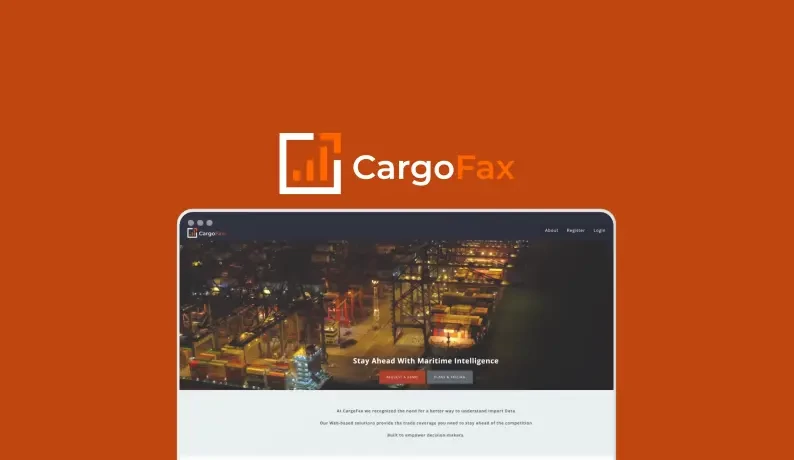
    LOGISTICS CargoFax

    CargoFax

    A data-driven import insights platform designed to help businesses make smarter import decisions.

    View Case Study →
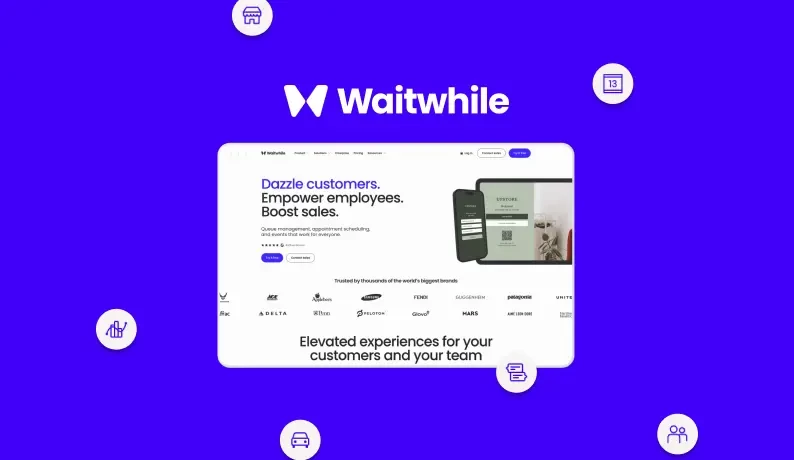
    BUSINESS UTILITY Waitwhile

    Waitwhile

    Insightful and data-driven decision-making for Businesses

    View Case Study →

    Why Choose Citrusbug as Your Django Development Company?

    Discovery Before Development

    Discovery Before Development

    Map data models, API contracts, integrations, and infrastructure before development starts. Your team reviews the architecture and scope early, reducing rework during implementation and deployment.

    Experienced Django Engineers

    Experienced Django Engineers

    Work with engineers experienced across Django 4.2 through 5.2 LTS, with production-focused experience in APIs, databases, async workflows, testing, and deployment.

    Full Code Ownership

    Full Code Ownership

    Receive the complete source code and intellectual property at delivery, with an NDA signed before engagement. Your team also gets the database, deployment, and CI/CD access needed to take ownership.

    Post-Launch Support

    Post-Launch Support

    Keep the application maintained after launch with L1/L2/L3 support covering Django security patches, dependency updates, bug fixes, and Python version migrations.

    Django Usage Statistics: Trends & Market Landscape in 2026
    Django Usage Statistics: Trends & Market Landscape in 2026 Artificial Intelligence

    Django Usage Statistics: Trends & Market Landscape in 2026

    Introduction Django has steadily secured its position as a default framework for teams shipping production web applications, from being an option among the many Python frameworks available. Engineering organizations select…

    Read Article →
    How To Develop Web Application In Python Using Django?
    How To Develop Web Application In Python Using Django? Python

    How To Develop Web Application In Python Using Django?

    Web application development refers to the process of designing, creating, building, and deploying web-based apps. Most web applications have common functionalities like upload support, server authentication, database connection, etc. So…

    Read Article →
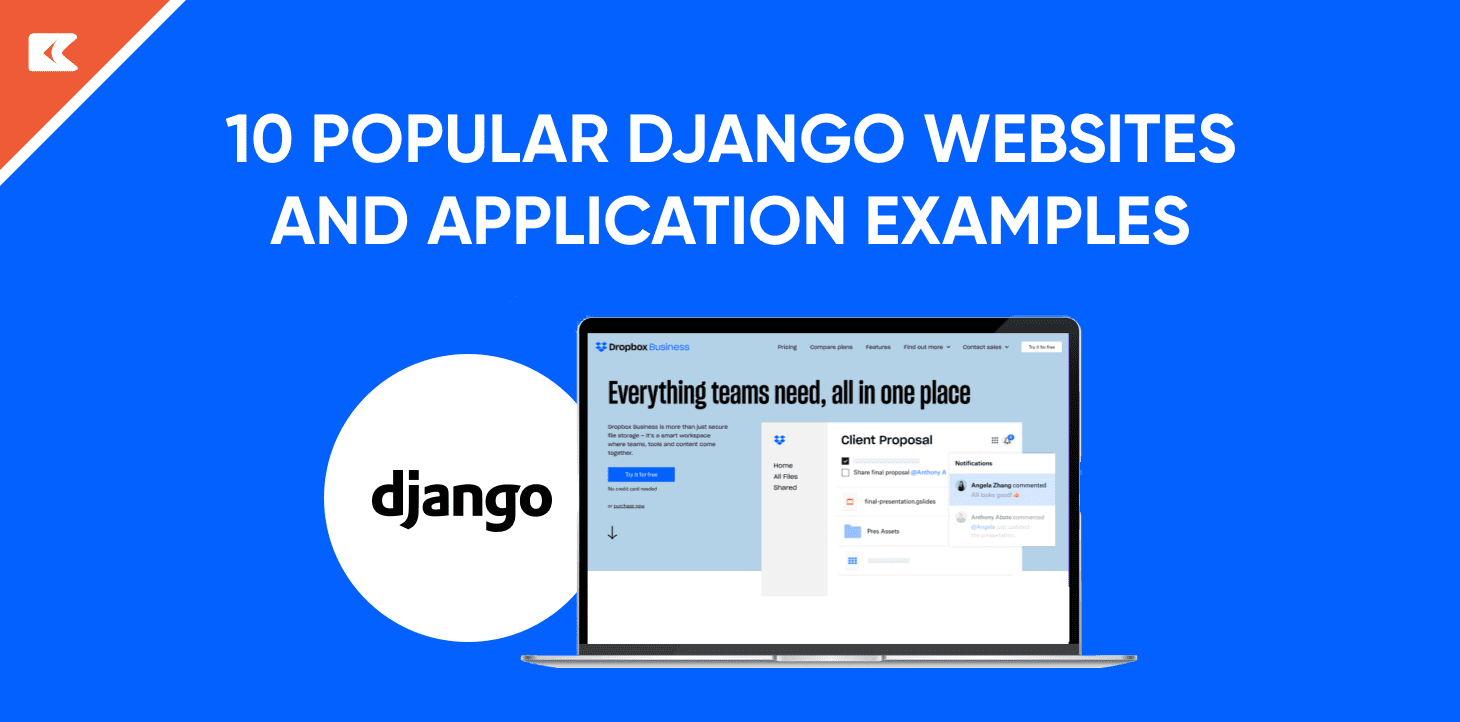
    10 Most Popular Django Web & App Examples
    10 Most Popular Django Web & App Examples Python

    10 Most Popular Django Web & App Examples

    The Increasing Trend of Django Websites and Applications The trend of web development with Python is enormously growing along with its involvement in domains like artificial intelligence, machine learning, data…

    Read Article →

    FAQs on Django Development Services

    How do I evaluate a Django development company's technical depth?

    Ask about their Django version experience, ORM optimization approach, deployment stack, and how they handle migration between LTS versions. Request code samples from past projects.

    Should I outsource Django development or hire in-house?

    Outsourcing works well for defined-scope projects, MVP builds, and team augmentation. In-house hiring makes sense when Django is your core long-term stack and you need permanent institutional knowledge.

    What affects the cost of a Django development project?

    Project scope, number of integrations, data complexity, compliance requirements, team size, and whether it is a new build or a codebase takeover. MVP projects start around $15,000.

    Can Citrusbug take over an existing Django codebase?

    Yes. Citrusbug starts with a codebase audit covering test coverage, dependency health, Django version status, and architectural risks before proposing a stabilization and improvement plan.

    How does Django compare to FastAPI for backend development?

    Django provides a full application framework with ORM, admin, authentication, and templating. FastAPI is a lightweight API framework built on Starlette. Django fits full-stack web applications; FastAPI fits pure API services.

    What does long-term Django maintenance include?

    Security patches, Django version upgrades, dependency updates, performance monitoring, database optimization, and structured release management through CI/CD pipelines.

    Do you work with startups on MVP-stage Django projects?

    Yes. Citrusbug supports startups from POC through production launch, with architecture planning sized for early-stage budgets and a codebase that scales without requiring a rewrite at growth stage.

    What gets handed over at the end of a Django project?

    Full source code, database schemas, API documentation, deployment runbooks, CI/CD configuration, and all credentials. Citrusbug retains no access after handover unless a support agreement is in place.

    Ready to Scope Your Django Project?

    Get architecture clarity, a realistic timeline, and a team that writes Django code your engineers can maintain.