
FINTECH


 Citrusbug Healthcare →

 ISO 27001
 HIPAA
HIPAA
 SOC 2
SOC 2
 GDPR-Aligned
Trusted By Industry Leaders















Certifications and Accreditations







The back-end developers you hire can contribute across core engineering disciplines, from API design and database architecture to cloud infrastructure and access control. Whether you're starting a new build or extending a system already in production, the focus stays on backend performance, reliability, and maintainability.
As a backend development company, we design REST and GraphQL APIs with versioning and contract testing from the first sprint, helping prevent schema changes from breaking clients and downstream integrations.
Query performance that looks fine at 500 users can change significantly as traffic and data volumes grow. Our developers design schemas, indexing strategies, caching, and read replicas around your expected workload rather than today’s dataset alone.
Our developers configure AWS, Azure, and GCP environments around application requirements, including compute sizing, auto-scaling, monitoring, and resource management. The goal is to identify infrastructure constraints early and keep backend services responsive as traffic grows.
OAuth 2.0, role-based access control, encryption in transit, and encryption at rest can be incorporated into the initial architecture rather than added later. Developers also document access boundaries and security controls so your team can review and maintain them over time.
When you're ready to hire back-end developers, share your technical requirements, stack, and timeline. We'll help you scope the right engagement and get the right engineering support in place.
Get Matched With DevelopersBackend work tends to pile up when the product grows faster than the engineering team. New integrations need to be built, database issues start taking longer to fix, or a critical part of the system depends on one person who no longer has the bandwidth.
AI coding tools have made implementation faster, especially for repetitive development work. But they don't take ownership of the backend. Someone still needs to decide how services should interact, how data should be structured, where performance will become an issue, and what needs to change before a system can handle more traffic.
Your developers are already tied up with releases, bug fixes, and feature work, while backend tasks keep getting pushed down the roadmap.
A previous developer or vendor left behind incomplete APIs, undocumented code, technical debt, or a backend that your current team doesn't want to take over without first understanding it.
Your project calls for experience with API architecture, database design, microservices, cloud infrastructure, or performance optimization that isn't available on your current team.
When the person who knew the backend inside out leaves, development can slow down quickly. Bringing in experienced developers can help your team understand the existing architecture and keep work moving.
You have backend work that needs to start now, but hiring and onboarding a full-time engineer will take longer than the project can wait. Bringing in developers gives your team the additional hands and expertise needed to keep the roadmap moving.
Build healthcare backends around HL7 and FHIR integrations, patient data workflows, role-based access, audit trails, and healthcare system connectivity. Developers can work with existing healthcare platforms or build backend services from the ground up.
Develop secure backends for payments, lending, banking, and financial applications, covering transaction processing, financial APIs, fraud-related data, authentication, and integrations with third-party financial services and platforms.
Support logistics platforms with real-time tracking, fleet and shipment data, carrier integrations, dispatch workflows, location services, and APIs that connect multiple transportation systems and third-party providers.
Build backend systems for product catalogs, inventory, orders, payments, customer accounts, and fulfillment. Developers integrate marketplaces, payment gateways, shipping providers, and other services needed to keep commerce workflows connected.
Develop backends for property platforms, listing management, CRM integrations, document workflows, search, and transaction processes. Developers can connect multiple property data sources while keeping APIs and data models organized.
Connect production systems, inventory platforms, ERP software, and connected equipment through backend services. Developers handle operational data, workflow automation, system integrations, and APIs across manufacturing environments.
Build backend services for learning platforms, student systems, assessments, authentication, reporting, and integrations with third-party education tools. Developers structure data and APIs around different user roles and academic workflows.
Develop booking and reservation backends that connect availability, pricing, payments, customer accounts, and third-party travel services. Developers handle API integrations and data synchronization across multiple systems and booking workflows.
Our Python developers use Django for admin-heavy platforms and rapid CRUD builds, and reach for FastAPI when you need async performance for AI-integrated endpoints or high-concurrency APIs.
NestJS gives large teams a structured, testable architecture out of the box. Express stays the pick for lean services and internal tools where speed of iteration matters more than enforced structure.
Laravel still runs a large share of production web platforms, and our developers work in it directly rather than treating it as legacy code to migrate away from by default.
When compliance requirements, existing enterprise infrastructure, or a large in-house Java or .NET team are already in place, we build inside that ecosystem instead of pushing a rewrite you didn’t ask for.
Go earns its place when a single service needs to handle thousands of concurrent requests with minimal memory overhead, like a payment gateway or a real-time event pipeline.
Relational data goes into PostgreSQL with proper indexing and normalized schemas. Document-shaped data goes into MongoDB. Redis handles caching, session storage, and anything that needs sub-millisecond reads.
Adding AI to an application puts new demands on the backend. Agents and AI features need reliable APIs, access to the right data, traceable requests, and infrastructure that can handle asynchronous workloads. Our back-end developers build or adapt the underlying systems to support these requirements.
Design APIs with consistent schemas, validation, versioning, and documentation so AI agents can interact with backend services reliably.
Use structured logging, tracing, metrics, and error tracking to see what happened across API calls, background jobs, and AI-driven workflows.
Use queues, events, and asynchronous processing for workloads that don’t need to happen within a single request, including AI jobs and data processing.
Connect applications to vector databases, retrieval pipelines, and existing data sources when AI features need access to internal or domain-specific information.

One senior developer slots into your existing team and sprint cadence, working your stack and your tools.

A small cross-functional group, developers plus a QA engineer, owns a defined slice of your backend end to end.

We staff, manage, and deliver the entire backend end to end, including full-stack developers when the frontend needs coverage too.
Backend developer rates typically range from $25 to $60 per hour, depending on seniority, tech stack, and engagement model, whether you need a single developer, an embedded pod, or a full team. Tell us your scope and we'll send a scoped quote within days.
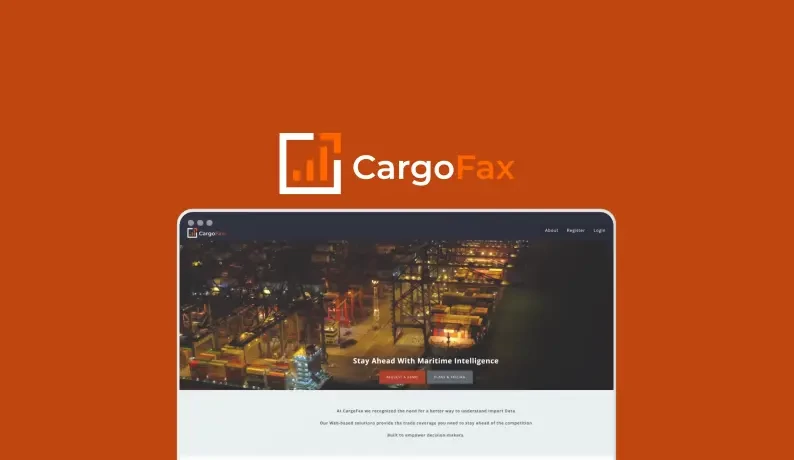
A data-driven import insights platform designed to help businesses make smarter import decisions.
View Case Study →
We discuss your product, current backend, technology stack, roadmap, team structure, and the work you need covered. This helps define whether you need one developer, a dedicated team, or specialized backend expertise.
We select developers based on the technical requirements of your project, including languages, frameworks, databases, cloud platforms, APIs, integrations, and industry experience. You get visibility into the developers who will work on your project before the engagement begins.
Once the engagement starts, developers get familiar with your codebase, documentation, development tools, repositories, and team processes. They work within the way your engineering team already operates rather than forcing a separate delivery process.
Developers take on the agreed backend scope, from API development and database work to integrations, performance improvements, and new backend features. For existing systems, they can also refactor or extend the current architecture where needed.
Backend requirements can change as the product develops. You can increase or reduce developer involvement, add specific expertise, or expand the scope as new features, integrations, and technical requirements emerge.
Your backend has to work with the systems your business already depends on. Our developers handle integrations with payment platforms, CRM and ERP systems, identity providers, internal applications, and legacy databases without treating every connection as a reason to replace what's already working.
Connect payment gateways, subscription billing, invoicing systems, and custom payment workflows with reliable API handling, webhooks, authentication, and safeguards against duplicate transactions.
Integrate backend services with CRM, ERP, and internal business systems to keep customer, order, financial, and operational data moving between systems without unnecessary duplication.
Connect older databases and internal applications to modern backend services when they still support important business workflows. We work around what needs to stay while modernizing what needs to change.
Integrate OAuth 2.0, SAML, enterprise SSO, and other identity providers so users can access new backend services through the authentication systems your organization already uses.
HIPAA, SOC 2, and GDPR each define a different scope of what counts as sensitive data and who’s allowed to touch it. Our developers build to the standard your industry actually enforces.

Access control mapped to least-privilege by default
Encryption at rest and in transit as standard practice
Audit logging built for HIPAA, SOC 2, and PCI-DSS reviews
Security reviews handled through our security and compliance services team before launch
Their agile way of working, competence, and friendliness are impressive.December 7, 2024
Citrusbug Technolabs handles a data extraction project for an education company. They're also responsible for managing an AI generation project for the client.
Citrusbug Technolabs has laid out and followed a clear project outline and consistently met deadlines. The team communicates well and demonstrates a strong understanding of the client's vision and goals. Their agile approach, high level of competence, and personable approach stand out.
 Read More
Their communication and ability to capture exactly what I was asking for were impressive.November 14, 2024
Citrusbug Technolabs built an automated system for a veteran medical company. The system needed to collect and store user data, generate customized letters based on surveys, and use AI to summarize reviews.
Citrusbug Technolabs delivered a functional automated system that successfully organized the client's records and auto-generated statements. The team was quick to respond, addressed all roadblocks, and communicated effectively. Overall, their ability to understand the client's needs stood out.
Read More
They were very calm and talented, and they did bring some of their own ideas.January 28, 2025
Citrusbug Technolabs has developed an MVP for a freight and capacity marketplace. The team has created three different interfaces for three market segments.
Citrusbug Technolabs has successfully developed an effective MVP. The team has delivered the project on time and almost within budget. Moreover, their responses have been timely. Overall, the team has been calm, talented, and innovative. This has led to the client's satisfaction.
Read More
What stood out most about them was their personalized approach and sense of ownership in every aspect of the project."February 27, 2024
Citrusbug Technolabs built a Flutter cross-platform mobile app for an education company. They also developed two web apps and an admin panel and provided DevOps support for the client's infrastructure.
Citrusbug Technolabs' support successfully boosted the client's user engagement by 8x, resulting in an 85% retention rate. The reliable team demonstrated a dedication to delivering on time and promptly responding to concerns and adjustments. Their personalized, client-centric approach stood out.
Read More
They didn't like the phrase "impossible to do", which made them very solution-oriented.February 19, 2024
A healthcare company hired Citrusbug Technolabs to design and develop a user-friendly application. The team provided tailored assistance to meet the client's requirements.
Citrusbug Technolabs successfully delivered an application that was ready for market. The team was highly professional and well-organized; they stayed focused throughout the engagement and were receptive to changes. Overall, they stood out for their trustworthiness and commitment to excellence.
Read More
They're 100% on time and transparent throughout each stage of the project.February 24, 2024
A financial technology company has hired Citrusbug Technolabs to build a custom web application. The team handles the development and design of the app.
The project is ongoing, but the client has been satisfied with Citrusbug Technolabs' services. The team is very professional — they always respect timelines and provide regular updates to ensure everyone's on the same page. Also, their transparent approach makes them a trustworthy partner.
Read More
"I do believe they are exceptional at where they stand."
Citrusbug Technolabs took on a mobile app development project for a Singapore-based development house. They were provided with UX designs to execute. Currently, they're finalizing and fine-tuning the product.
Citrusbug Technolabs contributed to the successful launch of the product, which has garnered over 10,000 users in just three months. The product has also received support from investors. They consistently followed-up with their progress and delivered at a speedy rate. The team is truly stellar.
Read More
Hiring a back-end developer is about more than adding another pair of hands. You need engineers who can understand an existing system, make sound technical decisions, work with your team, and stay accountable for what they build.

We review your requirements, existing architecture, codebase, and technical constraints before development begins. This gives you a clearer scope and helps identify backend risks before they become expensive changes later.

Your source code, documentation, and intellectual property remain yours. An NDA can be in place from the start, and you receive the backend assets needed to maintain and extend the system after delivery.

We choose infrastructure based on your application’s actual workload, with room to scale as requirements grow. Cloud architecture is considered alongside performance and operating costs rather than treated as an afterthought.

We design and document APIs around the systems and clients that need to use them, including web, mobile, third-party integrations, and AI-driven workflows where applicable.

Experienced engineers stay involved in the technical work, from architecture and development through testing and handover. You don’t have to rely on a separate team to make key backend decisions.

Your backend can continue to receive technical support after launch through L1, L2, or L3 support options, depending on your operational requirements and the level of ongoing assistance you need.
 React
React
Having a website for your business in this digital age has become a must. It opens up the possibility for your enterprise to reach a wider audience base and attract…
Read Article → Application Development
With the rapid increase in the popularization of mobile applications, the focus is now on understanding the process to build amazing apps and not just a common one. An efficient…
Read Article → Python
When choosing a Python web framework, the debate between Django vs Flask is one that backend developers and tech leads return to time and again. Both frameworks are built on…
Read Article →Most engagements start within 5 to 10 business days after we understand your stack and scope. A straightforward single-developer add-on can move faster than a full embedded pod.
Yes. We run a codebase and architecture audit first, document what's there, and give you a written assessment before proposing a delivery plan, whether or not you move forward with us.
A backend developer focuses entirely on server logic, databases, and APIs. A full-stack developer splits time across that and the interface. Pick backend-only when your frontend team already has coverage.
Yes. Every engagement includes an NDA and full source code and IP transfer at delivery. Nothing stays licensed or locked behind Citrusbug's infrastructure once the project is handed over.
Python with Django and FastAPI, Node.js with NestJS, PHP with Laravel, Java, and .NET, alongside PostgreSQL, MongoDB, and Redis. We match the stack to your existing system rather than pushing our own default.
Yes. Our developers work inside your project management tools, communication channels, and sprint cadence from week one, reporting to your lead the same way an in-house hire would.
A dedicated developer comes with backup coverage, a documented process, and accountability that a solo freelancer often can't guarantee if they get pulled onto another contract mid-project.
