













Explore our Healthcare Technology Offerings Citrusbug Healthcare → Citrusbug Healthcare →
Let’s Talk
AI DEVELOPMENT OUTSOURCING

Extend Your Team With Expert Outsourcing AI Development Services

Citrusbug delivers outsourcing AI development services for product and engineering teams that need experienced AI engineers without a lengthy hiring cycle. Build LLM features, AI agents, and ML models with a defined scope, senior technical expertise, and full ownership of the delivered work.

Hero Image
500+
Projects Delivered
98%
Client Retention

Certified

ISO 27001 ISO 27001
SOC 2 SOC 2
HIPAA HIPAA

Trusted By Industry Leaders

Bosch
Deloitte
eClinicalWorks
Epic Systems
Flipkart
McKinsey
HSBC
Softbank
Allianz
Airbnb
United Health
Phelic
Sun Pharma
Target
US Foods
Advinow

Certifications and Accreditations

Where Outsourced AI Projects Lose Momentum

AI projects rarely stall because the model cannot be built. They stall when success criteria are unclear, data arrives late, production performance is not monitored, or critical knowledge stays with one person. These gaps can turn a working proof of concept into a project that never reaches production.

Outsourcing AI development services only fixes that when the partner plans for these failure points before writing code. That is why our engagements start with an AI readiness discovery call, and every build runs against a pass or fail line both teams signed off on.
No Clear Definition of Success

Without agreed metrics and a representative test set, teams can keep tuning a model without knowing whether each change actually improves the outcome.

Data Access Delays Development

Security reviews, missing exports, and unclear data ownership can hold up AI development for weeks. Data requirements and access owners need to be identified before implementation begins.

Production Accuracy Changes Over Time

Customer behavior, source data, product catalogs, and upstream APIs change after launch. Monitoring and regression evaluations help detect when an AI system no longer meets its original performance criteria.

Critical Knowledge Stays With One Engineer

When prompts, evaluation logic, training scripts, and deployment steps are not documented, maintaining the system becomes dependent on one person. Documentation and knowledge transfer should be part of the delivery.

Our AI & ML Outsourcing Services for Product and Engineering Teams

LLM Features Inside Your Existing Product

Summarization, drafting, structured extraction, and semantic search built on OpenAI, Anthropic, or Gemini APIs, with guardrails, fallback logic, and per-request cost tracking so an LLM feature stays affordable once real usage arrives.

AI Agents That Act on CRM and ERP Data

Agents that read records, draft updates, and trigger workflows through tool calling and Model Context Protocol servers, with human approval steps on any action that writes to Salesforce, HubSpot, NetSuite, or your own systems.

RAG Assistants Grounded in Your Documents

Retrieval pipelines over policies, contracts, tickets, and knowledge bases using vector databases such as pgvector or Pinecone, with source citations in every answer and permission checks so each user only retrieves documents they are allowed to open.

Machine Learning Models for Forecasting & Scoring

Demand forecasts, churn and risk scores, and classification models built with XGBoost, scikit-learn, or PyTorch. For teams that need a dedicated ML track, our machine learning outsourcing engagement covers feature pipelines through retraining.

Computer Vision for Inspection and Capture

Image and video models that detect damage, read documents, count inventory, or verify identity, trained on your labelled data and deployed to cloud endpoints or edge devices depending on latency and connectivity needs.

NLP Pipelines for Text-Heavy Workflows

Classification, entity extraction, and sentiment models that route support tickets, triage claims, and pull fields from emails. Our NLP development work pairs transformer models with rules where accuracy on edge cases matters.

AI Integration Specialists for Your Existing Stack

Engineers who connect models to the systems your team already runs, including REST and GraphQL APIs, event queues, Zendesk, Slack, and internal admin panels, so AI output lands inside current workflows without a separate tool.

MLOps and LLMOps After Launch

Model registries in MLflow, tracing in Langfuse or LangSmith, drift alerts, and regression eval suites that run on every prompt or model change, giving your team evidence before a release reaches customers.

Not Sure Which AI Use Case to Fund First?

Bring two or three candidate ideas and we'll help rank them by data readiness, integration effort, and expected payback.

Book a Free Scoping Call

Outsourcing AI Development Services vs Building In-House

Each approach fits a different need. In-house hiring builds long-term domain knowledge, a freelancer can fill a specific technical gap, while an outsourced AI team can bring data, ML, LLM, MLOps, and integration expertise together for a defined project.

Factor In-House AI Hire Freelance Specialist Outsourced AI Team (Citrusbug)

Time to first working engineer

Months per senior role

Days to weeks

1-2 weeks after scoping

Skill coverage (data, ML, LLM, MLOps, integration)

Limited to who you hire

One specialty

Cross-functional team per project

Cost structure

Salary, benefits, recruiting fees, GPU and tooling costs

Hourly, variable availability

Fixed-Price, Time and Material, or Dedicated Team

Continuity if someone leaves

Knowledge leaves with them

High risk

Team-level documentation and backup engineers

Production accountability

Internal

Usually ends at handoff

Shared through launch and agreed support window

Code, model, and prompt ownership

Yours

Depends on contract

Yours, assigned under NDA and contract

Long-term domain context

Strongest

Weakest

Builds over the engagement, transferred at handover

How We Deliver an AI Development Project

1

Use Case and Data Audit

We sit with the people who own the workflow and the data, then map what the AI will read, what it will produce, and which system receives the output. The audit checks data volume, labelling quality, access permissions, and privacy constraints, and it usually removes at least one idea that looked promising but has no usable data behind it.

2

Success Metrics and Evaluation Set

Before any model work, both teams agree on a baseline and a target, such as extraction accuracy, deflection rate, or forecast error, and we build a golden evaluation set from your real examples. That set becomes the contract for quality. Every later prompt change, model swap, or retrain gets scored against it, which ends arguments about whether the system improved.

3

Proof of Concept Against Real Data

The proof of concept runs on your data, inside a sandboxed environment, and is scored on the evaluation set from step two. You see accuracy, latency, and cost per request side by side with the target. If the numbers fall short, you learn that in weeks and can stop, re-scope, or change approach before production spend begins.

4

Production Build and Integration

Once validated, the approach becomes production software with APIs, authentication, retries, queueing, and role-based access. Integrations into CRM, ERP, ticketing, or your own product are built and tested against staging data. Agent tools are exposed through Model Context Protocol servers or typed APIs with scoped permissions, so an agent can only touch what its task requires.

5

Security Review and Controlled Launch

Pre-release testing covers the OWASP Top 10 for LLM Applications, including prompt injection, sensitive data leakage, and excessive agency, and confirms logging and user disclosures are in place. Launch starts with a limited user group or shadow mode, compared side by side against the current process before full rollout. Rollback steps are rehearsed so a bad release can be reverted quickly.

6

Monitoring and Iteration

After launch, dashboards track accuracy on sampled traffic, latency, token spend, and user feedback. Drift alerts and scheduled eval runs flag degradation early, and retraining or prompt updates follow the same scored process as the original build. Your team decides whether Citrusbug keeps running this, shares it with your engineers, or hands it over fully.

Client Testimonials (We're Rated 4.7 on Clutch)

Choose an AI Development Outsourcing Model That Fits Your Scope

Fixed-Price Project

Fixed-Price Project

SCOPE LOCKED AFTER DISCOVERY

  • Clear inputs, outputs, and accuracy target
  • Proof of concept already validated
  • Milestone-based payments
  • Change requests priced separately
  • Suited to a single, well-defined AI feature
Time and Material

Time and Material

SCOPE SHAPED BY RESULTS

  • Weekly priorities set by eval scores
  • Room to switch models or approaches
  • Billing tied to hours logged
  • Sprint demos every one to two weeks
  • Suited to agents, RAG, and new use cases
Outsourced AI Engineers on Your Team

Outsourced AI Engineers on Your Team

DEDICATED TEAM, YOUR ROADMAP

  • ML, LLM, data, or MLOps engineers
  • Joins your standups and repositories
  • Monthly capacity you can resize
  • Your product lead sets priorities
  • Suited to multi-quarter AI roadmaps

What Drives AI Development Costs?

AI Project Type What Drives Cost

LLM feature in an existing product (summaries, drafting, extraction)

Prompt and evaluation design, UI changes, API usage, output quality requirements

RAG assistant over internal documents

Document cleanup, chunking strategy, retrieval quality, access controls, evaluation

Custom ML model for forecasting or scoring

Feature engineering, historical data quality, model development, evaluation, retraining

AI agent connected to CRM or ERP systems

Number of tools and integrations, workflow complexity, approval logic, error handling, audit logging

Computer vision in production

Data labeling volume, model training, inference environment, hardware testing, performance requirements

Fine-tuned or self-hosted LLM

Training data preparation, GPU infrastructure, model optimization, private deployment, MLOps

Data Security and IP Protection in Outsourced AI Development

AI engagements touch production data, customer records, and proprietary logic. Citrusbug signs an NDA before any data changes hands and works under ISO 27001- and SOC 2-aligned security practices throughout delivery.

  • Check Icon

    NDA and IP assignment signed before data access

  • Check Icon

    Masked or synthetic data for early prototypes

  • Check Icon

    OWASP LLM Top 10 checks before each release

  • Check Icon

    Disclosure and logging for EU AI Act Article 50

What Your Team Owns When the AI Engagement Ends

Vendor lock-in in AI is quieter than in regular software. Your repository can be complete while the prompts, evaluation data, and fine-tuned weights sit in an account you cannot open, and then every small change needs the original vendor. Citrusbug's outsourcing AI development services hand over every artifact the system needs to run, retrain, and be audited.

Source Code and Infrastructure as Code

  • Application code, Terraform or CloudFormation templates, and CI/CD pipelines transfer to your GitHub, GitLab, or Bitbucket organization. If you prefer, work lives there from the first commit, so there is nothing to migrate at the end.

Model Weights and Training Data Lineage

  • Fine-tuned weights, adapters, and the scripts that produced them are handed over with a record of which data version trained which model. Your team can work with experienced AI engineers when extending or retraining the models later.

Prompts and Evaluation Sets

  • Versioned prompts, system instructions, the golden evaluation set, and scored results for every release ship with the codebase. Your engineers can change a prompt tomorrow and see immediately whether quality moved up or down.

Cloud Accounts in Your Name

  • Deployments run in your AWS, Azure, or Google Cloud tenancy, and model API keys bill to your account. Access for Citrusbug engineers is scoped per role and revoked when the engagement closes.

Runbooks and Knowledge Transfer

  • Architecture notes, on-call runbooks, and recorded walkthroughs cover how the system is deployed, monitored, and rolled back. Teams planning to run it internally often pair this with MLOps consulting for the first retraining cycle.

Related AI Products

View All Case Studies →
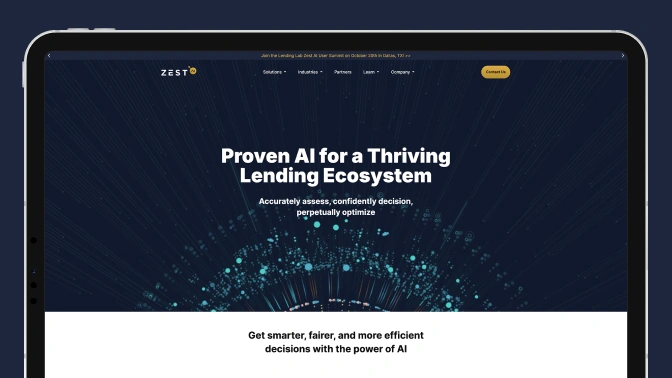
Zest AI

Zest AI

Zest AI is a leading AI-powered lending technology company helping banks, credit unions, and financial institutions make faster, smarter, and more inclusive credit decisions. By leveraging machine learning, predictive analytics,…

View Case Study →
How Much Does It Cost to Outsource AI Development?

A focused AI proof of concept typically costs $10,000–$30,000, while production AI features with complex integrations can range from $30,000 to $120,000+. Share your use case and data sources to get a scoped estimate based on your requirements.


    Your data and info stays secure. Read our Privacy Policy.


    Why Choose Citrusbug as Your AI Development Outsourcing Company?

    With 13+ years of software development experience, Citrusbug helps teams outsource AI projects with senior engineering expertise, clear technical scope, and a structured path from discovery to production.

    Metrics Before Models

    Metrics Before Models

    Every engagement fixes a baseline, a target, and an evaluation set before model work starts, so progress is measured in scores your team can check.

    Daily Updates and Demos

    Daily Updates and Demos

    You get written daily updates, working demos every sprint, and agreed overlap hours with the lead engineer, keeping decisions moving without waiting on email threads.

    Stalled Builds Recovered

    Stalled Builds Recovered

    Half-finished AI projects from another team are audited, stabilized, and completed, starting with an honest read on the technical debt and which parts are worth keeping.

    Post-Launch Support Options

    Post-Launch Support Options

    L1, L2, and L3 SLA support is available after launch, including a free maintenance period, so retraining and incident response have a named owner.

    Related Insights on AI Development

    View All Articles →
    The Role of Automation and AI in Modern Investment Software Development
    The Role of Automation and AI in Modern Investment Software Development Artificial Intelligence

    The Role of Automation and AI in Modern Investment Software Development

    Automation and artificial intelligence are changing the financial world, and the investment software development sits at the heart of this change. Companies, which previously used manual analysis and slow decision-making,…

    Read Article →
    AI App Development Cost in 2026: A Complete Guide for Businesses
    AI App Development Cost in 2026: A Complete Guide for Businesses Application Development

    AI App Development Cost in 2026: A Complete Guide for Businesses

    Artificial Intelligence (AI) has rapidly evolved from a futuristic concept to a business-critical technology. AI has applications in nearly every aspect of running a business, from offering users predictive healthcare…

    Read Article →
    AI-Powered SaaS Development: How AI Transforms SaaS Products
    AI-Powered SaaS Development: How AI Transforms SaaS Products Artificial Intelligence

    AI-Powered SaaS Development: How AI Transforms SaaS Products

    The AI industry reached $184 billion in 2024 and is predicted to increase to $ 826 billion by 2030. Does this sound ridiculously high? It is not surprising at all.…

    Read Article →

    FAQs About Outsourcing AI Development Services

    Should we outsource AI development or build an in-house team?

    Outsource when you need to ship within a quarter or lack LLM, MLOps, and data skills together. Build in-house once AI is core to your product and the roadmap justifies permanent headcount. Many teams do both.

    How much does it cost to outsource AI development?

    Cost depends on data readiness, integrations, and accuracy targets more than hourly rate. A validated proof of concept costs far less than a production agent with CRM access. We quote after discovery.

    Who owns the code, models, and prompts when the project ends?

    You do. Source code, model weights, prompts, evaluation sets, and infrastructure templates are assigned to you under contract, and cloud deployments run in your own accounts.

    How do you protect our data during an outsourced AI project?

    An NDA is signed before any data access. Prototypes use masked or synthetic data where possible, access is scoped per role, and production data stays inside your cloud environment.

    How long does it take to get an outsourced AI project into production?

    A proof of concept on real data usually takes a few weeks. Production timelines depend on integrations and security review, and the go or no-go decision happens before full build spend.

    Can we outsource AI engineers to work inside our existing team?

    Yes. Under the Dedicated Team model, ML, LLM, data, or MLOps engineers join your standups, repositories, and sprint planning while your product lead sets priorities and capacity resizes monthly.

    Does the EU AI Act affect an AI system an outsourced partner builds for us?

    Yes, if you serve EU users. Article 50 transparency duties apply from August 2, 2026, and Annex III high-risk obligations now start December 2, 2027. We build the disclosure and logging those require.

    What happens if model accuracy drops after launch?

    Drift alerts and scheduled evaluation runs catch it early. Fixes follow the same scored process as the original build, so every prompt update or retrain is checked against your evaluation set.

    Can you take over an AI project another team started?

    Yes. We audit the existing code, data pipelines, and prompts, then tell you what to keep, what to rebuild, and what it will cost to reach production.

    Need Experienced Engineers for Your AI Project?

    Bring your use case and technical requirements. We’ll discuss the architecture, development scope, and team needed to take it forward.