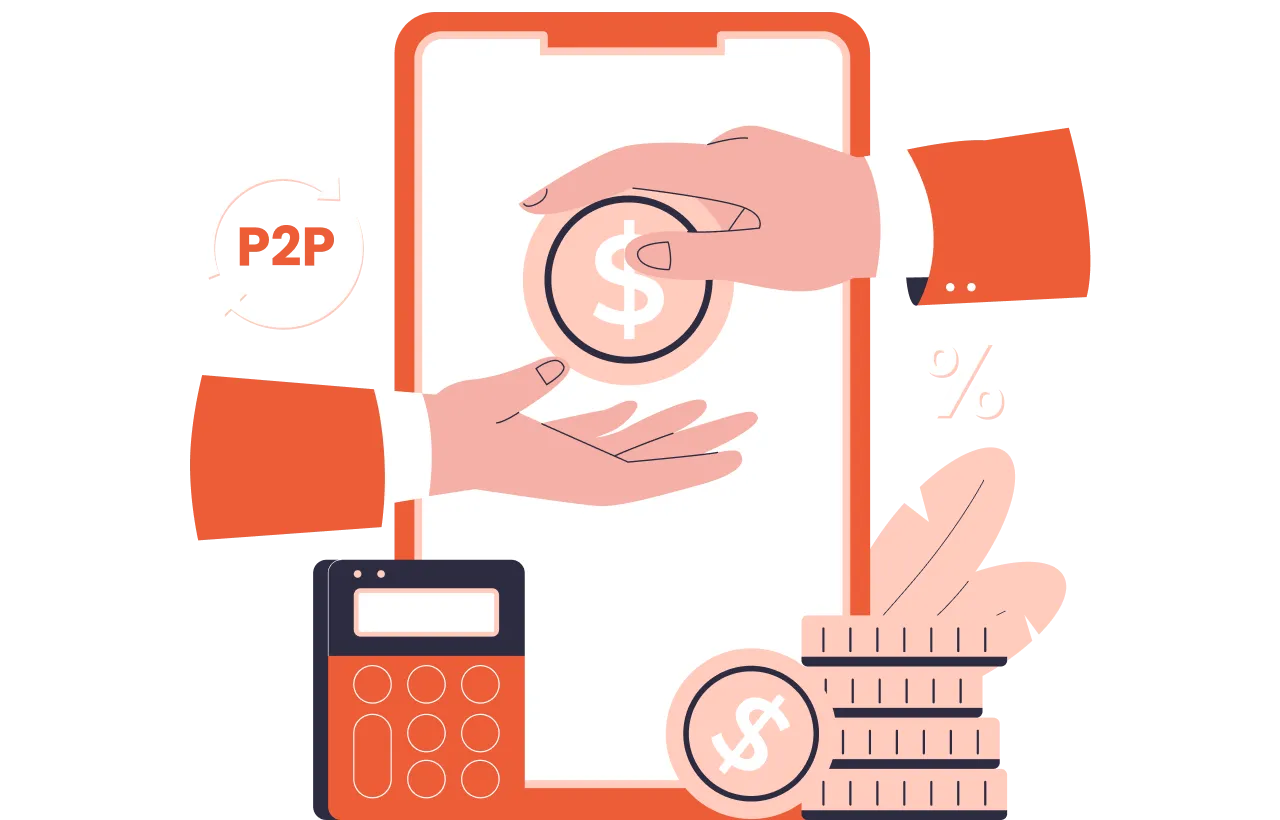
We help fintech startups, neobanks, and marketplace platforms build production-ready P2P payment apps. From architecture and compliance to launch and post-go-live support, we handle the full build so your team can focus on growth.
We develop secure, scalable P2P payment applications for fintech teams, neobanks, and digital marketplace operators. Every app we build is designed for regulatory compliance, real-world transaction volume, and the user expectations that define modern payments.
Custom P2P Payment App Development
End-to-end design and development of peer-to-peer payment applications tailored to specific business models. Covers user journeys, wallet systems, transaction processing, and third-party integrations aligned with target markets, scalability needs, and applicable financial regulations.
Digital Wallet Development
Secure digital wallet solutions that support fund storage, bank account linking, and balance management. Includes transaction history, real-time balance updates, top-ups, withdrawals, and controls designed to deliver a consistent and intuitive user experience.
Real-Time Money Transfer Systems
Instant money transfer capabilities with low latency processing and high availability. Designed to support large transaction volumes while maintaining accuracy, enabling users to send and receive funds quickly without delays, failures, or reconciliation issues.
Bank & Payment Gateway Integration
Integration with banks, UPI networks, cards, and payment gateways to enable smooth and reliable fund movement. Supports multiple payment methods while ensuring compatibility with financial systems and adherence to security and compliance requirements.
Security & Fraud Prevention Systems
Multi-layered security implementation covering encryption, authentication, and transaction monitoring. Includes fraud detection mechanisms that help identify suspicious behavior, prevent unauthorized access, and reduce financial risks across user accounts and payment flows.
KYC & Compliance Module Development
KYC workflows and compliance modules aligned with regulatory standards in financial ecosystems. Covers identity verification, document validation, audit logs, and reporting features required to operate securely within regulated markets and meet legal obligations.
Transaction Management & Analytics
Advanced transaction tracking and analytics through centralized dashboards and reporting tools. Provides visibility into user activity, transaction trends, revenue insights, and operational performance, helping teams monitor systems and make informed decisions.
P2P Marketplace and Escrow Payment Infrastructure
Payment infrastructure designed for marketplaces, gig platforms, and multi-party transactions. Supports escrow-based fund holding, split payments, conditional releases, dispute handling, and scheduled payouts, enabling controlled and transparent fund flows across participants.
Have a P2P Payment Idea or Existing System to Upgrade?
We can map out the architecture, integrations, and compliance requirements based on how your platform needs to operate.
Built for the Teams Driving Modern Payment Innovation
Fintech Startups and Founders
You are building a payment product from the ground up. You need a technical partner who understands compliance requirements, can architect for scale from day one, and will not disappear after launch. We have taken early-stage fintech products from concept to live platform, and we understand what it takes to build something that investors and users trust.
Neobanks and Digital-First Financial Institutions
You need P2P transfer functionality that integrates cleanly with your existing account infrastructure, meets your regulatory obligations, and performs at the transaction volumes your user base demands. We build payment modules that slot into your broader platform architecture without creating technical debt.
Marketplace and Gig Economy Platforms
Your platform facilitates transactions between users who do not know each other. You need escrow, dispute handling, split payments, and fraud prevention built in. We have built this infrastructure for marketplace operators and understand the operational complexity behind every transaction that hits your platform.
You are not starting from zero. You have existing systems, existing compliance obligations, and real users. We build P2P payment capabilities that integrate with legacy infrastructure through well-designed APIs, without requiring a full platform rebuild.
How We Engage
How To Build P2P Payment App – Our Proven Development Process
Every engagement follows the same disciplined path, whether the outcome is an AI system, a custom platform, or a cloud migration. No surprises, no shortcuts.
01
Discovery (1 to 2 Weeks)
We start by understanding your business objectives, target users, regulatory environment, and technical constraints. We map out the required compliance frameworks, identify third-party integrations, and produce a development roadmap with scope and timeline clarity before a single line of code is written.
02
Architecture and Design (2 to 3 Weeks)
Our architects design the system for the transaction volumes you are targeting, not just the volumes you have today. Simultaneously, our product designers create the user flows, screens, and interaction patterns that will define how users experience your platform.
03
Development & Integration (8 to 12 Weeks)
We build in structured two-week sprints with regular demos. Our engineers integrate payment rails, implement fraud detection, build the admin and compliance dashboards, and run security reviews in parallel with feature development.
04
QA, Security Testing, & Launch (2 to 3 Weeks)
Every P2P payment platform we build goes through dedicated security testing, penetration testing, and compliance review before deployment. We support phased rollouts and assist with app store submissions and infrastructure deployment.
What Goes Into a Production-Ready P2P Payment App
Payment apps fail in the market for two reasons: they are insecure or they are slow. We build for neither outcome. Here is what we include in every P2P payment application we develop.
Real-Time Transaction Processing
Transfers complete in seconds, not minutes. Our infrastructure uses event-driven architectures and optimized payment rail integrations to ensure that money moves at the speed users expect.
Every transaction, every session, every stored credential is protected by layered encryption and configurable authentication flows. We implement biometric authentication, OTP-based verification, and device trust scoring out of the box.
AI-Powered Fraud Detection
We embed fraud detection capabilities directly into the transaction layer. Behavioral anomaly detection and real-time risk scoring flag suspicious activity before payments settle, not after.
Integration with Banks, Cards, and Wallets
Your users can link bank accounts via ACH/open banking APIs, add debit and credit cards, and connect third-party wallets. We support Plaid, Stripe, Dwolla, and custom bank integrations depending on your target markets.
Cross-Platform Compatibility (iOS, Android, Web)
We build mobile-first using React Native or Flutter for single-codebase cross-platform performance, alongside a web application for users who prefer browser-based access. One codebase, consistent experience.
Your compliance and operations teams need visibility and control. We build configurable transaction limit rules, velocity controls, and a full-featured admin panel with reporting, user management, and manual review queues.
Dispute and Chargeback Management
We build structured dispute workflows that allow users to raise issues, allow your operations team to review evidence, and allow you to execute refunds or holds programmatically. Payment ops without this capability generate serious compliance risk.
Push Notifications and Payment Reminders
Real-time push notifications for payment sent, payment received, and payment request remind users to act and keep them engaged with the platform.
Bill Splitting and Group Payments
For consumer-facing apps, we build bill-splitting flows, shared expense tracking, and group payment requests that drive the social engagement that keeps P2P apps sticky.
We Build P2P Payment Apps That Meet Regulatory Requirements
Payment software operates in one of the most regulated industries in the world. We build compliance in from architecture, not as an afterthought. Every P2P application we deliver is aligned with the frameworks your markets require.
PCI DSS
We follow PCI DSS guidelines throughout the build, including secure data storage, encrypted transmission, and controlled access to cardholder data. Our processes are designed to minimize your compliance surface and reduce audit complexity.
KYC and AML Compliance
We integrate KYC identity verification flows, real-time AML transaction monitoring, suspicious activity reporting, and customer due diligence procedures. These are built as configurable modules so your compliance team can adapt rules as your platform and regulatory obligations evolve.
GDPR
For any platform handling personal data of users in the European Union, we implement data minimization, purpose limitation, consent management, and the right to erasure at the data model level, not as a retroactive patch.
PSD2 and Open Banking (EU and UK)
For fintech platforms operating in Europe and the United Kingdom, we build PSD2-compliant strong customer authentication flows, open banking API integrations, and the technical infrastructure required to operate as a payment initiation or account information service provider.
SOC 2 Type II Readiness
For platforms seeking SOC 2 certification, we build with the controls, logging, and audit trail infrastructure that auditors require. We can deliver a codebase and infrastructure architecture that is SOC 2 ready at launch.
BUILDING NEXT-GEN SOLUTIONS
Technologies and Platforms We Use
LangChain
Haystack
OpenAI GPT-4
Anthropic Claude
OpenAI GPT-4
Google Dialogflow
Rasa
Vapi.ai
Azure Prompt flow
DALL-E
Stable Diffusion
TensorFlow
Hugging Face Transformers
Amazon Glu
Pandas
Numpy
Redshift
OpenCV
Tesseract OCR
How Much Does it Cost to Develop a P2P Payment App?
The cost to develop a peer-to-peer payment software typically ranges from $25,000 to $150,000, depending on features, compliance needs, and integrations.
Every project is unique, and so is the development cost. Connect with our experts and share your project needs to get an accurate estimate.
P2P Fintech Platforms Development We Offer
P2P Lending Platform Development
Platforms structured for P2P lending environments, connecting individual borrowers and lenders with built-in loan discovery, risk-based pricing, and borrower profiling. Supports repayment scheduling, delinquency handling, and configurable interest models.
Merchant-Enabled P2P Platforms
P2P systems extended to support micro-merchants, creators, and small businesses accepting payments directly from users. Covers QR-based payments, payment links, request flows, and lightweight merchant tools without the complexity of full payment gateway setups.
P2P Foreign Exchange Platform Development
Currency exchange systems designed around peer matching instead of traditional forex routing. Matches users with opposite currency needs, manages live rate negotiation or automated pricing, and handles settlement flows across borders with compliance considerations built in.
Social Media–Centric Payment App Development
Payment functionality embedded within social or messaging environments, where transactions happen inside conversations, groups, or content flows. Supports peer payments in chats, shared expenses, and interaction layers that make payments part of user engagement, not a separate action.
Cross-Border P2P Transfer Solutions
International transfer systems optimized for cost and speed by routing transactions through distributed accounts or matching flows. Includes multi-currency handling, FX conversion logic, and settlement mechanisms designed to reduce dependency on traditional remittance rails.
Crypto-Based P2P Exchange Development
Decentralized-style exchange environments where users trade digital assets directly with each other. Includes escrow-based transaction locking, order matching logic, wallet interactions, and dispute handling frameworks required for trust in peer-driven crypto transactions.
How We Engage - Three Ways to Work with Our Team
Fixed-Price Project
You have a defined scope, a clear budget, and a launch deadline. We deliver against a fixed statement of work with milestones, defined deliverables, and no scope creep surprises. Best for teams who know exactly what they are building.
MVP-First, Then Scale
Many of our most successful fintech clients started with a lean MVP, validated it with real users, and then expanded features over subsequent phases. We help you define a focused MVP scope, build and launch it fast, and plan the roadmap from there. This approach reduces financial risk while getting you to market quickly.
Dedicated Development Team
You have ongoing product development needs and want engineers embedded in your process. We provide a dedicated team that integrates with your workflow, attends your standups, works in your tools, and is accountable to your product roadmap. This model is the right choice for platforms post-launch that need continuous development capacity.
Client Testimonials (We're Rated 4.7 on Clutch)
THE PROJECT
Web & AI Development for Education Company
AI Development, Custom Software Development
Nov. 2024 - Ongoing
THE REVIEW
Their agile way of working, competence, and friendliness are impressive.
December 7, 2024
5
★★★★★
Quality5.0
Schedule5.0
Cost5.0
Willing to refer5.0
PROJECT SUMMARY:
Citrusbug Technolabs handles a data extraction project for an education company. They're also responsible for managing an AI generation project for the client.
FEEDBACK SUMMARY:
Citrusbug Technolabs has laid out and followed a clear project outline and consistently met deadlines. The team communicates well and demonstrates a strong understanding of the client's vision and goals. Their agile approach, high level of competence, and personable approach stand out.
Custom Automated System Dev for Veteran Medical Co
Generative AI, Application Testing, Custom Software Development
Aug. - Oct. 2024
THE REVIEW
Their communication and ability to capture exactly what I was asking for were impressive.
November 14, 2024
5
★★★★★
Quality5.0
Schedule5.0
Cost5.0
Willing to refer5.0
PROJECT SUMMARY:
Citrusbug Technolabs built an automated system for a veteran medical company. The system needed to collect and store user data, generate customized letters based on surveys, and use AI to summarize reviews.
FEEDBACK SUMMARY:
Citrusbug Technolabs delivered a functional automated system that successfully organized the client's records and auto-generated statements. The team was quick to respond, addressed all roadblocks, and communicated effectively. Overall, their ability to understand the client's needs stood out.
MVP Development for Freight & Capacity Marketplace
Custom Software Development
$10,000 to $49,999
Jan. 2024 - Feb. 2025
THE REVIEW
They were very calm and talented, and they did bring some of their own ideas.
January 28, 2025
5
★★★★★
Quality5.0
Schedule5.0
Cost5.0
Willing to refer5.0
PROJECT SUMMARY:
Citrusbug Technolabs has developed an MVP for a freight and capacity marketplace. The team has created three different interfaces for three market segments.
FEEDBACK SUMMARY:
Citrusbug Technolabs has successfully developed an effective MVP. The team has delivered the project on time and almost within budget. Moreover, their responses have been timely. Overall, the team has been calm, talented, and innovative. This has led to the client's satisfaction.
What stood out most about them was their personalized approach and sense of ownership in every aspect of the project."
February 27, 2024
5
★★★★★
Quality5.0
Schedule5.0
Cost5.0
Willing to refer5.0
PROJECT SUMMARY:
Citrusbug Technolabs built a Flutter cross-platform mobile app for an education company. They also developed two web apps and an admin panel and provided DevOps support for the client's infrastructure.
FEEDBACK SUMMARY:
Citrusbug Technolabs' support successfully boosted the client's user engagement by 8x, resulting in an 85% retention rate. The reliable team demonstrated a dedication to delivering on time and promptly responding to concerns and adjustments. Their personalized, client-centric approach stood out.
Custom Software Development Mobile App Development UX/UI Design
$10,000 to $49,999
June 2023 - Jan. 2024
THE REVIEW
They didn't like the phrase "impossible to do", which made them very solution-oriented.
February 19, 2024
4.75
★★★★★
Quality4.5
Schedule4.5
Cost5.0
Willing to refer5.0
PROJECT SUMMARY:
A healthcare company hired Citrusbug Technolabs to design and develop a user-friendly application. The team provided tailored assistance to meet the client's requirements.
FEEDBACK SUMMARY:
Citrusbug Technolabs successfully delivered an application that was ready for market. The team was highly professional and well-organized; they stayed focused throughout the engagement and were receptive to changes. Overall, they stood out for their trustworthiness and commitment to excellence.
Custom Web App Dev & Design for Financial Technology Firm
Mobile App Development UX/UI Design Web Design
Sep. 2023 - Ongoing
THE REVIEW
They're 100% on time and transparent throughout each stage of the project.
February 24, 2024
5
★★★★★
Quality5.0
Schedule5.0
Cost5.0
Willing to refer5.0
PROJECT SUMMARY:
A financial technology company has hired Citrusbug Technolabs to build a custom web application. The team handles the development and design of the app.
FEEDBACK SUMMARY:
The project is ongoing, but the client has been satisfied with Citrusbug Technolabs' services. The team is very professional — they always respect timelines and provide regular updates to ensure everyone's on the same page. Also, their transparent approach makes them a trustworthy partner.
Staff Augmentation for Singaporean Development Company
Mobile App Development
$10,000 to $49,999
THE REVIEW
"I do believe they are exceptional at where they stand."
5
★★★★★
Quality5.0
Schedule5.0
Cost5.0
Willing to refer5.0
PROJECT SUMMARY:
Citrusbug Technolabs took on a mobile app development project for a Singapore-based development house. They were provided with UX designs to execute. Currently, they're finalizing and fine-tuning the product.
FEEDBACK SUMMARY:
Citrusbug Technolabs contributed to the successful launch of the product, which has garnered over 10,000 users in just three months. The product has also received support from investors. They consistently followed-up with their progress and delivered at a speedy rate. The team is truly stellar.
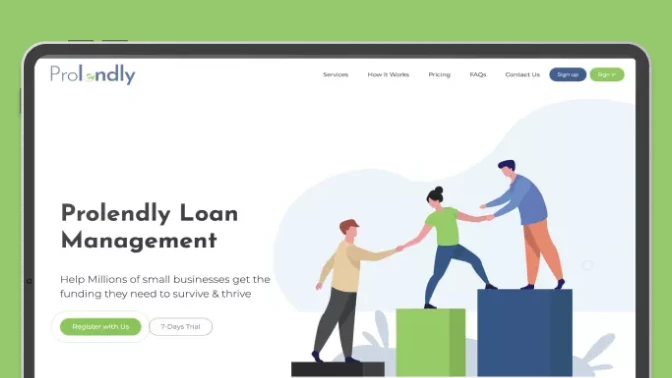
Prolendly is a FinTech SaaS platform that connects startups and small businesses with funding opportunities, lenders, and capital consulting resources.
Digital Payment Statistics: Global Trends, Growth Rate, and Future Outlook
Digital payments have disrupted the financial landscape across the world over the last 10 years. What started as a convenient alternative for cash and cards has now become indispensable to…
Predictive Analysis in Finance: Solving Financial Challenges with AI-Powered Solutions
Past financial data alone is no longer sufficient in a quickly moving market. Leveraging Predictive analysis in finance, organizations can evolve from retrospective models to a forward-looking approach by detecting…
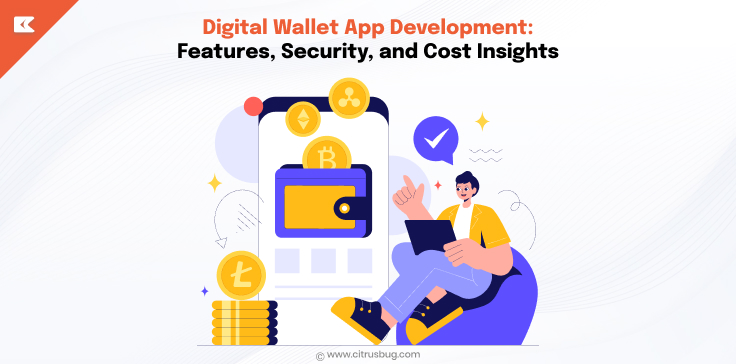
Digital Wallet App Development: Features, Security, and Cost Guide for 2026
The way we pay and manage money is changing fast. Digital wallet is not only a convenience anymore, but a fundamental aspect of daily transactions among millions of people all…
Frequently Asked Questions About P2P Payment App Development
What exactly is a P2P payment app?
A P2P (peer-to-peer) payment app lets people send and receive money directly to and from each other using a smartphone or web application, without needing a physical bank branch or check. Users link a bank account, card, or wallet, and transfers happen digitally and typically in seconds.
How long does it usually take to build a P2P payment app?
Most P2P payment apps take between 10 and 22 weeks to build, depending on the complexity of features, number of payment rail integrations, and compliance requirements. A focused MVP can be ready in 10 to 14 weeks. A full-featured platform with AI fraud detection, multi-currency support, and marketplace payment logic typically takes 16 to 22 weeks.
Is P2P payment software really secure?
It can be, but only when built correctly. At Citrusbug, we use end-to-end encryption, multi-factor authentication, real-time fraud detection, and rigorous pre-launch penetration testing. Security is an architectural decision, not a feature you add at the end.
What compliance requirements do I need to address?
This depends on where your platform operates. Most P2P payment apps need to address KYC, AML, and PCI DSS as a baseline. If you are operating in Europe or the UK, PSD2 and GDPR apply. If you are targeting US enterprise clients, SOC 2 Type II readiness is increasingly expected. We navigate this with you during the discovery phase.
Can you integrate a P2P payment app with banks, cards, and wallets?
Yes. We support bank account linking via ACH and open banking APIs (Plaid, TrueLayer), debit and credit card payment processing via Stripe and others, and integration with third-party wallets. The specific integrations depend on your target markets and user base.
Can you build a P2P payment app for a marketplace or gig economy platform?
Yes. Marketplace and gig economy platforms have more complex payment requirements than basic user-to-user transfer apps. We build escrow functionality, split payment logic, payout scheduling, and dispute resolution workflows for multi-sided platforms. This is a core use case for our team.
What is the difference between a P2P payment app and a digital wallet?
A digital wallet stores funds or payment credentials on behalf of a user and is used to make payments at merchants or between accounts. A P2P payment app focuses specifically on direct transfers between two people, often without storing funds. In practice, many modern platforms combine both. We can build either, or both together, depending on what your users need.
Can AI be integrated into a P2P payment app?
Yes. AI adds significant value for fraud detection, transaction risk scoring, behavioral anomaly detection, and user behavior analysis. We integrate AI capabilities as a core feature layer, not a bolt-on. The result is an app that gets smarter and more secure as your transaction volume grows.
What happens after the app goes live?
We provide ongoing support, including security patches, performance monitoring, feature development, and infrastructure scaling. For teams with continuous development needs, we offer a dedicated team model that keeps your engineers engaged post-launch.
Ready to Build a P2P Payment App Your Users Will Actually Trust?
We build secure, compliant, and scalable P2P payment platforms for fintech teams worldwide.





























.svg)


.svg)


.svg)


.svg)

















.svg)
.svg)