
FINTECH

 Citrusbug Healthcare →

 ISO 27001
 SOC 2
 HIPAA
Trusted By Industry Leaders










Certifications and Accreditations


Your roadmap needs a FastAPI service, a data pipeline, and an LLM feature this quarter, but the Python role you opened in spring still has no signed offer. Your existing engineers are keeping a Django app running while handling support tickets between feature work.
That gap is where outsourcing earns its cost. As a Python development outsourcing company, Citrusbug takes a defined slice of the work, or the whole product, and runs it with senior engineers who already know the stack. If you only need extra hands inside sprints your own lead runs, hiring dedicated Python developers is the lighter option.

Open Python roles remain unfilled while features slip. An outsourced team can start on scoped work while recruiting continues in parallel, keeping development moving without waiting for another hire.

Investor demos, customer pilots, and contract go-lives come with fixed dates. A team that handles development, QA, and DevOps can add delivery capacity without pulling your existing engineers away from production support.

Polars pipelines, Celery task queues, vector search, and LLM orchestration may require experience your current team does not have. Outsourcing adds those skills for the duration of the project without creating a permanent hiring requirement.

A half-finished repository, incomplete documentation, or unresolved tickets can leave a Python product stuck between development and release. Citrusbug reviews the existing codebase, identifies what can be retained, and creates a path to complete the remaining work.
Citrusbug's Python development outsourcing services can run as a standalone project or as one workstream inside a larger build, with the same engineers carrying context from the first sprint to production.

Customer portals, internal tools, and multi-tenant SaaS backends, built through our Django development practice on the 5.2 LTS line, or on FastAPI where async throughput matters, backed by PostgreSQL and role-based access.

Typed FastAPI and Django REST Framework services with Pydantic v2 validation, OpenAPI docs generated from code, and integrations into Stripe, Salesforce, HubSpot, or your ERP, versioned so mobile clients survive every release.

Retrieval pipelines, document extraction, and agent workflows built with LangGraph or PydanticAI, grounded in your own data through pgvector or a managed vector store, and evaluated against test sets before users see a response.

Batch and streaming pipelines using Polars, pandas, and Airflow or Dagster, moving data from product databases into Snowflake, BigQuery, or Postgres so finance and product teams stop reconciling spreadsheet exports by hand.

Celery and Redis task queues, scheduled jobs, and scripts that take over manual steps like invoice matching, report generation, and file ingestion, with retries and alerting so failures surface before a customer notices.

Codebases moved across major Python and Django releases, abandoned packages replaced with maintained ones, and test coverage added first, so every stage of the migration ships to production without a freeze on feature work.

Discovery, UX, backend, cloud deployment, and launch handled by one team, so founders go from a validated idea to a working MVP development release without stitching together three freelancers.

Dependency updates, security patching, performance profiling with py-spy, and fixes for Python applications already in production, whether Citrusbug built them or another team handed over the repository last month.
Tell us where your team needs support, from backend development to data pipelines and AI features. We’ll outline the team and delivery plan.
Talk to an EngineerPython 3.10 reaches end of life on October 31, 2026, while Django 4.2 has already reached the end of its support window. If your application still runs on either version, the upgrade should be part of your roadmap rather than something left until a dependency or security issue forces it.
An unsupported runtime rarely fails loudly. It shows up later as a dependency that no longer installs, a security review that flags an outdated stack, or a published vulnerability with no fix available for your version.
An upgrade is also a chance to review your dependencies, test coverage, deployment process, and compatibility with newer Python capabilities. Citrusbug handles this as staged legacy application modernization, validating dependencies and application behavior before moving changes into production.

DEFINED SCOPE AND BUDGET

EVOLVING REQUIREMENTS

LONG-TERM PRODUCT OWNERSHIP
Outsourcing should not leave your team dependent on the vendor. Citrusbug keeps code, infrastructure, documentation, tests, and project knowledge accessible to your engineers throughout the engagement, with full source-code ownership and an NDA from the start.

Code can live in your GitHub or GitLab organization from the first commit, keeping access, history, and branch protection under your control.

Type hints checked by mypy or Pyright, Ruff for linting and formatting, and uv lockfiles that pin every dependency so builds reproduce exactly on any machine.

pytest suites covering business logic and API contracts run in a GitHub Actions CI/CD pipeline on each pull request, so a failing test stops the release before any customer meets the bug.

Docker images and Terraform modules for AWS, Azure, or Google Cloud let any environment be rebuilt from scratch and keep cloud costs visible line by line.

Decision records explain why each major choice was made, and runbooks cover deployments, rollbacks, and the incidents your on-call engineer is most likely to face.

Recorded walkthroughs and paired sessions with your engineers before handover, timed so your team ships a change on its own while Citrusbug is still available for questions.













Before any code, a business analyst and a senior Python engineer map user flows, integrations, data sources, and non-functional needs such as expected load and data residency. The output is a written requirements document, user stories, and clickable wireframes that your stakeholders sign off on. If discovery shows the idea still needs validation, the next step becomes a proof of concept sized to answer that one question.
Engineers choose the framework, database, hosting, and deployment model against those requirements and write down the reasoning. Django usually wins for admin-heavy products, FastAPI for high-concurrency APIs. You receive a phased delivery plan, the proposed team composition, and an estimate tied to your engagement model, with the assumptions that would change it listed plainly.
Citrusbug assigns engineers whose recent work matches your stack, whether that means Celery-heavy background processing or LLM retrieval. As part of our Python development outsourcing services, access to repositories, cloud accounts, and communication channels is granted with least-privilege permissions, and the first sprint starts from the approved backlog, so week one goes into building features your stakeholders already agreed on.
Work runs in short sprints with daily written updates and a working demo at every sprint review. You click through deployed features on a staging environment and reprioritize the backlog before the next sprint begins. Burn-down and budget figures are shared each sprint, so scope decisions happen with real numbers on the table.
Automated tests run on every merge, and a QA engineer covers exploratory and regression testing before each release. Dependency scanning with pip-audit and static analysis with Bandit flag known vulnerabilities early, and Locust load tests confirm the API holds at the traffic levels agreed in discovery. Findings get fixed inside the sprint that introduced them.
Production deployment follows a rehearsed runbook with a tested rollback path. Error tracking in Sentry and cloud-native alerting are live before the first user logs in. After launch, Citrusbug either transfers the system to your team or stays on to handle monitoring, patching, and new features, and the documentation stays current either way.

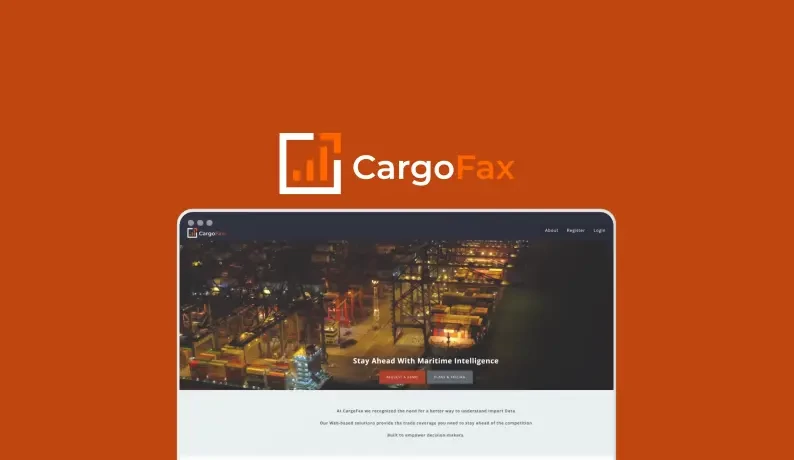
A data-driven import insights platform designed to help businesses make smarter import decisions.
View Case Study →From seed-stage founders looking for a Python development company for startups to enterprise teams clearing a modernization backlog.
Outsourced Python work typically runs from about $5,000 for a small automation project to $100,000 or more for a multi-module platform. Share your scope and we'll send a phased estimate for your build.
Their agile way of working, competence, and friendliness are impressive.December 7, 2024
Citrusbug Technolabs handles a data extraction project for an education company. They're also responsible for managing an AI generation project for the client.
Citrusbug Technolabs has laid out and followed a clear project outline and consistently met deadlines. The team communicates well and demonstrates a strong understanding of the client's vision and goals. Their agile approach, high level of competence, and personable approach stand out.
 Read More
Their communication and ability to capture exactly what I was asking for were impressive.November 14, 2024
Citrusbug Technolabs built an automated system for a veteran medical company. The system needed to collect and store user data, generate customized letters based on surveys, and use AI to summarize reviews.
Citrusbug Technolabs delivered a functional automated system that successfully organized the client's records and auto-generated statements. The team was quick to respond, addressed all roadblocks, and communicated effectively. Overall, their ability to understand the client's needs stood out.
Read More
They were very calm and talented, and they did bring some of their own ideas.January 28, 2025
Citrusbug Technolabs has developed an MVP for a freight and capacity marketplace. The team has created three different interfaces for three market segments.
Citrusbug Technolabs has successfully developed an effective MVP. The team has delivered the project on time and almost within budget. Moreover, their responses have been timely. Overall, the team has been calm, talented, and innovative. This has led to the client's satisfaction.
Read More
What stood out most about them was their personalized approach and sense of ownership in every aspect of the project."February 27, 2024
Citrusbug Technolabs built a Flutter cross-platform mobile app for an education company. They also developed two web apps and an admin panel and provided DevOps support for the client's infrastructure.
Citrusbug Technolabs' support successfully boosted the client's user engagement by 8x, resulting in an 85% retention rate. The reliable team demonstrated a dedication to delivering on time and promptly responding to concerns and adjustments. Their personalized, client-centric approach stood out.
Read More
They didn't like the phrase "impossible to do", which made them very solution-oriented.February 19, 2024
A healthcare company hired Citrusbug Technolabs to design and develop a user-friendly application. The team provided tailored assistance to meet the client's requirements.
Citrusbug Technolabs successfully delivered an application that was ready for market. The team was highly professional and well-organized; they stayed focused throughout the engagement and were receptive to changes. Overall, they stood out for their trustworthiness and commitment to excellence.
Read More
They're 100% on time and transparent throughout each stage of the project.February 24, 2024
A financial technology company has hired Citrusbug Technolabs to build a custom web application. The team handles the development and design of the app.
The project is ongoing, but the client has been satisfied with Citrusbug Technolabs' services. The team is very professional — they always respect timelines and provide regular updates to ensure everyone's on the same page. Also, their transparent approach makes them a trustworthy partner.
Read More
"I do believe they are exceptional at where they stand."
Citrusbug Technolabs took on a mobile app development project for a Singapore-based development house. They were provided with UX designs to execute. Currently, they're finalizing and fine-tuning the product.
Citrusbug Technolabs contributed to the successful launch of the product, which has garnered over 10,000 users in just three months. The product has also received support from investors. They consistently followed-up with their progress and delivered at a speedy rate. The team is truly stellar.
Read More
Rated 4.7/5 on Clutch and backed by 13+ years of software development expertise, Citrusbug provides Python development outsourcing services for backend systems, data platforms, AI applications, and legacy modernization. Our approach combines clear requirements, experienced engineers, and structured delivery from discovery through production.

Engineers who have shipped Python systems for healthcare and fintech clients build in audit logging, encryption at rest, and access reviews before a compliance officer has to ask.

Right-sized instances, autoscaling rules, and serverless jobs where they fit keep AWS, Azure, or GCP bills proportional to real traffic from launch day onward.
Choose L1, L2, or L3 SLA coverage after release, from monitoring and triage through root-cause fixes, matched to how critical the application is to revenue.

Experience across data pipelines, analytics platforms, reporting systems, and ML workflows helps the team design Python applications around high-volume processing and downstream data requirements.
Every engagement follows the same disciplined path, whether the outcome is an AI system, a custom platform, or a cloud migration. No surprises, no shortcuts.
We begin by understanding your business goals, technical requirements, and project scope to create a clear development roadmap.
Our team designs scalable architecture and intuitive solutions tailored to your needs, ensuring performance, flexibility, and security.
Using modern Python frameworks and agile methodologies, we develop high-quality, reliable software aligned with your objectives.
We test, optimize, and deploy your solution seamlessly — ensuring smooth performance and readiness for growth.
 Python
The most widely used programming language is Python. Regarding jobs and challenges in data science, Python always impresses its users. Most data scientists choose Python programming language due to its…
Read Article → Python
We all are aware of the fact that Python is the fastest-growing and easy-to-learn programming language. Now to understand its popularity and useability in the tech industry, we will learn…
Read Article → Artificial Intelligence
Python is one of the immensely popular programming languages in the field of AI and machine learning. As per the survey reports by Kaggle 90% of the machine learning engineers…
Read Article →Python development outsourcing services can range from around $5,000 for small automation projects to $25,000–$80,000 for MVPs and $100,000+ for multi-module platforms. Integrations, data complexity, and team seniority have the biggest impact on cost.
Usually, for defined projects. You skip recruiting fees, benefits, and idle time between projects, and pay only for delivery. For a permanent core platform, pairing an in-house lead with an outsourced team often works best.
You do. Full source code ownership transfers at delivery, an NDA is signed before any detailed discussion, and documentation, infrastructure templates, and credentials are handed over with the code.
Outsource individual developers when you have an engineering lead who will manage them daily. Outsource the whole project when you want Citrusbug accountable for architecture, QA, deployment, and delivery dates.
Teams typically begin within one to two weeks of scope approval. For a new product, discovery runs first, so engineers start from signed-off requirements and an agreed backlog.
Yes. The first step is a code and infrastructure audit covering test coverage, dependency health, security gaps, and missing documentation, followed by a recovery plan that says what to keep, fix, or rebuild.
Yes. Upgrades run in stages, adding test coverage first, then moving to supported releases such as Python 3.13 or 3.14 and Django 5.2 LTS, with each stage deployed and verified before the next.
Every engagement runs under an NDA with least-privilege access to repositories and cloud accounts. Citrusbug is ISO 27001 certified, and projects for EU clients follow GDPR-aligned data handling practices.
Ask for Python-specific case studies, who owns the repository, how testing is enforced, what a sprint demo looks like, and how handover works. Vague answers on ownership or testing are the clearest warning sign.
