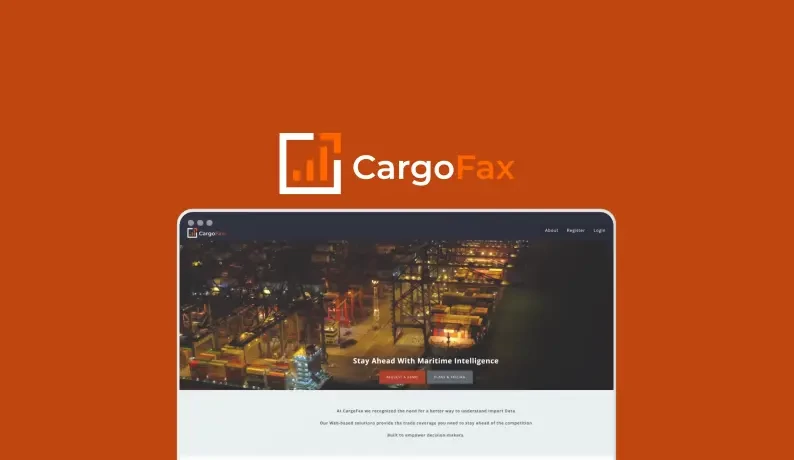
CargoFax
A data-driven import insights platform designed to help businesses make smarter import decisions.
View Case Study →Trusted By Industry Leaders
Manufacturing software development spans the systems that plan production and the systems that run it. Here's what we build and connect for discrete and process manufacturers.
Off-the-shelf ERP forces your BOM structure to fit someone else’s data model. We build and integrate ERP and MRP systems around your actual routing, work centers, and costing rules, so production scheduling reflects how your floor runs today.
Manual quality logs miss defects until a batch is already shipped. Our MES and quality-control builds capture inspection data at the work cell, flag out-of-spec readings in real time, and feed first-pass yield straight into your reporting dashboards.
Unplanned downtime rarely gives a warning. We connect vibration, temperature, and cycle-count sensors to your machines through IIoT gateways, then use predictive models to flag early signs of failing bearings, worn tooling, and other equipment issues before they stop the line.
Supplier delays hit harder when your team finds out from an empty bin. We build supply chain and warehouse systems that track inbound materials, safety stock, and vendor lead times in one view, so purchasing reacts to signals instead of shortages.
Production schedules fall apart when machine capacity, changeovers, downtime, and priorities aren’t visible together. We build scheduling systems that account for these constraints and track OEE, helping teams spot bottlenecks and make better use of available production capacity.
Plant data becomes difficult to act on when production, quality, maintenance, and inventory reports sit in separate systems. We bring this data into manufacturing dashboards that give plant and operations teams a clearer view of performance, bottlenecks, and operational trends.
Tell us what you're running today and what needs to change. We'll discuss your requirements and outline the next steps for development.
Book a 30-min Free CallGeneric ERP and MES platforms often force your production processes into predefined workflows. This is where a manufacturing software development company can build around your actual processes, reducing disconnected data, manual workarounds, and operational gaps that are difficult to spot.
WIP, downtime, quality, and machine data sit across ERP, MES, spreadsheets, and shop-floor tools, leaving teams without a complete production view.
When software doesn't match actual routing, changeovers, or reporting processes, supervisors and operators fall back to spreadsheets, manual entry, and duplicate records.
Older PLCs, scanners, machines, and sensors often remain disconnected from newer software, making modernization harder without replacing equipment that still works.
Discrete, process, and batch manufacturers plan, schedule, and track production on fundamentally different logic. We build software around the specific model your plant runs.
Automotive, electronics, and industrial equipment makers track individual units and complex assemblies through work orders. We build systems that trace serial numbers and sub-assemblies from work order to finished unit.
Formula-driven producers need batch tracking, recipe versioning, and yield reconciliation built into the core software from the start. We design for lot genealogy and compliance documentation that chemical and food processors can hand an auditor directly.
When customers configure orders before you build, static forecasts stop working. We build scheduling systems that plan and produce against real-time order data, so capacity gets allocated to what’s actually been sold.
Every ETO project starts with a design that doesn’t exist yet. We connect engineering approvals, custom BOMs, and production scheduling into one workflow, so a design change doesn’t mean re-keying the same data three times.
Pharmaceutical and food processors live and die by lot traceability. We build batch software with genealogy tracking, scheduling, and documentation, keeping every lot traceable from raw input to shipped case.
Plants running discrete, process, and batch production side by side need systems that can handle different production requirements in one environment. We deliver connected systems where a single schedule accounts for assembly lines and batch runs together.
Older plants often have PLCs and production equipment that still run reliably but weren't designed for modern manufacturing software. We build the integration layer that connects existing equipment through OPC-UA and Modbus gateways, using ISA-95 aligned data models without requiring a hardware refresh. The MES can also be deployed through modular, containerized components, so you can add capabilities such as quality management or production scheduling without adopting a full suite from day one.
AI only earns its place on the shop floor when it changes what a supervisor does next, whether that's a digital twin flagging drift early or a camera catching a defect before it ships.
Vibration and temperature sensors feed models trained on your equipment's failure history, flagging worn bearings and drifting tolerances before a breakdown stops the line.
Cameras mounted at the work cell catch surface defects and dimensional variance in real time, cutting the manual inspection backlog that slows first-pass yield.
Models trained on order history and seasonal patterns predict material needs weeks out, keeping purchasing ahead of shortages the data already showed.
Scheduling models re-sequence work orders automatically when a machine goes down or a rush order lands, without a planner rebuilding the board by hand.
A data-driven import insights platform designed to help businesses make smarter import decisions.
View Case Study →
Defined Scope, Set Budget
Flexible Scope as You Learn
An Embedded Team, Long-Term
A manufacturing software development company is only as useful as what it connects to. Here's what we integrate as standard.
Connect SAP, Oracle, Microsoft Dynamics, or your existing ERP and MRP systems with two-way data synchronization. Production orders, inventory levels, material requirements, purchasing data, and other operational records stay aligned without relying on manual exports or duplicate entry.
Connect manufacturing applications directly with MES, SCADA, PLC, and other shop-floor systems. Machine status, production counts, downtime events, quality readings, and process data can flow into a centralized layer for monitoring, reporting, and operational analysis.
Keep engineering and production teams working from the same product data. BOMs, specifications, engineering changes, and revision information can flow from PLM and engineering systems into production planning, reducing re-entry and helping prevent outdated information from reaching the shop floor.
Synchronize warehouse and electronic data interchange systems with production and business workflows. Purchase orders, advance shipping notices, inventory counts, shipment information, and material movements can move between systems automatically, giving operations teams a more consistent view of inventory and fulfillment.
Tell us what you're working with. We'll assess the system, integration requirements, and data flows, then define the right approach.
Real numbers vary, but here's what a manufacturing software development company typically charges by project complexity.
| Project Type | Complexity | Estimated Cost | Typical Timeline |
|---|---|---|---|
|
Single-module integration (e.g. ERP-MES sync) |
Low |
$45,000 |
8-12 weeks |
|
MES or quality-control system build |
Medium |
$90,000 |
12-20 weeks |
|
IIoT rollout with predictive maintenance |
High |
$150,000 |
16-24 weeks |
|
Full production suite (ERP + MES + IIoT + WMS) |
Very High |
$150,000+ |
6-9 months |
We walk the floor, review your ERP, MES, and PLC setup, and map where data breaks down between systems. This becomes the scope everything else is built from.
Architecture and data-model decisions come next, shaped around how your operators work the floor today, before a line of code gets written.
Development runs in agile sprints with weekly demos, so working software connects to real machine data within the first few weeks.
Once modules are ready, we connect them to your ERP, MES, and PLCs, then run parallel testing against live production data before anything goes live.
Rollout happens module by module. Shift supervisors and operators get direct training, and we stay on for post-launch support as the system beds into daily production.
Share your requirements, existing systems, integrations, and timeline. We'll review the scope and provide a tailored cost estimate.
We map your routing, work centers, and system gaps before writing a line of code. Requirements, wireframes, and integration diagrams get signed off first, so the build matches what your floor actually needs.
We design software around the machines, PLCs, sensors, and systems already running on your floor, reducing unnecessary hardware changes and avoiding a rebuild of infrastructure that still works.
Production data doesn't need an oversized cloud bill to stay available. We architect deployments sized to your actual data volume and uptime needs, so infrastructure cost tracks your plant's real usage.
In today’s fast-paced world, factories not just run on machines, they run on industrial IoT data. Each sensor value, manufacturing record and quality assurance produces meaningful data. These insights can…
Read Article →
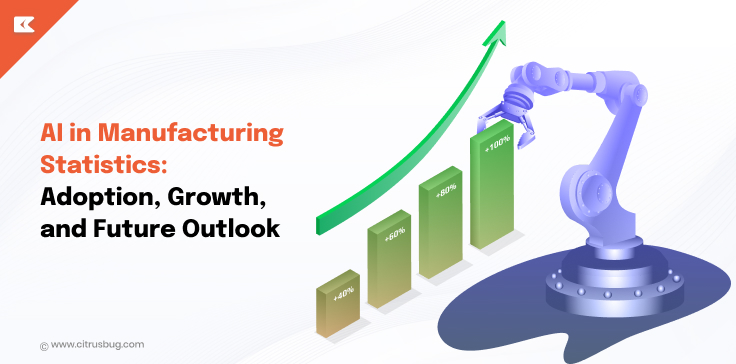
Artificial Intelligence (AI) is no longer a future-oriented concept in manufacturing. It is in the process of transforming production lines, factories and supply chains across the globe. From robotics and…
Read Article →
The transformation of the manufacturing industry might be the most obvious change that has occurred in the recent past. Machines are no longer completing tasks, but they learn, predict and…
Read Article →Most manufacturing software development company timelines run 8 to 24 weeks depending on scope. A single ERP-MES integration lands on the shorter end; a full IIoT rollout takes longer.
Yes. Our custom manufacturing software development connects to your current ERP, MES, and SCADA systems through APIs or gateways. Replacement is rarely needed unless your platform genuinely can't support your growth.
They stay. We connect existing PLCs through OPC-UA or Modbus gateways rather than requiring new controllers, so your IIoT rollout doesn't force a hardware refresh across the floor.
You do. Full source code ownership transfers at delivery, and production data stays in systems you control. We don't retain rights to anything built for your plant.
We offer Fixed-Price, Time and Material, and Dedicated Team models. Fixed-price suits a defined scope like a single MES build; Time and Material fits projects where requirements evolve.
Discrete, process, batch, make-to-order, and mixed-mode plants. Our manufacturing IT solutions adapt to whichever production model you run, since a discrete line and a batch plant need different software.
New modules roll out one at a time, tested against live production data before going fully live. Parallel running lets your team verify output before the old system switches off.
Yes, that's the starting assumption. We build around your specific routing, work centers, and existing systems from the first requirements call.