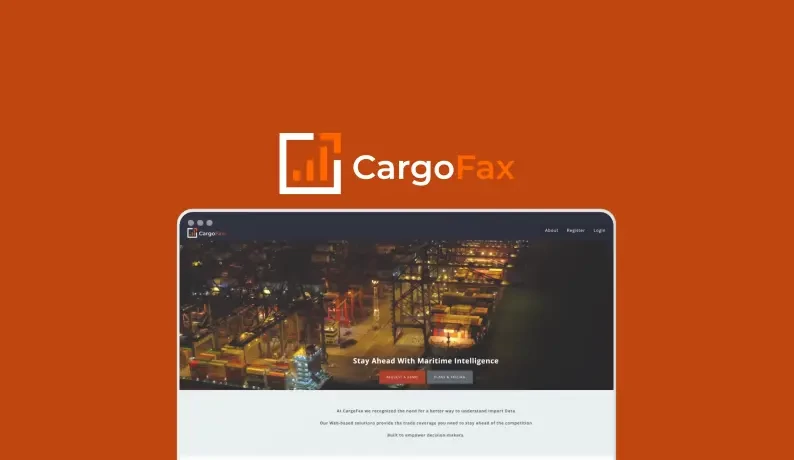
CargoFax
A data-driven import insights platform designed to help businesses make smarter import decisions.
View Case Study →Trusted By Industry Leaders
From new SSIS package development to legacy modernization and Azure migration, our ETL integration services help teams build, maintain, and move data pipelines across their existing technology environment.
We design control flow and data flow logic in SQL Server Data Tools, build reusable connection managers, configure error handling and logging, and deploy packages through the SSISDB catalog using the project deployment model.
Inherited packages often come with limited documentation and fragile dependencies. We map the existing workflows, rebuild unreliable transformations, and improve the code and package structure so your team can maintain and extend the environment without relying on the original vendor.
We migrate existing SSIS workloads to Azure using Azure-SSIS Integration Runtime, handling SSISDB migration, authentication, package dependencies, and production validation before cutover. Where packages require changes for the target environment, we address them as part of the migration.
We build ETL workflows that support data warehouses and reporting environments, including incremental loads, dimensional models, and slowly changing dimensions. This helps keep reporting data accurate without relying on unnecessary full reloads as data volumes grow.
Tell us what’s slowing down your SQL Server and SSIS workflows. We’ll review your current setup and outline the right approach for modernization, development, or migration.
Discuss Your ETL ProjectIf your SQL Server environment has been running SSIS packages for years, the challenge may not be moving data itself. It may be understanding how the existing pipelines work and keeping them reliable as requirements change.
• Limited documentation: Packages, dependencies, and transformation logic may be difficult for your current team to understand.
• Fragile workflows: Small changes can break existing packages or create unexpected issues across dependent processes.
• Manual recovery: Failed jobs may still require someone to investigate, rerun, or validate the data manually.
• Growing load times: Increasing data volumes can turn previously manageable ETL jobs into longer-running processes.
• Harder integrations: Adding new systems or data sources becomes more difficult when existing pipelines rely on outdated structures and workarounds.
• Aging systems: Older applications and databases can make changes to connected SSIS workflows more difficult to plan and execute. This is where modernizing legacy applications can also help reduce dependencies that hold data workflows back.
Over time, these issues can turn routine ETL maintenance into recurring operational work and make the environment harder to extend.
Sequences tasks such as Execute SQL, File System, and Script operations, with loops and conditional branching for multi-file or multi-table loads.
Moves data from source to destination through transformations such as lookups, derived columns, and conditional splits within a pipeline.
Store and reuse the connection details for data sources and destinations, making it easier to update shared connection settings without changing every package.
Stores deployed packages, execution history, parameters, and environment configurations, giving teams a central place to manage and troubleshoot SSIS workloads.
Existing SSIS packages can run in Azure through the Azure-SSIS Integration Runtime, allowing teams to move established ETL workflows without rebuilding everything from scratch. We handle the SSISDB catalog migration, network and identity configuration, and validation runs to confirm packages continue producing the expected results before the on-premises environment is retired.
SSIS supports a wide range of common data sources, while custom connection managers and components can extend that connectivity when your environment requires something more specific. We configure integrations around the systems your pipelines need to move data between.
SQL Server, Azure SQL, Oracle, and MySQL sources, connected through native OLE DB and ODBC drivers with parameterized queries that pull only the rows that changed since the last successful run.
Fixed-width files, delimited exports, and Excel workbooks handled with schema validation built into the data flow, so a renamed column upstream doesn't silently break a load three steps later.
Azure Blob Storage, Amazon S3, and REST APIs pulled in through script tasks and custom components wherever SSIS doesn't ship a native connector out of the box.
Salesforce, Microsoft Dynamics, and industry-specific platforms integrated through their APIs and mapped into the same warehouse tables as your core SQL Server data.
We deliver ETL integration services around the data environment you already have, whether you're building new SSIS packages or improving existing pipelines. We assess the current setup, define the target architecture, validate the data, and deploy with the monitoring your team needs to maintain it.
We inventory every existing package, connection manager, and scheduled job, then flag which ones are safe to leave alone and which ones are quietly failing.
We design the control flow, data flow, and target schema before writing a single task, so the package structure matches how your data actually changes.
Packages get built, tested against production-scale data volumes, and checked row by row against existing output before anything replaces it.
We deploy into the SSISDB catalog with logging and alerting configured, so a failed load surfaces as a notification, not an angry email the next morning.
A data-driven import insights platform designed to help businesses make smarter import decisions.
View Case Study →
AI-based personal health monitoring and preventive care platform designed to transform diverse clinical and patient data into actionable insights.
View Case Study →
Revolutionizing Import Data Management in Logistics
View Case Study →Scheduled ETL jobs run consistently and deliver refreshed data to downstream systems on a predictable schedule. Your teams spend less time checking whether a load finished and more time working with the data.
Monitoring, alerts, and appropriate retry logic help identify failed jobs quickly and reduce repetitive manual intervention. When something does require attention, your team has the execution details needed to troubleshoot it faster.
A well-structured control flow, reusable connection managers, and clearly defined transformations make it easier to bring new sources into the pipeline without rebuilding existing workflows each time requirements change.
Finance, operations, and other teams can work from shared warehouse data with defined transformation and loading rules. This reduces reliance on separate spreadsheets, manual extracts, and conflicting versions of the same numbers.
Data pipelines often move sensitive information that needs clear rules for access, handling, and retention. Our data governance practices help define how that information should be managed within ETL workflows.
HIPAA-Aligned Data Handling: PHI fields get masked or tokenized inside the data flow itself, before they ever reach a staging table outside the source system.
SOC 2 Controls: Access to connection manager credentials and the SSISDB catalog is logged and scoped per role, matching the audit trail a SOC 2 review expects.
GDPR Data Minimization: Transformations only carry the fields a downstream system needs, so personal data doesn’t spread into reports that never required it.
ISO 27001 Alignment: Package deployment, credential storage, and environment configuration follow the same change control process as the rest of your infrastructure.
Most SSIS package rebuilds and modernization engagements run $8,000 to $35,000 depending on package count and how undocumented the existing estate is. Full Azure migrations run higher.
Tell us your scope for an exact number.
Every package goes through our Secure ADLC methodology, with security and access review built into each build stage from day one, so credential handling stays clean well before go-live and stays that way after.
We regularly inherit stalled or undocumented SSIS estates left behind by a departed contractor, mapping every dependency and getting the pipeline stable and documented inside a few weeks.
Requirement analysis, dependency mapping, and a documented data flow diagram come before a single package gets touched, so the rebuild matches how your business actually moves data today.
Yes. We start with a dependency audit that maps every connection manager and transformation before touching a package, so nothing breaks silently during handover.
Depends on the package. Ones that are structurally sound get patched and documented. Ones with tangled control flow logic get rebuilt from the mapped requirements.
Most single-estate modernizations run 6 to 12 weeks depending on package count and how much dependency mapping the audit turns up.
Provisioning an Azure-SSIS Integration Runtime, moving the SSISDB catalog, configuring managed identity authentication, and validating every package's output against production before cutover- the same discipline we apply to any data migration.
Both. We configure logging and alerting inside the SSISDB catalog under the project deployment model, so failures surface immediately instead of piling up silently.
We flag deprecated dependencies like the Legacy SSIS Service or 32-bit mode in your SSIS software during the audit and replace them before they cause a production issue.
Yes. SSIS connects to Oracle and MySQL natively, and we build custom connectors for Salesforce, REST APIs, and other systems without a built-in adapter.
You do. Full source code, package files, and dependency documentation transfer at delivery, with no vendor lock-in on the SSISDB catalog.
Most package rebuilds run $8,000 to $35,000. Full Azure migrations or new multi-source builds typically run higher, scoped after a short audit.