
HEALTHCARE

 Citrusbug Healthcare →

 ISO 27001
 SOC 2
 HIPAA
Trusted by industry leaders










Certifications and Accreditations

From internal business applications to customer-facing products, Citrusbug provides software development services across product engineering, integrations, modernization, and cloud infrastructure. Each project starts with discovery to define requirements, technical priorities, and delivery milestones.

Build operations portals, ERP and CRM extensions, approval workflows, and reporting dashboards around your business processes. Our custom software development services help reduce manual work and give teams tools suited to their day-to-day operations.

Develop software products from an initial MVP through ongoing feature development. Capabilities include multi-tenant architecture, subscription billing, tenant-level access controls, usage analytics, and release workflows tailored to your product requirements.

Build web applications with React or Next.js front ends and Node.js, Python, or .NET back ends. Development can cover responsive interfaces, accessibility, performance optimization, API design, and integration with third-party platforms.
Develop mobile applications using React Native or Flutter for cross-platform delivery, or Swift and Kotlin for native iOS and Android experiences. Features can include offline access, data synchronization, push notifications, and app store deployment support.
Modernize legacy applications, outdated frameworks, and on-premises infrastructure through a phased approach. Prioritize critical dependencies, improve maintainability, and document architectural changes while planning releases around operational requirements.
Connect platforms such as Salesforce, HubSpot, QuickBooks, NetSuite, and Stripe with custom applications through APIs and event-driven workflows. Validation, retry handling, and monitoring help maintain data consistency and identify integration failures.
Set up and manage cloud environments across AWS, Azure, and Google Cloud, using infrastructure as code and CI/CD pipelines where appropriate. Staging environments, deployment automation, and cost monitoring support more consistent releases and infrastructure management.
Build data pipelines that consolidate information from operational systems into platforms such as Snowflake, BigQuery, or PostgreSQL. Data transformation and modeling prepare information for Power BI or Looker dashboards, helping teams track performance and make informed decisions.
Talk through your product idea, core features, and technical requirements with an engineer before moving into development.
Discuss Your ProjectCitrusbug builds custom AI capabilities around your workflows, data, and existing systems, from document processing and forecasting to automated task handling. Each solution is evaluated against relevant test cases before deployment.
Automate workflows that involve gathering information, coordinating tasks, and preparing actions across business systems. Our AI agent development services can include CRM and ERP integrations, permission controls, audit logs, and human approval for sensitive actions.
Develop retrieval-augmented generation (RAG) applications that answer questions using contracts, manuals, support tickets, and knowledge bases. Access controls, source references, and model selection help align responses with your information requirements and intended use.
Use historical data to build models for demand forecasting, churn prediction, risk scoring, and anomaly detection. Deploy models through APIs or existing applications, with performance monitoring to identify changes in data patterns and model accuracy over time.
Add capabilities such as intelligent search, summarization, document extraction, and in-app assistants to existing SaaS products or internal platforms. A modular implementation allows features to be tested, updated, and managed alongside the core application.
Privacy, AI governance, and accessibility requirements can influence how software handles personal data, manages user permissions, and presents information. Citrusbug considers relevant requirements during discovery so they can inform architecture, development, and testing from the start.
Our security and compliance services help teams translate applicable requirements into engineering controls. Legal applicability should be confirmed with qualified counsel.
Design workflows for consumer data access, correction, deletion, and opt-out requests. Depending on the product and applicable obligations, controls may include consent management, Global Privacy Control signals, data retention rules, and traceable request handling.
AI systems used in areas such as hiring, lending, or other consequential decisions may require additional risk assessments, notices, or safeguards. We can support requirements such as decision logging, human review, and documentation, based on the system’s intended use and applicable rules.
Some California laws introduce disclosure and documentation requirements for specific generative AI systems and applications. We help maintain relevant technical records, including model details, data sources, and system behavior, where these support applicable transparency and documentation obligations.
Build more accessible interfaces with semantic components, keyboard navigation, screen reader support, and sufficient color contrast. Accessibility testing against WCAG guidelines can help identify barriers early and support the needs of people using different devices and assistive technologies.
Workshops bring together your product owner, operations leads, and the people who handle the current process every day. Requirements, data flows, and integrations are documented, and the release plan is agreed with you. You approve the scope and estimate before development begins, and the discovery documents remain yours if you decide to pause or build elsewhere.
Engineers set up repositories, cloud accounts, CI/CD pipelines, and staging environments inside accounts your company owns from day one. Infrastructure is written as code in Terraform, which means every environment can be rebuilt, audited, and handed to another team without anyone reverse engineering how a server was configured by hand.
Development runs in two-week sprints, with working-software demos at the end of each sprint and written daily updates in between. As a software development company in California, Citrusbug works with your product owner to reprioritize the backlog as feedback arrives, keeping development focused on the features that matter most.
Under our Secure ADLC delivery approach, automated unit, integration, and security scans run on every pull request. Before each release, QA engineers run regression suites, OWASP-aligned security checks, and WCAG 2.2 AA accessibility reviews with screen readers. Defects are logged against the acceptance criteria from discovery, which keeps sign-off tied to what was agreed in writing.
Releases go out with a rollback plan, monitoring dashboards, and alerting tied to the metrics agreed in discovery. At handover, you receive the full source code, infrastructure definitions, API documentation, and admin runbooks, with credentials transferred to your accounts so no part of the product depends on Citrusbug to keep running.
After launch, you can keep a reduced team for new features or move to an L1, L2, and L3 support agreement with defined response times. Usage data from the first months of real traffic often reshapes the roadmap, and the support agreement gives you engineering capacity to act on what that data shows.
Their agile way of working, competence, and friendliness are impressive.December 7, 2024
Citrusbug Technolabs handles a data extraction project for an education company. They're also responsible for managing an AI generation project for the client.
Citrusbug Technolabs has laid out and followed a clear project outline and consistently met deadlines. The team communicates well and demonstrates a strong understanding of the client's vision and goals. Their agile approach, high level of competence, and personable approach stand out.
 Read More
Their communication and ability to capture exactly what I was asking for were impressive.November 14, 2024
Citrusbug Technolabs built an automated system for a veteran medical company. The system needed to collect and store user data, generate customized letters based on surveys, and use AI to summarize reviews.
Citrusbug Technolabs delivered a functional automated system that successfully organized the client's records and auto-generated statements. The team was quick to respond, addressed all roadblocks, and communicated effectively. Overall, their ability to understand the client's needs stood out.
Read More
They were very calm and talented, and they did bring some of their own ideas.January 28, 2025
Citrusbug Technolabs has developed an MVP for a freight and capacity marketplace. The team has created three different interfaces for three market segments.
Citrusbug Technolabs has successfully developed an effective MVP. The team has delivered the project on time and almost within budget. Moreover, their responses have been timely. Overall, the team has been calm, talented, and innovative. This has led to the client's satisfaction.
Read More
What stood out most about them was their personalized approach and sense of ownership in every aspect of the project."February 27, 2024
Citrusbug Technolabs built a Flutter cross-platform mobile app for an education company. They also developed two web apps and an admin panel and provided DevOps support for the client's infrastructure.
Citrusbug Technolabs' support successfully boosted the client's user engagement by 8x, resulting in an 85% retention rate. The reliable team demonstrated a dedication to delivering on time and promptly responding to concerns and adjustments. Their personalized, client-centric approach stood out.
Read More
They didn't like the phrase "impossible to do", which made them very solution-oriented.February 19, 2024
A healthcare company hired Citrusbug Technolabs to design and develop a user-friendly application. The team provided tailored assistance to meet the client's requirements.
Citrusbug Technolabs successfully delivered an application that was ready for market. The team was highly professional and well-organized; they stayed focused throughout the engagement and were receptive to changes. Overall, they stood out for their trustworthiness and commitment to excellence.
Read More
They're 100% on time and transparent throughout each stage of the project.February 24, 2024
A financial technology company has hired Citrusbug Technolabs to build a custom web application. The team handles the development and design of the app.
The project is ongoing, but the client has been satisfied with Citrusbug Technolabs' services. The team is very professional — they always respect timelines and provide regular updates to ensure everyone's on the same page. Also, their transparent approach makes them a trustworthy partner.
Read More
"I do believe they are exceptional at where they stand."
Citrusbug Technolabs took on a mobile app development project for a Singapore-based development house. They were provided with UX designs to execute. Currently, they're finalizing and fine-tuning the product.
Citrusbug Technolabs contributed to the successful launch of the product, which has garnered over 10,000 users in just three months. The product has also received support from investors. They consistently followed-up with their progress and delivered at a speedy rate. The team is truly stellar.
Read More
DEFINED SCOPE AND BUDGET
EVOLVING PRODUCT SCOPE
LONG-TERM PRODUCT TEAM
The cost of custom software depends on what you need to build, how it connects with existing systems, and the technical requirements it must meet. These six factors help explain where development effort can increase.
Applications with multiple user roles, approval workflows, complex permissions, and administrative controls require more engineering and testing than products with a small set of straightforward workflows.
Each integration adds implementation and testing work. Well-documented APIs are generally simpler to work with than legacy databases, EDI feeds, or third-party systems with limited documentation or testing environments.
Building for web, iOS, and Android involves different interface, compatibility, and testing requirements. Cross-platform frameworks may reduce duplicated effort, while native features and device-specific functionality can add complexity.
AI costs vary with the use case, data quality, and evaluation needs. A focused feature using a hosted model typically involves less work than a RAG application requiring data preparation, access controls, retrieval testing, and ongoing monitoring.
Sensitive information may require additional access controls, audit logs, and data protection measures. Migrating legacy records, validating data, and designing cloud infrastructure around availability and usage requirements can also increase development effort.
Standard interface patterns and reusable components can simplify implementation. Custom design systems, user research, complex interactions, and accessibility testing add design and engineering work, particularly for products with varied user needs.
Custom software projects with Citrusbug typically range from $25,000 for a focused build to $150,000+ for enterprise platforms. Share your requirements and an engineer will reply with a scoped estimate.
Every engagement starts under NDA, and the source code, infrastructure accounts, and documentation transfer to your company at delivery with no licensing ties to Citrusbug.
Serverless functions, right-sized databases, and autoscaling rules are chosen with your monthly hosting bill in view, and cost alerts flag spikes before the invoice arrives.
The engineers who scope your product in discovery go on to build, launch, and support it, which keeps context intact as the roadmap changes over months and years.

 Custom Software Development
Every software project faces uncertainty. Changing requirements, tight deadlines, or new technologies can easily disrupt progress. This is the reason why risk management in software development is necessary. It assists…
Read Article →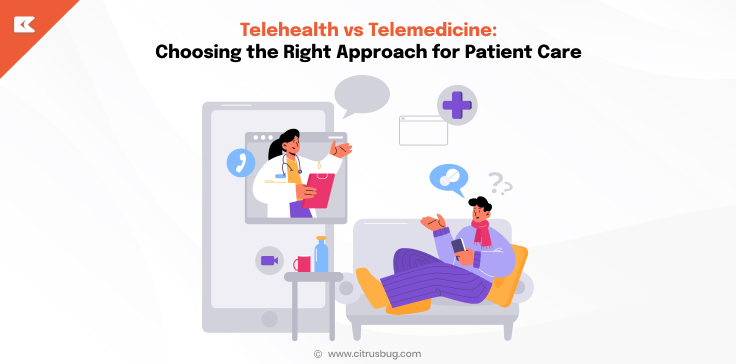 Application Development
Healthcare delivery has shifted beyond hospital walls, with providers increasingly using digital platforms to consult, monitor, and engage with patients remotely. This shift has made terms like telehealth and telemedicine…
Read Article →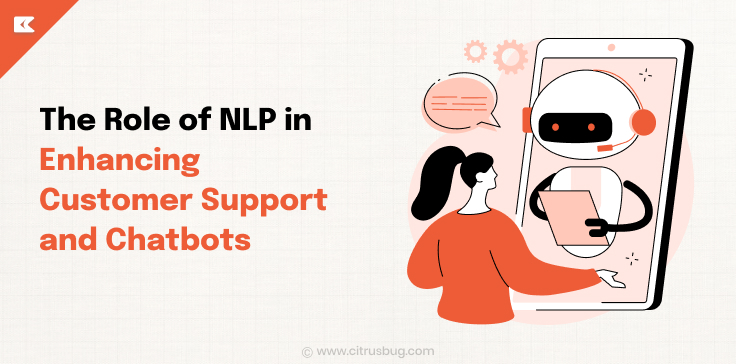 Artificial Intelligence
Natural Language Processing is a revolutionary subset of artificial intelligence that allows machines to read, comprehend, and produce human languages. NLP plays a very important role in augmenting customer interactions…
Read Article →Yes, when communication is structured. You get written daily updates, a demo at the end of every sprint, and shared access to the backlog and repositories, with calls scheduled inside Pacific Time working hours.
Timeline depends mostly on integrations, platforms, and the number of user roles. Discovery produces a release plan with dated milestones for your scope, and an MVP-first plan puts a usable product in front of customers sooner.
It depends on your business. The CCPA covers for-profit companies that meet its revenue or data-volume thresholds, or earn most revenue from selling or sharing personal information. We document which requirements apply so your counsel can confirm.
Usually, yes. AI features connect to your application through APIs as a separate service, so search, summarization, or agents can launch and be rolled back while the core codebase stays as it is.
Both. Seed-stage founders typically start with a fixed-price MVP, while established SMEs bring modernization, integration, or AI projects for an existing platform, often through a dedicated team.
On time-and-materials or dedicated team engagements, the backlog is reprioritized each sprint. On fixed-price projects, changes are estimated as change requests, so you approve any cost or date impact first.
Citrusbug is ISO 27001 certified and SOC 2 compliant. Work is covered by an NDA, access to your systems is role-based, and credentials stay in cloud accounts your company owns.
A short description of the problem, who uses the current process, the systems involved, and any deadline or budget range. Documents, screenshots, or a codebase link help, though none are required for a first conversation.
