












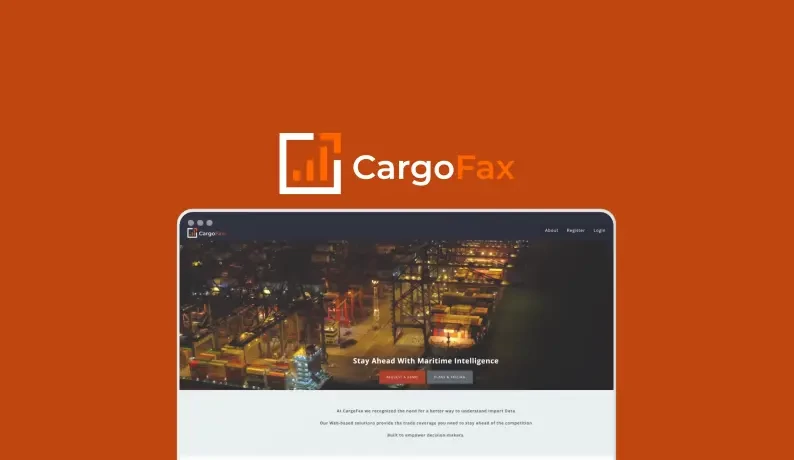
CargoFax
A data-driven import insights platform designed to help businesses make smarter import decisions.
View Case Study →Trusted By

Citrusbug helps businesses in Qatar build custom applications, modernize existing systems, integrate AI, and launch digital products. Each engagement is scoped around your business goals, current technology, and integration needs, with clear delivery milestones and full source code ownership at handover.
Internal platforms for approvals, scheduling, inventory, and field operations, modelled on your actual workflow with role-based access, audit logs, and reports managers can pull without asking IT for an export.
Customer portals, booking engines, and operational dashboards built on React or Next.js with Node.js or Python backends, structured around clean APIs so new channels plug in later without a rebuild.
Native iOS and Android apps or cross-platform builds in Flutter and React Native, with offline support, push notifications, and secure login, released through store review on your own developer accounts.
Document extraction, demand forecasting, chat assistants, and recommendation engines added to existing products through AI/ML development services that begin with data quality and end with monitored models.
Multi-tenant platforms with subscription billing, tenant isolation, and admin consoles, built for founders who need an MVP in market first and a codebase that scales once paying customers arrive.
Wireframes, clickable prototypes, and design systems tested with real users before development starts, so layout, navigation, and content decisions are settled while each change still takes hours to make.
Ageing PHP, .NET Framework, or desktop applications moved to supported frameworks in stages, with data migration scripts, parallel runs, and rollback plans that protect daily operations during cutover.
Infrastructure as code with Terraform, CI/CD pipelines, container deployments, and monitoring on Azure, Google Cloud, or AWS, sized to measured usage so hosting bills follow actual demand.
Share your goals, existing systems, and key requirements. Our engineers will discuss the scope, identify integration considerations, and outline a realistic timeline and budget.
Schedule a 30-Min CallWe assess in-country and regional hosting options against your data location requirements, application performance, service availability, and budget, then document the chosen architecture.
Qatar’s Personal Data Privacy Protection Law (Law No. 13 of 2016) governs covered personal data processing. We account for relevant privacy requirements through data-flow mapping, access controls, retention rules, and processes for handling data subject requests.
Financial institutions regulated by the Qatar Central Bank may face specific cloud requirements, including restrictions on where certain information is processed and approval obligations for cloud arrangements. For applicable projects, we help document technical controls and architecture decisions for review by your compliance team.
Government-facing systems may need to align with Qatar’s National Information Assurance Policy and applicable data classification and security controls. We factor relevant technical requirements into architecture and implementation planning, while formal assessments and approvals remain with the responsible authorities.
Citrusbug integrates custom applications with the systems your business already relies on, from ERP and CRM platforms to payment providers, banking interfaces, and logistics tools. These integrations help synchronize business data, automate transaction and order updates, and reduce manual reconciliation. Error logging and alerts help teams identify failed exchanges and maintain reliable data flows across connected systems.
Connect payment providers and supported banking interfaces to process payment requests, receive transaction updates, and reconcile payment records.
Integrate platforms such as SAP, Microsoft Dynamics 365, and Odoo to synchronize orders, inventory, invoices, and financial records across applications.
Connect CRM platforms with customer portals, email, and messaging tools to keep customer details, enquiries, and interaction histories aligned.
Exchange order details, shipment information, tracking updates, and delivery statuses between business applications and supported logistics providers.
A data-driven import insights platform designed to help businesses make smarter import decisions.
View Case Study →
Workshops with your business and technical stakeholders define project goals, user needs, existing systems, and integration requirements. The outcome is an agreed scope, documented requirements, and a prioritized backlog before development begins.
Engineers define the technical architecture, data model, integrations, and hosting approach based on your requirements. You receive a delivery roadmap, milestone-based timeline, and cost estimate tied to the agreed scope.
Wireframes and clickable prototypes help your team review key user journeys before development. For bilingual products, designs account for Arabic and English layouts, including right-to-left behavior where needed. Approved designs guide implementation and keep the experience consistent.
Development progresses in structured sprints, with working features reviewed against agreed requirements. Code reviews and automated tests support quality, while regular updates and sprint demos give your team visibility into progress, blockers, and scope decisions.
QA covers functional behavior, regression risks, performance, and relevant device or browser compatibility. Security checks are tailored to the application and may include access controls, dependency scanning, secrets management, and common web application risks. Issues are addressed and retested before release.
Deployment planning covers monitoring, backups, and rollback procedures appropriate to the application. Handover includes source code, technical documentation, and guidance for your team. After launch, support options can be aligned with your maintenance needs and required response coverage.
DEFINED SCOPE AND BUDGET
EVOLVING SCOPE
LONG-TERM ROADMAP
Projects typically range from about $25,000 for a focused application to $120,000 or more for enterprise platforms. Features, integrations, bilingual design, and hosting requirements decide where yours lands. Share your brief for a scoped estimate.
Citrusbug combines experienced engineering, transparent delivery practices, and clear ownership terms to help businesses move from requirements to reliable software with greater control over scope, progress, and long-term maintenance.
Requirements, user stories, and technical dependencies are reviewed before development begins. This creates a shared scope, helps surface risks early, and gives your team a clearer basis for evaluating estimates and milestones.
You retain full source code ownership, with an NDA in place by default. Documentation and relevant access credentials are handed over so your team can maintain or extend the product.
Daily written updates, sprint demos, and access to the project repository and task board give your stakeholders visibility into progress, blockers, and upcoming decisions.
If a previous development project has stalled, we assess the existing codebase, identify reusable components and outstanding issues, and map a realistic path toward completion without automatically starting over.
Custom software development is the process of developing software for specific users. In today’s era of technological transformation, one software solution is not fit for everyone. Due to this Custom…
Read Article →
Operating with a committed group means recruiting the people you need to handle the jobs you can’t (or choose not to) do at work. There are a number of occasions…
Read Article →
MVP stands for a minimum viable product, it is the perfect way to validate a product idea. As per the study by the IBM institute 90% of startup fails in…
Read Article →Timelines depend on scope, integrations, and how quickly decisions are approved. Discovery produces a milestone plan with dates for each release, and an MVP-first approach puts working software in users' hands earliest.
Not always. It depends on your sector, contracts, and data types. Financial institutions under QCB rules and government-facing projects face closer scrutiny, so we assess hosting in discovery and document the recommendation for your legal team.
Yes. Bilingual products are designed with right-to-left layouts, Arabic typography, and mixed-direction form handling from the first wireframe, and both language versions are tested on real devices before release.
Yes. Through the Dedicated Team model, our engineers join your repositories, sprint rituals, and code review standards, so knowledge builds inside your organisation while the product moves forward.
Support runs at L1, L2, or L3 levels, covering user issues, bug fixes, and deeper code or infrastructure changes. A period of free maintenance follows launch, with its exact scope set in the contract.
Each personal data flow is mapped during discovery, with consent capture, retention rules, and access and deletion requests built into the product. We design to support PDPPL requirements, while legal sign-off stays with your counsel.
Ask for a written discovery output, clear code ownership terms, defined engagement models, and examples of similar builds. A partner who explains hosting and data decisions before quoting is planning your project properly.