Otter Finance
Otter Finance is a European fintech platform that enables users to access liquidity against their assets without selling them, providing streamlined financial tools and dashboards for asset management and investment activities.
Most financial software gets built by teams who understand code but not clearing cycles, reconciliation windows, or audit trails. We build banking, payment, lending, and wealth management systems with compliance and data integrity engineered in from the first sprint, not bolted on before launch.
Trusted Software Development Company By
Financial software covers more ground than a single dashboard or app. Here's what we build most often, matched to how each system actually needs to behave in production.
Account management, transaction processing, and general ledger systems built to handle high transaction volumes without breaking reconciliation. We modernize legacy cores or build new ones that integrate cleanly with existing banking infrastructure.
Fast, secure payment rails matter more than a flashy checkout screen. Our payment gateway and digital wallet build support multiple payment methods, real-time settlement, and fraud screening that runs in-line, not after the fact.
Portfolio tracking, rebalancing logic, and performance analytics for advisors and individual investors alike. These platforms need to reconcile real-time market data against a client’s actual holdings without lag or drift.
Loan origination, underwriting automation, and credit scoring models that hold up under audit. We build lending platforms that shorten approval cycles while keeping every decision explainable to a regulator.
Manual compliance reviews do not scale past a certain transaction volume. Automated audit trails, rule-based monitoring, and regulatory reporting reduce the manual burden on your compliance team without sacrificing accuracy.
Raw transaction data is not the same as a decision-ready dashboard. We build financial BI tools that turn scattered data sources into forecasts, anomaly alerts, and reports your finance team can act on the same day.
Client relationships in finance run on more than contact history. Our banking and finance CRM builds connect transaction data, service history, and compliance flags into a single view for every relationship manager.
Self-service is now the default expectation, not a nice-to-have. Secure portals give clients and investors real-time account visibility, document access, and transaction history without a support ticket.
Tell us what you're working with and we'll help you scope the right starting point.
Book a Free Discovery CallGeneric platforms apply one compliance model to every client, which rarely matches your specific regulatory footprint.
Pre-built connectors cover common cases. Your core banking system, market data feed, or legacy ledger often isn’t one of them.
Feature requests wait in line behind every other client on the platform, even when the fix is business-critical for you.
Multi-tenant platforms make it hard to control exactly where transaction data lives, which matters more every year.
Financial software gets audited in ways most software never does. Our reference architecture separates transaction processing, compliance logging, and reporting layers from day one, so every decision path stays traceable without slowing down the system that has to run in real time.
Real-time or batch sync with your core banking platform so account balances, transactions, and ledger entries stay consistent across every system that touches them.
Direct integration with payment gateway platforms, card networks, ACH, and instant payment rails, with idempotency handling so a retried request never double-charges anyone.
Live feeds from market data providers for pricing, valuation, and portfolio performance calculations, reconciled against your internal holdings in near real time.
Identity verification, sanctions screening, and credit bureau pulls wired into onboarding and underwriting flows without adding friction to the applicant experience.
Two-way sync with your general ledger or ERP so financial reporting reflects what actually happened in the platform, not a manual export three days later.
Credit scoring, fraud detection, and robo-advisory models built on AI are moving from pilot to production across banking and fintech. Regulators are moving just as fast. High-risk AI systems used in credit and financial decisioning face new transparency and human-oversight requirements taking effect in August 2026, and model risk expectations that once applied mainly to large banks are reaching mid-market lenders and fintechs too.
We build AI-driven financial features with the audit trail built in from the start: every model decision logged, every escalation to a human reviewer documented, every recommendation explainable to a compliance officer or a regulator without a separate reporting project after the fact. Fraud detection and credit models get faster because of AI. They also need to get easier to defend, which is where most vendors stop short. Our risk and compliance solutions work covers exactly this gap.
Every financial software engagement follows the same disciplined sequence, adjusted for your specific compliance footprint and integration map.
We map your current systems, compliance obligations, and integration points before writing a single requirement, so the build plan reflects your actual environment.
Every data flow gets documented against the regulations that apply to it, from PCI DSS to SEC and FINRA reporting rules where relevant.
We design the system architecture around audit trails and data integrity first, then layer in the interface and workflow design your team will actually use daily.
Development happens in short sprints with working software you can review every week, integrated against your core systems as we go, not at the end.
We launch with a rollback plan, monitor the first weeks closely, and stay on for ongoing support, security patches, and compliance updates as regulations shift.
Best for projects with a clear, defined scope.
Best for ongoing platform development and modernization.
Best for evolving scope you can't fully define yet.
Otter Finance is a European fintech platform that enables users to access liquidity against their assets without selling them, providing streamlined financial tools and dashboards for asset management and investment activities.
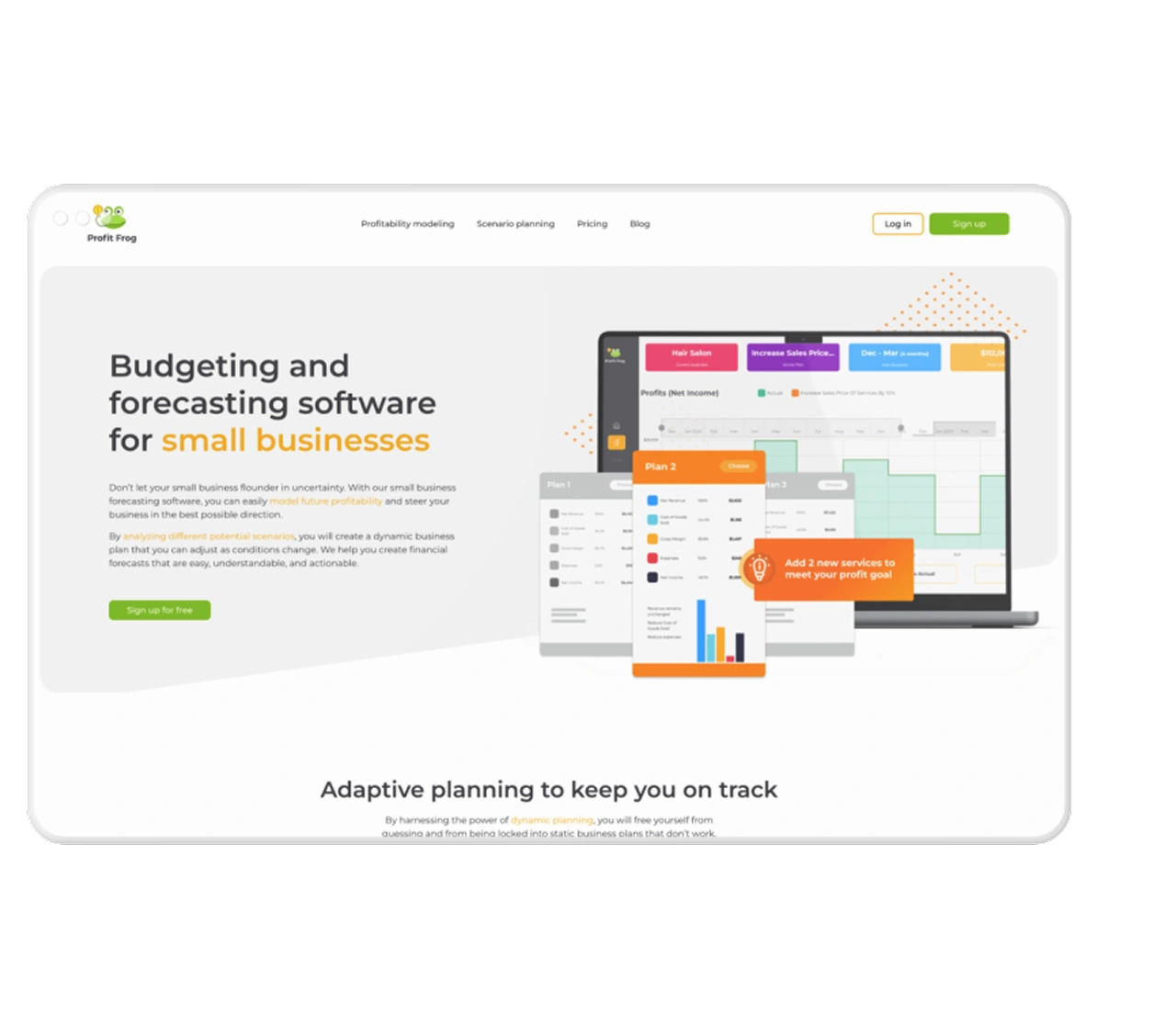
Profit Frog is a budgeting and profitability forecasting platform that empowers small business owners to model future performance, analyze scenarios, and make confident financial decisions.
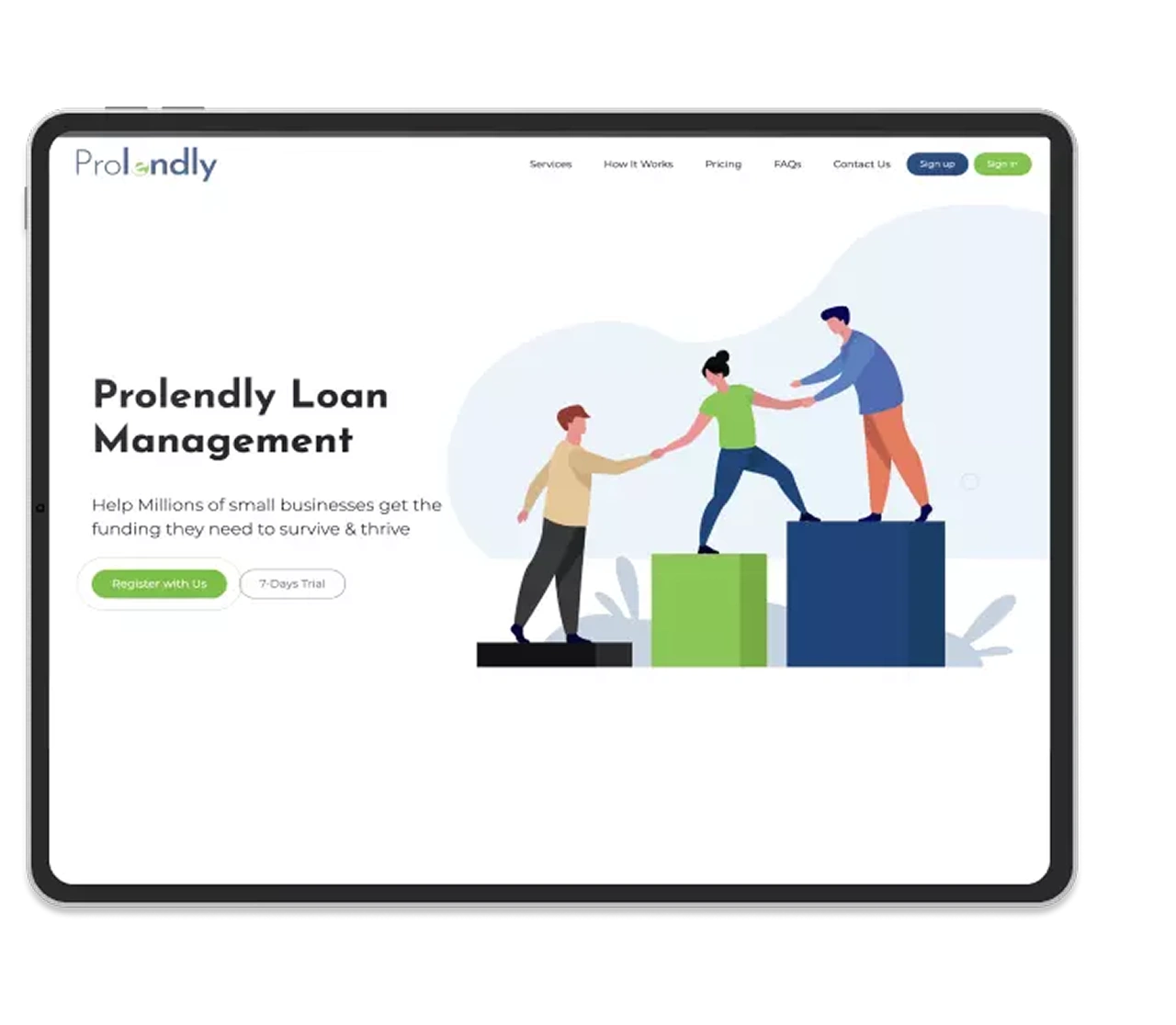
Prolendly is a FinTech SaaS platform that connects startups and small businesses with funding opportunities, lenders, and capital consulting resources.
Every financial software build scopes differently based on system type and compliance load. Here's a realistic range for the systems we're asked to build most often, including banking CRM systems when that's part of a broader engagement.
| System Type | Complexity | Typical Timeline | Key Integrations |
|---|---|---|---|
|
Payment / Digital Wallet Platform |
Medium |
2-4 months |
Payment gateways, card networks, KYC providers |
|
Wealth & Investment Platform |
High |
3-6 months |
Market data feeds, custodians, portfolio accounting |
|
RegTech / Compliance System |
Medium |
1.5-3 months |
Core systems, reporting APIs, audit log storage |
|
Lending & Credit Platform |
High |
3-7 months |
Credit bureaus, KYC/AML, core banking |
|
Core Banking Modernization |
Very High |
6-12 months |
Legacy core, payment rails, general ledger |
Costs typically range from $25,000 for a focused compliance or reporting tool to $150,000 or more for a full platform build. Share your scope and we'll size it accurately.
We map your data flows and compliance obligations before a single sprint starts, so the build plan reflects your actual regulatory footprint instead of a generic template.
Security and audit logging get built into the development lifecycle itself from day one, not added as a final pre-launch step that delays your release.
We connect to the core banking, payment, and market data systems you already run today, not a fixed list of connectors a vendor happened to prebuild.
L1, L2, and L3 support options keep the platform running and current with new compliance requirements for years after the initial launch.
Past financial data alone is no longer sufficient in a quickly moving market. Leveraging Predictive analysis in finance, organizations can evolve from retrospective models to a forward-looking approach by detecting…
Read Article →
Today, finance teams are trapped in the endless circle of manual entries, reconciliations, and compliance examinations. Such activities are necessary but may take time, leading to delays and human errors…
Read Article →
Revenue operations (RevOps) look great on paper. It sounds like the fix every growing business needs: align marketing, sales, and customer success. Build a clean pipeline. Forecast revenue with confidence.…
Read Article →Core banking systems, payment platforms, lending and credit tools, wealth management software, compliance automation, and financial analytics dashboards, custom-built to your compliance requirements rather than adapted from a generic template.
An AI financial software development company builds explainability and audit trails into every AI-driven decision, from credit scoring to fraud detection, so the model holds up under regulatory review, not just under testing.
By logging every model decision, documenting human review points, and mapping AI outputs against model risk expectations and the EU AI Act's high-risk classification for credit and fraud systems.
Yes, when audit trails, human oversight checkpoints, and explainability are designed in from the start. The risk isn't AI itself, it's deploying it without a way to show a regulator how a decision was made.
Anywhere from 3 months for a scoped compliance tool to over a year for a core banking modernization. Integration complexity and regulatory scope drive the timeline more than feature count.
PCI DSS, SOC 2 Type II, GDPR, and SEC or FINRA-relevant audit trail requirements depending on your business, plus DORA-aligned resilience practices for clients operating in the EU.
Both. Most engagements integrate with an existing core banking, ledger, or CRM system rather than replacing everything, since a full rebuild is rarely the right first move.
Fixed-Price for clearly scoped builds, Dedicated Team for ongoing platform work, and Time and Material for scope that evolves as you learn more.
You do, in full, at delivery. There's no ongoing licensing dependency on us to keep your platform running.