
 Back
Back







Key Takeaways
- The global AI in diagnostics market reached $2.44 billion in 2026, growing from $1.5 billion in 2024 at a sustained 21.74% CAGR.
- AI diagnostic models now achieve 94% identification accuracy for pathologies in radiology and dermatology.
- The FDA authorized 1,451 AI-enabled medical devices through 2025, with radiology accounting for 76% of all cumulative authorizations.
- AI tools cut diagnostic processing time by more than 90% in radiology and pathology workflows compared to manual review.
- Only 29.2% of FDA-cleared AI/ML devices report both sensitivity and specificity metrics, limiting institutional confidence in cross-population performance.
AI is transforming how diseases are identified across clinical settings worldwide. The AI in diagnostics market has reached a measurable inflexion point where regulatory momentum, validated clinical outcomes, and accelerating institutional investment are collectively reshaping how healthcare systems detect and manage disease.
Machine learning models are now embedded in radiology workflows, pathology laboratories, and speciality medical imaging software development centers across major health systems globally. The move from experimental deployment to clinical standard is being driven by rising chronic disease burden, growing radiologist shortages, and mounting evidence that AI diagnostic tools perform at a level that supports mainstream institutional trust.
The performance data, investment figures, regulatory authorizations, and segmentation patterns in this space all point toward sustained, large-scale growth that shows no sign of decelerating through the end of this decade.
What Is AI in Diagnostics?
AI in diagnostics is the application of machine learning, deep learning, and computer vision to analyze medical data, including imaging scans, laboratory results, and genomic inputs, to detect disease, identify anomalies, and support clinical decisions across radiology, pathology, neurology, oncology, and cardiology. Organizations pursuing this direction increasingly rely on medical diagnostic software solutions to operationalize these capabilities.
The practical value lies in speed, accuracy, and reach. These tools process complex medical data faster than manual workflows, reduce errors tied to clinician fatigue and human variability, and extend diagnostic capability to settings where specialist access is limited, making them relevant across both high-volume hospitals and resource-constrained care environments.
AI in Diagnostics Market: Current Size and Investment Scale
This segment has entered a period of compounding growth backed by strong fundamentals on both the clinical and investment sides. Market size data from 2024 and 2025 reflects consistent annual expansion, while the volume of capital flowing into the sector has climbed to levels that reinforce long-term commercial confidence in the category.
Global Market Valuation
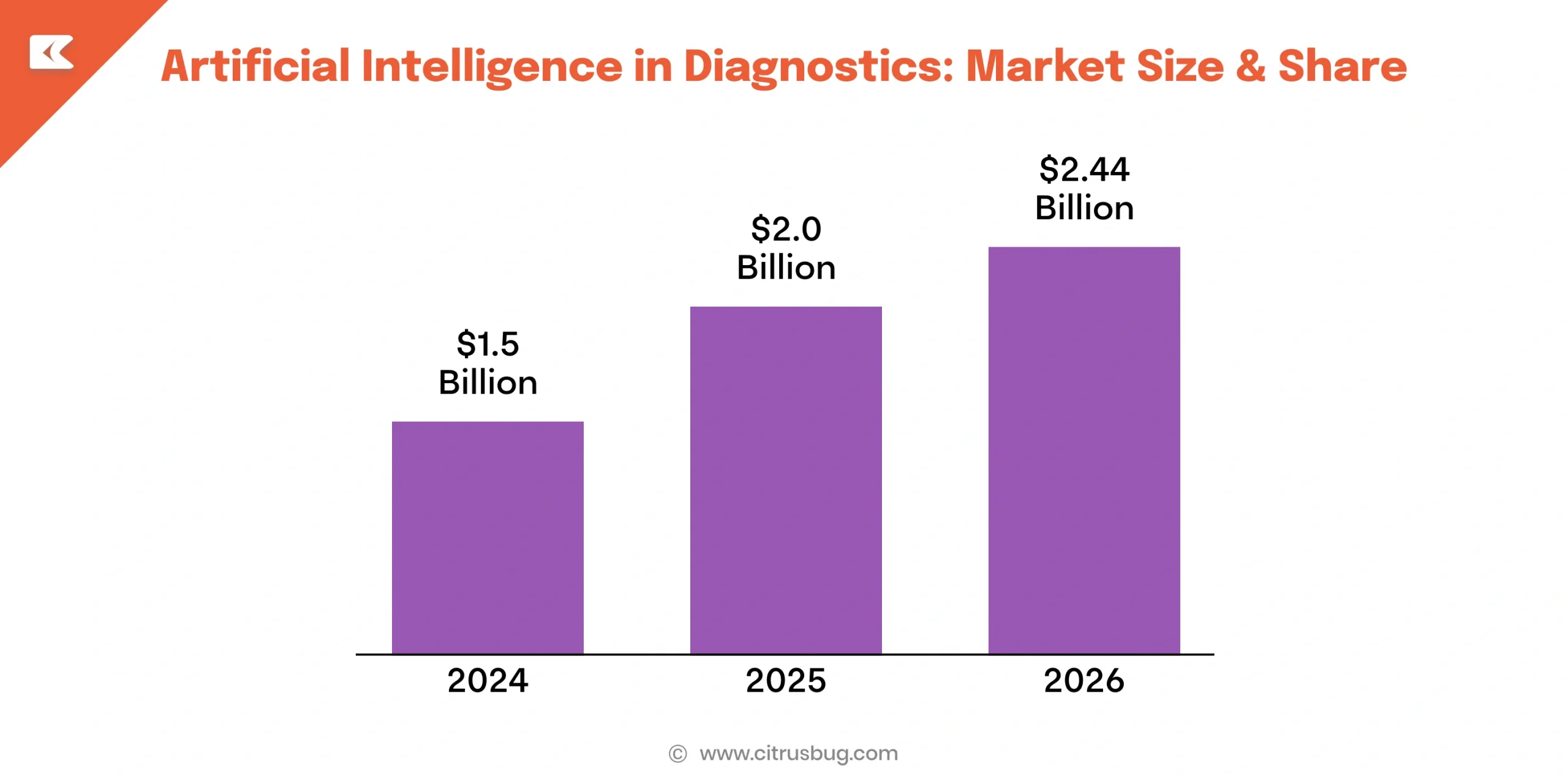
Year-over-year market size data from 2024 through 2026 confirms a clear and sustained growth trajectory, with each successive year building on a larger base as clinical adoption broadens and more AI-enabled devices receive regulatory clearance for deployment.
- The global AI in diagnostics market was valued at USD 1.5 billion in 2024, establishing the baseline from which the market’s rapid expansion through 2025 and into the current year has been measured.
- Market value rose to USD 2.0 billion in 2025, growing at a compound annual growth rate of 21.74%, a rate sustained by increasing clinical deployment of AI imaging tools and growing provider demand for automated diagnostic support across specialties.
- By 2026, the market reaches USD 2.44 billion, continuing its upward pace as more health systems integrate AI-powered diagnostic tools into their core clinical technology investments.
Funding and Investment Activity
Capital markets have responded to diagnostic AI with a level of investment that reflects structural conviction rather than speculative interest. Funding data from 2024 and 2025 confirms that AI-focused health companies are capturing a growing and disproportionate share of total digital health capital, with diagnostics-related applications at the center of that activity.
- Annual US digital health venture funding reached USD 14.2 billion in 2025, a 35% year-over-year increase and the highest level recorded since 2022, with AI companies accounting for the majority of both deal count and total capital raised across the sector.
- 54% of all digital health investment deals in 2025 were closed by AI-enabled companies, compared to 37% in 2024, marking a decisive shift in where healthcare investors are concentrating their largest commitments.
- AI-focused health startups globally raised more than USD 5 billion in 2024, demonstrating that investor confidence in AI software development services for clinical diagnostics extends well beyond the US market and reflects a globally distributed conviction in the category.
How AI Is Being Adopted Across Diagnostic Healthcare
Adoption of AI diagnostic tools is advancing on two fronts simultaneously. At the clinical level, performance data is validating the technology and building provider confidence. At the regulatory level, a record volume of device authorizations is expanding the pool of commercially ready tools available for deployment. Together, these forces are closing the gap between technology readiness and widespread institutional adoption, making the current environment one of the most active periods the sector has seen.
Clinical Accuracy and Provider Demand
Performance metrics from current AI diagnostic deployments confirm that the technology is meeting clinically meaningful accuracy thresholds, while parallel data on provider fatigue establishes the clear operational demand that is driving adoption from the bottom up.
- AI diagnostic models currently achieve 94% identification accuracy for pathologies in radiology and dermatology, a performance threshold that is directly accelerating adoption across both specialist and generalist clinical environments where diagnostic precision is a primary operational requirement.
- More than 70% of healthcare providers report experiencing diagnostic and administrative fatigue, creating direct and measurable demand for AI-based tools that reduce manual processing load while maintaining the quality and reliability of diagnostic output.
Regulatory Approvals and Device Authorization
The pace of FDA authorizations for AI-enabled medical devices has accelerated significantly in recent years, reflecting both growing commercial readiness among developers and increasing institutional maturity within the regulatory review process for AI and machine learning tools. This maturation in the review infrastructure signals that AI diagnostics has moved well past its experimental phase in the eyes of regulators and is now treated as a mainstream device category with established evaluation criteria.
- The FDA authorized a cumulative total of 1,451 AI-enabled medical devices through the end of 2025, a figure that captures the full depth of the cleared device landscape available for clinical deployment across diagnostic specialties.
- 295 AI/ML device clearances were granted by the FDA in 2025 alone, representing one of the highest single-year authorization totals in the history of AI/ML medical device approvals and signaling a regulatory environment keeping pace with the speed of clinical innovation.
Key Trends Reshaping Diagnostic AI Today
Beyond the headline growth data, specific patterns are defining where clinical AI is concentrating, how regulatory bodies are responding, and what kinds of evidence are building the most durable clinical trust. These developments have direct implications for understanding where the market stands today and where the next phase of adoption is most likely to emerge.
Radiology’s Commanding Lead in Device Authorization
Radiology continues to hold an outsized position across all FDA AI-enabled device authorizations, and recent data confirms that its lead remains intact. The specialty accounts for 76% of all cumulative FDA AI-enabled medical device authorizations granted through the end of 2025, representing by far the largest and most established segment of clinical diagnostic AI.
This dominance reflects decades of structured, digitized imaging data in standardized formats, well-established clinical validation pathways, and deep learning architectures that have matured through extensive training on CT, MRI, and X-ray datasets at institutional scale across thousands of radiology departments worldwide.
Record Device Clearances Signal Regulatory Maturity
The FDA cleared 168 machine learning-enabled Class II medical devices in 2024, with 74.4% of those devices classified as radiology tools, followed by cardiovascular applications at 6.5% and neurology at 6.0%. The breadth of specialties represented in the 2024 clearance class, though still radiology-dominant, shows that the regulatory review infrastructure is beginning to support sustained throughput across a wider range of diagnostic applications.
The volume of clearances within a single calendar year signals that the FDA’s AI and ML device review framework has reached a level of institutional capacity that enables high-output authorization cycles year over year.
Diagnostic Time Savings Validated in Clinical Research
Quantifiable efficiency gains are now appearing consistently across peer-reviewed literature, providing the clinical evidence base that complements regulatory activity and market investment figures. Across radiology and pathology workflows, AI tools demonstrated reductions in diagnostic processing time of more than 90% compared to traditional manual processes, with radiology showing the highest rates of independent AI-assisted diagnosis due to the standardization of imaging data formats and established interpretation protocols. In oncology-related screening, AI-powered tools demonstrated up to a 20% reduction in false-positive cancer detection findings in clinical environments, reducing unnecessary follow-up procedures and improving overall diagnostic confidence across cancer screening pathways.
Broader AI Medical Diagnostics Ecosystem Growing in Scope
When the scope of AI’s role in medicine extends beyond point-of-care diagnostics to include clinical research applications, genomics interpretation, and personalized medicine platforms, the overall market picture becomes considerably larger. This broader AI in medical diagnostics ecosystem registered USD 4.03 billion in 2025, driven by growing integration of machine learning in healthcare across genomic data analysis, clinical trial patient enrichment, and high-throughput laboratory screening platforms operating alongside traditional imaging and pathology applications.
Market Segmentation by Modality, Application, and End User
Revenue does not distribute evenly across modalities, application areas, or care settings in this space. Certain segments hold dominant revenue positions that reflect years of technology maturation and deep data availability, while others are growing at a pace that signals where the next wave of competitive activity is building. Understanding both the current revenue concentration and the growth direction provides a clearer picture of near-term market dynamics.
Diagnostic Modality Segment
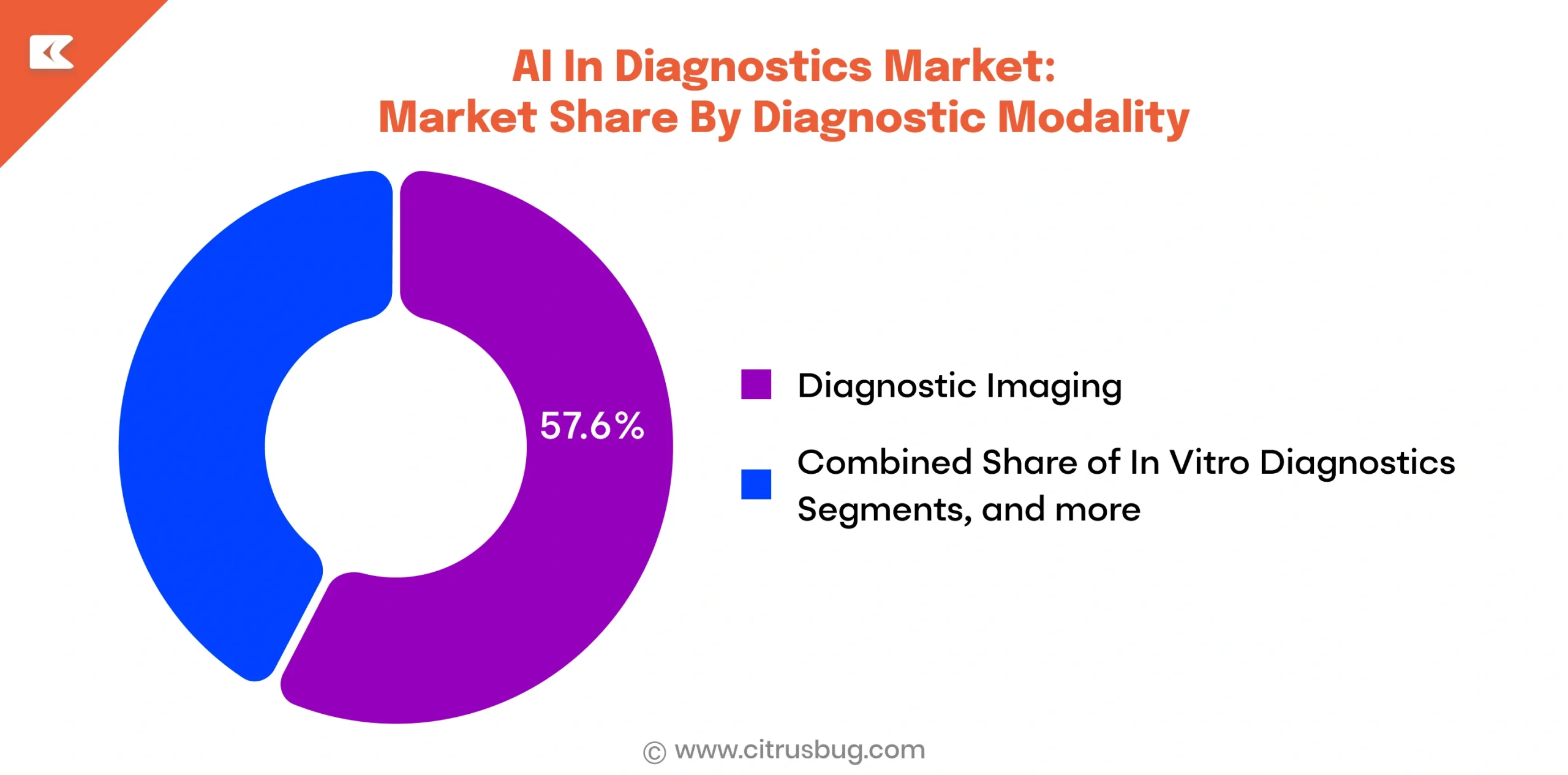
Diagnostic imaging has established itself as the foundational layer of AI diagnostics deployment, a position built through decades of accumulated structured data and clinical validation depth. Imaging modalities captured 57.64% of the total global AI diagnostics market share in 2025, driven by deep learning models trained on large-scale CT, MRI, and X-ray datasets across radiology departments worldwide. The widespread implementation of PACS systems and DICOM data infrastructure has made diagnostic imaging the most AI-mature modality in the market, with established training pipelines, validation protocols, and clinical workflows already built to accommodate automated interpretation at institutional scale.
Software Component and Application Segment
Software
The software component of the AI diagnostics ecosystem is growing in both revenue share and long-term strategic importance relative to hardware and services counterparts. The software segment captured 46% of total AI diagnostics revenue in 2025, reflecting strong institutional demand for cloud-native diagnostic platforms capable of integrating CT, MRI, genomic data, and patient records within unified analytical environments.
Software is also the fastest-accelerating component by growth rate, projected to expand at a CAGR of 33.5% over the forecast period, driven by the broader shift toward platform-based AI diagnostic infrastructure and the expansion of AI tools beyond imaging into multi-modal clinical data environments.
Neurology Application
At the application level, neurology has established itself as the leading specialty by current revenue share. The neurology segment held more than 25% of global AI diagnostics revenue in 2025, supported by high demand for AI tools designed to analyze complex neuroimaging data and assist in early detection of Alzheimer’s disease, epilepsy, and stroke.
Neurology is also expected to remain among the strongest-growing application areas, with a projected CAGR of 31.4% over the forecast period, sustained by expanding high-resolution brain imaging datasets and increasing clinician reliance on AI-assisted interpretation for neurological decision support.
Hospital and Clinical End User Segment
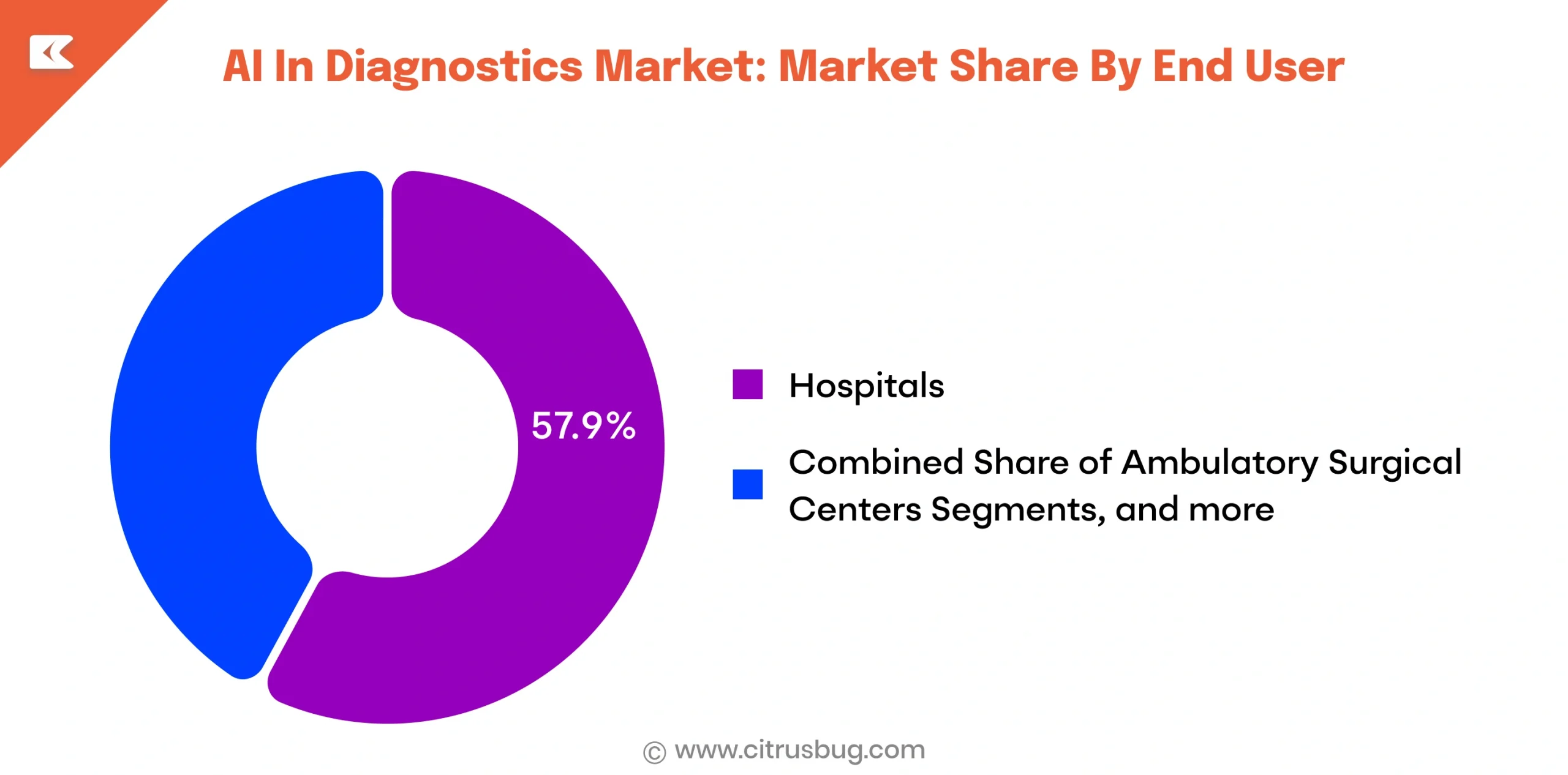
Hospitals are the dominant buyers and deployers of AI diagnostic tools globally, a position grounded in their access to large, diverse patient datasets and established imaging infrastructure. They accounted for 57.9% of total market revenue in 2025, driven by the operational pressure to address radiologist shortages and growing imaging backlogs across high-volume care settings.
Hospitals also carry the institutional IT capacity to integrate AI diagnostic platforms into existing clinical workflows more systematically and at greater speed than smaller or more fragmented diagnostic settings can typically manage.
Regional Growth and Market Leadership
The geographic distribution of AI diagnostics revenue reflects fundamental differences in regulatory infrastructure, digital health investment capacity, and healthcare system maturity across global markets. Current data identifies North America as the clear leader by revenue share, with Asia Pacific tracking the most rapid growth rate of any region in the current forecast period.
North America
- North America held 53.48% of total global AI diagnostics revenue in 2025, a position anchored by streamlined FDA clearance pathways, active CMS reimbursement coding for AI-powered diagnostic services, and some of the world’s highest per-capita spending on clinical technology and health IT. The broader North American AI in medical diagnostics market reached USD 3.58 billion in 2025, reflecting substantial institutional spending across hospital networks and specialty diagnostic centers on AI workflow optimization tools, imaging interpretation platforms, and clinical decision support systems.
Asia Pacific
- The Asia-Pacific region is tracking the highest growth rate of any region in the AI in diagnostics market during the 2026 to 2031 forecast period, driven by government-backed healthcare digitization programs across China, India, and Japan, rapid expansion in imaging infrastructure, and large and growing patient populations that create substantial demand for scalable, AI-supported diagnostic capacity across public and private health systems.
Challenges Facing AI Diagnostics Adoption
Clinical adoption is expanding at pace, but structural gaps in performance reporting standards and adaptive safety frameworks continue to slow the rate at which healthcare organizations can fully assess and trust the tools being offered for deployment across their diagnostic workflows.
- Clinical Performance Transparency Gaps: Only 29.2% of FDA-cleared AI/ML diagnostic devices in 2024 reported both sensitivity and specificity performance metrics, and only 15.5% provided demographic breakdown data. This reporting gap makes it difficult for healthcare institutions to evaluate whether a cleared device will perform consistently across their specific patient population, particularly in settings with diverse or complex demographics, slowing enterprise-level adoption and institutional confidence in approved tools.
- Limited Adoption of Adaptive Safety Frameworks: Only 10% of all AI/ML device clearances granted in 2025 included Predetermined Change Control Plans, the regulatory mechanism designed to govern how algorithmic performance is managed through future updates and retraining cycles. Without this framework in place, the large majority of currently deployed AI diagnostic devices lack formal processes for managing performance drift as algorithms are updated over their operational lifespan.
Growth Forecast and Market Opportunities Through 2035
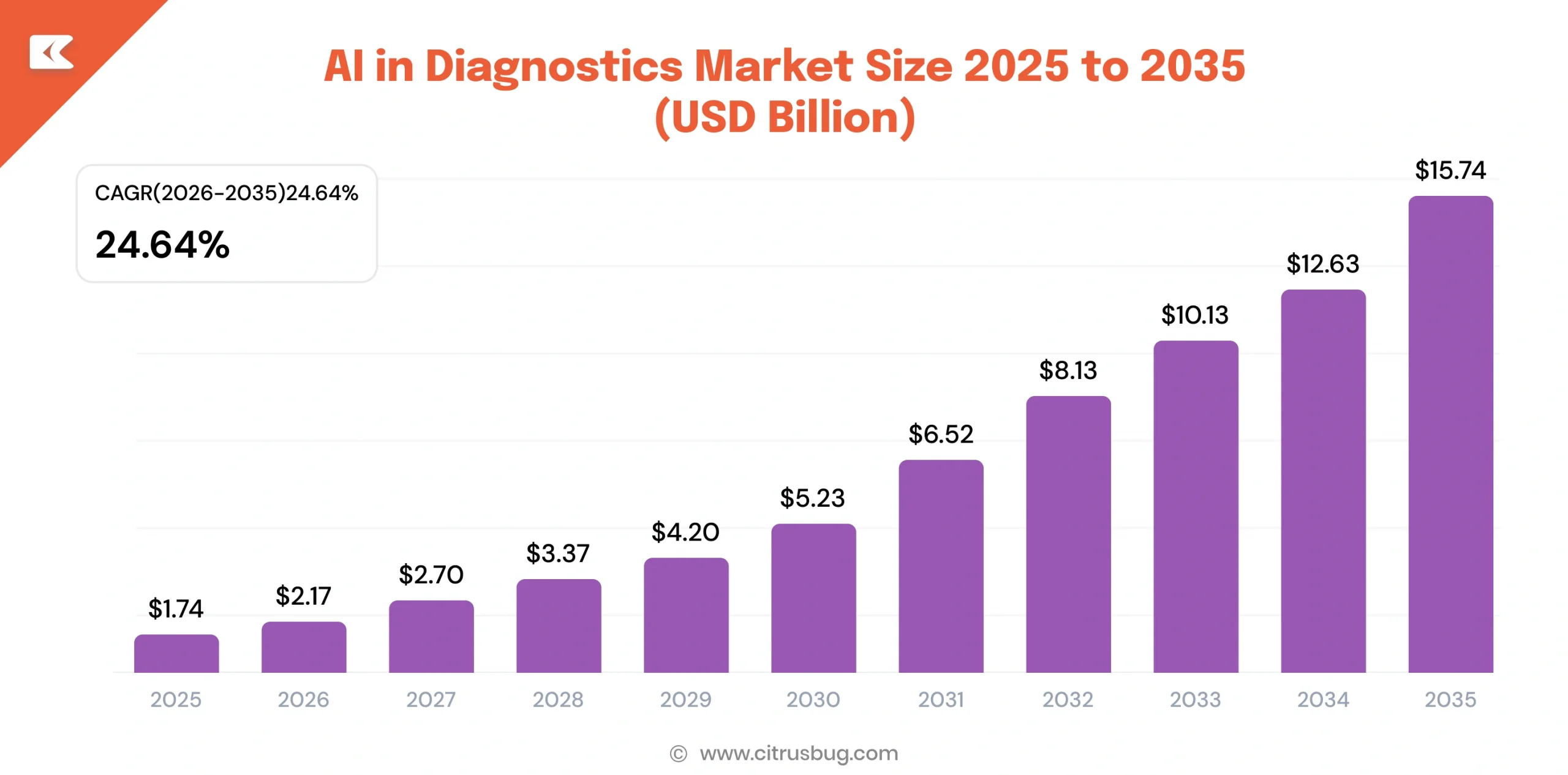
- The AI in diagnostics market is projected to grow at a CAGR of 24.64% from 2026 to 2035, indicating strong expansion opportunities through 2030 as healthcare providers increasingly adopt AI-enabled diagnostic solutions.
- Preventive healthcare is creating a major opportunity for AI in diagnostics, as early disease detection and risk prediction can help reduce rising healthcare costs, which could reach USD 176 billion without effective interventions.
Conclusion
The AI in diagnostics market is supported by a convergence of validated clinical performance, regulatory throughput, and capital investment that confirms the sector’s transition from early adoption into sustained, operational-scale growth. Data across market size, device authorizations, segment share, regional dynamics, and forward projections all point toward a durable and expanding category with a clear trajectory through 2032.
For organizations developing AI-powered diagnostic solutions, the combination of expanding institutional demand, maturing regulatory frameworks, and growing reimbursement clarity creates the structural conditions for long-term growth in the AI in diagnostics market.