
 Back
Back







The patient portal market has moved well past the stage of being a digital convenience layered on top of existing healthcare systems. What began as a basic interface for viewing lab results has evolved into a full-service platform covering appointment scheduling, prescription management, care team communication, and complete health record access.
Healthcare providers are no longer building portals simply to satisfy compliance requirements. Regulatory mandates, patient expectations, and the economics of value-based care have turned digital patient engagement into a measurable clinical and operational priority. Hospitals, speciality practices, and insurance networks are all deepening their portal investments.
The data tells a consistent story. Growth is broad-based. And, adoption is widening across both provider and patient segments, and forward projections confirm years of accelerating expansion ahead.
What is a Patient Portal?
A patient portal is a secure, web-based or mobile platform that connects individuals to their personal health information stored within a provider’s electronic health record system. Patients use these unified, all-patient-needs-in-one-place, tools to view test results, request prescription refills, schedule appointments, and message their care teams directly.
These platforms matter because they reduce the administrative friction that builds up between clinical visits. When patients can handle routine health needs through a digital interface, call volumes decrease, staff time shifts toward higher-priority tasks, and patients stay better informed about their ongoing care.
Patient Portal Market Size and Global Valuation
Consistent year-over-year expansion across all major segments is defining the current trajectory of this sector. Across global and national-level indicators, the data reflect broad-based growth supported by EHR policy requirements, increasing patient technology adoption, and sustained provider-side investment in digital health infrastructure.
Global Market Size and Current Valuation
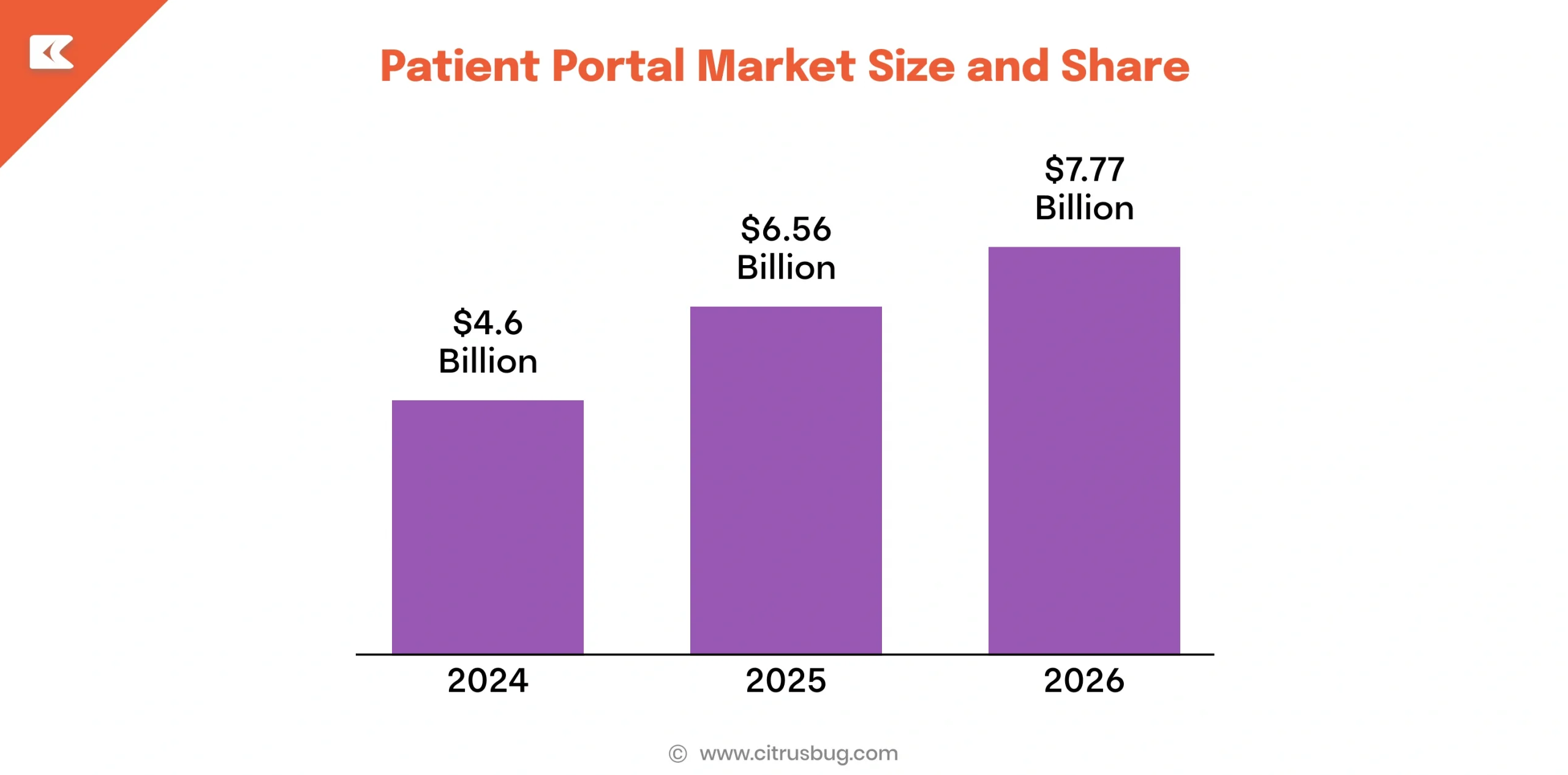
The scale of this market has expanded significantly over the past two years, with figures across 2024, 2025, and 2026 reflecting accelerated growth in both global and regional market values.
- The global market was valued at USD 4.6 billion in 2024. This established a solid foundation ahead of what has since become a period of rapid investment across the digital health sector.
- In 2025, the global revenue reached USD 6.56 billion. Hospitals and health systems expanded portal deployments as part of broader EHR modernization and patient engagement initiatives.
- In 2026, the market stands at an estimated USD 7.77 billion, supported by rising patient engagement requirements, insurance sector adoption, and expanded telehealth infrastructure across developed and emerging markets.
U.S. Market Performance
The United States represents the single largest national market within this global industry, and its scale reflects the advanced state of American healthcare’s digital infrastructure.
- The U.S. market reached USD 1.89 billion in 2025, a figure driven by near-universal EHR adoption among American providers and a federal policy environment that has made patient access to health records a legal requirement.
How Patients and Providers Are Adopting Digital Portals
Portal adoption has crossed a threshold where it can no longer be measured by provider offering rates alone. The data now show meaningful distinctions between how many patients have access, how many are actively using portals, and through which devices and channels they choose to engage with their health information.
Physician-Side EHR and Portal Integration
Patient portal availability starts on the provider side. Without EHR adoption at the institutional level, patient portals cannot exist in any functional form, which makes physician-side infrastructure data directly relevant to understanding portal deployment capacity.
- In 2024, 95% of U.S. office-based physicians had adopted EHR systems, a near-universal rate that establishes the technical foundation for patient portal rollouts across the American healthcare system.
- Over 75% of hospitals in the United States have implemented patient portals integrated with their EHR systems. At the institutional level, EHR-linked portal deployment has crossed the majority threshold nationwide.
Patient Access and Engagement Rates
Access to a portal and active, consistent use of that portal are two different metrics. Recent data shows that access has expanded significantly while engagement patterns continue to mature.
- In 2024, more than 3 in 4 individuals were offered access to a patient portal by their healthcare providers, a broad reach that highlights how widely portal infrastructure has been deployed across primary care and specialty settings.
- In 2024, 57% of individuals used a smartphone app to view their health records. This reflects a clear shift toward mobile-first health data access and growing patient expectation for on-demand record availability from personal devices.
Active Use and Registration Growth
Beyond access rates, registration data and multi-portal usage figures point to a patient population that is increasingly comfortable navigating digital health tools across multiple provider relationships.
- More than 59% of individuals nationally managed access to multiple online medical records or portals in 2024. Many patients are now coordinating health information across more than one provider through separate digital systems.
- Improved digital health awareness and infrastructure produced a 22% increase in patient portal registrations across North American healthcare systems in 2024. This demonstrates measurable acceleration in new patient onboarding onto portal platforms.
Market Segmentation and End-User Adoption Patterns
This sector breaks into distinct segments based on the type of buyer, the portal deployment model, and the healthcare setting in which the platform operates. Each segment shows a different growth rate and adoption dynamic, which matters for understanding where the next phase of expansion is coming from.
Provider-Led Market Share
Healthcare providers are the primary buyers and operators of patient portal solutions, and their purchasing decisions shape the overall market structure. Hospitals, physician groups, and specialty clinics together held approximately 56.42% of this market in 2025.
Their investment in portals is driven by EHR meaningful use requirements, value-based care contract performance metrics, and operational pressure to reduce administrative workloads through digital patient self-service. As provider organizations continue to expand their patient engagement programs, this segment is expected to retain its dominant position across the forecast period.
Integrated vs. Standalone Portal Solutions
Patient portal solutions fall into two main architectural types, each holding a distinct position and a different growth profile.
Integrated portal software, embedded directly within an EHR system, holds the largest product share of 53.8% in 2026. Hospitals and health systems favor integrated portals because they enable unified data management within existing vendor relationships and eliminate the need for custom data pipelines between separate systems.
This segment is projected to grow at a 14.44% CAGR over the forecast period. This reflects sustained institutional preference for embedded, EHR-native solutions.
Standalone portals, which operate independently and can aggregate records from multiple providers and insurers, are attracting growing interest. The standalone segment is expected to register the fastest CAGR of 22.1% from 2026 to 2033. This growth is driven by patient demand for consolidated health record access across multiple care relationships and a broader trend toward patient-controlled health data.
Hospitals and Clinics Dominate End-user Spending
Among the organizations deploying portals, acute care facilities and outpatient clinical settings represent the largest source of market demand. Hospitals and clinics hold a market share of 43.8% among end users in 2026.
The scale of their patient volumes, depth of EHR investment, and need to manage high quantities of appointment requests, lab result notifications, and follow-up communication through digital channels make these settings the most active and consistent buyers of portal technology.
Regional Market Share and Growth Insights
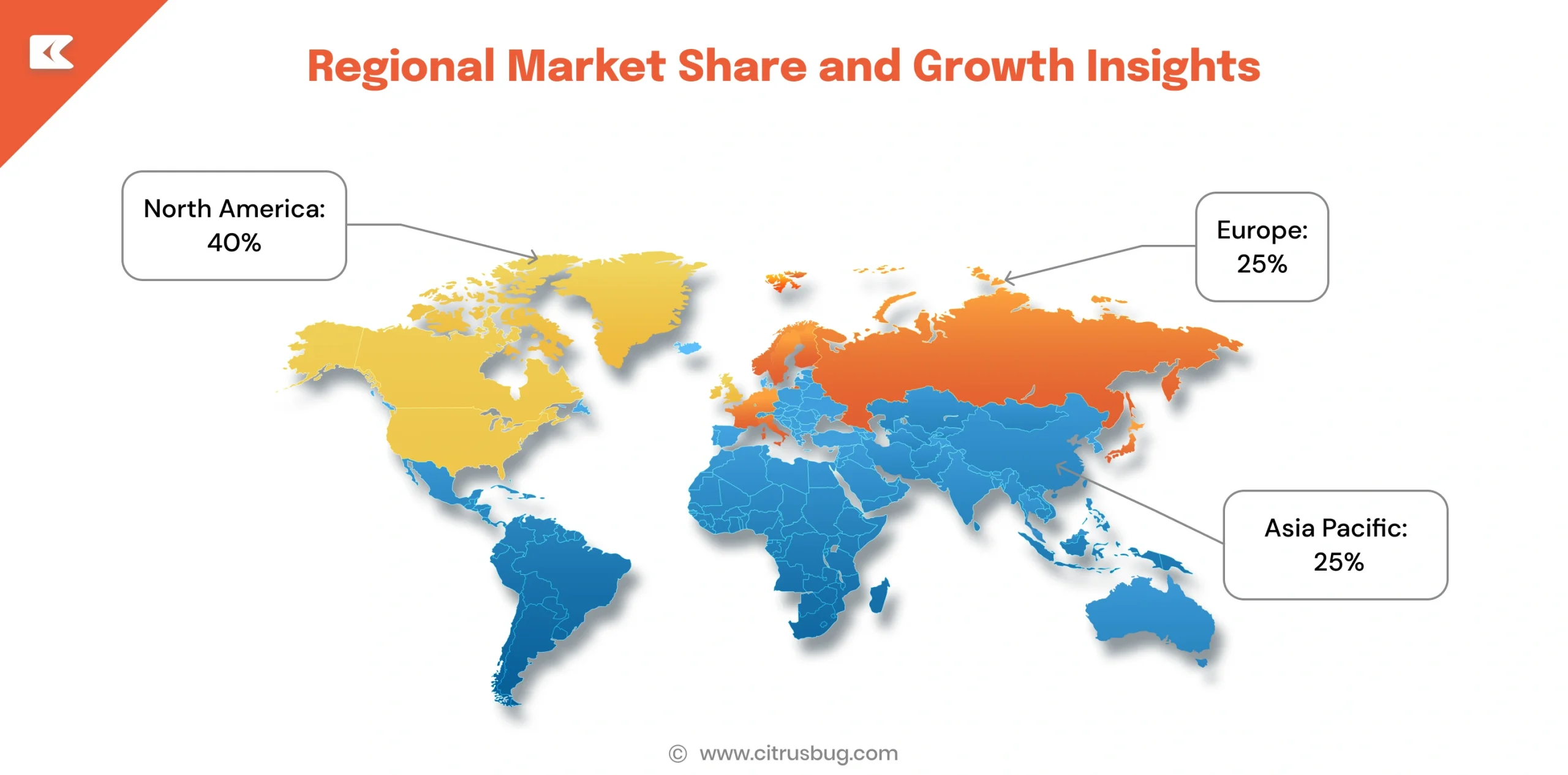
This market is a global phenomenon, but its development is uneven across regions. North America leads by revenue and infrastructure maturity, while Europe and Asia-Pacific are expanding rapidly based on national digital health mandates and growing smartphone penetration across patient populations.
North America
- North America accounts for approximately 40% of the total global market share in 2026, a position supported by decades of EHR investment, federal health data policy, and high patient internet connectivity rates. The region is also projected to grow at a CAGR of 13.61% over the forecast period, driven by continued rollout of integrated portal features among health systems of all sizes and by increasing patient expectations for mobile health access.
Europe
- Europe holds approximately 25% of the global market share in 2026, led by government-backed digital health programs in Germany, the United Kingdom, and the Nordic countries. The European market is projected to grow at a CAGR of 18.5% from 2025 to 2032, with national EHR rollouts and data-sharing frameworks creating favorable conditions for structured patient record access across health networks.
Asia-Pacific
- Asia-Pacific accounts for approximately 25% of the global market share in 2026, with digital health initiatives in China, Japan, South Korea, and India accelerating portal deployment alongside high smartphone penetration and growing patient awareness of preventive and chronic care management. The region is positioned for above-average growth as government investment in connected health infrastructure expands across both urban and rural settings.
Key Trends Shaping Patient Portal Technology
Several behavioral and technological developments are actively redefining how portals are built, adopted, and used across healthcare systems. These trends are visible in the current market and usage data and are expected to intensify rather than plateau over the near term.
Cloud-First Deployment Gaining Ground
Cloud infrastructure is becoming the default architecture for new portal deployments at healthcare organizations of all sizes. The cloud-based segment is projected to expand at a CAGR of 19.9% from 2023 to 2030, outpacing on-premises alternatives across every provider type.
Organizations are choosing cloud portals for lower upfront capital requirements, reduced IT maintenance burdens, and the ability to scale access across multiple facilities without separate software installations at each location.
Patient Preference for Digital Communication
Patients are increasingly bypassing phone-based communication with providers in favor of digital channels, and portal usage data directly reflects this behavioral shift. Approximately 70% of patients express a preference for communicating with their healthcare providers online rather than through phone calls or in-person interactions.
This preference is especially strong among working-age adults managing chronic conditions alongside professional schedules, and it is creating persistent demand for portal investment among providers focused on patient retention and satisfaction performance.
Secure Messaging Reduces Administrative Burden
Secure messaging has evolved from a supplementary portal feature into a major channel for patient–provider communication. Following broad portal deployment, messaging interactions increased rapidly and, in some specialties, accounted for more outpatient interactions than in-person visits.
The growing use of secure messaging reflects its potential to streamline communication and support patient engagement, although increasing message volumes may also contribute to clinician workload and require workflow optimization.
Accelerating Provider-Side Adoption
The provider segment is not just deploying portals but actively deepening its investment in portal capabilities over time. The providers segment of the patient portal market is expected to register a CAGR of 19.7% over the forecast period.
Providers are using portal data to fulfill quality reporting requirements, improve clinical outcome scores, and reduce unnecessary emergency department utilization through proactive patient communication, all of which translate into measurable financial improvements under value-based care contracts.
Payer-Driven Portal Adoption Rising
Insurance payers represent one of the fastest-growing adopter categories in this space, with growth driven by member engagement, care plan adherence, and claims management objectives. The payers segment is expected to grow at a CAGR of 20.8% from 2026 to 2033.
Insurers are deploying member-facing portals to streamline prior authorizations, improve care plan adherence, and reduce call center costs. This reflects a broader trend of payers taking a more direct role in shaping member health behavior through purpose-built digital engagement tools.
Factors Driving Digital Patient Portal Adoption
Multiple structural forces are creating sustained conditions for growth in this space. These drivers span regulatory environments, clinical care models, and broader shifts in patient behavior that together keep portal demand elevated across all major geographies.
Regulatory Mandates and EHR Interoperability Standards
Government healthcare regulations in the United States, the European Union, and the Asia-Pacific require providers to offer patients documented access to their health records. Laws like the 21st Century Cures Act and national EHR mandates in Germany and the United Kingdom compel organizations to deploy and maintain portal systems.
This regulatory framework creates a floor for adoption that is not expected to ease as digital health policies continue to evolve.
Growing Patient Demand for Health Self-Management
Patients are taking a more proactive role in managing chronic conditions, post-treatment recovery, and multi-specialist care coordination. Patient portals are the primary digital tool supporting this shift toward active personal health management.
As patient health literacy improves and awareness of preventive care grows, demand for accessible and functional portal platforms continues to rise alongside it.
Expansion of Telehealth and Hybrid Care Models
The sustained growth of telehealth visits following the pandemic period permanently raised patient comfort with remote health interactions. Patient portals connect virtual visits, remote monitoring data, and in-person care records into one accessible interface.
Health systems that have built telehealth capabilities are extending those investments into more complete portal functionality to support continuity of care across settings.
Chronic Disease Management and Continuous Monitoring
Healthcare organizations managing large populations of patients with diabetes, hypertension, and heart disease need continuous digital touchpoints to monitor adherence and catch early deterioration.
Patient portals provide this infrastructure through automated lab result delivery, medication reminders, and care plan updates. These capabilities reduce the need for costly phone outreach programs and help clinical teams focus attention on the highest-risk patients.
Technology Investment in Digital Health Platforms
Venture capital and health system investment in digital health are funding new portal platforms with AI-powered scheduling tools, multilingual interfaces, and accessibility features for ageing populations.
This investment cycle raises the quality baseline of available solutions and drives replacement of older systems with low patient engagement rates. Higher platform quality translates into higher adoption across provider organizations, which feeds continued expansion in this space.
Future Growth Projections and Long-Term Forecasts
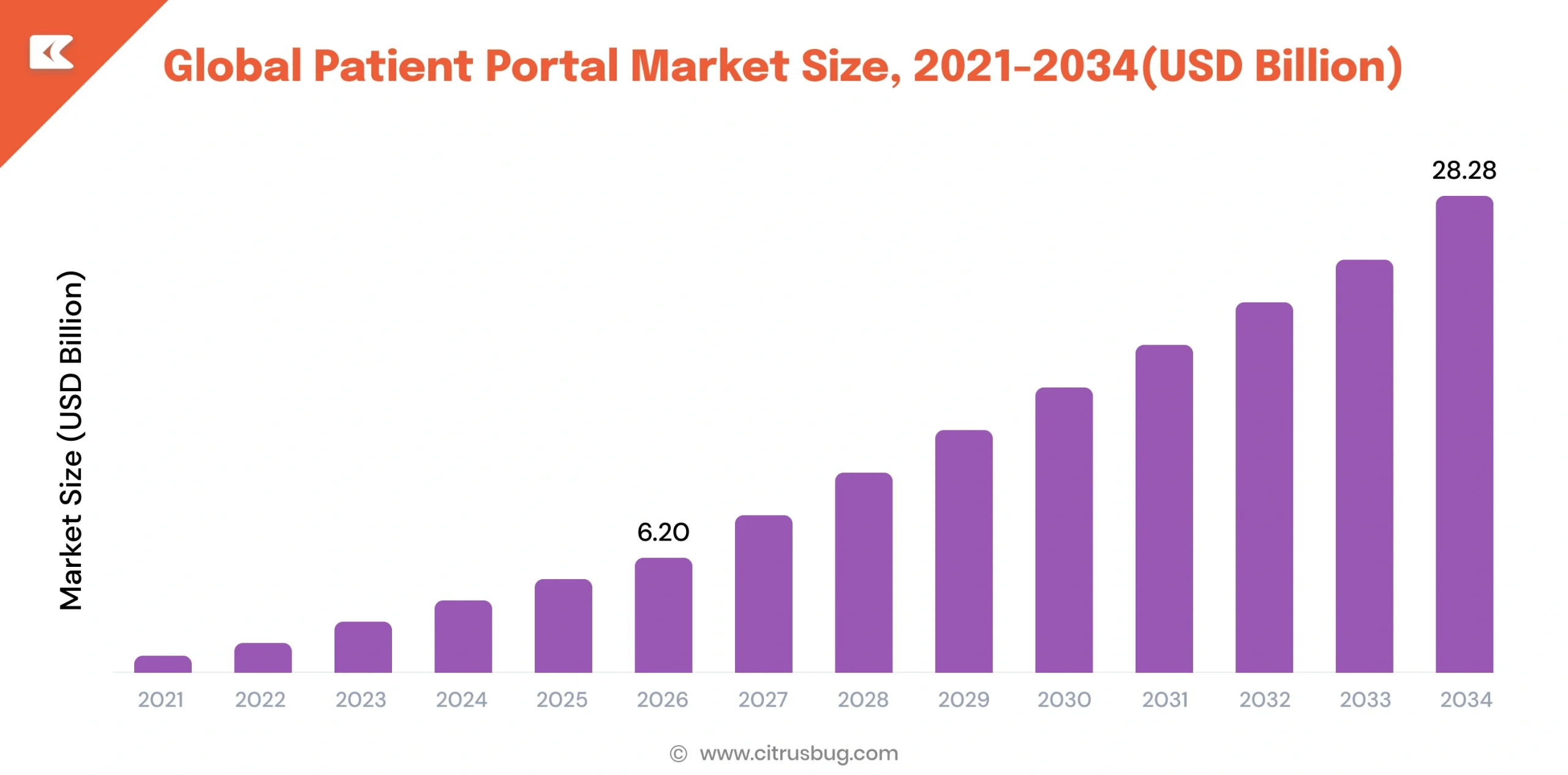
The patient portal market is expected to experience rapid expansion over the next decade, driven by digital health adoption, patient engagement initiatives, and increasing EHR integration.
- The global patient portal market is projected to grow from USD 6.20 billion in 2026 to USD 28.28 billion by 2034, highlighting substantial long-term growth opportunities for healthcare technology providers.
- The market is anticipated to expand at a 20.9% CAGR between 2026 and 2034, reflecting increasing investments in digital healthcare infrastructure and patient-centric care models.
- Nearly 70% of patients prefer online access to medical records, appointment scheduling, and provider communication, which will continue to accelerate portal adoption worldwide.
- More than 65% of healthcare providers globally have already implemented patient portal systems, and further adoption is expected as organizations focus on improving patient engagement and operational efficiency.
- Mobile-enabled portals currently account for approximately 55% of portal usage, while AI-powered patient portal adoption has increased by nearly 35%, indicating that intelligent and mobile-first solutions will be major growth drivers through 2034.
(Source)
Conclusion
The patient portal market is on a clearly defined growth path, supported by measurable adoption statistics, consistent expansion, and a regulatory environment that continues to push providers toward deeper patient engagement. The data across market size, usage rates, segmentation, and regional performance confirm durable, broad-based demand through the end of the decade.
For healthcare organizations investing in patient portal software development, the opportunity extends well beyond compliance. Portal platforms that drive active patient use, reduce administrative friction, and connect cleanly with existing EHR infrastructure are positioned to deliver both clinical and operational value in a market that shows no signs of slowing.