




















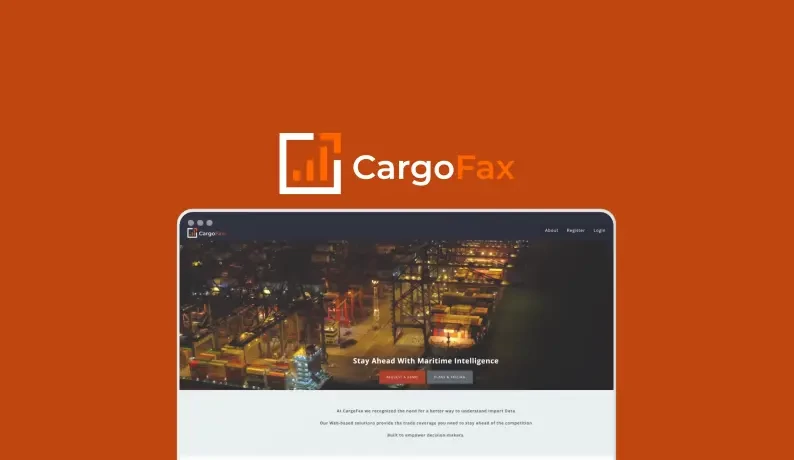
CargoFax
A data-driven import insights platform designed to help businesses make smarter import decisions.
View Case Study →Trusted By Industry Leaders
New shippers and retailers increasingly expect X12 204, 214, and 210 exchanges or API-based tracking from the start. Manual file handling and disconnected portals add operational work to every load.
Older on-premise systems can become difficult to extend when you need multi-client billing, customer portals, mobile scanning, or new carrier integrations. A modernization layer or targeted rebuild can add these capabilities without replacing the entire platform.
Finding developers who understand load lifecycles, carrier workflows, accessorials, warehouse operations, and scheduling can take longer than the project itself. An outsourced team can add this engineering capacity while your internal team retains ownership of the product.
Forecasting, ETA prediction, and exception detection depend on accessible, structured shipment data. When events remain scattered across TMS, WMS, EDI, and carrier systems, the AI project can stall before it reaches production. Engineering support can connect those systems and turn the pilot into a usable workflow.
Whether you need one carrier integration or a complete TMS and WMS platform, we shape the engagement around your workflows and systems. The result is custom software your team owns, maintains, and can extend after launch.
Load planning, carrier selection, tendering, and freight settlement built around your lanes and rate structures. TMS workflows connect to load boards, carrier onboarding tools, and accounting so dispatchers stop re-keying the same shipment three times.
Multi-client inventory, activity-based billing, and client portals that match how a 3PL actually invoices. Handheld barcode and RFID scanning support receiving, wave picking, and cycle counts, with warehouse management software built around these operational workflows.
Freight software outsourcing services for brokers and digital freight startups cover shipper and carrier portals, quote engines, and capacity matching. Carrier vetting, rate confirmations, and POD capture share one workflow, keeping margin visible on every load.
Live vehicle location, driver hours, fuel, and maintenance data pulled from Samsara, Motive, or Geotab APIs into one dashboard. Our fleet management software turns raw telematics feeds into dispatch decisions and service schedules.
Driver apps with optimized multi-stop routes, photo and signature proof of delivery, and automated customer notifications. Route logic recalculates around delivery windows, vehicle capacity, and live traffic as the day unfolds, keeping stop counts realistic.
Tracking portals fed by carrier APIs, EDI 214 status messages, and visibility networks such as Project44 or FourKites. Shippers self-serve ETAs and documents, which cuts the status-check calls your customer service team fields every afternoon.
Translation services that convert X12 and EDIFACT messages into clean JSON events your applications can consume. Each new trading partner then becomes a repeatable configuration step for your team, with acknowledgments and error queues handled consistently.
Demand forecasts for labor and inventory planning, plus agents that watch TMS and WMS events for late pickups, short shipments, and missed appointments. Alerts reach the right coordinator with the shipment context already attached.
Share your current systems and priority workflows, and get a phased estimate with integration costs broken out line by line.
Get a Free EstimateFreight software needs to reflect how each business handles loads, customers, carriers, inventory, and billing. We adapt the technology to your operating model, whether you run a 3PL, brokerage, private fleet, or internal logistics function, so the workflows and data structures support how your team actually works.
Manage multi-client inventory, warehouse workflows, billing, client portals, and transportation operations through software designed around the way your customers and facilities operate.
Connect shippers, carriers, quotes, tenders, documents, and payments through platforms that give teams better visibility into capacity, shipment status, and margin across every load.
Bring dispatch, fleet tracking, driver workflows, maintenance, fuel, compliance, and freight operations together so teams can manage assets and shipments from connected systems.
Extend internal logistics capabilities with software for transportation planning, carrier management, shipment visibility, warehouse coordination, and integrations without replacing the systems already in use.
We map trading partners, carriers, telematics, and back-office systems before development begins, giving the team a clear integration scope, estimate, and delivery plan.
Every transaction set in play gets catalogued, typically 204 load tenders, 990 responses, 214 status updates, 210 freight invoices, and 856 ship notices, along with each partner’s quirks, VAN or AS2 connection, and the acknowledgment rules your contracts require.
Tracking, rating, and capacity data from carrier APIs, visibility networks, DAT load boards, and onboarding services like Highway or RMIS get documented with rate limits, authentication method, and fallback behavior when a provider goes down.
Samsara, Motive, and Geotab feeds are reviewed for webhook or polling delivery, GPS ping frequency, and hours-of-service fields, so dispatch screens and ETA calculations run on data that actually arrives on time.
NetSuite, QuickBooks, Dynamics, or SAP connections for invoicing, freight audit, and cost allocation are planned using our data integration services approach, including which system owns each record and how conflicts resolve.
For carriers running European lanes, we identify the consignment data that needs to reach certified eFTI platforms and account for the regulatory transition scheduled for November, including the requirements introduced under Regulation (EU) 2020/1056.
AI can sit directly inside the logistics workflows your team already uses, turning shipment, carrier, warehouse, and document data into actions your operators can review and approve.
DEFINED SCOPE AND BUDGET
YOUR ROADMAP, OUR ENGINEERS
EVOLVING REQUIREMENTS
These ranges reflect typical Citrusbug estimates for custom builds. Integration count, the number of user roles, and mobile scope move a project within each band far more than the core feature list does.
| System Type | Complexity | Estimated Cost | Main Cost Drivers |
|---|---|---|---|
|
Delivery management app |
Low |
$20,000 to $50,000 |
Route logic, driver app, customer notifications |
|
Fleet management software |
Medium |
$25,000 to $75,000 |
Telematics APIs, maintenance rules, reporting |
|
Supply chain management software |
Medium |
$25,000 to $75,000 |
Supplier portals, IoT tracking, order sync |
|
Warehouse management system |
High |
$30,000 to $100,000 |
Scanning hardware, multi-client billing, slotting |
|
TMS or freight brokerage platform |
Very High |
$90,000 to $150,000+ |
EDI volume, load boards, carrier compliance, settlement |
|
Each additional integration (ERP, CRM, carrier) |
Medium |
$3,000 to $15,000 |
Message format, partner testing, error handling |
Engineers sit with dispatchers, warehouse leads, and billing staff, virtually or on-site, to watch how a load or order actually moves today. Screen recordings and workflow notes capture the workarounds that never reach a requirements document, like the spreadsheet a coordinator keeps for detention charges or the manual check before every carrier invoice goes out.
Every EDI partner, API, telematics feed, and back-office system is documented with format, volume, and failure behavior. The estimate and sprint plan come straight from that inventory, and you receive user stories, wireframes, and an architecture outline before the build begins, giving you something concrete to approve, challenge, or take to another vendor.
Dispatch boards, warehouse handheld screens, and driver app flows are prototyped in Figma and tested with the people who will use them every shift. Changing a screen at this stage costs hours, while changing it after release costs a sprint plus retraining. A night-shift dispatcher's feedback often reshapes a layout more than any stakeholder review.
Two-week sprints ship working features into a staging environment connected to partner test endpoints. You see progress in weekly demos and get daily written updates, while automated tests cover EDI parsing, rate calculations, and status transitions- the logic that quietly breaks when a trading partner changes one field without telling anyone.
The new system processes real shipments alongside the current one for an agreed period. Output is compared load by load across tender acceptance, status events, invoices, and inventory counts, and cutover happens only once mismatches are resolved. Go-live dates are planned around operational peaks so your team is not learning a new system during the busiest period.
Source code, infrastructure-as-code scripts, API documentation, and runbooks transfer to your repositories. Post-launch support is available at L1, L2, and L3 levels under an SLA, and a free maintenance period after launch covers fixes when carriers change their APIs or trading partners update their EDI specifications.
A data-driven import insights platform designed to help businesses make smarter import decisions.
View Case Study →
Outsourced logistics builds typically range from $20,000 for a focused MVP to $150,000+ for an enterprise TMS or multi-sided freight platform. Share your systems and target launch date for a scoped estimate.
Engineers who know tender, dispatch, POD, and settlement cycles ask the right questions in week one, shortening discovery and keeping requirements grounded in how loads actually move.
Inherited a half-finished TMS or WMS from another team? We audit the codebase, stabilize what works, document the gaps, and carry the remaining roadmap to production.
NDA signed before the first scoping call and full repository ownership at delivery. Your platform, integrations, and infrastructure scripts stay yours if you ever change vendors.
From X12 transactions to carrier and telematics APIs, we account for partner-specific formats, authentication, rate limits, acknowledgments, and exception handling before integration work reaches production.
In today’s fast-paced world, effective management of logistics and transportation operations is essential for companies to offer top-notch customer service. For managers, it can be difficult to coordinate and continuously…
Read Article →
It’s no secret that artificial intelligence (AI) has been integrated into our culture in the modern day. AI has shown its incredibly creative ability to help us maximise efficiency in…
Read Article →
Convenient and smooth delivery of goods is something every client expects. This change in customer behaviour has fueled on-demand delivery and last-mile logistics operations. Organizations should leverage technology and explicitly…
Read Article →Outsourcing is faster when you need TMS, WMS, or EDI expertise now and lack freight-literate engineers. Many teams outsource the initial build, then hire in-house to own the product once it stabilizes.
A focused logistics MVP typically takes 8 to 12 weeks after discovery. Platforms with multiple EDI partners, a combined TMS and WMS, or AI features usually run several months with phased releases.
Yes. Connections to NetSuite, SAP, Dynamics, and existing TMS or WMS platforms are scoped in discovery, using APIs where available and EDI or file-based exchange where partners still require it.
You do. Citrusbug signs an NDA before scoping and transfers full source code, infrastructure scripts, and documentation to your repositories at delivery. Shipment and customer data never becomes vendor property.
Look for shipped logistics products, fluency in EDI transaction sets and carrier APIs, a written integration plan inside the proposal, and a clear handover process. Ask how partner integrations get tested before go-live.
Yes. Outsourced 3PL software development covers multi-client inventory, activity-based billing, client portals, and EDI connections to each shipper, with handheld scanning for receiving, picking, and shipping.
Usually, yes. Forecasting models and exception agents can sit on top of an existing TMS or WMS through APIs or event streams, provided shipment data is accessible and reasonably clean.
Citrusbug offers L1, L2, and L3 support under an SLA, including fixes when carriers or trading partners change APIs or EDI specs, plus planned feature releases on your roadmap.