

CUSTOM SOFTWARE DEVELOPMENT
Custom Software Development Company in Austin

500+
Projects Delivered
98%
Client Retention
13+
Years Building Software
Certifications
 ISO 27001
 SOC 2
 HIPAA
Trusted by industry leaders














Certifications and Accreditations


Custom Software Development Services for Product and Operations Teams
Whether you need a software development company in Austin for a single release or a long-term product, each service below can run as a standalone project or as one stage of a larger build. Stack choices follow your product and your hiring plans.

Custom Web Applications
Browser-based tools for customers, partners, or internal staff, built with React or Next.js on the front end and Node.js or Python behind it, designed around the workflows your team runs every day.

SaaS Platform Development
Multi-tenant architecture, subscription billing through Stripe, role-based access, and usage analytics for B2B products. Tenant data stays isolated, which helps when an enterprise prospect sends a SOC 2 security questionnaire.

MVP and Proof of Concept
A first release scoped to the features that test your core assumption, so you can put it in front of users or investors without spending runway on everything else waiting on the roadmap.

Mobile App Development
iOS and Android apps built natively or with React Native and Flutter, sharing one backend with your web product so accounts, data, and push notifications stay consistent across every device.

AI Features and Agents
LLM-powered assistants, document extraction, and agent workflows built on your own data with retrieval, evaluation, and guardrails. Our AI software development work starts by testing whether a model answers reliably enough to ship.

Legacy System Modernization
Older .NET, PHP, or AngularJS applications moved to supported frameworks and cloud hosting in stages, with the current system kept running until each replacement module has passed testing in production conditions.

Cloud and DevOps Setup
AWS or Azure infrastructure defined in Terraform, CI/CD pipelines in GitHub Actions, and monitoring that alerts your team to failures before customers notice them. Every environment can be rebuilt from code.

APIs and System Integrations
Connections to CRMs, ERPs, payment processors, and EHRs through REST or GraphQL APIs and webhooks, replacing manual exports and double data entry between the systems your operations already depend on.
Need Engineering Support for Your Product Roadmap?
Discuss your upcoming features, technical challenges, or integration requirements with our engineering team to identify a practical path forward.
Talk to an EngineerWhat the Discovery Phase Delivers Before Development Starts
An estimate written before anyone understands your workflows is a guess with a number on it. Discovery fixes the scope on paper first, and everything it produces belongs to you whether or not you continue the build with us.

Requirements Document
Business rules, user roles, edge cases, and non-functional needs such as uptime and data retention, written so any engineering team could pick the project up.

User Stories With Acceptance Criteria
Every feature broken into stories your product owner can prioritize, each with testable conditions that define exactly when the work counts as done.

Clickable Wireframes
Interactive screens for the main user flows, reviewed with your team or early users to catch confusing steps before they cost development hours.

Architecture and Stack Decision
Recommended frameworks, hosting, and data model, with the reasoning behind each choice and the trade-offs against options your team may already prefer.

Costed Sprint Plan
A release-by-release breakdown of effort and cost, so you can decide what ships in version one and what waits for the next funding stage.

Integration and Risk Register
Third-party systems, data migrations, and compliance obligations identified early, each with an owner and a plan, so none of them surface mid-sprint.
A Structured Approach to Custom Software Development
1
Discovery Workshops
Your founders, product owner, and key users work through a series of sessions with our business analyst and solution architect. Together we map current workflows, agree on the problem the first release must solve, and challenge features that don't serve it. Discovery closes with a sign-off meeting where you approve or adjust scope and budget before any development time is booked.
2
UX and Technical Design
Designers turn approved wireframes into a visual system in Figma, covering components, states, and WCAG 2.2 AA accessibility where your product requires it. In parallel, the architect sets up repositories, environments, and the data model. Running both tracks together means developers begin the first sprint with designs, infrastructure, and coding standards already in place.
3
Sprint Development
Engineers build in short sprints with peer-reviewed pull requests, automated tests, and continuous integration on every merge. Features move through development, staging, and production in the same order each time, which keeps releases predictable. Technical debt is logged and scheduled alongside features, so any shortcut taken for a deadline already has a date to be paid down.
4
QA and Security Testing
Our QA engineers test key workflows, integrations, permissions, and application behavior across relevant devices and environments. Depending on project requirements, testing includes automated regression checks, vulnerability scanning, access-control reviews, and performance testing. Issues are identified and addressed before release to help improve software reliability, security, and readiness for production.
5
Launch and Handover
Production deployment follows a written runbook with rollback steps. You receive repository access, infrastructure credentials, API documentation, and an architecture guide, all under your own accounts. If an internal team will take over, our engineers pair with them through the first releases so knowledge transfers through real work on the codebase.
6
Post-Launch Support
Free maintenance covers bug fixes for an agreed period after launch. Beyond that, L1, L2, and L3 support options cover monitoring, incident response, and ongoing feature work, sized to how critical the software is to your operations. Roadmap work continues in the same sprint rhythm your team already knows.
CLIENT WORK
View All Case Studies →
Software Products Citrusbug Has Shipped
PHARMACY

Zest AI
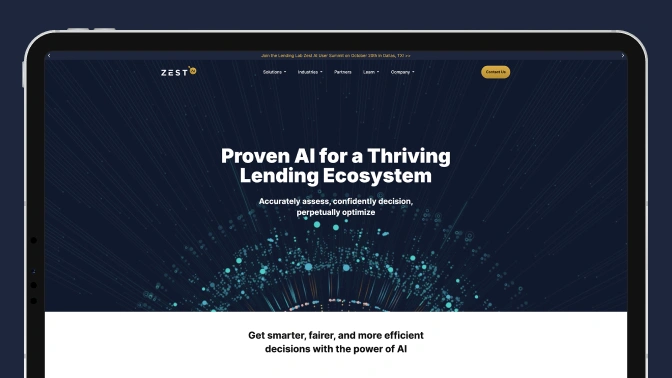
Zest AI is a leading AI-powered lending technology company helping banks, credit unions, and financial institutions make faster, smarter, and more inclusive credit decisions. By leveraging machine learning, predictive analytics,…
View Case Study →Client Testimonials (We're Rated 4.7 on Clutch)
THE PROJECT
Web & AI Development for Education Company
AI Development, Custom Software Development
Nov. 2024 - Ongoing
THE REVIEW
Their agile way of working, competence, and friendliness are impressive.December 7, 2024
PROJECT SUMMARY:
Citrusbug Technolabs handles a data extraction project for an education company. They're also responsible for managing an AI generation project for the client.
FEEDBACK SUMMARY:
Citrusbug Technolabs has laid out and followed a clear project outline and consistently met deadlines. The team communicates well and demonstrates a strong understanding of the client's vision and goals. Their agile approach, high level of competence, and personable approach stand out.
THE REVIEWER
 Read More
 Read More
THE PROJECT
Custom Automated System Dev for Veteran Medical Co
Generative AI, Application Testing, Custom Software Development
Aug. - Oct. 2024
THE REVIEW
Their communication and ability to capture exactly what I was asking for were impressive.November 14, 2024
PROJECT SUMMARY:
Citrusbug Technolabs built an automated system for a veteran medical company. The system needed to collect and store user data, generate customized letters based on surveys, and use AI to summarize reviews.
FEEDBACK SUMMARY:
Citrusbug Technolabs delivered a functional automated system that successfully organized the client's records and auto-generated statements. The team was quick to respond, addressed all roadblocks, and communicated effectively. Overall, their ability to understand the client's needs stood out.
THE REVIEWER
Read More
Read More
THE PROJECT
MVP Development for Freight & Capacity Marketplace
Custom Software Development
$10,000 to $49,999
Jan. 2024 - Feb. 2025
THE REVIEW
They were very calm and talented, and they did bring some of their own ideas.January 28, 2025
PROJECT SUMMARY:
Citrusbug Technolabs has developed an MVP for a freight and capacity marketplace. The team has created three different interfaces for three market segments.
FEEDBACK SUMMARY:
Citrusbug Technolabs has successfully developed an effective MVP. The team has delivered the project on time and almost within budget. Moreover, their responses have been timely. Overall, the team has been calm, talented, and innovative. This has led to the client's satisfaction.
THE REVIEWER
Read More
Read More
THE PROJECT
Web & Mobile App Development for Education Company
Custom Software Development, DevOps Managed Services
$10,000 to $49,999
THE REVIEW
What stood out most about them was their personalized approach and sense of ownership in every aspect of the project."February 27, 2024
PROJECT SUMMARY:
Citrusbug Technolabs built a Flutter cross-platform mobile app for an education company. They also developed two web apps and an admin panel and provided DevOps support for the client's infrastructure.
FEEDBACK SUMMARY:
Citrusbug Technolabs' support successfully boosted the client's user engagement by 8x, resulting in an 85% retention rate. The reliable team demonstrated a dedication to delivering on time and promptly responding to concerns and adjustments. Their personalized, client-centric approach stood out.
THE REVIEWER
Read More
Read More
THE PROJECT
Mobile App Development for Healthcare Company
Custom Software Development Mobile App Development UX/UI Design
$10,000 to $49,999
June 2023 - Jan. 2024
THE REVIEW
They didn't like the phrase "impossible to do", which made them very solution-oriented.February 19, 2024
PROJECT SUMMARY:
A healthcare company hired Citrusbug Technolabs to design and develop a user-friendly application. The team provided tailored assistance to meet the client's requirements.
FEEDBACK SUMMARY:
Citrusbug Technolabs successfully delivered an application that was ready for market. The team was highly professional and well-organized; they stayed focused throughout the engagement and were receptive to changes. Overall, they stood out for their trustworthiness and commitment to excellence.
THE REVIEWER
Read More
Read More
THE PROJECT
Custom Web App Dev & Design for Financial Technology Firm
Mobile App Development UX/UI Design Web Design
Sep. 2023 - Ongoing
THE REVIEW
They're 100% on time and transparent throughout each stage of the project.February 24, 2024
PROJECT SUMMARY:
A financial technology company has hired Citrusbug Technolabs to build a custom web application. The team handles the development and design of the app.
FEEDBACK SUMMARY:
The project is ongoing, but the client has been satisfied with Citrusbug Technolabs' services. The team is very professional — they always respect timelines and provide regular updates to ensure everyone's on the same page. Also, their transparent approach makes them a trustworthy partner.
THE REVIEWER
Read More
Read More
THE PROJECT
Staff Augmentation for Singaporean Development Company
Mobile App Development
$10,000 to $49,999
THE REVIEW
"I do believe they are exceptional at where they stand."
PROJECT SUMMARY:
Citrusbug Technolabs took on a mobile app development project for a Singapore-based development house. They were provided with UX designs to execute. Currently, they're finalizing and fine-tuning the product.
FEEDBACK SUMMARY:
Citrusbug Technolabs contributed to the successful launch of the product, which has garnered over 10,000 users in just three months. The product has also received support from investors. They consistently followed-up with their progress and delivered at a speedy rate. The team is truly stellar.
THE REVIEWER
Read More
Read More


BUILDING NEXT-GEN SOLUTIONS
Technologies and Platforms We Use

LangChain

Haystack

OpenAI GPT-4

Anthropic Claude
OpenAI GPT-4

Google Dialogflow

Rasa

Vapi.ai

Azure Prompt flow

DALL-E

Stable Diffusion
TensorFlow

Hugging Face Transformers

Amazon Glu

Pandas
Numpy
Redshift

OpenCV

Tesseract OCR
How Much Does It Cost to Develop Custom Software in Austin?
Projects typically start around $25,000 for a focused web or mobile app and can exceed $150,000 for multi-platform systems with complex integrations. Share your idea to get a scoped estimate.
ENGAGEMENT MODELS
Find the Right Engagement Model for Your Software Development Project

Fixed-Price
SCOPE SIGNED OFF IN DISCOVERY
- Agreed budget before sprint one
- Milestone-based payments
- Change requests estimated separately
- Suited to MVPs and defined releases
- Delivery dates set in the plan

Time and Material
SCOPE STILL TAKING SHAPE
- Billed on actual hours worked
- Priorities reset every sprint
- Regular effort and spend reporting
- Suited to evolving SaaS products
- Effort scales up or down

Dedicated Team
ONGOING PRODUCT ROADMAP
- Engineers assigned to your product
- Works inside your sprint rituals
- Your product owner sets priorities
- Suited to long-term roadmaps
- Add roles as you grow
WHY CITRUSBUG
Why Choose Citrusbug as Your Software Development Company in Austin
Choosing a software development partner means finding a team that communicates clearly, makes sound technical decisions, and takes responsibility for delivery. At Citrusbug, our approach centers on visibility, security, cost awareness, and long-term maintainability.

Daily Progress Visibility
Daily written updates and regular sprint demos show what has been completed, what comes next, and where decisions are needed. Your team stays informed without unnecessary meetings or repeated status requests.

Security From Sprint One
Our Secure ADLC approach incorporates security reviews, dependency scanning, and access-control checks throughout development. Addressing risks early helps reduce rework and keeps security considerations part of everyday engineering decisions.

Cloud Costs Planned Upfront
We evaluate infrastructure choices, expected usage, and scaling requirements before deployment. This helps align AWS, Azure, or GCP spending with your product's current needs while leaving room for future growth.

Full Code and IP Ownership
Your codebase, repositories, and cloud environments remain under your control. We document architectural decisions and provide the technical handover your team needs to maintain, extend, or transition the software without unnecessary vendor dependency.
PLANNING YOUR BUILD
Related Insights on Custom Software Development
View All Articles →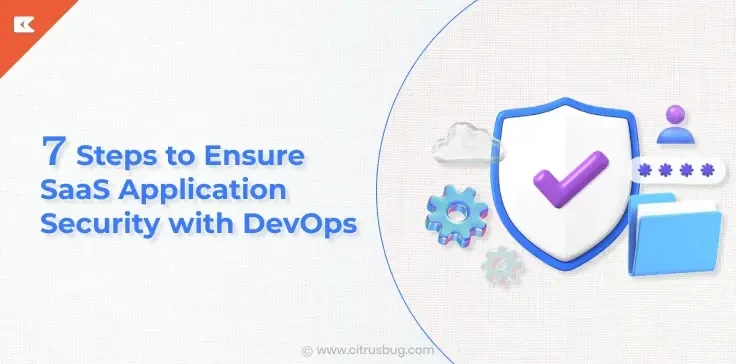
 Application Development
7 Steps to Ensure SaaS Application Security with DevOps
Image source: Freepik In the age of digitization, SaaS apps have caused a fundamental change in the operational environment of enterprises. These cloud-based apps provide hitherto unrivaled scalability, accessibility, and…
Read Article → Custom Software Development
How Much Does it Cost to Develop MVP in 2026?
The cost to develop MVP remains one of the most critical questions for founders and product leaders entering 2026. With AI-driven development tools reshaping timelines and remote engineering teams compressing…
Read Article → Artificial Intelligence
Top Digital Transformation Trends That Shaping Businesses
Digital transformation stands as a trendsetter in an age wherein technological progress sets the pace for business transformation. Towards the latter end of 2025, knowing and harnessing these developments is…
Read Article →FAQs About Software Development Company in Austin
How do I choose a software development company in Austin?

Ask for a scoped estimate, case studies close to your product, and the roles that will write your code. A partner that runs discovery first can show requirements, wireframes, and costs before you commit to the full build.
How long does custom software development take?
Simple apps can ship in weeks, while enterprise systems with several integrations take months. Discovery produces a release-by-release timeline, so you see the full schedule before any development time is booked.
Who owns the source code when I hire a software development company?
You do. Full source code ownership transfers at delivery, and every engagement is covered by an NDA from the first conversation. Repositories and cloud accounts can sit under your organization from day one.
Can we build a proof of concept before committing to a full product?
Yes. A proof of concept tests one risky assumption, such as an AI model's accuracy or an integration's feasibility, before you fund the full product. Its results feed directly into the MVP scope.
Can you add AI features to software we already run?
Yes. Typical additions connect an LLM API to your existing data through retrieval, with permission checks and logging in place. A small evaluation set measures answer accuracy before anything reaches your users.
Can we hire software developers who work inside our in-house team?
Yes. Under the Dedicated Team model, our engineers join your repositories, standups, and sprint planning while your product owner sets priorities. QA, DevOps, or design roles can be added as the roadmap grows.
How do you handle changes to requirements mid-project?
Every change request is estimated for effort and cost before it enters a sprint, and you approve it first. Time and Material handles frequent changes well, and Fixed-Price works best once discovery has settled scope.